
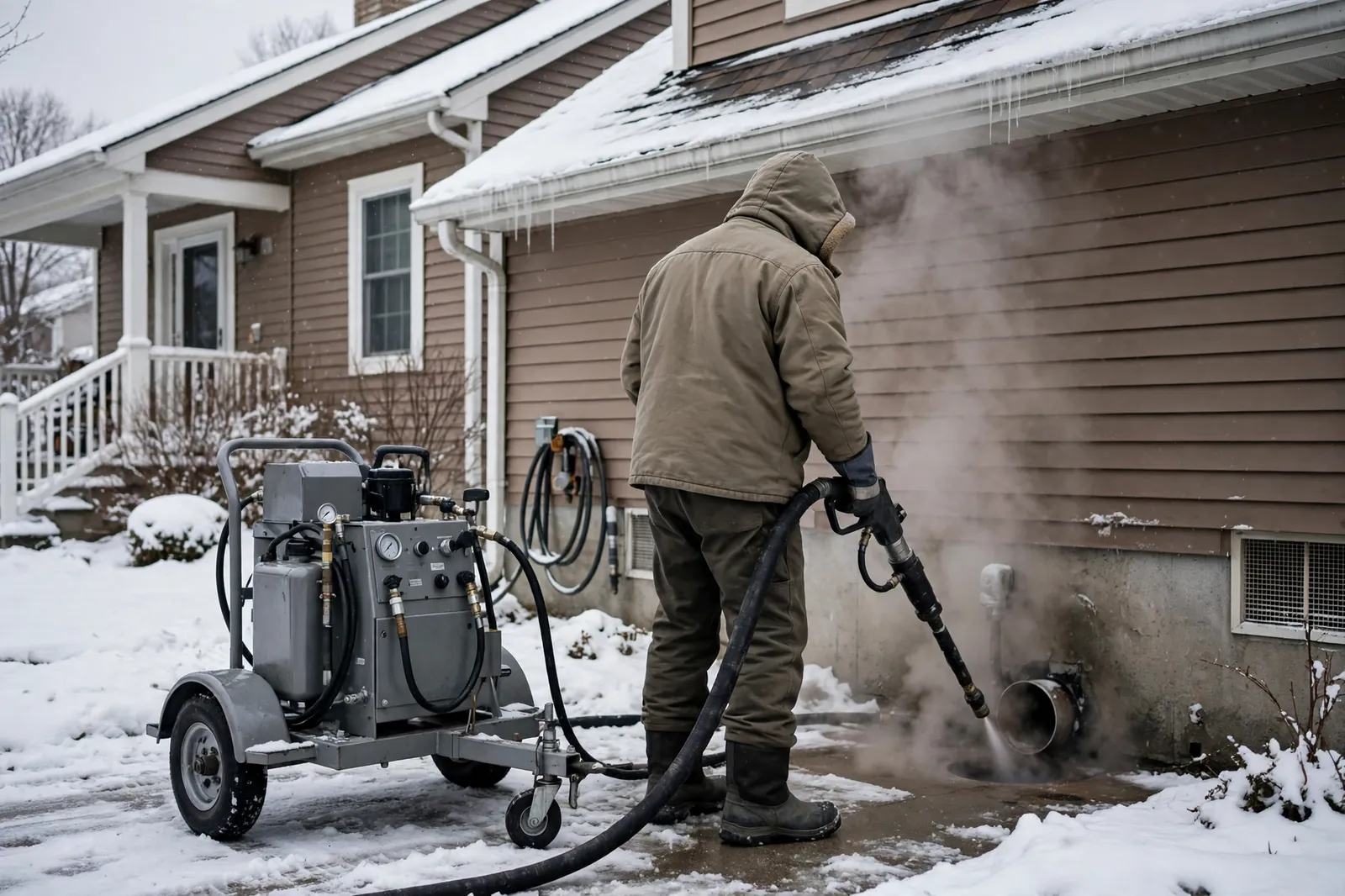
Hydro Jetting in Winter
Winter changes a drain job in small ways: the ground is hard, the house is full, the kitchen is busy, and a backup at Christmas is the last thing anyone wants. This guide explains what winter changes about jetting and what it does not. Call (833) 878-1592 to book a visit.
Updated 2026-11-18. Prices shown are estimates only.
Does jetting work when it is cold?
Yes. Jetting works in winter, and the reason is simple: the water in the hose is under pressure and moving, so it does not sit still long enough to freeze. The pump, the hose and the nozzle all work the same in January as in June, and the cleaning itself — hot water stripping grease, jets scouring scale, a cutter slicing roots — is unaffected by the air temperature.
What winter changes is access, not cleaning. An outdoor cleanout under frozen ground takes longer to reach, a hose run across a icy yard needs care, and a crew working outside will move slower. The jetting itself is the same job, done in colder conditions, and a crew that has worked through winters before will have the routine for it.
Frozen ground and buried cleanouts
The most common winter delay is a buried cleanout. In summer the cap is easy to find and dig out; in winter the ground above it is frozen hard, and digging takes longer. If you know where your cleanout is, mark it before the ground freezes — a stake, a flag, a note on the house plan — so the crew can find it without hunting in the cold.
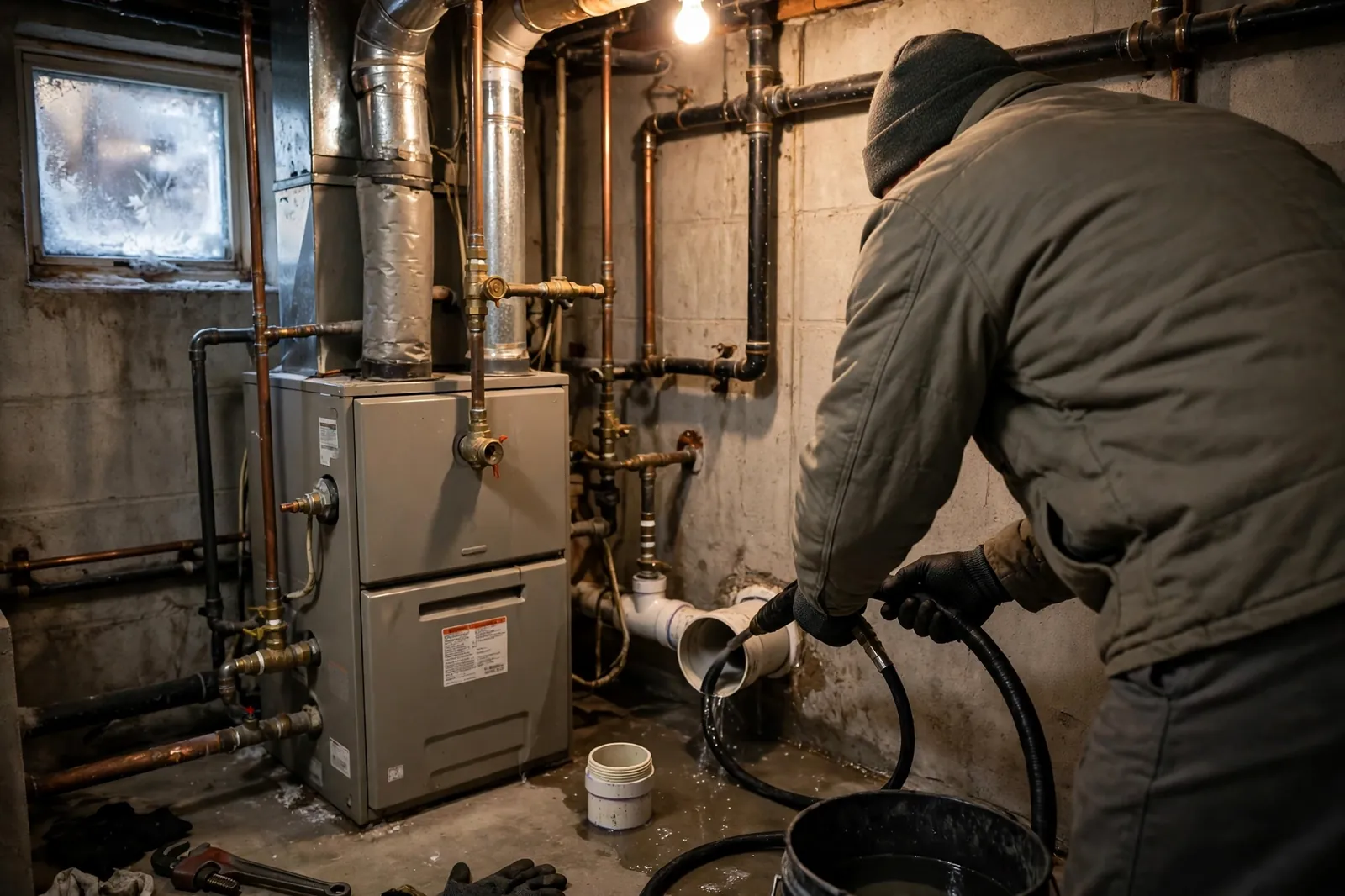
An indoor cleanout avoids the problem entirely: a basement or ground-floor entry point is unaffected by frozen ground, and the crew can work inside in the warm. If your home has both, say so when you book, because the indoor point is the faster choice in winter even if the outdoor one is closer to the blockage.
Holiday backups: why winter is the busy season
Winter is the busy season for drain work, and the reason is the house, not the weather. Over the holidays the house is full, the kitchen is cooking all day, the showers and toilets are used far more than usual, and the drains carry a load they never see in a quiet week. A line that was coping in November can block on Christmas Day, when the house is full and no crew is easy to reach.
The answer is to clean before the holidays, not during them. A camera look and a jetting visit in late autumn, before the guests arrive, clears the coating that would have become a backup under the holiday load. It is the cheapest insurance a busy household can buy, and it is booked in a quiet week, not a crisis.
Grease in winter: a colder, harder coating
Grease behaves worse in winter, because the pipe walls are colder and the fat sets faster and harder. A kitchen line that drained acceptably in summer can slow sharply in winter, as the fat that once stayed soft now hardens within feet of the sink. Hot-water jetting is the answer, because the heat melts the hardened coating in a way a cold cable never will.
Kitchen habits matter more in winter, too. Wiping pans before washing, keeping oil out of the sink, and running hot water after greasy washing all count for more when the pipes are cold. A household that is careless with fat in December will meet the bill for it before the new year. See hydro jetting for grease for the full picture on fat in kitchen lines.
Frozen pipes and jetting: what not to do
Jetting is for drains, not for frozen water supply pipes, and the two should not be confused. A frozen supply pipe — no water at the tap — needs thawing by a plumber, not jetting. Jetting a frozen drain line, where standing water in the pipe has frozen solid, is also a job for a careful crew: the camera look comes first, and if the line is frozen solid, the crew will say so and advise thawing before any jetting.
Do not pour boiling water down a frozen drain and hope for the best, and do not use a chemical cleaner on a frozen line. Both can crack a pipe or create a hazard for the crew who later opens it. A frozen drain is a small number of cases, and a crew that looks first will tell you whether yours is one of them.
Indoor access in winter: easier than you think
Winter favours indoor access. A basement cleanout, a ground-floor cleanout, or a pulled trap gives the crew a warm, dry entry point, and the hose run from there is the same as from outside. The crew will lay protection on floors near the entry point, and the water and debris flow out through the sewer, so the house stays clean.
Clear a path to the indoor entry point before the crew arrives, and move anything valuable away from it. Keep pets and children out of the work area, and make sure someone is home to give access and to hear what the camera shows. Those steps are the same in winter as in summer, and they matter more when the crew is working against the cold outside.
What to do before a winter visit
Before the crew arrives, do the winter checks: mark the outdoor cleanout if it will be used, clear a path through snow or ice to the door the crew will use, and clear the area around the indoor entry point. Write down which fixtures are slow, when the problem started, and what has already been tried, so the crew starts at the right line.
Tell the crew if you have used a chemical drain cleaner, since that changes how the line is handled, and tell them if any pipe is frozen or suspected frozen. The more they know before they arrive, the less time they spend working it out in the cold, and the sooner the line is clear.
After the clean: winter habits that help
After a winter clean, the habits that keep the line clear are the winter versions of the usual ones: keep fat out of the sink, use screens, keep wipes out of the toilet, and run hot water after greasy washing. In winter, add one more: do not let a seldom-used drain sit dry for weeks, because a dry trap lets sewer smell into the house, and a dry line lets grease set undisturbed.
Run water through guest bathrooms and floor drains now and then, even when nobody is using them, so the traps stay full and the lines stay wet. That small habit keeps the drains ready for the next busy period, and it costs nothing but a few seconds of attention.
Planning ahead: the late-autumn clean
The best winter plan is a late-autumn clean. Book a camera look and a jetting visit before the holidays, when the crew is available and the house is quiet, and the line goes into the busy season clean. Keep the closing footage and the date on file, so the next clean can be timed from what the pipe shows.
If you have trees near the line, add a late-summer survey to the plan, after the growth season, so root strands are cut while they are thin. Two planned visits a year — one for roots, one before the holidays — cost less than one emergency call on a holiday, and they keep the winter from ever becoming a drain crisis.
Why do drains block more in winter
Winter loads a drain in three ways at once. The house is fuller, so more water goes down the pipes. The pipes are colder, so fat sets faster and harder. And the kitchen is busier, so more grease reaches the line. A drain that coped in October can fail in December under that combined load, and the failure usually arrives on the busiest day of the year.
That is why winter blockages feel sudden even though they are not: the coating was building all year, and winter is when the load finally exceeds what the narrowed bore can carry. The fix is the same as the prevention — a clean before the load arrives — and the camera look is what shows how close the line already is to its limit.
Snow, ice and the crew's access
Snow and ice change the job outside the house. A path to the door must be cleared, the hose run across a yard needs care on ice, and the pump unit sits on ground that may be frozen hard. The crew will work slower outside, and they may need a hand clearing the way to the cleanout. A visit booked for a morning after a snowfall can take longer than the same visit in a clear week.
Do what you can before they arrive: clear the steps, salt the path to the door they will use, and mark the cleanout so nobody has to hunt for it in the snow. The National Weather Service cold safety page is a useful check before any outdoor work in severe cold, and the crew will say if the conditions make the job unsafe to start.
The guest bathroom problem
The guest bathroom is a winter weak spot. It sits unused for weeks, its trap dries out, and when the guests arrive the first flushes push air and smell back into the room. A dry trap is an open path for sewer gas, and the smell is often blamed on the drains when the cause is simply a trap that has had no water in it for a month.
Run the taps and flush the toilet in every guest bathroom a day or two before the guests arrive, and run water down the floor drains in the basement and laundry room too. If a guest bathroom drains slowly once it is in use, the branch may be coated, and a jetting visit can clear it. The habit costs a few seconds, and it is the difference between a fresh room and a smelly one.
Winter and the septic system
A septic system in winter needs the same care as a sewer line, with one extra point: the drain field sits in shallow soil, and a deep freeze can slow it. Snow cover helps, because it insulates the ground, so a field that is cleared of snow can freeze faster than one left covered. Do not drive over the field in winter, and do not pile snow on it from the driveway.
Inside, the same winter rules apply: keep fat out of the drains, spread laundry loads through the week rather than running them all in one day, and tell the crew you have a septic system when you book. A jetting visit on a septic home needs planning around the tank, so the crew does not send a sudden surge into it.
Holiday cooking: the kitchen's busiest week
Holiday cooking is the hardest week of the year for a kitchen line. Roasting, frying, baking and washing up run all day, and the fat load is many times a normal week's. The dishwasher runs back to back, the disposal works overtime, and the line that was coping in November meets a load it never sees in a quiet week.
The habits that help are the usual ones, done more carefully: wipe every pan, scrape every plate, keep oil in a container, and run hot water after each greasy wash. If the sink slows during the holiday week, do not reach for a chemical cleaner — call the crew and describe the symptoms. A line that is jetted clean before the holidays rarely needs a crew during them.
What if the line freezes solid
If the line is frozen solid, the job changes from cleaning to thawing. The camera look comes first, and it shows whether the water in the pipe is frozen, where the ice sits, and whether the pipe is sound underneath it. A plumber thaws the line with controlled heat — never an open flame — and checks the pipe as the ice clears, because a freeze can crack a weak section.
Jetting comes after the thaw, not before, and only if the camera shows the pipe is sound. A line that freezes once will often freeze again in the same spot, so ask the crew what made that stretch vulnerable: a shallow run, a draught, or a section with no insulation. The fix for the cause is worth more than a second thaw.
Booking a winter visit: lead times
Winter bookings need more lead time than summer ones, because the season is busy and the weather can move a visit. A planned clean in late autumn can be booked weeks ahead, and the crew will hold the slot. An emergency call on a holiday is a different matter: the crew may be on a call already, and the visit may take longer to arrange.
Book the planned clean early, and keep the crew's number where you can find it. If a backup happens on a holiday, call and describe the symptoms plainly — which fixtures, when it started, whether any pipe is frozen — so the crew can judge the urgency. For an urgent backup, see emergency hydro jetting.
Winter in a cold climate vs a mild one
Winter is not the same everywhere. In a northern state, the ground freezes deep, the cleanout may be under snow for months, and frozen pipes are a regular part of the season. In a southern state, the ground rarely freezes, but a cold snap can still catch a shallow line, and the house is just as full over the holidays.
The plan adapts to the place. In the north, mark the cleanout before the first freeze and favour indoor access. In the south, watch the kitchen line, because the holiday load is the same even where the ground never freezes. The camera look is the same in both places, and it is what sets the plan from what the pipe shows.
The spring check: what winter leaves behind
Spring is the time to check what winter left behind. The ground thaws, the house empties, and the drains settle back to their normal load — but the coating that built up over the holidays is still there, and the pipe that froze may have cracked. A spring camera look catches both before they become a summer problem.
Walk the yard as it thaws and look for dips or soggy patches over the line, since a freeze can shift soil and open a joint. Run every fixture and watch the lowest drain. A line that was jetted in late autumn and stays quick through spring is a line that is in good shape; a line that slows again by April needs another look.
Protecting outdoor drains in winter
Outdoor drains and yard lines deserve a winter look too. A yard drain clogged with leaves will hold water that freezes, and the ice can crack the pipe or lift the grate. A downspout that discharges into a drain can send cold water into a line that is already slow, and the freeze makes the blockage worse.
Clear leaves from yard drains before the first freeze, and check that downspouts run clear of the house rather than into a blocked line. Jetting can clear a yard drain of leaves, silt and roots, and the camera shows whether the pipe is sound. A yard line that is cleaned in autumn goes into winter empty, and an empty line cannot freeze full.
A winter drain calendar
Here is a short calendar for the cold months. In October, mark the outdoor cleanout, clear the yard drains, and book the late-autumn camera look and clean. In November, run water through the guest bathrooms and check the kitchen habits before the holiday cooking starts. In December, watch the lowest drain through the busy weeks and keep fat out of the sink.
In January, run water through seldom-used drains so the traps stay full, and watch for smells from dry traps. In February, plan the spring camera look, so any freeze damage is caught early. That calendar is short, it costs little, and it keeps winter from ever becoming a drain crisis.
When to call a crew in winter
Call a crew when more than one fixture slows at once, when a low drain backs up, or when the kitchen line blocks during the holiday week. Call sooner, not later, when the house is full and the kitchen is busy, because a line that is coping in the morning can block by the evening under a holiday load.
When you call, describe the symptoms plainly: which fixtures, when it started, what has already been tried, and whether any pipe is frozen or suspected frozen. The crew can then judge the urgency and the entry point before they arrive. A winter call that starts with clear symptoms is a winter visit that ends with a clear line, and the number to call is (833) 878-1592.
Signs you may need hydro jetting
- Several fixtures slow at once as the house fills for the holidays.
- A kitchen sink drains slower in cold weather than it did in summer.
- An outdoor cleanout is buried under frozen ground.
- A drain smell returns from a seldom-used guest bathroom.
- The same line blocked last winter and was never properly cleaned.
- Water backs up through a low drain during a busy holiday weekend.
- The yard drain holds water that has frozen around the grate.
- A pipe that froze last year has never been checked since.
How it works
- 1
Step 1 — Mark the cleanout
Before the ground freezes, mark the outdoor cleanout, and note whether an indoor entry point is available as the faster winter choice.
- 2
Step 2 — Clear the paths
Clear a path through snow or ice to the door the crew will use, and clear the area around the indoor entry point.
- 3
Step 3 — Book before the holidays
Call (833) 878-1592 in late autumn, book a camera look and a jetting visit, and clear a path for the crew on the day.
- 4
Step 4 — Keep winter habits
Wipe pans, keep fat out of the sink, run water through seldom-used drains, and watch the lowest fixture through the busy season.
What does it cost?
Winter work is priced like any other jetting visit. Typical ranges, shown as estimates, are below.
| Service | Typical range (estimate) | Notes |
|---|---|---|
| Branch line jetting | $250 – $550 | One sink or bath line |
| Main line hydro jetting | $350 – $900 | Whole-home line |
| Camera inspection with jetting | $150 – $350 | Often included |
Prices are estimates only. The local company that does the work sets its own final pricing.