
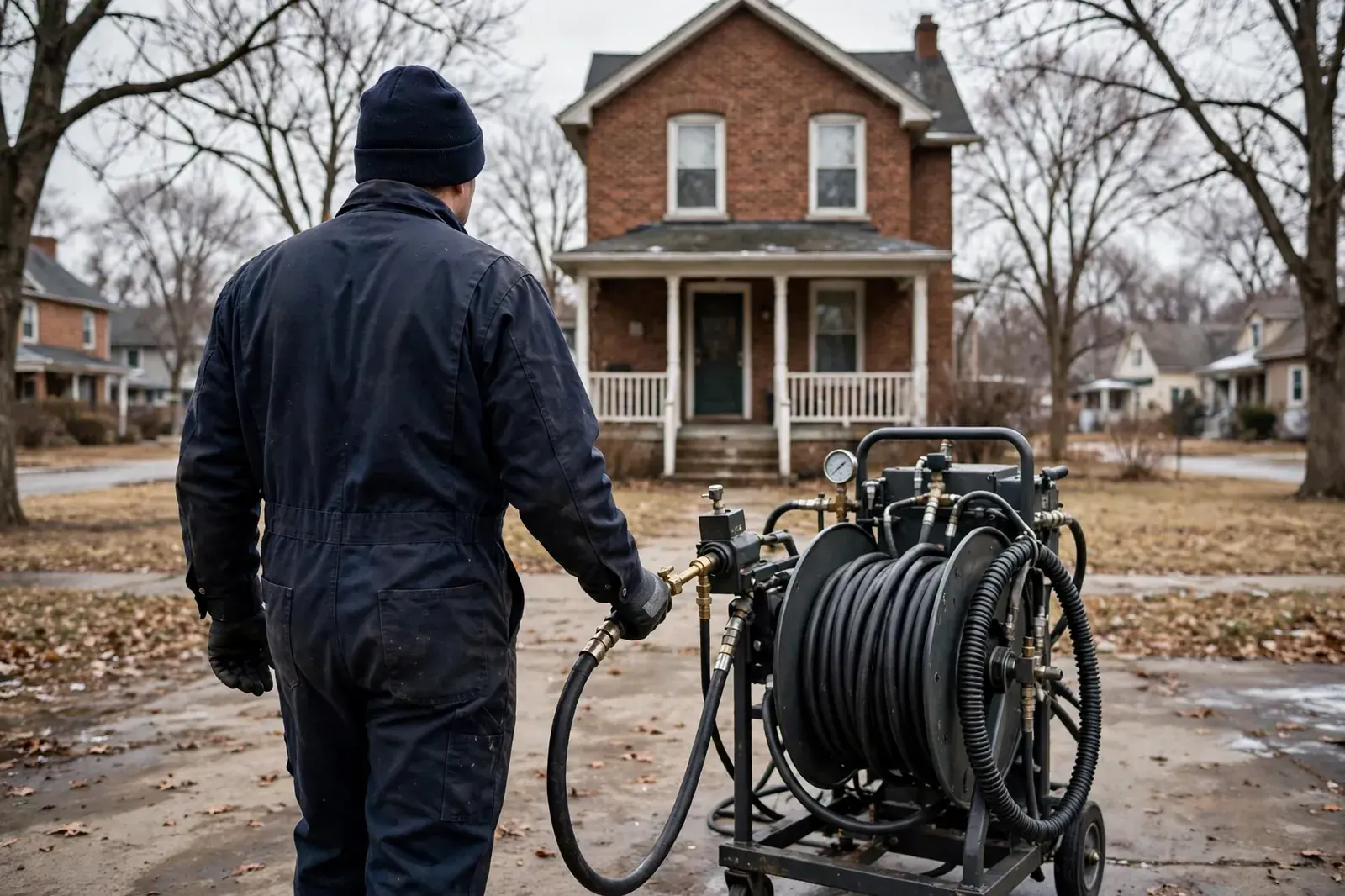
Hydro Jetting in Chicago, IL
Hydro jetting in Chicago is the deep clean for a drain line: a nozzle sprays water in several directions at once, cutting grease, scale, and root growth off the walls and carrying it out to the sewer. A camera look comes first, because freeze damage and old cast iron change the job. Call (833) 878-1592 to book a visit.
Updated 2026-11-18. Chicago, IL · Cook County · Population 2,721,308. Prices shown are estimates only.
- 2,721,308 Population
- Cook County
- 85 ZIP codes served
- Logan Square Neighbourhood
Before & after in Chicago
Before & after
Drag the slider to compare the same pipe before and after jetting.
Hydro jetting in Chicago
Do Chicago winters freeze drain lines?
Yes, and Chicago is one of the American cities where the question matters most. The ground freezes deep here in January and February, and any pipe that sits shallow, or runs through an unheated space, can freeze solid.
Most sewer laterals are buried below the frost line and stay safe, but the trouble spots are well known: a shallow branch under a driveway, an exposed pipe in an unheated basement or crawl space, a trap in a back room that stays cold all winter, and a line that already drains slowly.
A partly clogged line is the one most likely to freeze. Grease and scale slow the water down, and slow water spends more time in the cold stretches, so a drain that was sluggish in October often stops completely in January.
That is why the best time for a jetting visit in Chicago is autumn, before the first hard freeze. A clean line with its full bore open moves water fast, and fast water does not sit long enough to freeze.
If a drain stops during freezing weather, do not pour boiling water into it and do not use a chemical cleaner. Boiling water can crack a cold fixture and will not reach a freeze deep in the line, and chemicals sit in the standing water and do nothing for ice.
Call for a camera look instead. A technician can tell a frozen section from a grease blockage by where the water stops, and can warm a shallow freeze safely or clear the coating once it thaws.
Before winter, insulate any exposed pipe you can reach and shut basement windows that face the wind.
Hydro jetting in Chicago
How much does hydro jetting cost in Chicago?
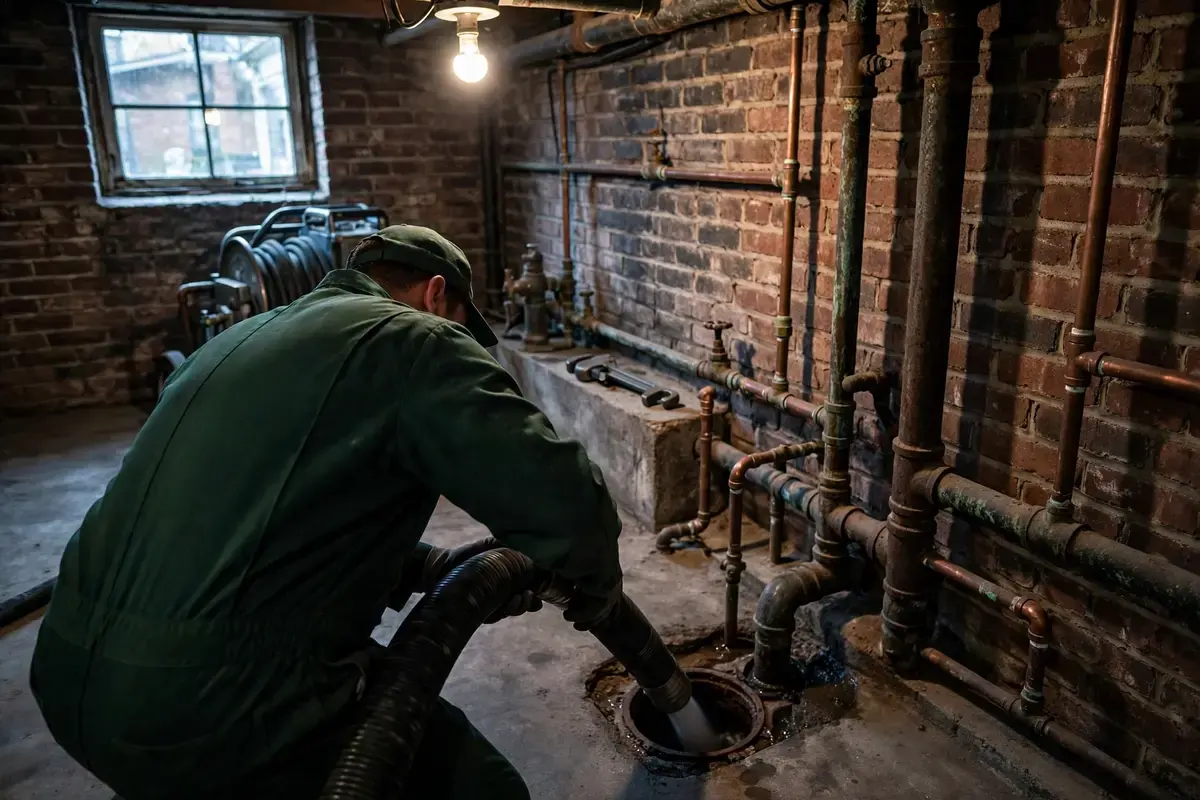
In Chicago the price follows the pipe: its length, its material, and how heavy the buildup is. A single kitchen or bathroom branch with a clear basement cleanout sits at the low end of the table below.
A main line that runs from a basement cleanout to the street through old cast iron, with grease, scale, and root growth layered together, sits higher, because the crew runs more passes and spends more time on the camera work.
Access in Chicago is usually through the basement, and that is where the city's housing helps and hurts at once. Most homes have a basement cleanout, so the crew does not need to pull a fixture to reach the line.
But the cleanout may sit behind a finished wall, under a staircase, or behind years of stored boxes, and clearing that path is part of the job. Larger buildings with shared mains cost more for the same reason longer runs do: more pipe to clean, more branches to check.
Winter changes the timing, not the price. A jetting visit booked in autumn is the same job as one booked in February, but a February visit may have to wait for a thaw if the line is frozen, and a frozen line cannot be jetted until the ice is gone.
The camera look before quoting is what turns the ranges below into a firm figure for your home, because it shows the coating, the joints, and the length before anyone promises a price.
Hydro jetting in Chicago
Logan Square's brick two-flats and their drains
Logan Square is full of the brick two-flats and frame bungalows that define Chicago's older neighbourhoods, and their drains carry the history of the houses. Many were built in the 1910s through the 1940s, and a large share still run on their original cast iron stacks and clay laterals.
Cast iron lasts a long time, but its inner wall roughens as it ages, and a rough wall grabs grease and paper. A line that drained fine for fifty years starts to slow a little each year, until the tub fills when the toilet flushes.
Two-flat living makes the pattern harder to read. The ground-floor flat sees the backup first, even when the grease came from the kitchen upstairs, and the upstairs tenant may not know there is a problem at all.
A snake in the ground-floor branch clears the symptom for a few weeks, and then the clog returns, because the main was never cleaned. Jetting fixes this by cleaning the whole run from the lowest cleanout to the street, branches included, so the fix reaches the source.
The yards matter too. Logan Square's parkways and front yards hold mature maples and oaks, and their roots test every clay joint in the lateral.
If you own one of these houses, a camera inspection every year or two is the cheapest way to stay ahead of it: it catches root hairs while they are still thin enough to cut in a single pass. When you buy in the area, ask for the camera footage, and look at the pipe material in each stretch, not just at whether the drains run on the day you visit.
Hydro jetting in Chicago
What does a camera inspection find in Chicago drains?
The camera in a Chicago lateral usually finds a short list of problems, and the order tells you the age of the house. In a pre-1960 home the first stretch often shows grease in the kitchen branch, laid down in layers until the bore is half its original size, and soap scum and hair doing the same work in the bathroom branches.
Further out, the camera finds scale on the walls of hot-water lines, and root hairs pushing through the joints of the clay lateral.
The camera also finds the problems jetting cannot fix, and those findings are the ones that matter most. A cracked or caved section shows as a break with soil pressing in.
A belly shows as a stretch where water stands still instead of flowing, often where the ground has settled under a driveway or a walkway. A separated joint shows as a step in the pipe where waste catches.
In Chicago, the camera sometimes finds a pipe that has shifted at a joint after a hard freeze heaved the soil, leaving a gap that roots exploit.
Ask the technician to narrate the footage as it plays and to note the distance to each problem from the cleanout. That distance turns a general report into a usable one: a root mat fifty feet out near the street trees is a different job from a grease coat ten feet out under the kitchen.
Keep the video or the written notes. The next time the drain slows, new footage can be compared with the old, and you will know at once whether the problem is new buildup or the same joint failing again.
Hydro jetting in Chicago
Clay soil, roots, and the Chicago lateral
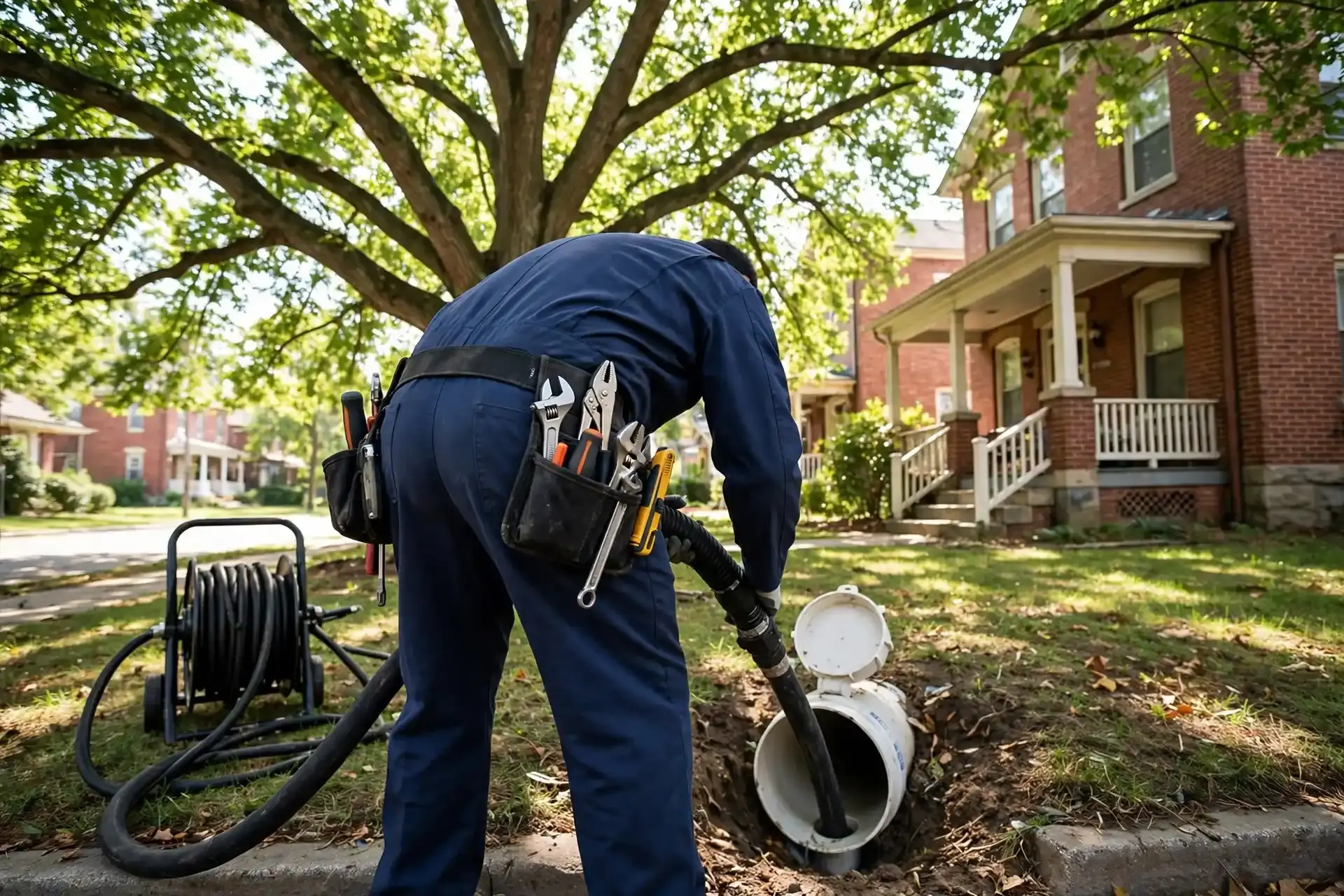
Chicago sits on heavy clay soil, and that soil shapes what happens to a sewer lateral. Clay holds water, swells when wet, and shrinks when dry, so the ground around a buried pipe moves with the seasons.
That movement stresses the joints of a clay or cast iron lateral, opening small gaps that roots can enter and that waste can catch on. Over decades the same movement can settle a stretch of pipe into a belly, where water stands and grease collects.
The trees make it worse in the useful sense that they point to the problem. Maples and oaks line the parkways of most Chicago neighbourhoods, and their roots spread wide in the damp clay, searching for the moisture in a lateral.
A root hair slips through a gap in a joint and grows toward the water inside. At first it is a fine thread the camera barely catches.
Given a season or two it becomes a mat that snags paper and waste, and the drain starts to back up after heavy use.
Jetting cuts the fine growth and clears the mat, but it does not seal the joint, so roots return. The right rhythm for a Chicago home with a clay lateral and mature trees is a camera look once a year and jetting when the footage shows growth returning.
If the same joint grows back thick within a year, the lasting fix is a repair at that joint, and the camera footage is what the plumber uses to price it. When you plant a new tree, keep it well away from the line between the house and the street.
Hydro jetting in Chicago
How does Lake Michigan water affect your pipes?
Chicago's water comes from Lake Michigan, treated and delivered by the Chicago Department of Water Management. It is generally described as moderately hard, which means it carries enough dissolved minerals to leave scale in hot-water lines over time, but far less than the very hard supplies of the desert Southwest.
You can see the minerals on a shower head or a faucet aerator as a pale crust. Inside a drain the effect is the same, only hidden.
Scale builds slowly in Chicago, and that is why it is easy to miss. A hot-water line loses a little of its bore each year as minerals settle on the walls, and the rough surface catches soap and hair.
A kitchen branch that carries hot water for dishwashing scales faster than a cold line. Jetting removes scale with a head that scours the wall, and the camera afterward shows whether the wall is clean or whether the scale has pitted the pipe underneath.
There is no way to stop scale while the water supply stays the same, but a water softener on the incoming supply slows it down, and it is worth discussing if your fixtures crust over within months of cleaning. Without a softener, plan on a camera check every year or two for hot-water lines.
Treat a shower that keeps slowing down as a scale problem first and a hair problem second, and clean the aerators when you see the crust, because the aerator is the early warning for the drains.
Hydro jetting in Chicago
Inside a Chicago jetting visit
The visit opens with a phone call and a basement. You tell the crew which fixtures are slow, whether more than one is affected, and whether anything has backed up, and that tells them whether they face one branch or the main line.
Before they arrive, clear the route to the basement cleanout. Chicago basements collect storage, and a cleanout behind boxes and bicycles costs time before the cleaning starts.
The camera is the first tool out of the truck. From the lowest cleanout, the lens travels the line while you watch the picture on a small monitor: the coating, the joints, the roots, any freeze damage from winters past.
That picture decides the pressure and the nozzle, because a sound PVC line and a pitted cast iron line are cleaned at different settings. Then the hose feeds in and the head works the line in passes toward the street, each one a little further, while water carries the loosened material to the sewer.
At the end the camera travels the line again, and the monitor should show bare walls. The crew then opens several fixtures at once to test the line under a real load.
Ask to watch that second run and to keep the recording. In a city where a lateral can freeze at a shallow spot and crack a joint, that footage is the baseline for next year: it shows what was clean, and what was already worn.
Hydro jetting in Chicago
Same-day call or scheduled visit in Chicago?
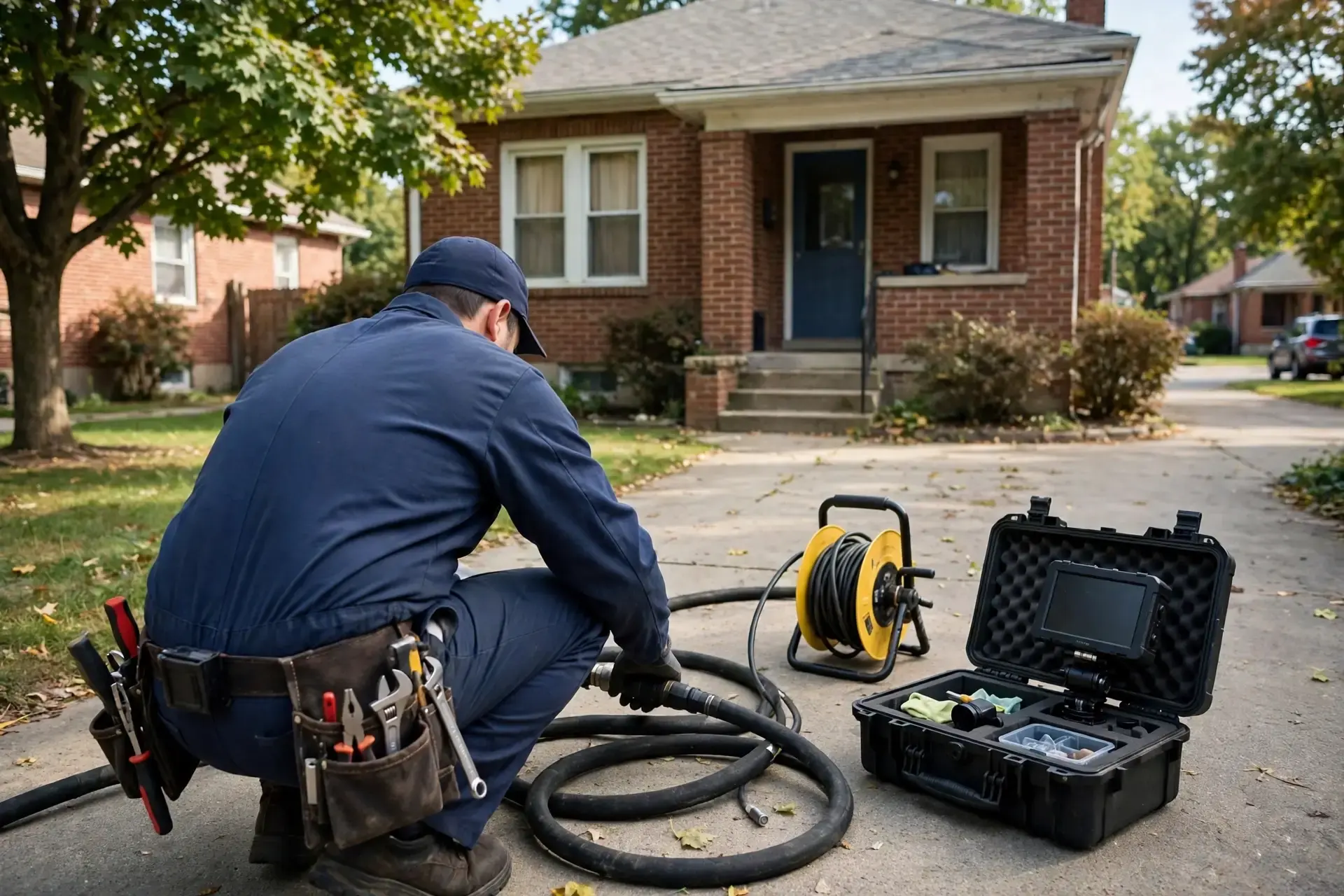
A backup is the clearest same-day sign a Chicago drain can give. Water rising in a tub while a toilet flushes, a basement drain that fills when the washing machine empties, a toilet that will not flush at all, sewage smells strong enough to notice from another room, or water pooling on a floor near a drain: any one of those means the line has stopped moving, and the next flush will push water into the lowest fixture in the house.
Call that day.
A single slow sink is a routine booking, as long as nothing is backing up and no other fixture is affected. Pull the stopper and take the hair out, run hot water for a minute after cooking, and note whether the slowness shifts through the day.
A drain that drags in the evening and runs well in the morning is often carrying a grease coat that stiffens overnight and softens with use. That is a cleaning job, and it can wait a few days for a scheduled slot.
The line between routine and urgent is spread. One slow fixture is a branch problem.
Two fixtures on different floors slowing at once is the main line, and the main will not clear on its own. So is a drain that has been snaked twice in a year and slows again within weeks: the snake bored a hole through the coating and left the rest behind.
In Chicago, book the autumn visit before the first hard freeze, and ask to see the footage, so the cause, grease, scale, or roots, is named rather than guessed.
Hydro jetting in Chicago
Permits for drain jetting in Chicago
A permit is not part of a cleaning visit in Chicago. Jetting leaves the plumbing exactly as it found it, apart from the coating it removes, so the city asks for no filing and sends no inspector.
Permits come into the picture only when the camera shows a fault that water cannot fix.
When a repair is needed, the work is filed and inspected like any other plumbing change. That covers cutting out a length of lateral, excavating a yard or parkway to reach a break, opening a wall for a failed stack, and fitting a cleanout where the house has none.
Digging under a sidewalk or into the street can call for a separate public-way approval, and that approval often takes longer than the repair itself. A plumber who finds such a fault should explain the filing before the digging starts and say who handles it.
Before the crew arrives, it is worth knowing where the cleanout is and whether earlier work left open permits on the house. In a two-flat or a small apartment building, the building may want notice before work on shared lines.
Ask for a written note of the camera findings at the end of the visit: if a filed repair follows, that note is the document the next plumber starts from.
Hydro jetting in Chicago
How does jetting in Chicago compare with Aurora and Naperville?
Chicago shares its drain problems with the suburbs around it, but the housing changes the work. Aurora and Joliet, to the southwest, have a similar mix of older homes near their centres and newer suburbs further out, so their laterals carry the same cast iron and clay, with the same root growth at the joints.
The difference is access: suburban homes more often have a yard cleanout that is easy to reach, while a Chicago two-flat may need the crew to work from a basement cleanout.
Naperville and Schaumburg are newer suburbs where most homes are post-war or newer, with longer laterals and more PVC. Their lines scale less and root less, but a long run from the house to the street takes more time to clean, and the camera often finds a belly where the ground has settled under a long driveway.
Elgin and Evanston sit in between, with older housing near their centres and newer tracts further out.
The practical point is that a price quoted for one of these towns does not transfer to another. The cost table on this page is written for Chicago's housing and access, and a visit in a suburb with a sixty-foot lateral will run longer.
What stays the same everywhere is the method: camera first, jetting passes, camera after. If you own homes in more than one of these places, compare the camera footage between them rather than the bills.
Hydro jetting in Chicago
Why Chicago drains clog a little more each year
Chicago drains rarely fail all at once. They fail a little at a time, and that slow pattern is what catches homeowners out.
A cast iron stack that has carried waste for eighty years has a rough inner wall, and each year the roughness grabs a little more grease and paper. A clay lateral laid when the street was built has joints that roots have been testing for decades, and each year the growth thickens a little.
A hot-water line loses a little bore to scale each year. None of these shows up as a sudden blockage.
They show up as a shower that drains a little slower than it did last spring.
The freeze makes the slow decline worse. When a partly coated line freezes at a shallow spot, the ice can crack a joint or shift a section of pipe, and the damage stays after the thaw.
The next year the line clogs a little faster, because the cracked joint catches more waste and lets in more roots. That is why a Chicago line that has frozen once deserves a camera look the following spring, even if it seems to be draining fine.
The fix is rhythm, not reaction. A camera check every year or two, jetting when the footage shows buildup, and an autumn visit before the first hard freeze will keep a Chicago line clear for years.
The cost of that rhythm is far lower than the cost of a backup in January, when the ground is frozen and a repair means waiting for a thaw. Treat the camera footage as a survey of the whole system, and keep it, because it is the record that tells the next plumber what has changed.
Signs you may need hydro jetting
- A basement floor drain fills during a spring thaw.
- A kitchen sink in a brick two-flat drains slowly after dinner.
- A toilet on the second floor needs a second flush to clear.
- A shower drains slowly while the washer runs downstairs.
- Dark grit shows in the water at a low drain after a flush.
- A drain snaked in autumn is dragging again by spring.
- Several fixtures slow down together on a cold evening.
- A sewage smell rises from a floor drain after a freeze.
- Water rises in a tub when a toilet flushes on another floor.
- A sump pump runs often while the drains stay slow.
- One strip of yard stays damp above the sewer line.
How it works
- 1
Step 1 — Camera down the line before water
From the lowest cleanout, the technician sends a camera into the pipe and reads the monitor as it travels: grease, roots, scale, freeze damage. The cleaning pressure and nozzle come from that picture.
- 2
Step 2 — Dial the jetter to the old pipe
Chicago's older lines need a setting matched to their state. The crew sets the machine to the pipe the camera showed and fits the head for grease, scale, or roots.
- 3
Step 3 — Wash the line toward the street
Pass by pass, the head strips the coating from the walls and the water carries it out to the sewer. The crew watches the slow fixtures as the flow returns.
- 4
Step 4 — Look again, then test under load
A second camera run closes the job, and the monitor should show bare walls. The crew then opens the slow fixtures at the same time to test the drain under a real load, and only then is the cleanout closed.
Hydro jetting cost in Chicago
What does it cost?
What a Chicago jetting visit costs depends on the pipe in front of the crew, and the table below gives countrywide ranges to work from. Length is the first factor: a short branch is quick, a main running to the street through old cast iron is not. Weight of buildup is the second: a light grease coat clears in a pass or two, a root mat needs repeated work. Age of the line is the third, and in Chicago it often decides the bill, since pre-1960 cast iron and clay need slower passes and more camera time than newer PVC. A basement cleanout in the open keeps the visit short, while a buried one adds time. The camera look before quoting replaces the range with a firm figure for your house. Compare whole visits, camera before and after, jetting passes, and a flow test at the slow fixtures, not headline numbers.
| Service | Typical range (estimate) | Notes |
|---|---|---|
| Main line clean-out | $350 – $650 | The usual home job |
| Single fixture line clean | $250 – $500 | One sink, tub, or laundry line |
| Severe or commercial jetting | $600 – $1,200 | Roots, thick grease, long pipes |
Prices are estimates only. The local company that does the work sets its own final pricing.
Questions about hydro jetting in Chicago