
Root Clearing Services
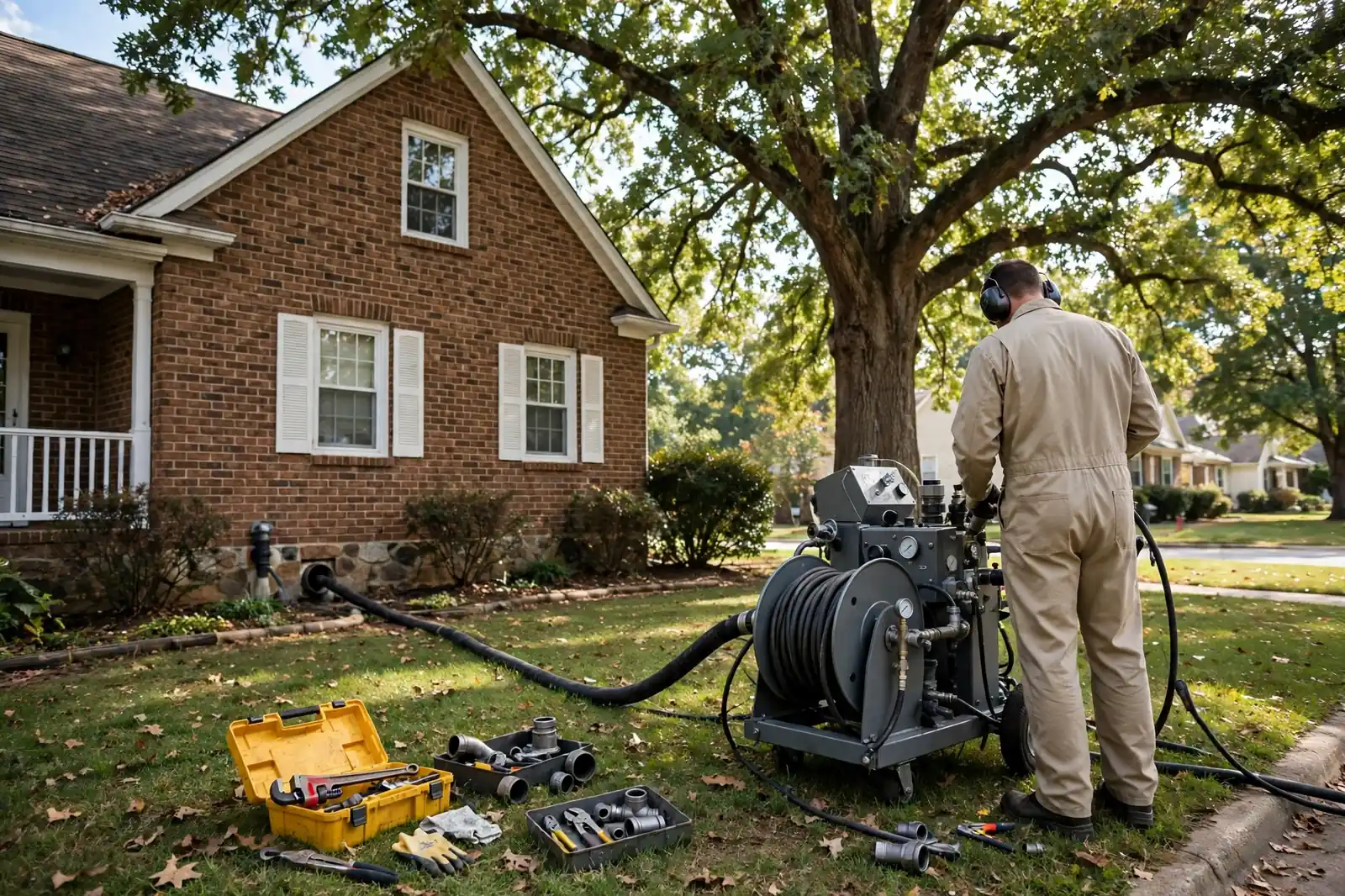
Tree roots follow moisture, and a sewer line leaking a little vapour through a joint is an open invitation. Fine strands slip in, thicken inside the pipe, and trap paper until the line blocks. Root clearing cuts those strands out with a spinning jetting head and washes the pieces away. Call (833) 878-1592 to book a survey and a cut.
Updated 2026-11-18. Prices shown are estimates only.
- $150–$900 Typical cost range
- 5 Steps in the visit
- 12 Questions answered
Before & after — root clearing
Before & after
Drag the slider to compare the same pipe before and after jetting.
Root Clearing
How roots find their way into a pipe
A sewer pipe is not a sealed tube along its whole length. Clay pipes are made of short sections joined together, and older plastic and iron pipes have joints too.
Each joint is a tiny gap, and when the soil around it is damp, vapour escapes through the gap. A root tip nearby senses that moisture and grows toward it, and the finest strand can pass through a gap no wider than a hair.
Once inside, the root finds a steady supply of water and nutrients, so it thickens fast. It branches along the pipe, and its fine hairs catch toilet paper and waste.
What started as a single strand becomes a mat, and the mat becomes a plug. The tree above ground may look perfectly healthy while its roots are quietly filling the line below.
Root Clearing
Yard clues that roots are in the line
The clearest outdoor clue is a patch of lawn that grows faster and greener than the rest, fed by the moisture leaking from a joint. A soggy patch that never dries, or a dip in the ground above the line, points the same way.
Indoors, the signs are the usual sewer ones: slow drains across the home, a toilet that bubbles when the washing machine runs, and a blockage that returns a few months after a clearing.
Timing helps too. If a line blocks every spring or summer, when roots grow fastest, and stays clear through winter, roots are a likely cause.
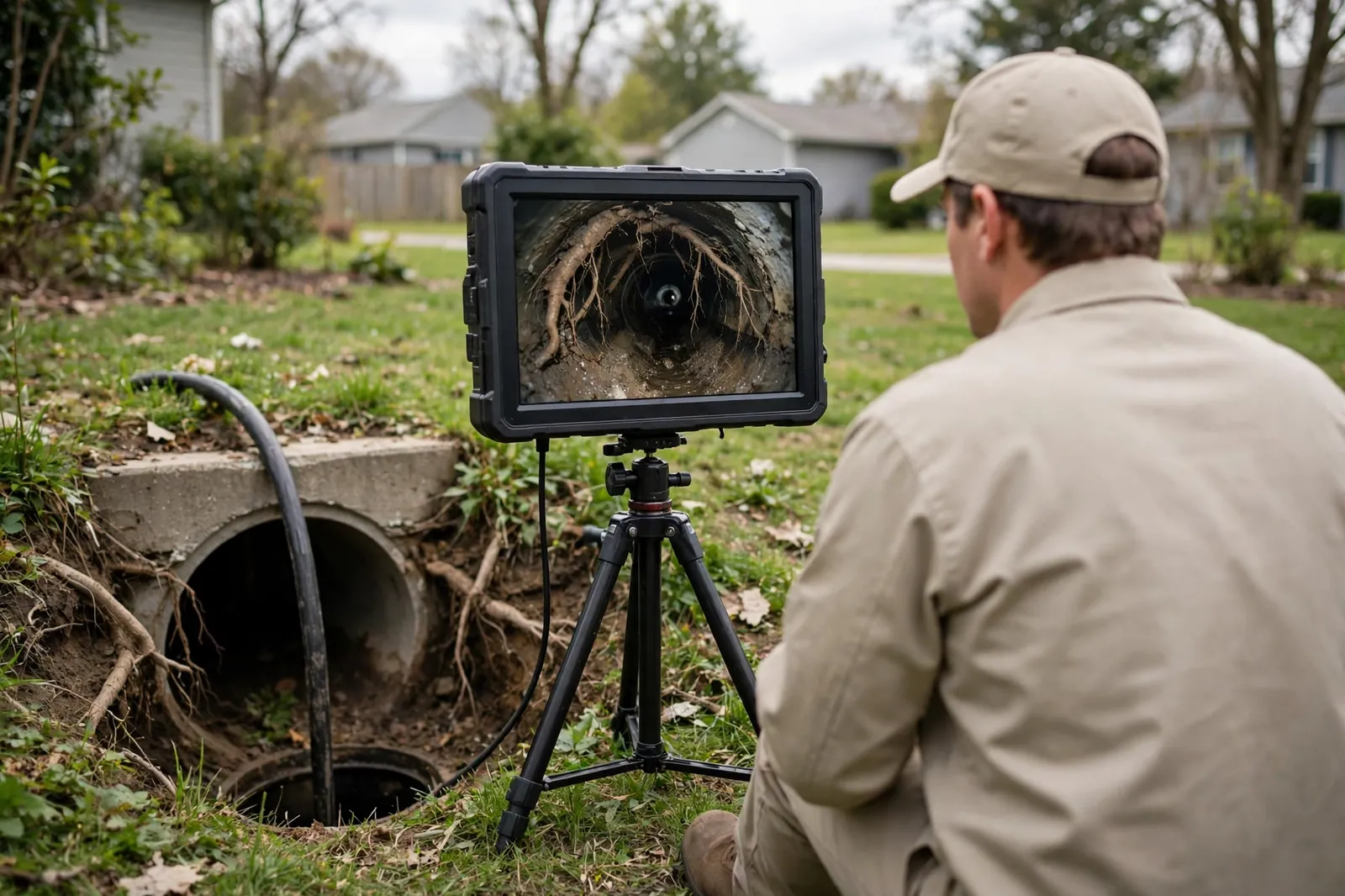
A camera survey settles it: the screen shows the strands, the mat, and the joint they came through, so there is no guessing about the cause or the spot.
Root Clearing
The cutting head and how it works
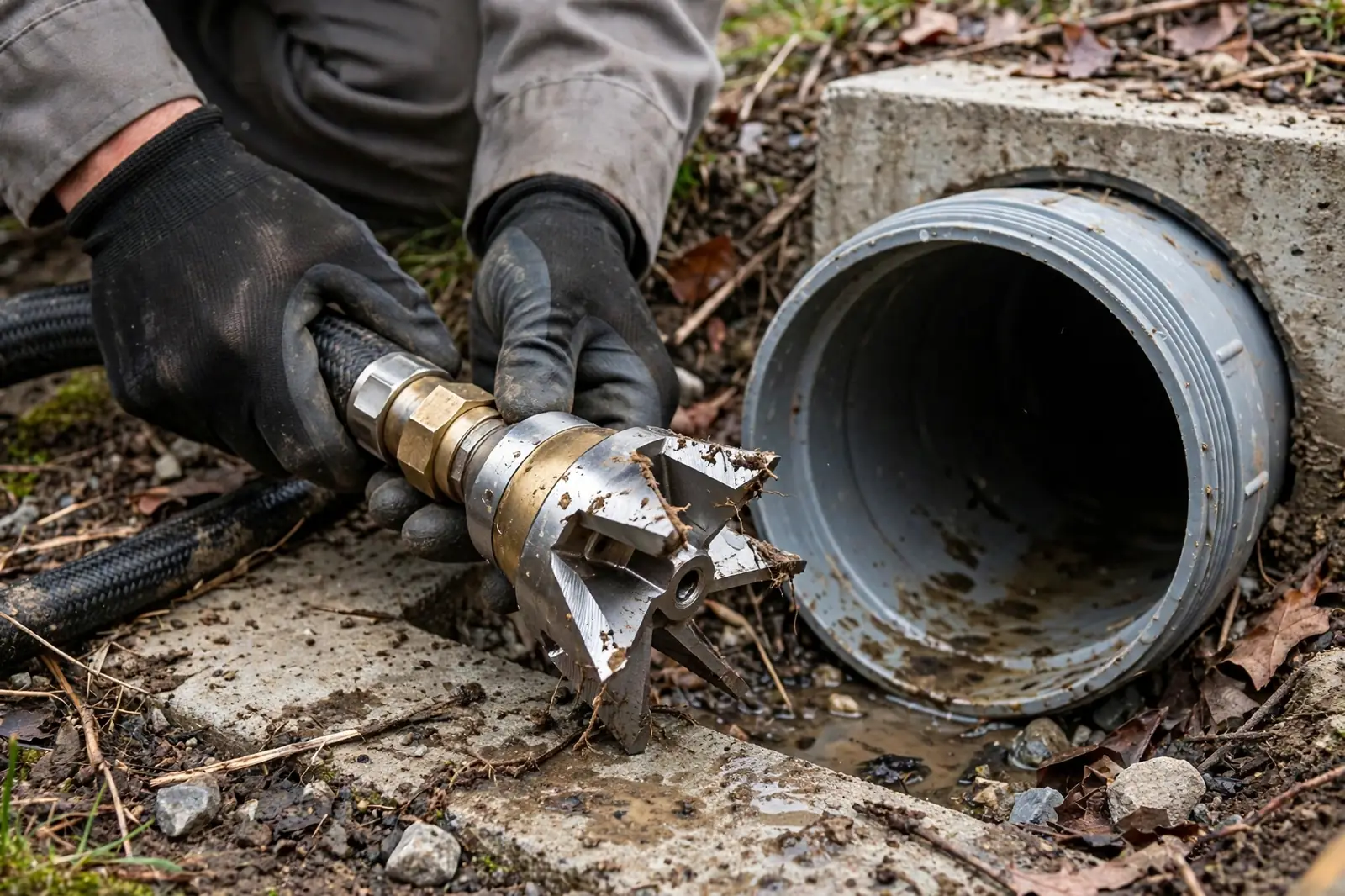
A root job uses a different nozzle from a grease job. The cutting head spins as water drives it, and its blades slice through root strands as the hose advances.
The operator feeds it slowly into the mat, letting the blades cut a little at a time, and the wash jets behind it carry the cut pieces out toward the street main. Rushing the head can jam it in a thick mat, so patience is part of the skill.
After the cut, the camera goes back in. A good cut leaves the pipe walls visible and the bore open, with only the cut ends of roots showing at the joint.
If the mat is very thick, or the roots have shifted a joint out of line, the operator may clear what can be cleared safely and then show you the footage, rather than forcing the head through a section that is no longer sound.
Root Clearing
Why roots come back after a cut
Cutting removes the roots inside the pipe, but it does not close the joint they came through. The tree is still there, the moisture is still there, and new strands will grow back through the same gap.
How fast depends on the tree and the season, but a year or two is common. That is the honest limit of root clearing: it is a treatment, not a cure.
What changes the picture is the pipe itself. A sound modern pipe with tight joints keeps roots out.
An old clay line with many joints invites them in again and again. Some owners choose regular cuts on a schedule, and that works while the pipe holds its shape.
Others choose to replace the worst section, which closes the entry point for good. The camera footage is what lets you weigh those two paths.
Root Clearing
Repair choices when cutting is not enough
When roots have broken a section, shifted a joint, or filled a pipe so thickly that cutting cannot restore the bore, repair enters the picture. The simplest repair is to dig down and replace the damaged section with a modern pipe and sealed joints.
It is disruptive to the yard, but it removes the entry point entirely.
Another option is a liner: a sleeve fitted inside the old pipe that seals the joints from within. It suits a pipe that is still round and mostly sound but has joints that leak.
Which option fits depends on the footage, the depth of the pipe, and what sits above it. A crew that shows you the survey can explain the trade-offs for your line, not a general case.
Root Clearing
Living with trees near a sewer line
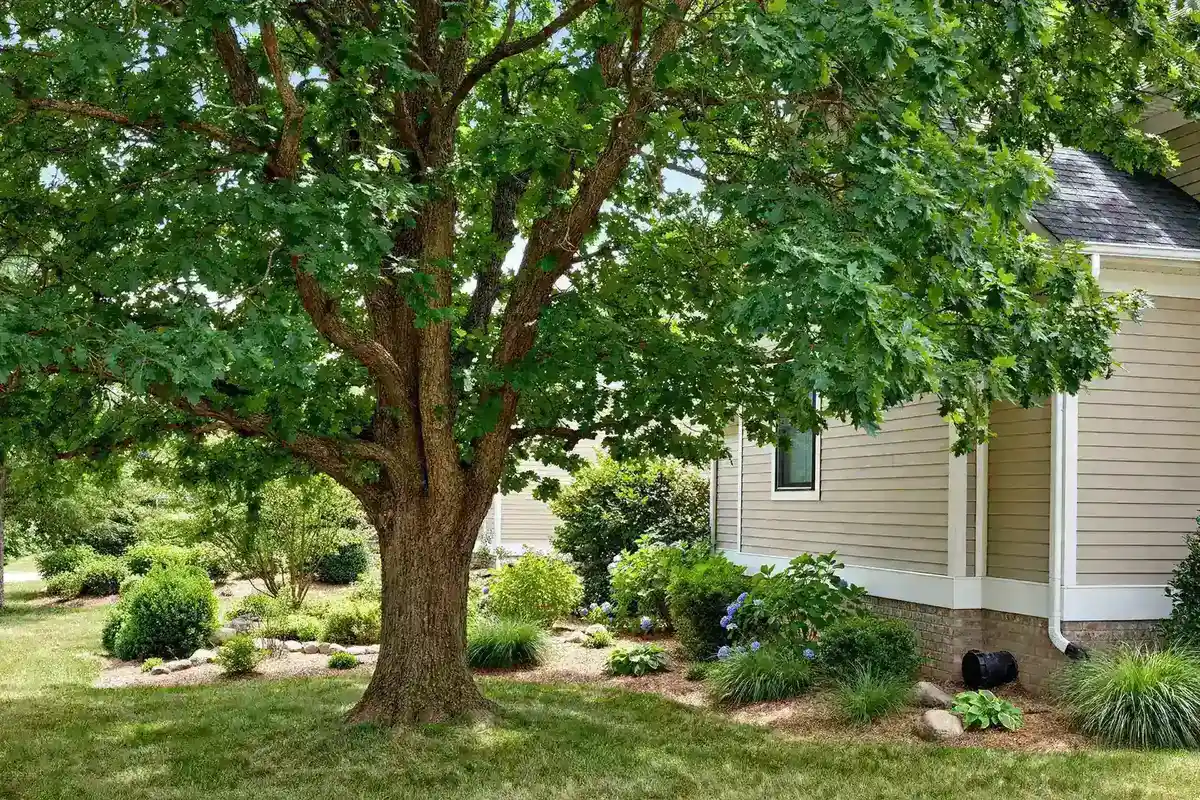
Trees and sewer lines can share a yard, but they need watching. Know where your line runs — the survey footage and the cleanout position usually tell you — and be cautious about planting new trees close to it.
If a large tree already stands over the line, a camera survey every year or two is a cheap way to catch strands while they are thin and easy to cut.
Do not pour root-killing chemicals down the drain as a first step. They can harm the tree, the soil and the pipe, and they do not remove a mat that has already formed.
A mechanical cut clears the line, and a survey shows whether the pipe needs a repair or just a regular check. That order — look, cut, decide — keeps the yard and the line in better shape.
Root Clearing
Which trees cause the most trouble?
The trees that cause the most trouble are the thirsty ones with wide, shallow root systems. Willows are the worst known offenders: a willow can send roots fifty feet or more in search of water, and a sewer joint leaking vapour is a target it will find.
Poplars and cottonwoods are nearly as eager, and their roots grow fast in damp soil. Maples, elms and oaks cause trouble too, but usually closer to the trunk, within twenty or thirty feet.
Smaller trees and shrubs are not harmless either. A fruit tree planted over a sewer line can send fine roots into a joint within a few years, and a hedge row along a boundary can hide a dozen small root systems feeding on the same leak.
The distance that matters is the distance from the trunk to the pipe, not the height of the tree. A tall tree with deep roots may never touch a sewer line, while a modest willow thirty feet away can choke it.
When a root problem is found, the crew can usually say which tree is responsible by following the roots back toward the surface and by the position of the joint they entered through.
Root Clearing
How fast do roots grow back after clearing?
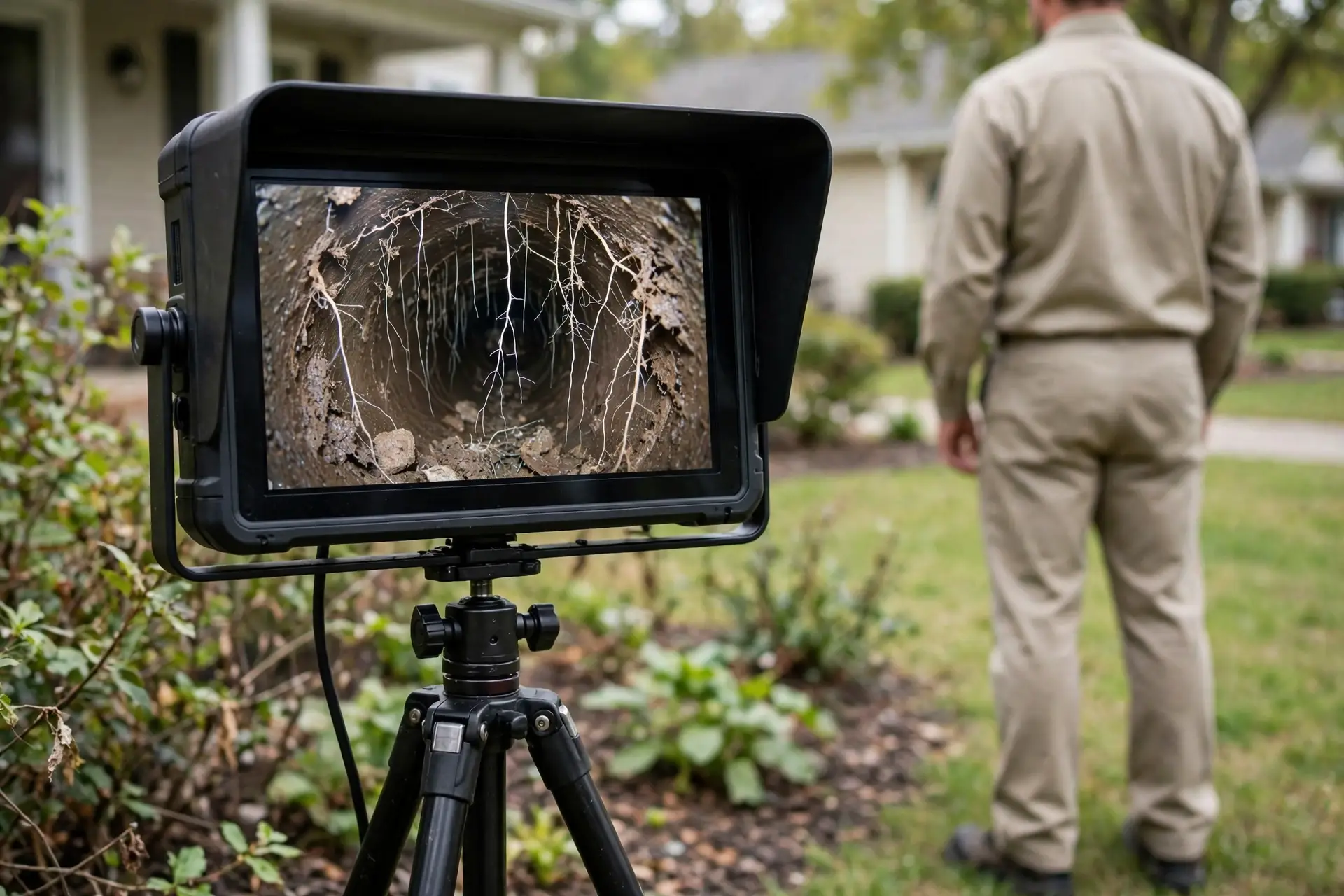
Roots grow back, because cutting them does not close the gap they came through. How fast depends on the tree, the season and the size of the opening.
A thin strand cut in spring can grow back to a mat within a year, because spring is when the tree is pushing new growth and the soil is wet. A thick mat cut in late autumn may take two years to return, because the tree is slowing down for winter.
A large opening in a joint lets a thick root through quickly, while a hairline crack admits only fine strands that take longer to thicken.
Most homeowners find that a root clearing lasts between one and three years before the drains slow again. That interval is the real measure of the problem: a line that needs cutting every year has a wide opening and a vigorous tree, and it is a candidate for repair rather than another cut.
A line that needs cutting every three years can often be managed with a regular schedule. Keeping a note of the date of each clearing, and of how bad the mat was, turns a guess into a record, and the record is what a repair decision should rest on.
Root Clearing
What does a root mat look like on camera?
A root mat on a camera screen looks like a pale, tangled nest filling the pipe. The roots themselves are cream or light brown, thin as string at the edges and thick as a finger at the centre, and they hang from the top of the pipe where they entered through a joint.
Paper and waste caught in the mat show as dark clumps, and the water behind the mat sits still and murky. The picture is unmistakable once it has been seen, and it explains the symptoms at once: the flow cannot get through the nest.
The camera also shows the entry point, because the roots are thickest at the joint they came through and thinner further along the line. That matters, because the entry point is where the repair must happen.
A root mat that fills the pipe for ten feet usually entered at one joint, and fixing that one joint stops the regrowth. A mat that appears at several joints along the run means several openings, and the repair is bigger.
The final camera look after cutting shows the pipe walls again, the joint, and the gap the roots used, which is the evidence for the next decision.
Root Clearing
Can root killer chemicals keep a line clear?
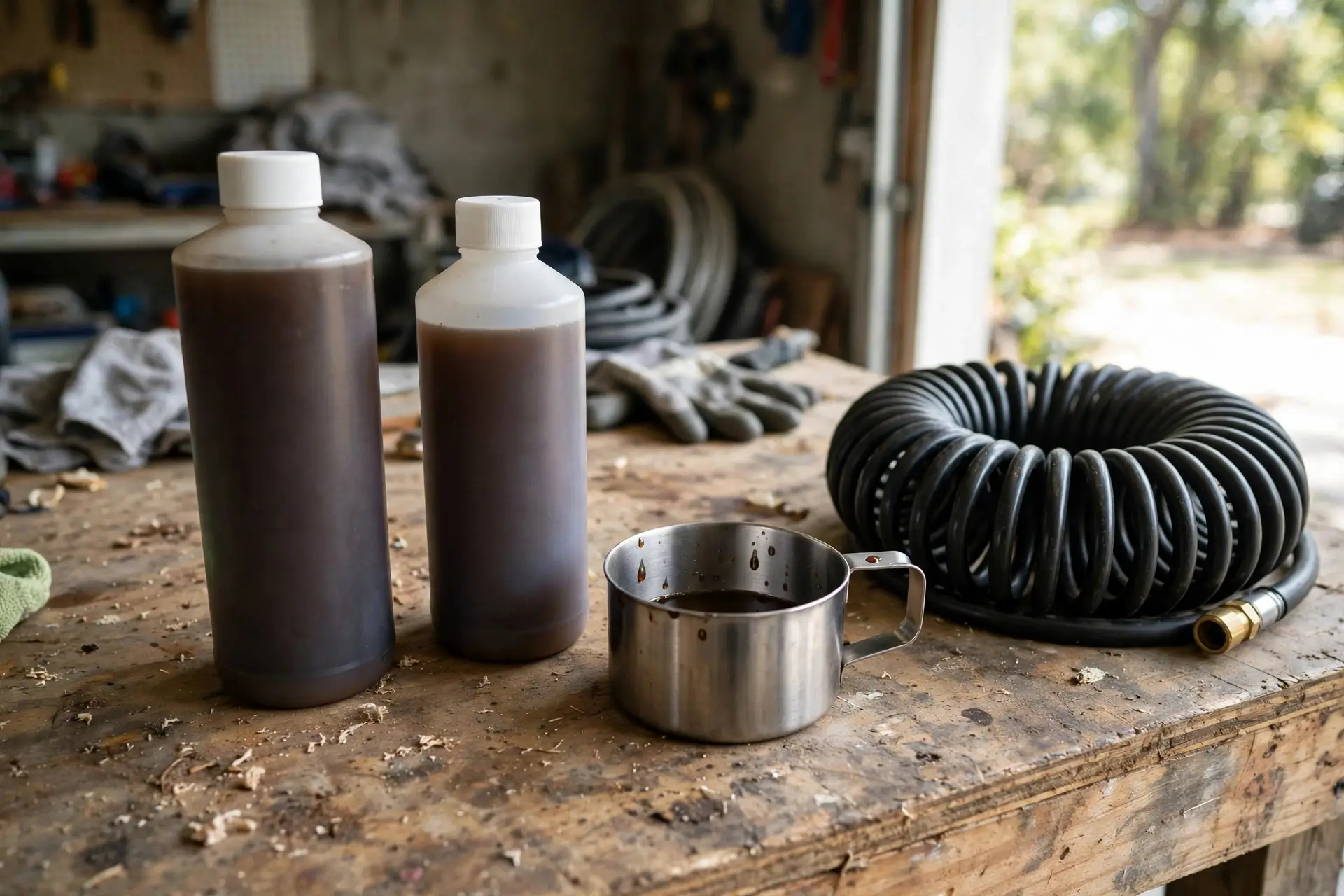
Root killer products, usually copper sulphate or a foaming herbicide, can slow regrowth, but they cannot fix a line that is already blocked, and they cannot close the gap the roots came through. Poured or flushed into the drain, the chemical reaches the roots and burns back the fine strands, which buys time.
The thick roots at the entry point usually survive, because the chemical does not reach them in a strong enough dose, and they grow back from the surviving base.
There are limits to be aware of. Copper sulphate is a heavy metal, and many towns restrict how much can go into a sewer, because it passes through to the treatment plant.
Foaming products coat the pipe walls better, but they need the line to be clear first, so they work as a follow-up to cutting, not as a replacement for it. The most honest way to use them is as a maintenance step between cuttings: cut the mat, jet the line clean, and then use the product on a schedule to slow the regrowth.
Used that way they can stretch a one-year interval to two, but they will not make a root problem go away.
Root Clearing
When is a pipe lining the right answer?
A pipe lining, sometimes called cured-in-place pipe, is a fabric tube soaked in resin, pushed into the old pipe and cured in place with heat or light, forming a new smooth pipe inside the old one. It is the right answer when the old pipe is still round and in one piece, but its joints have opened and roots keep coming through them.
The liner covers every joint along its length, so the roots lose every entry point at once, and the smooth inner surface flows better than the old rough one.
Lining is not the answer for every root problem. A pipe that has collapsed, or one with a severe dip that holds standing water, cannot be lined, because the liner follows the shape of the old pipe and would copy the dip.
A pipe with a large break or a missing section needs digging and replacement instead. Lining also costs more than cutting, so it only makes sense when the cutting interval has become short, usually once a year or less, and the camera shows a pipe that is otherwise sound.
The decision rests on the camera picture: a round pipe with open joints suits a liner, and a broken pipe does not.
Root Clearing
How is a root problem found before it blocks the line?
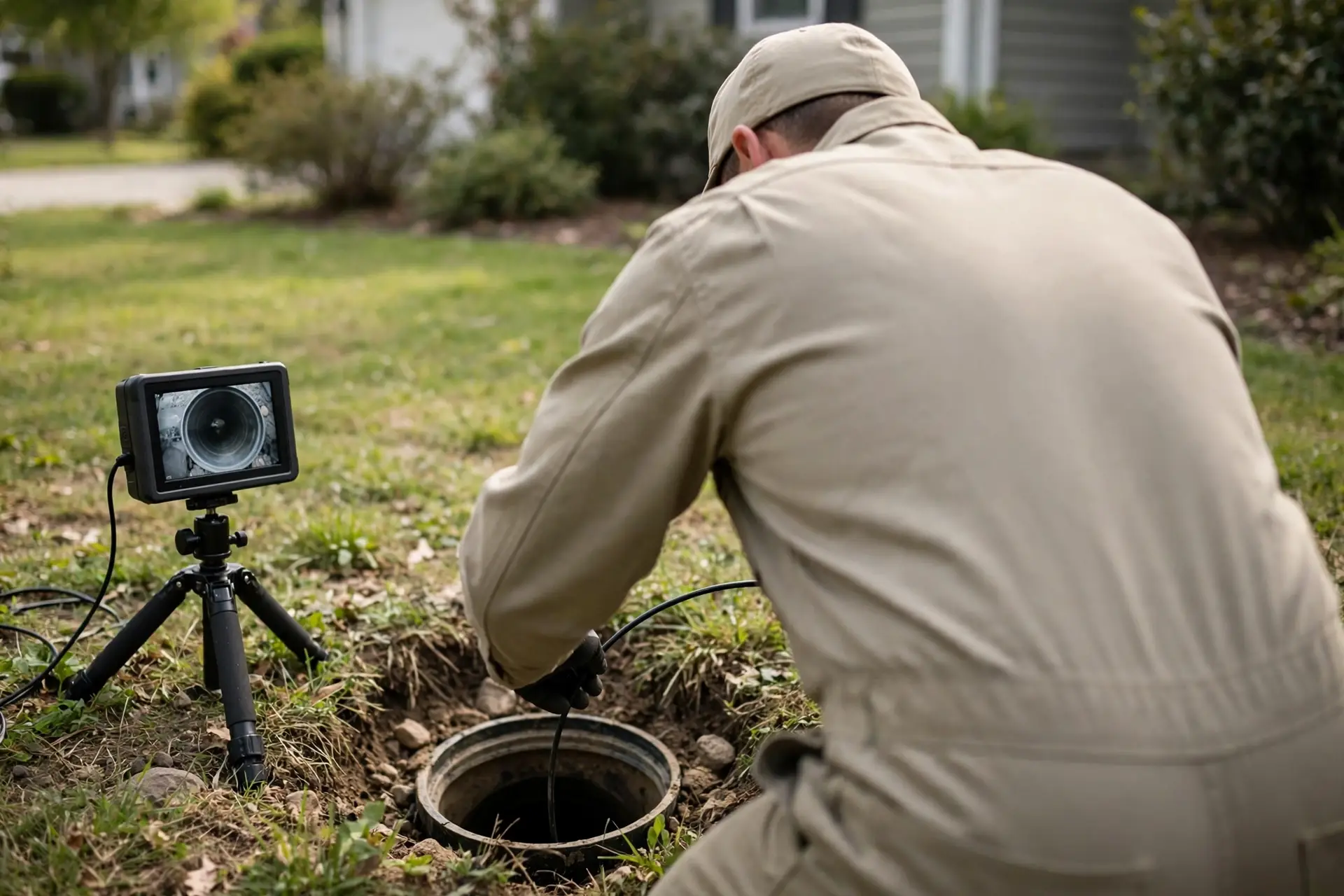
A root problem gives early warnings, and a homeowner who knows them can catch it before the line blocks. The first is a drain that slows a little each month, then clears after a heavy flush, then slows again: the mat is growing, and the flow is finding a smaller and smaller path through it.
The second is a gurgling sound from a low fixture when a toilet flushes, because air is trapped behind the mat. The third is a yard clue: a tree near the line putting on fast, lush growth in a dry summer, fed by the leak it is drinking from.
A camera survey is the way to confirm it, and it is worth doing when the drains have slowed twice in a year, or when a home with large trees nearby has never had its sewer line looked at. The survey shows the roots while they are still thin strands, and a thin strand is cheaper to cut than a thick mat.
Some homeowners with a known root problem schedule a survey every two years, at the same time as a jetting visit, so the line is watched rather than left to block. The cost of a survey is small beside the cost of a backup, and the picture it gives is the basis for every later decision.
Signs you may need root clearing
- A patch of lawn over the line grows greener and faster than the rest.
- A soggy patch or a dip appears in the ground above the sewer line.
- Drains slow across the home, worst in spring and summer.
- The same sewer blockage returns a few months after a clearing.
- A toilet bubbles when the washing machine drains.
- The camera shows fine strands or a mat inside the pipe.
- The drains slow a little more each month, then run clear after a heavy flush, then slow again.
- A toilet flushes, and a gurgling sound answers from the tub or the floor drain.
- The same sewer line has blocked in the same season two years running, often in spring when roots grow fastest.
- A tree near the line is growing faster and lusher than its neighbours, fed by the leak it is drinking from.
- The camera survey from a previous visit showed fine root strands at a joint, and the drains are slowing again.
- Paper flushed down one toilet appears in another fixture, because the flow is pushing back through the mat.
How it works
- 1
Step 1 — Read the yard and the drains together
The crew asks about the trees near the line, the season the trouble started, and how often it has come back, because a root problem follows a pattern that the history reveals.
- 2
Step 2 — Camera survey to find the entry joint
A camera travels the sewer line and shows the root mat, the joint it entered through, and the condition of the pipe, with the distance from the house measured on the cable.
- 3
Step 3 — Cut the mat with a cutting head
A spinning cutting head on the jetting hose shreds the root mat, and the water flow carries the pieces out toward the street main, clearing the bore of the pipe.
- 4
Step 4 — Jet the line clean
A scouring nozzle follows the cutter, washing the root fibres and trapped waste off the walls so the camera can see the joint clearly on the final look.
- 5
Step 5 — Show the joint and plan the next step
The final camera look shows the gap the roots used. The crew explains whether cutting on a schedule will do, or whether the joint should be repaired or lined.
Root Clearing cost
What does it cost?
Root work is priced by how thick the mat is and how far along the line it sits. Typical ranges, shown as estimates. A thin mat of fine strands near the cleanout costs less than a thick mat forty feet down the line, because the crew needs a longer hose, a cutting head and more passes. The camera survey is the first step, and it may be priced on its own at $150 to $350 or bundled with the cutting and jetting, so ask which it is. The entry point matters too — an outdoor cleanout is quick to open, while a line reached through a basement cleanout or a pulled toilet takes longer. If the survey shows a damaged joint, a repair or a lining is a separate job with its own quote, and it costs more than a cut. The written quote should list the survey, the cutting, the jetting and the tidy-up as separate lines, and a planned visit in working hours costs less than an urgent call.
| Service | Typical range (estimate) | Notes |
|---|---|---|
| Root cutting with jetting | $400 – $900 | Root mat in the line |
| In-pipe camera survey | $150 – $350 | Often bundled in |
| Sewer line jetting | $350 – $900 | House to street main |
Prices are estimates only. The local company that does the work sets its own final pricing.
Questions about root clearing