
Local Pros • 24/7 • Upfront Pricing
Hydro Jetting Services
Hydro Jetting Online connects homeowners and businesses with local plumbing pros who clean drains and sewer lines with high-pressure water. Jetting strips grease, scale, and roots from pipe walls and restores full flow. Call (833) 878-1592 any time to talk through slow drains, backups, or repeat clogs. This page explains what jetting does, what it costs, and how a visit runs, so you can decide whether it fits your line before you book.
 The signs show up long before the backup
Common problems
Drain problems we clear every day
Most jetting jobs start with one of these four problems. If yours is on the list, the fix is usually one visit.
- 1Slow drains all over the houseSinks, tubs and showers that all drain slowly usually share one clogged main line.
- 2Grease buildup in kitchen linesCooking grease cools, hardens and narrows the pipe until water barely moves.
- 3Tree roots in the sewer lineRoots find tiny cracks, grow inside the pipe and catch everything that flows past.
- 4A line that keeps backing upRepeat backups after snaking mean the buildup is still stuck to the pipe walls.
About hydro jetting
What hydro jetting does for your drains
Plain answers to the questions homeowners ask before they book.
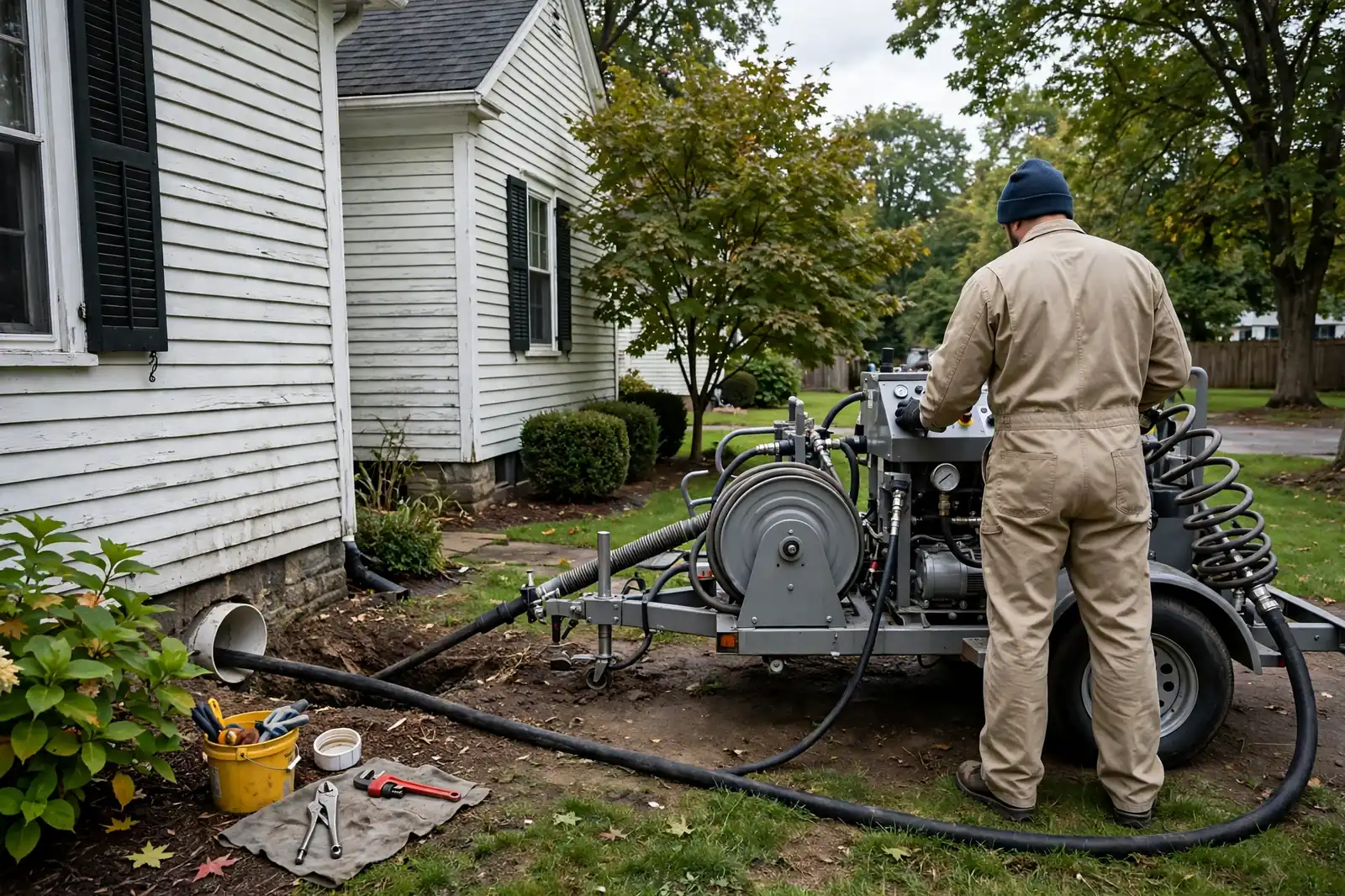
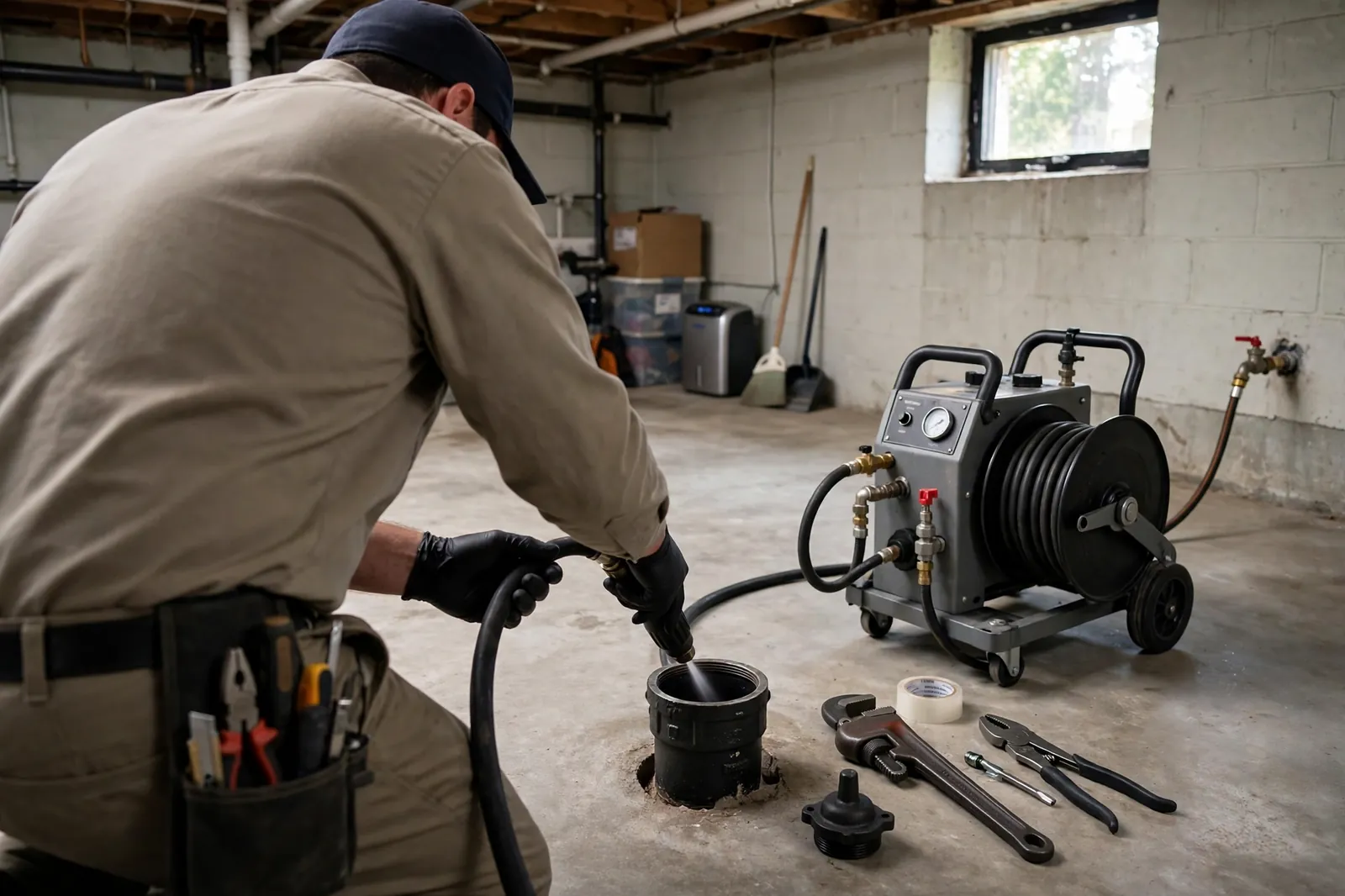
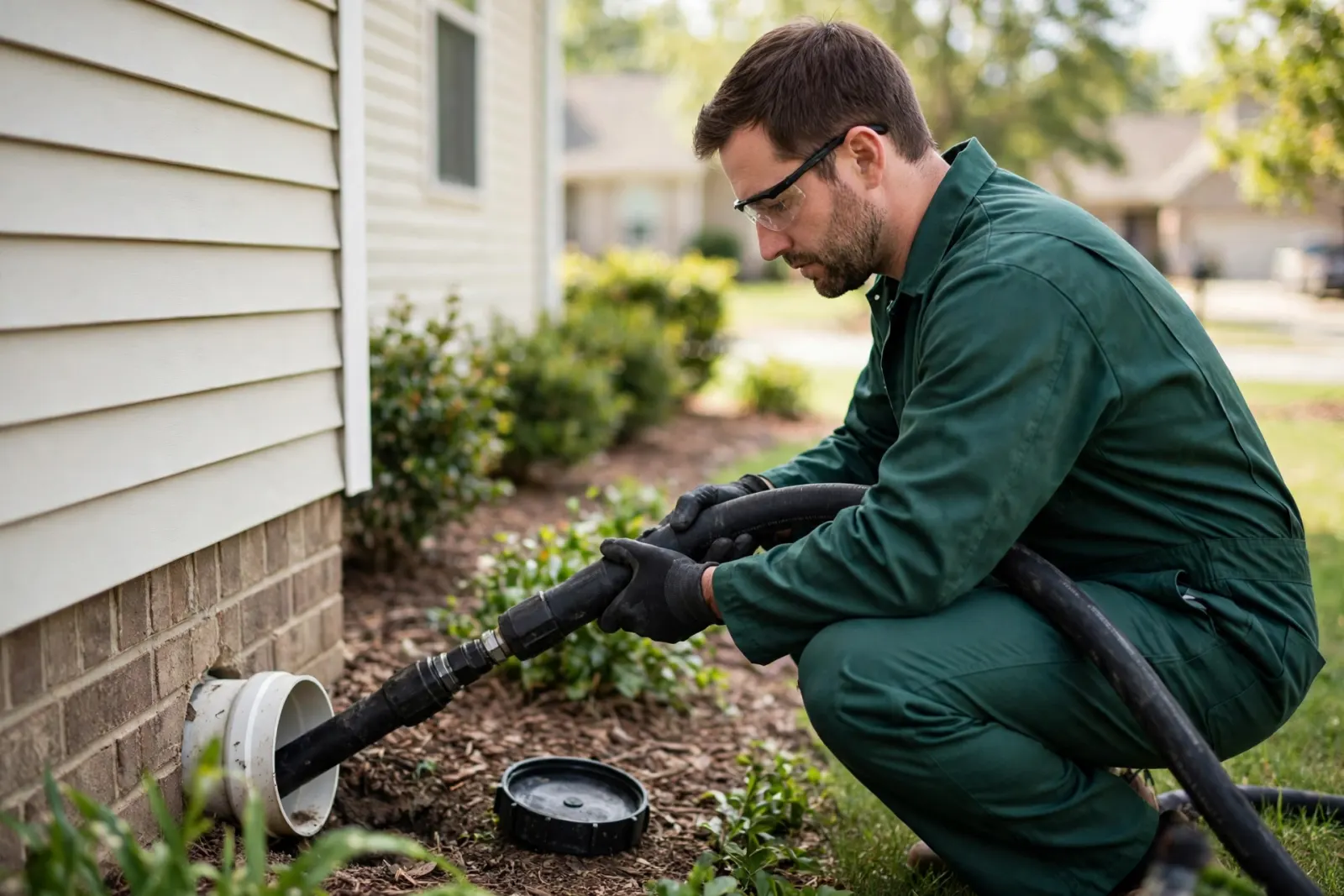 Jetting hose at an outdoor cleanout
What is hydro jetting and how does it help your home?
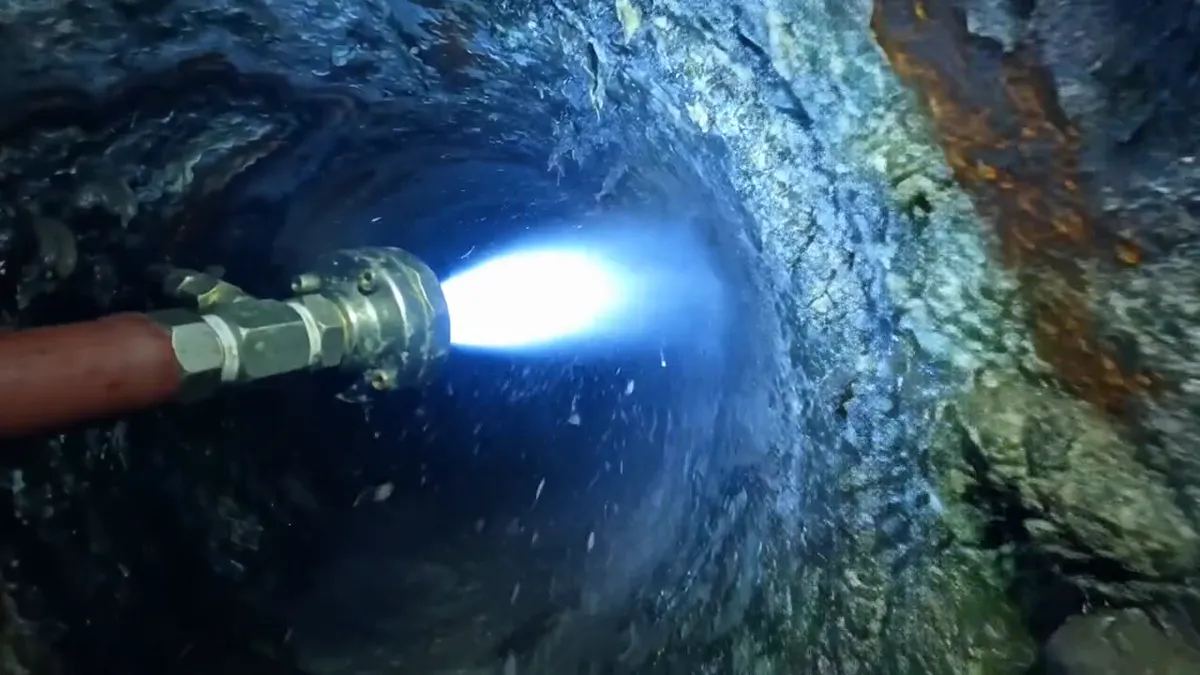
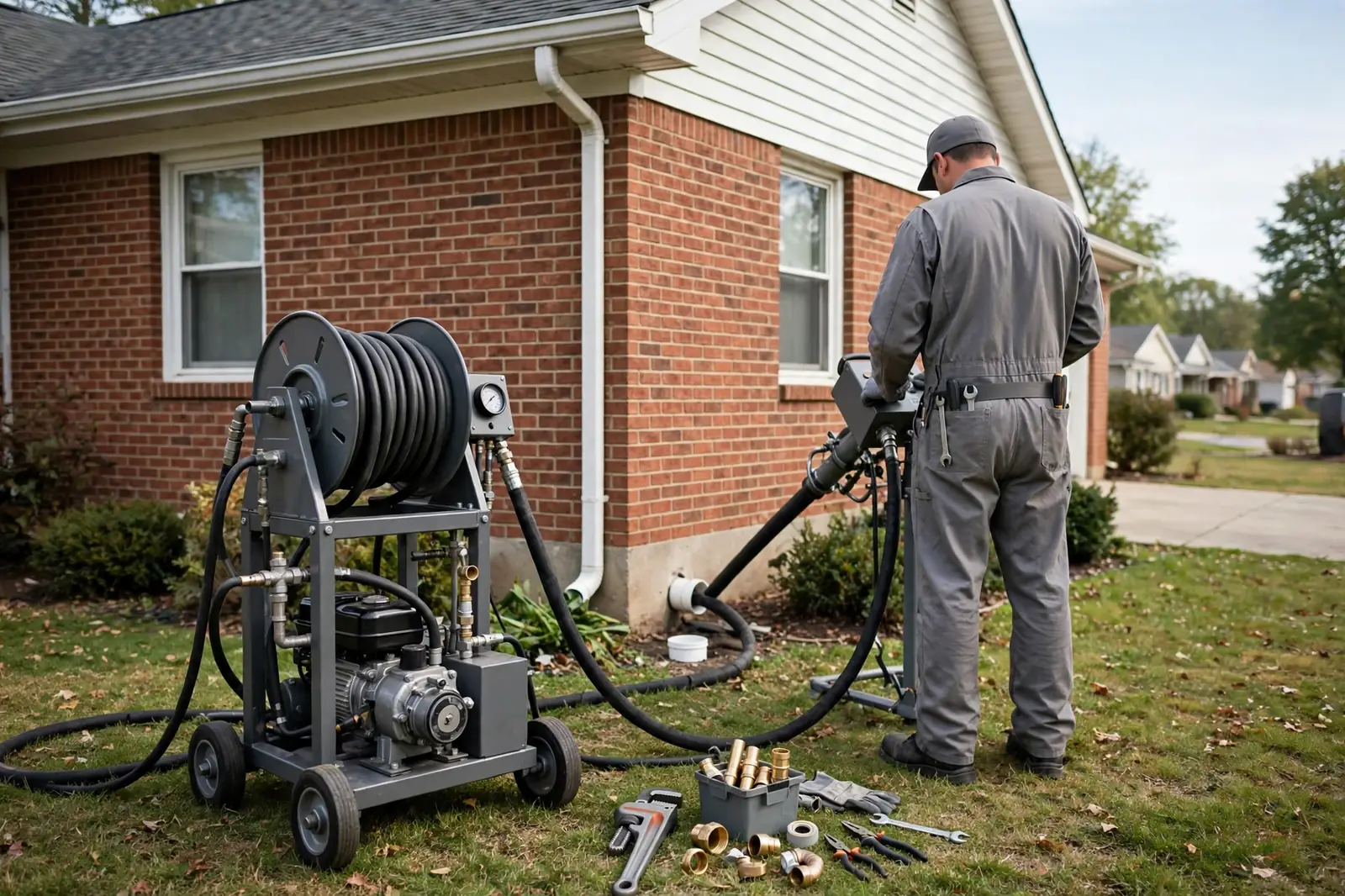
Hydro jetting sends water at high pressure through a hose into a drain or sewer line. A nozzle sprays jets in several directions, cutting grease, scale, soap, and roots from the pipe walls and flushing the debris out. The result is a line that is clean across its full width, not just open in the middle.
That full clean matters when clogs keep coming back. A snake opens a path through a blockage, but it leaves a sticky layer on the walls that catches new debris. Jetting removes that layer, so water moves freely and the line stays open longer. It is the right tool for repeat clogs, slow drains across the house, and heavy buildup a camera can see.
The pressure and the nozzle are matched to the pipe, not set to one level for every job. A kitchen line with soft grease needs a different setup from a main line with scale or roots, and the camera look first is what lets the plumber choose. The nozzle sprays water forward to cut through a blockage and backward to pull the hose along the pipe and wash debris out behind it. That two-way spray is why jetting cleans the full width of the pipe rather than just opening a path through the middle. For a line that keeps clogging, that full clean is the difference between a fix that lasts weeks and one that lasts much longer.
Which drains can hydro jetting clean?
Jetting works on kitchen lines, bathroom lines, laundry lines, main sewer lines, and commercial drains. Kitchen lines collect grease and food waste. Bathroom lines collect hair and soap scum. Main lines collect all of it, plus paper and roots that enter through joints. Each line needs the right nozzle and pressure, which the plumber picks after a camera look.
Commercial lines are larger and carry more waste each day, so they often need bigger equipment and more passes. Restaurants, hotels, offices, and apartment buildings use jetting to keep lines open and to cut the risk of a backup during busy hours. The same water-only method works at home and at work.
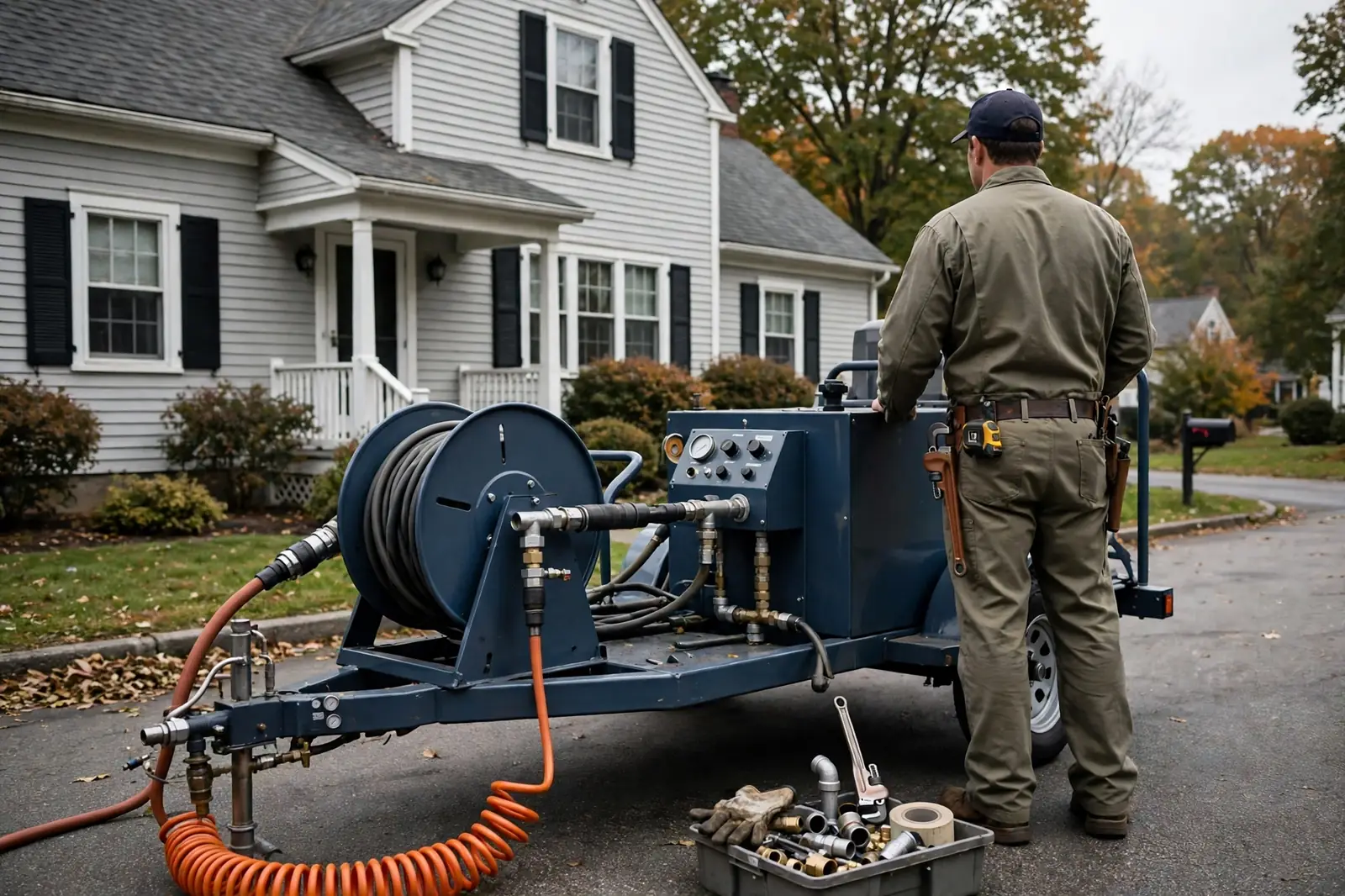
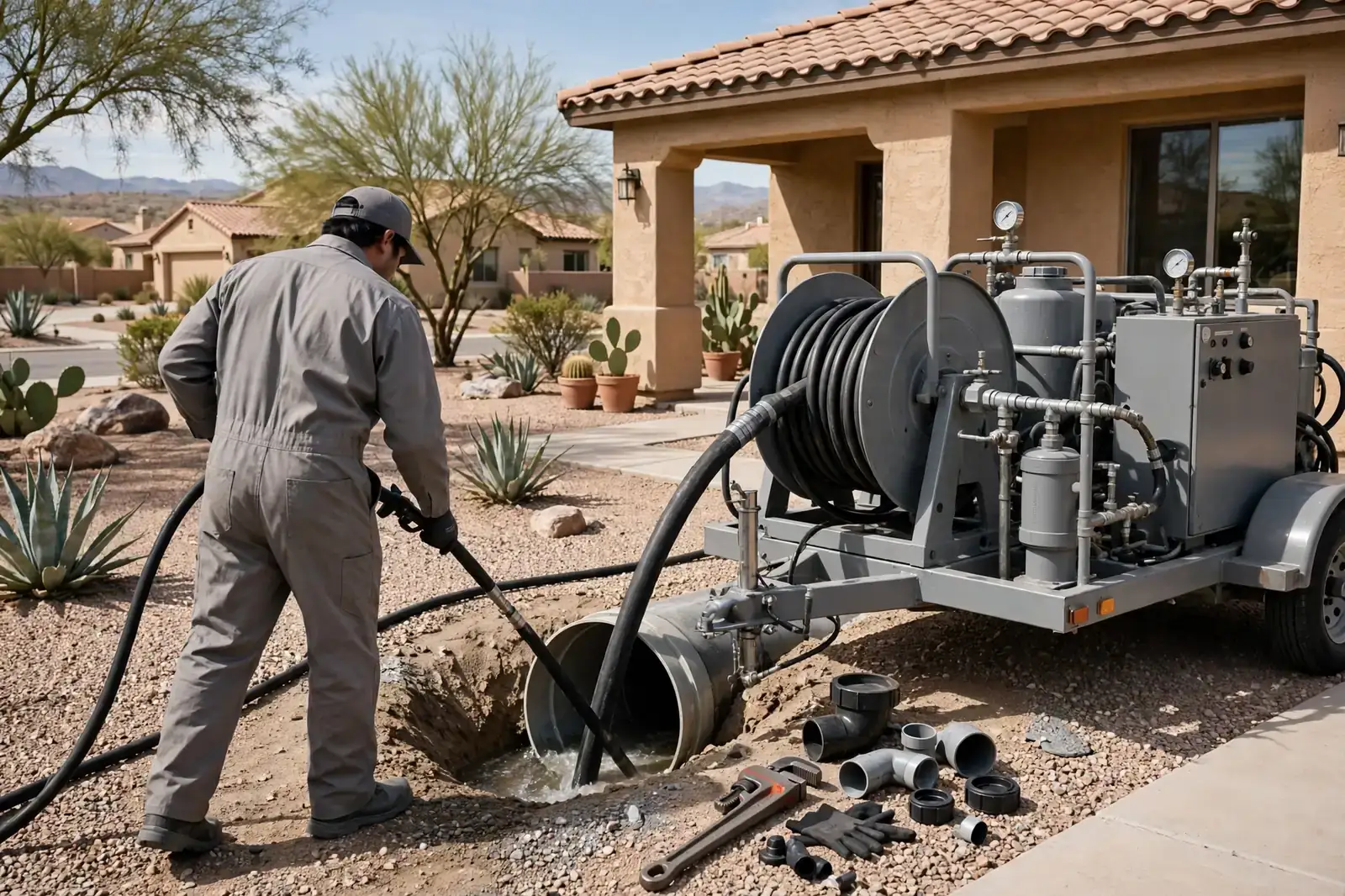
The same method scales from a single bathroom line to a whole apartment block, but the setup changes with the size of the line. A small branch line uses a smaller hose and a lower flow, while a main sewer line uses a larger machine, a bigger hose, and more water. The plumber picks the setup after the camera look, because the pipe material and the type of buildup decide what is safe. Cast iron with heavy scale needs a different approach from PVC with grease, and a clay pipe with roots needs care around the joints. That is why a camera inspection comes first on every visit, whatever the size of the line.
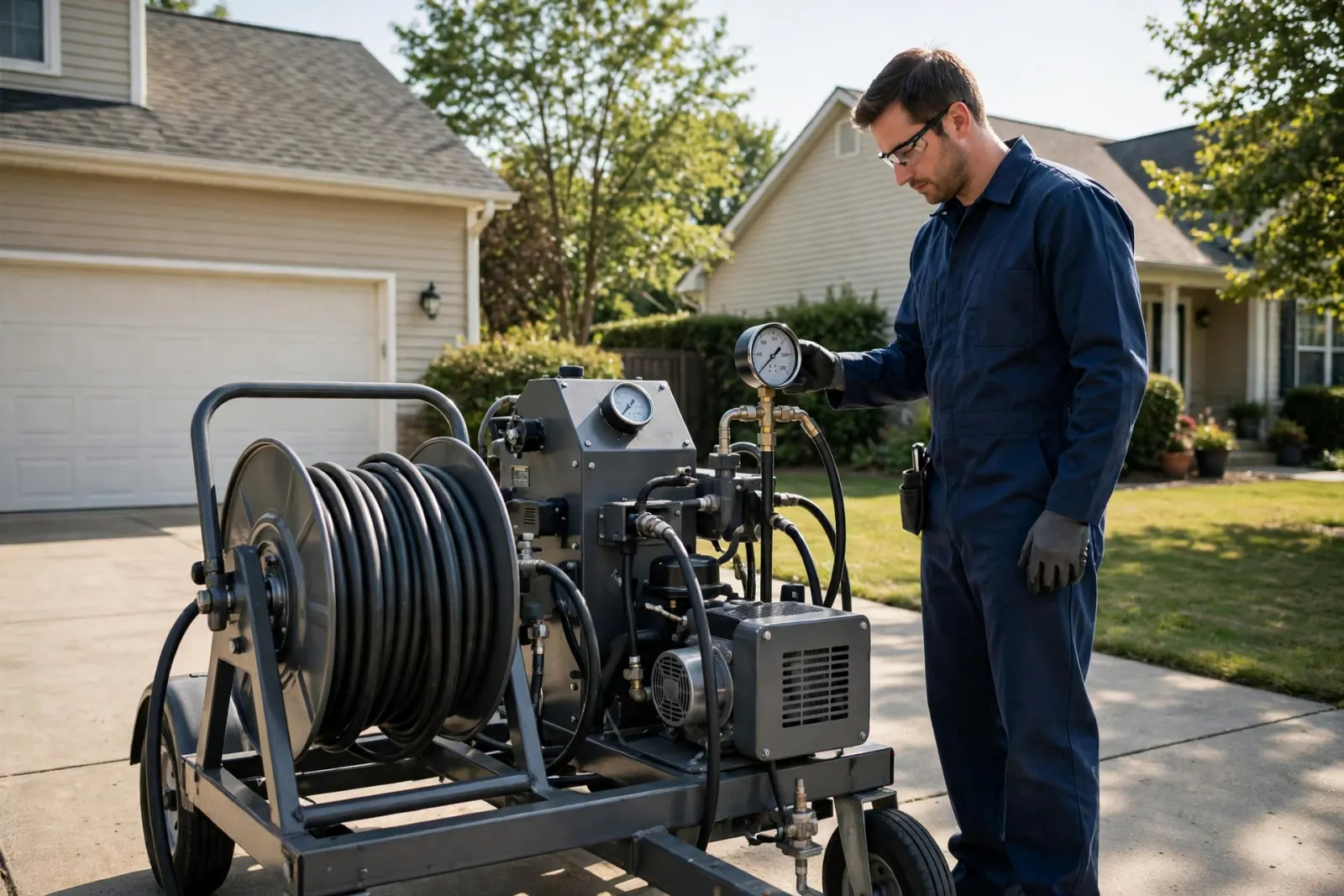 Jetting machine set up on a driveway
How much does hydro jetting cost?
Most home hydro jetting jobs fall in a typical range of $300 to $900. A short branch line costs less than a long main line, and heavy grease or roots take more time. A camera inspection may be included or priced on its own, usually $150 to $350. The cost table on this page lists typical ranges as estimates, not quotes.
Ask for a written quote before work starts. It should list the inspection, the jetting, and cleanup. If the camera finds a broken or collapsed pipe, the job changes from cleaning to repair, and the plumber should explain the new price before going ahead. No one should start repair work without that talk first.
The range also moves with where you live and how easy the line is to reach. A cleanout that is clear and close to the house keeps the job simple, while a cleanout buried under a patio, or a line that runs a long way to the street, takes more time and more water. A job that needs the camera, the jetting, and a second camera check costs more than a short single pass, but it also gives you proof that the line is clear. Always ask for the written quote before work starts, and check that it lists each part: the inspection, the jetting, and the cleanup. If a price is quoted over the phone, treat it as an estimate until the camera has been in.
What happens during a hydro jetting visit?
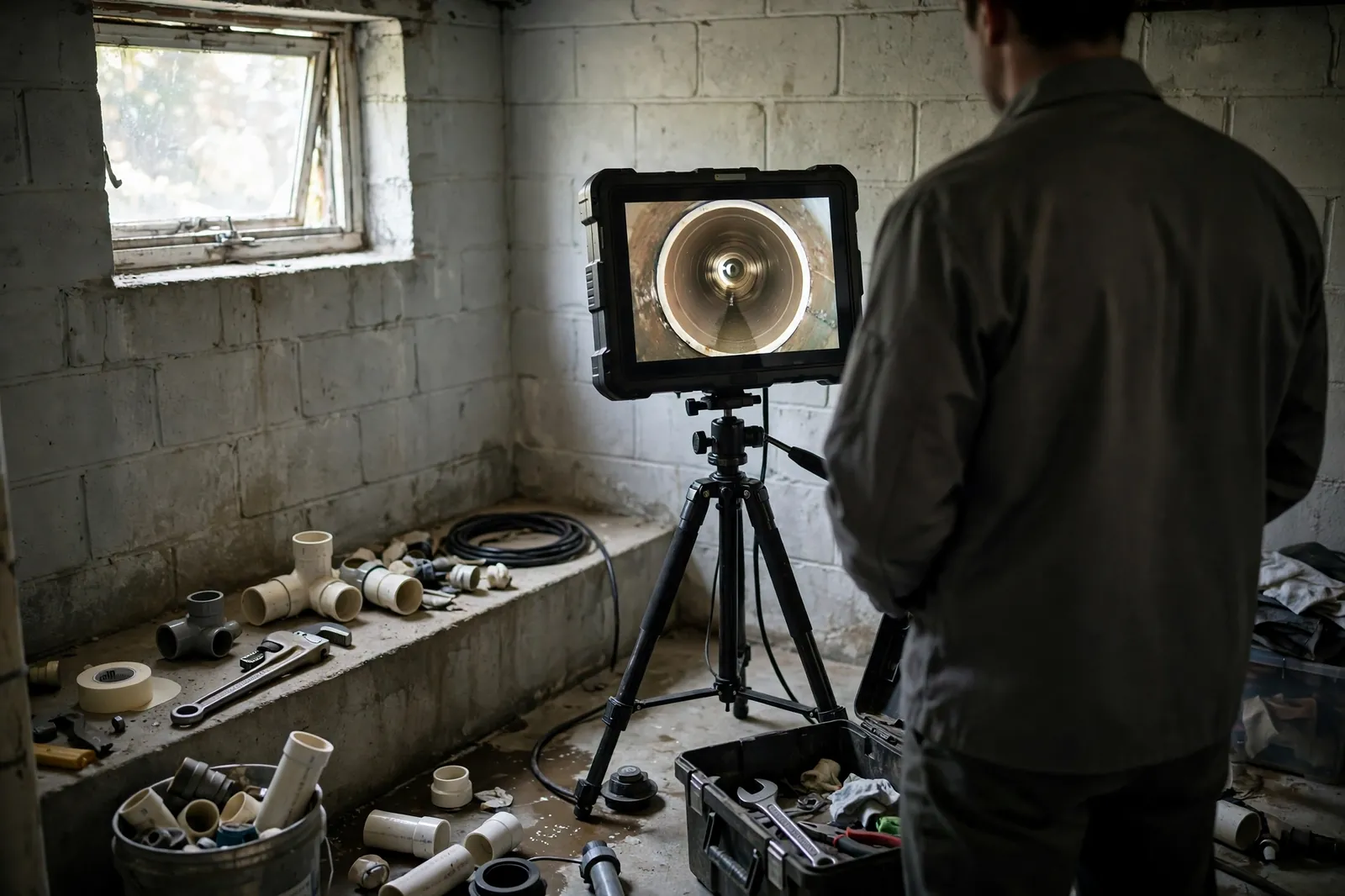
The visit starts with a talk about which fixtures are slow or backing up and when the problem started. The plumber finds the best access point, usually a cleanout, and runs a camera into the line. The camera shows the blockage type, the pipe material, and any weak spots.
Then the jetting hose goes in and the line is cleaned in passes until the flow is clear. A final camera pass confirms the result. Most home visits take one to three hours. The crew should protect floors near indoor access points, clean up before leaving, and explain what was found and what to watch for next.
After the final camera check, the crew should show you the footage, so you can see the line before and after the clean. That comparison is the best proof that the work is done, and it also shows anything that may need attention later, such as a cracked joint or a section with heavy scale that will need another pass one day. Ask the crew to explain what they found in plain words, and what to watch for next: which fixtures to keep an eye on, what not to put down the drains, and when a follow-up camera check would be worth it. The visit ends with the work area cleaned and the fixtures tested, not just with the hose packed away.
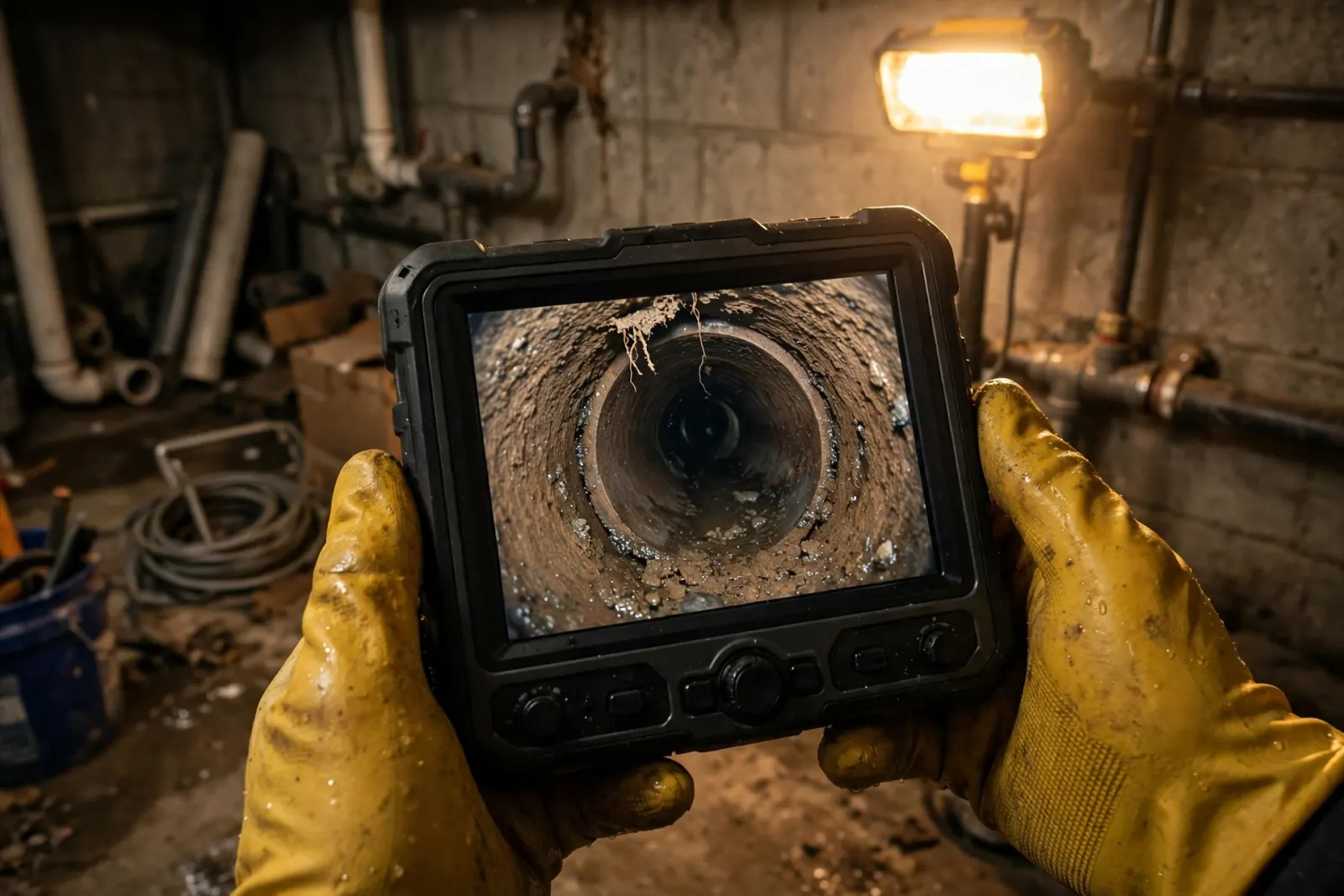 Camera inspection shows the inside of the pipe
Is hydro jetting safe for older pipes?
Hydro jetting is safe for most pipes in good shape when the pressure is set to match the pipe. PVC, ABS, cast iron, and clay can all be jetted with the right setup. The camera inspection first is what makes the job safe, because it finds cracks, thin spots, and weak joints before the water is turned up.
Pipes that are already broken, collapsed, or badly corroded should not be jetted at full pressure. The plumber should show the problem on camera and talk through repair options instead. If you do not know the age or material of your pipes, say so when you book, so the crew brings the right gear.
Age alone does not rule jetting out, but the state of the pipe does. A cast iron line from the 1960s can be jetted safely if the camera shows it is sound, while a clay line with a cracked joint needs care, and a collapsed section should not be jetted at all. The camera inspection is what makes that call, because it shows cracks, thin spots, and weak joints before the water is turned up. If you live in an older home and do not know the pipe material, say so when you book, so the crew brings the right nozzles and sets the pressure to suit what they find. A good plumber will show you the problem on camera rather than just describing it.
When should you call for hydro jetting?
Call when drains keep slowing down, when the same clog returns within weeks, or when several fixtures are slow at the same time. Those patterns point to buildup along a run of pipe. A camera check can confirm it before you spend on a full cleaning.
Call right away if water backs up into a tub, shower, or floor drain. Stop using water and avoid flushing until the line is checked. A backup can spread water across floors fast, and early help limits the damage. The phone line is open around the clock at (833) 878-1592.
The pattern to watch is repetition. One slow drain after a heavy day of laundry may clear on its own, but the same drain slowing again within weeks, or several fixtures slowing together, points to buildup along a run of pipe. Gurgling from a sink or toilet when another fixture is used is another early sign, since it means air is trapped by a narrowing line. Bad smells from drains, especially after running water in the kitchen or bathroom, can also point to buildup. If you notice two or more of these signs together, a camera check is worth booking before the line closes altogether. The phone line is open around the clock at (833) 878-1592.
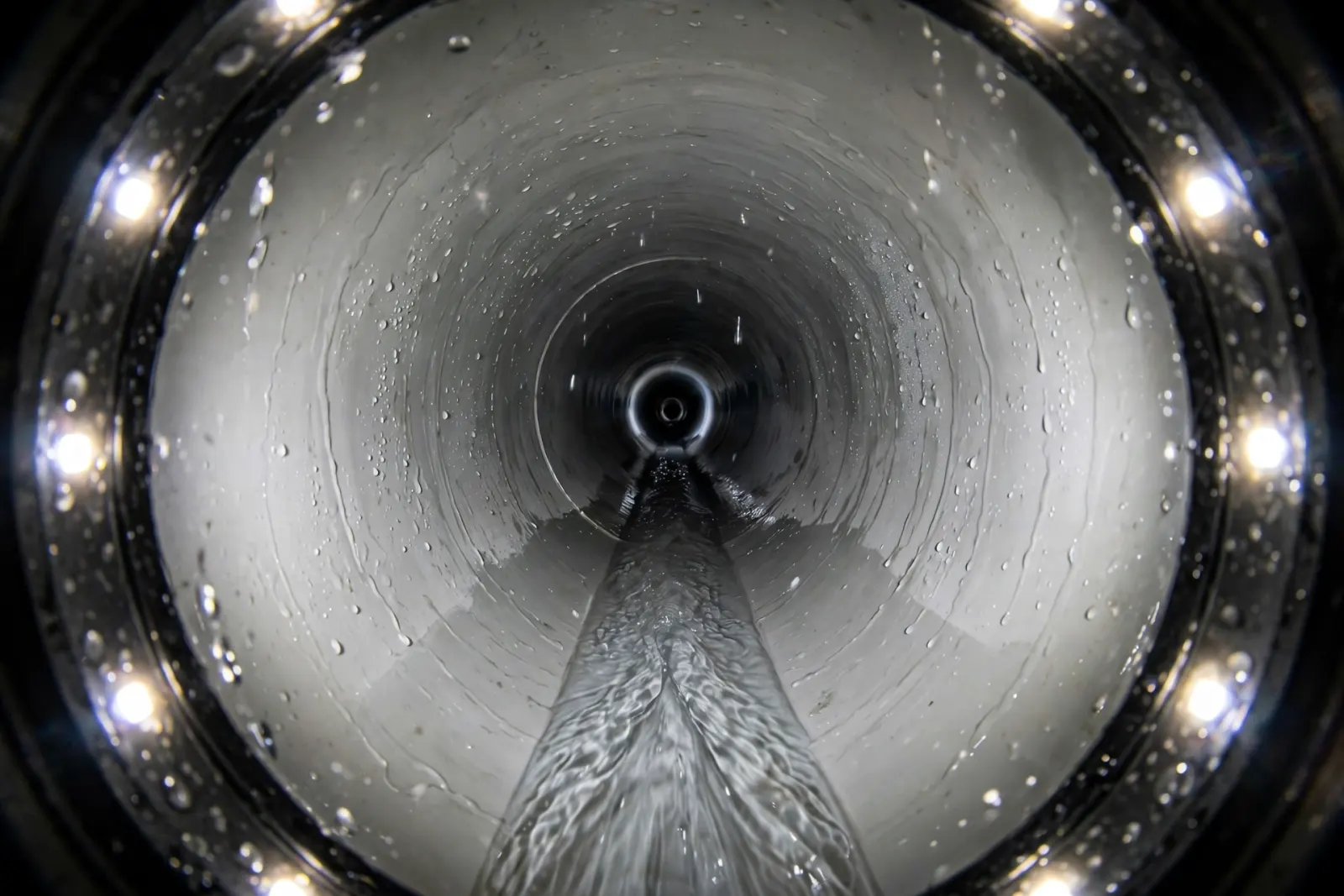 A clean pipe after jetting — camera view
How do you choose between jetting and snaking?
Snaking suits a simple, single clog close to a fixture, such as hair in a shower trap. It is fast and it costs less. Jetting suits repeat clogs, heavy buildup, grease lines, and main sewer lines. It cleans the full pipe and lasts longer.
A camera inspection settles the choice. If the camera shows a coated pipe wall, jetting is the better fix. If it shows a single object or a local clog, snaking may be enough. A good plumber will show you the footage and explain why one tool fits better than the other for your line.
Cost is part of the choice too. Snaking costs less per visit, but a line that needs snaking every few months can cost more over a year than one jetting that clears the full pipe. Jetting costs more up front, but it removes the layer that catches new debris, so the line stays open longer. The camera footage settles the question: if the pipe wall is coated, jetting is the better fix; if the trouble is a single object or a local clog, snaking may be enough. Ask the plumber to show you the footage and explain the choice in plain words, and get the quote in writing before either tool is used.
What can you do to keep drains clear?
Keep cooking grease out of the sink. Wipe pans before washing them and pour cooled oil into a sealed container for the trash. Use drain screens to catch hair and food. Avoid flushing wipes, even ones labelled flushable, and run cold water when the disposal is on.
Fix dripping taps and running toilets, since extra water can push waste into low spots in a sewer line. If you have large trees near the sewer line, ask about a camera check every year or two. Small habits do not replace cleaning, but they slow the next round of buildup.
The habits that help most are small and daily. Wipe pans before washing them, and pour cooled cooking oil into a sealed container for the trash rather than down the sink. Use a drain screen in the shower to catch hair, and clean it after each use. Run cold water when the disposal is on, and avoid flushing wipes, cotton buds, and dental floss, even when the packet says flushable. Once a month, run hot water through the kitchen sink for a minute after washing up, which helps keep fresh grease moving. None of these habits replaces a proper clean, but together they slow the next round of buildup, and they cost nothing.
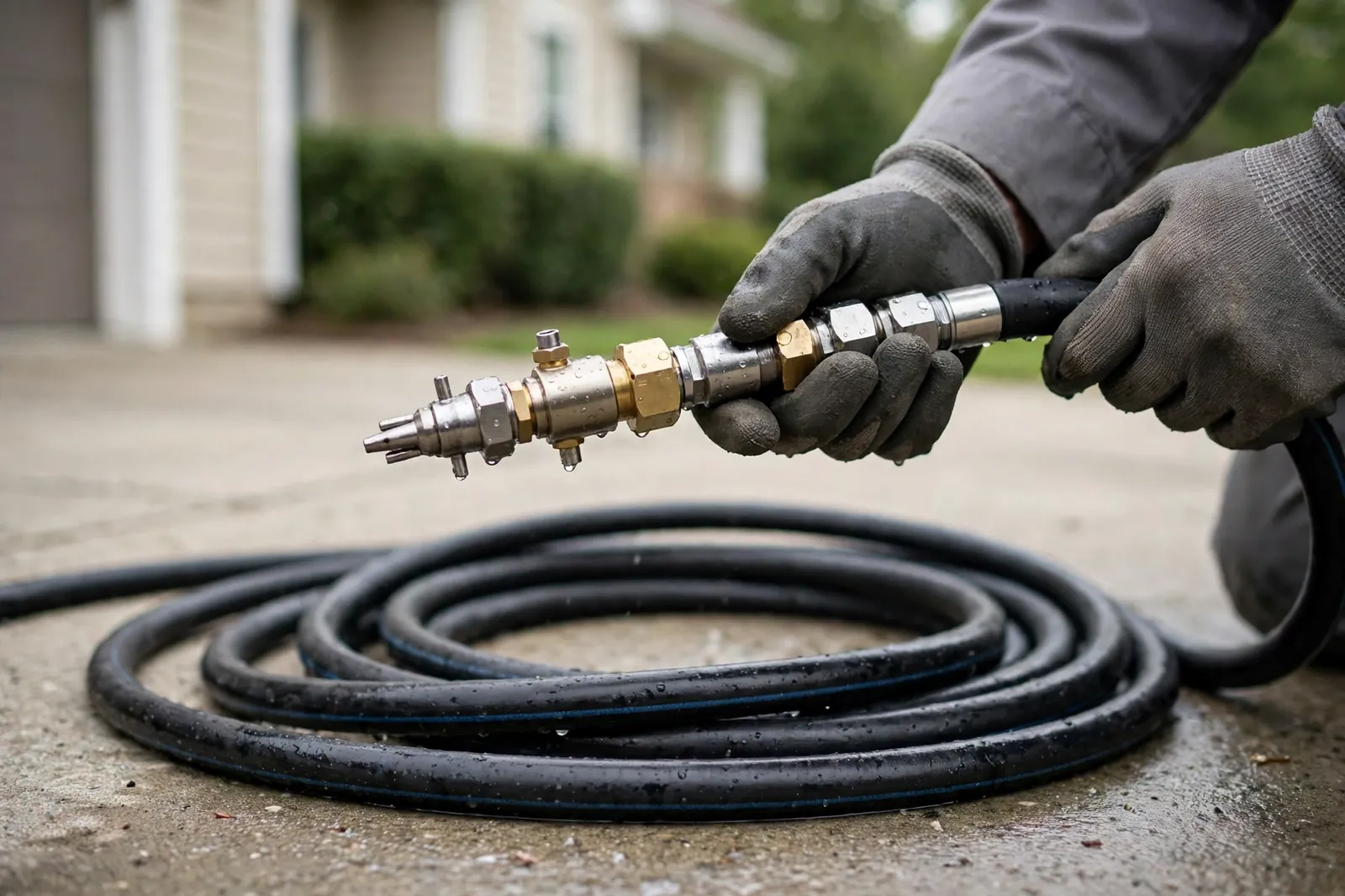 Equipment set up before jetting starts
Hydro jetting for older homes and older pipes
Older homes often have a mix of pipe materials: cast iron under the house, clay out to the street, and newer PVC where a bathroom was redone. Each material behaves differently under water pressure, and each shows its age in a different way. Cast iron builds up scale on the inside, which narrows the pipe a little each year. Clay cracks at the joints, which is where roots get in. Galvanised steel rusts from the inside, which roughens the wall and catches debris. A camera inspection shows which of these is in your line before any jetting starts.
If you have just bought an older home, a camera check is worth booking even if the drains seem fine, since it shows the state of the line you have inherited. The footage gives you a record of the pipe material, the joints, and any weak spots, and it helps the plumber set the pressure to suit the pipe. Jetting is safe for most pipes in good shape when the pressure is matched to the material, and the camera is what makes that match possible. If the camera shows a broken or collapsed section, the crew should talk through repair options instead of jetting at full pressure.
Hydro jetting in apartments, rentals, and shared buildings
Shared buildings add one question to every drain job: whose line is it? A slow drain in one flat may be a branch line that belongs to that flat, or it may be a shared stack or main that serves several flats. The symptoms tell the story: if only one flat is affected, the trouble is usually in that flat's own lines; if several flats are slow at once, the trouble is usually in a shared line. When you phone, say whether you live in a flat, whether neighbours have the same problem, and whether you rent or own, since that decides who needs to approve the visit.
Access is the other difference. In a flat, the cleanout may be in a shared basement, a service cupboard, or outside the building, and the crew may need a key or a caretaker to reach it. If you are a tenant, check whether your landlord or managing agent needs to approve the visit first. If you manage the building, say which flats are affected and whether the trouble is in a shared line, so the crew can plan the visit around the right access point. The camera look first, the written quote, and the final camera check apply just the same as in a house.
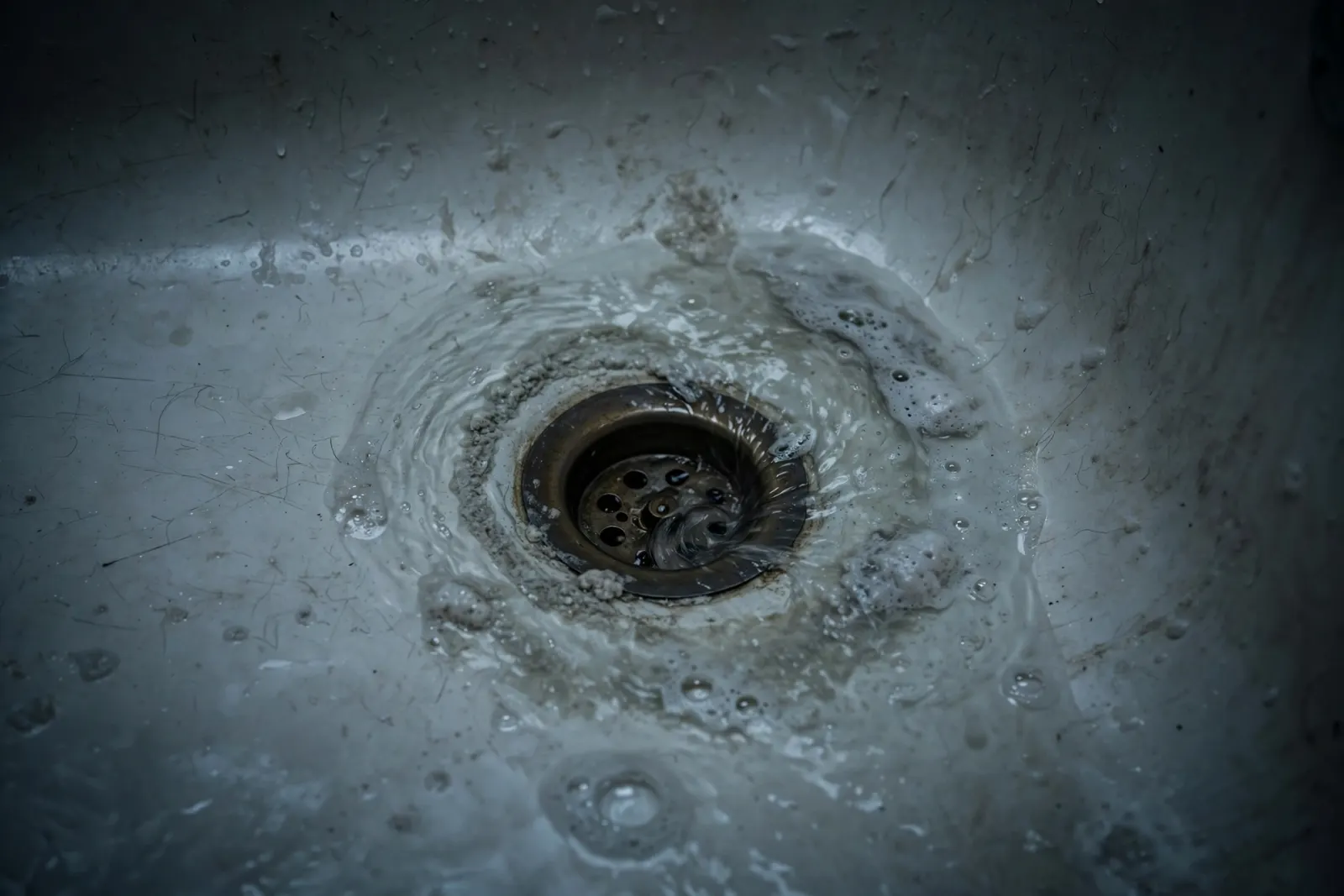
 Standing water is a sign the line needs attention
Seasonal drain trouble: what changes through the year
Drains do not block at the same rate all year. In summer, trees put out new roots, and a sewer line becomes a steady source of water for them, so root trouble grows through the warm months and shows up by autumn. In autumn, leaves wash into outdoor drains and gutters, and heavy rain can push extra water into a line that is already narrowed. In winter, grease hardens faster in cold pipes, and a cleanout buried under snow takes time to reach, so a kitchen line that coped in summer can slow in January.
Spring brings its own pattern: thawing ground shifts older pipes, and the first heavy rain of the season can show up a line that narrowed over winter. The habits that help are seasonal too. In autumn, clear leaves from outdoor drains. In winter, wipe pans before washing them, since grease sets faster in a cold pipe. In summer, watch for a drain that slows a little more each month, since that is how root trouble starts. A camera check once a year or two, timed to the season that troubles your line most, is a simple way to stay ahead of it.
What a written quote should list before jetting starts
A written quote is the one document that protects both sides of a jetting visit, so it is worth knowing what should be on it. It should list the camera inspection, whether that is included or priced on its own, the jetting itself, and the cleanup. It should say which lines are included — a single branch, the main line, or several lines — since that is the most common source of confusion on a bill. It should give the total price, and it should say what happens if the camera finds a broken pipe: whether the job stops, whether a repair quote follows, and whether any extra charge applies.
Ask for the quote before work starts, and read it before you agree. If anything is unclear, ask the crew to explain it in plain words. Keep a copy for your records, along with any notes about what the camera showed. A quote is an estimate of the agreed work, not a promise that nothing else will be found, but it should be clear enough that there is nothing to argue about after the line is clear. If a price is quoted over the phone, treat it as an estimate until the camera has been in and the written quote is in your hand.
Professional services
Professional Hydro Jetting Services
One crew, one method, six ways to clear a line — pick the service that matches the problem.
 Hydro JettingHigh-pressure water clears grease, scale and roots from drains and sewer lines.
 Main Line JettingClears the main line from the house to the street, where most whole-home backups start.
 Sewer JettingScours sewer pipe walls and flushes out buildup that snakes and chemicals leave behind.
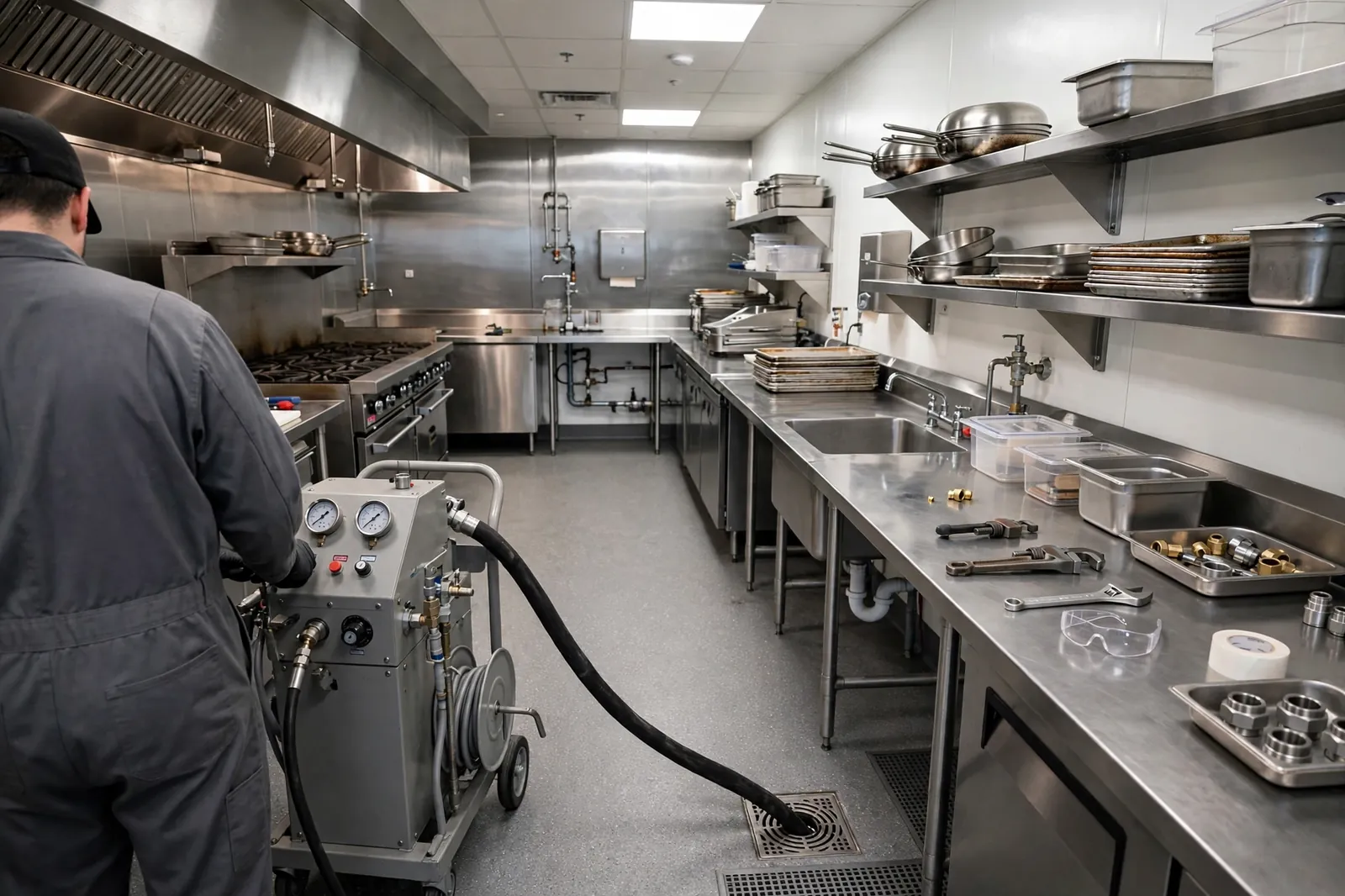 Grease Line JettingBreaks up hardened grease in kitchen and restaurant lines and flushes it out.
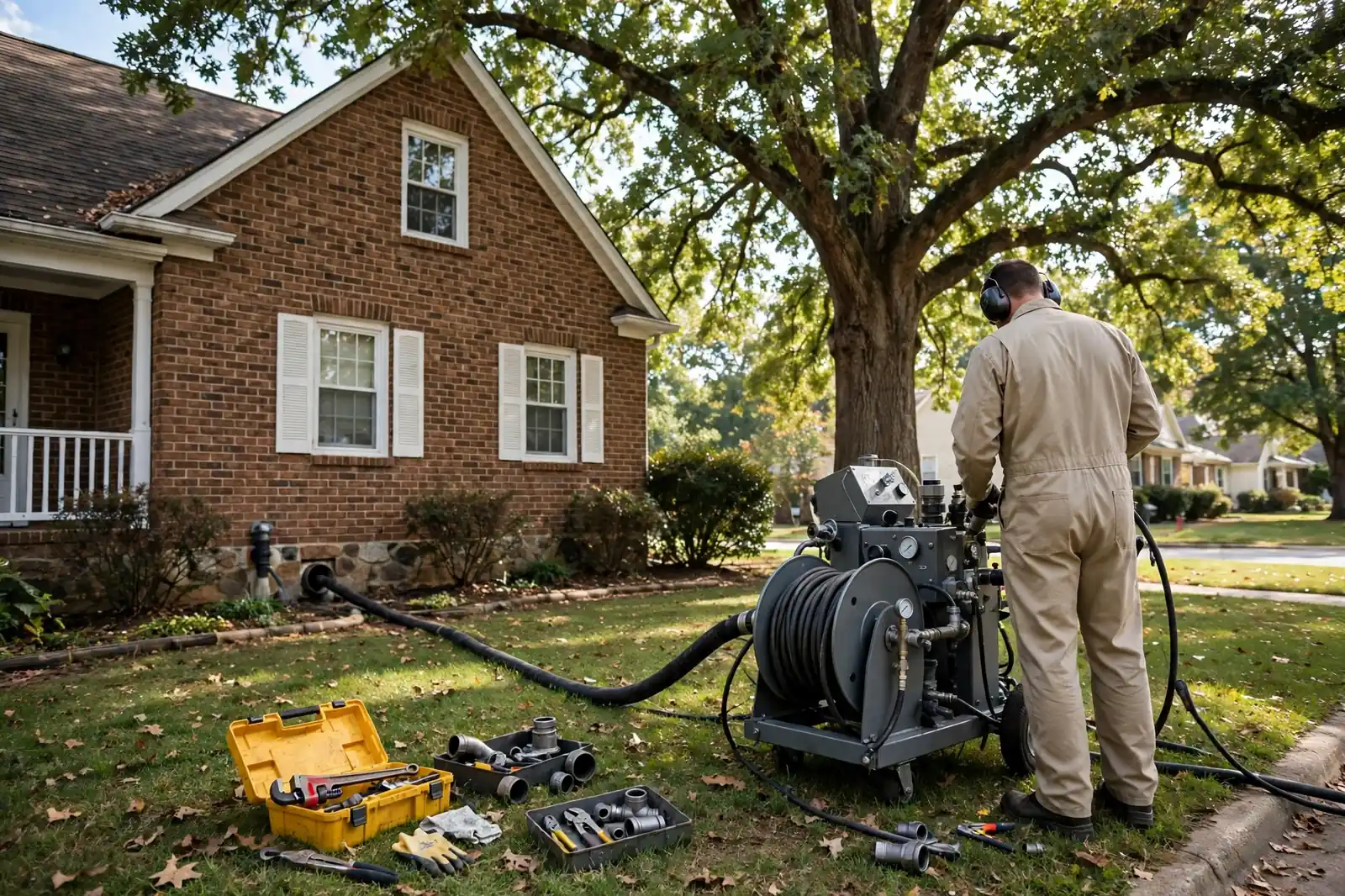 Root ClearingCuts through tree roots in the line and flushes the debris away.
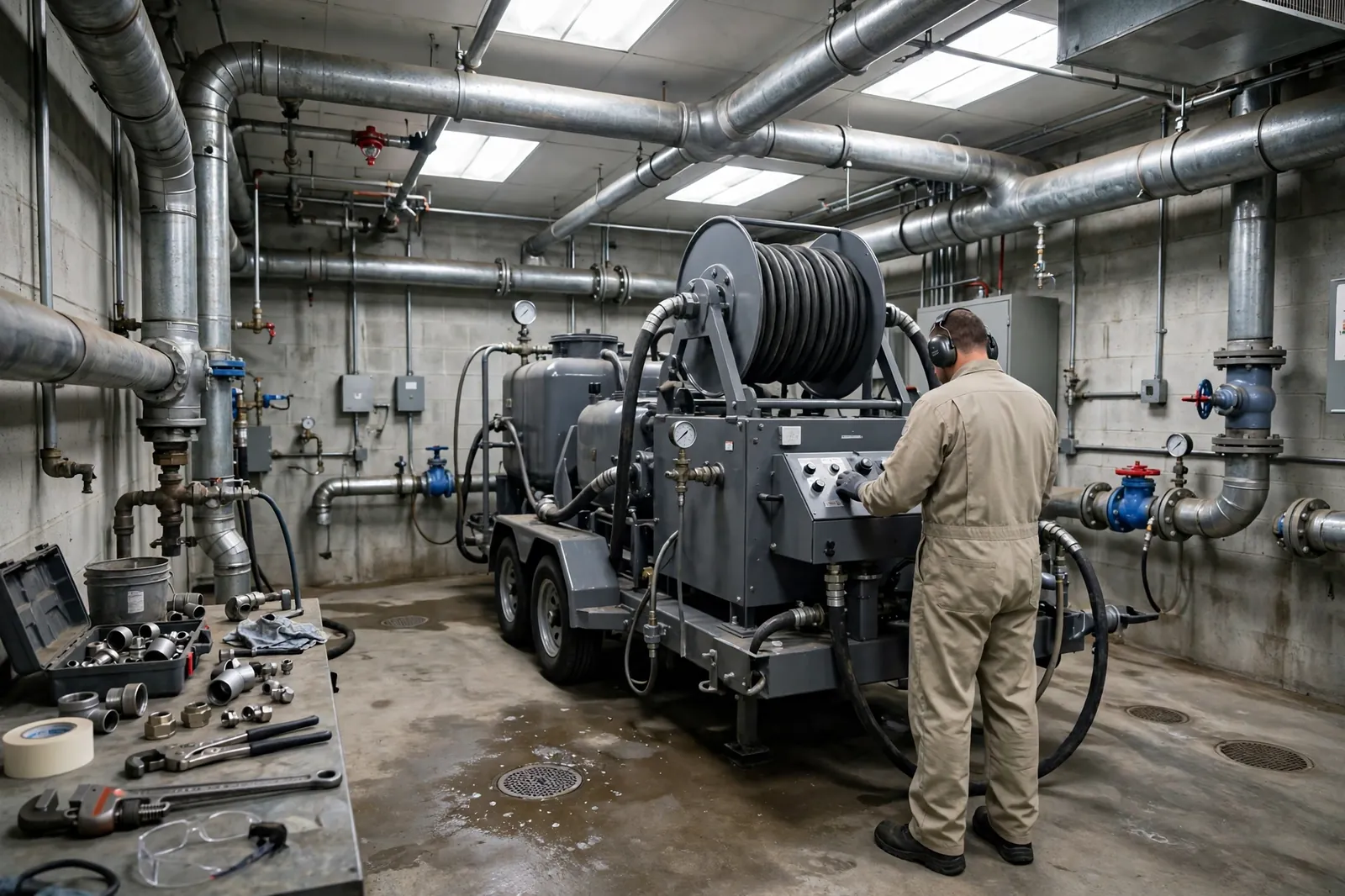 Commercial Hydro JettingScheduled jetting for restaurants, rentals and facilities that cannot afford a backup.
Standing water is a late sign — call before it gets hereWarning signs
Signs you may need hydro jetting
One sign on its own can wait a few days. Two or more together mean the line is closing up.
- Water drains slowly from sinks, tubs, or showers even after the trap is cleaned.
- The same drain clogs again within weeks of being cleared with a plunger or snake.
- Several fixtures drain slowly at the same time, which points to a problem further down the line.
- You hear gurgling from a sink or toilet when another fixture is used.
- Bad smells rise from drains, especially after running water in the kitchen or bathroom.
- Water backs up into a tub, shower, or floor drain when a toilet is flushed or a washer runs.
- A drain that slows a little more each month, rather than all at once, which points to buildup on the pipe walls.
- A line that smells worse in hot weather, when grease and waste in a narrowed pipe warm up.
Drain emergency
Backed up right now? Get help fast.
A sewer backup does not get better on its own. Do these four things first, then call.
- 1Stop running waterTurn off taps, dishwashers and washing machines so the line does not take on more water.
- 2Stay clear of the backupDo not use sinks, tubs or toilets that are backing up, and keep children and pets away from the water.
- 3Shut off the water if a pipe burstIf a pipe has burst, close the main shutoff valve if you can reach it safely.
- 4Call nowTell us what is happening and a local pro will take it from there — lines are answered 24/7.
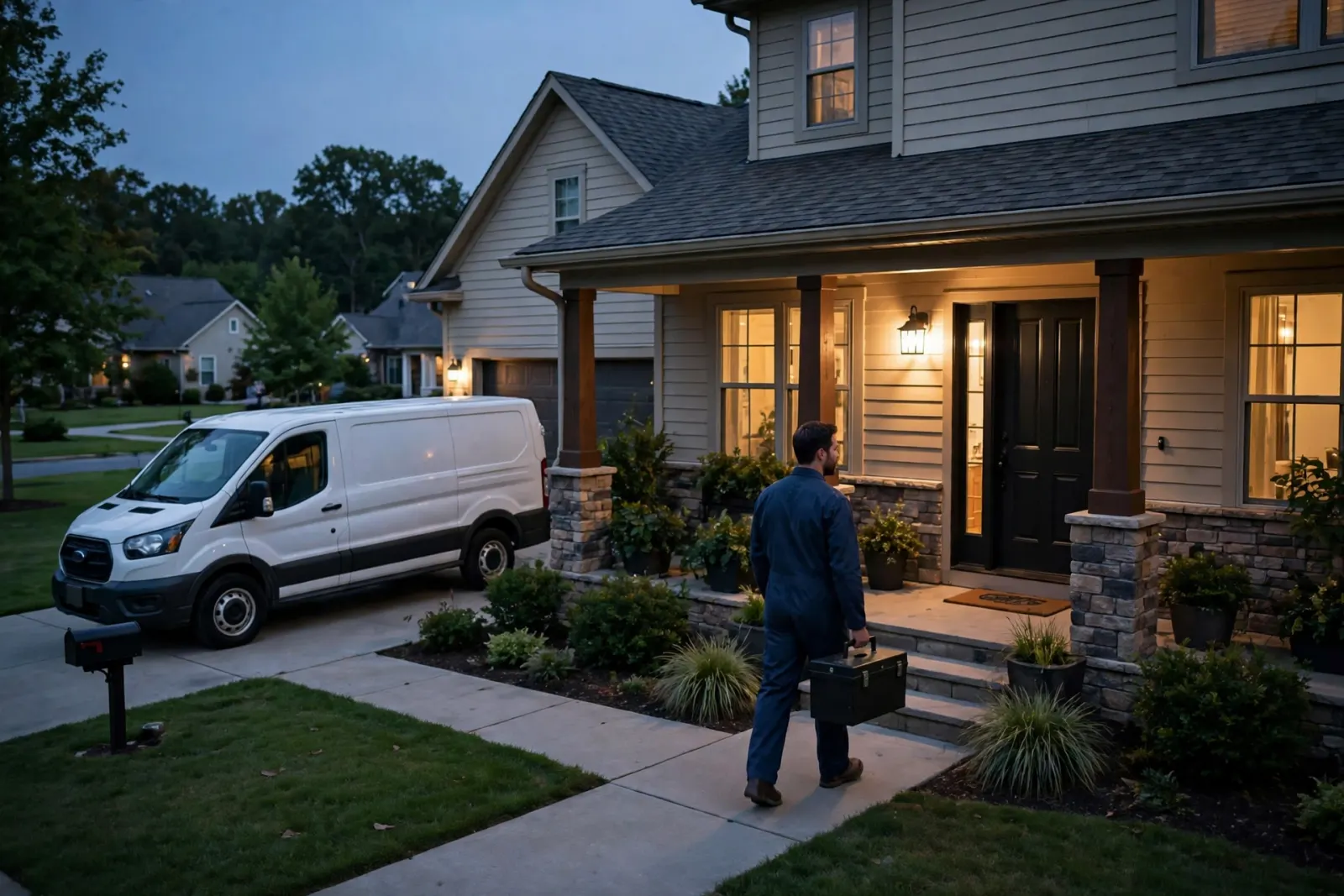 Lines answered 24/7 — including nights and weekends
Pricing
What does hydro jetting cost?
Most jobs land in the range below. The exact price depends on the line, the buildup and the access.
Typical ranges only. These are estimates, not quotes. The final price depends on line length, access, and what the camera inspection finds. Ask for the quote in writing before work starts, and check that it lists the inspection, the jetting, and the cleanup.
| Service | Typical range (estimate) | Notes |
|---|---|---|
| Main line hydro jetting | $350 – $650 | Most homes |
| Camera inspection with jetting | $150 – $350 | Often included |
| Single drain line jetting | $250 – $550 | One branch line |
| Repeat or heavy buildup cleaning | $400 – $900 | Extra passes needed |
Prices are estimates only. The local company that does the work sets its own final pricing.
What changes the price
- How long the line is, and how far the blockage sits from the cleanout.
- How much buildup is stuck to the pipe walls.
- Whether a camera inspection is needed first.
- Access to the cleanout — a clear, reachable cleanout keeps the job simple.
You agree on the price with the local company before any work starts.
Before & after
What jetting does to a pipe
Drag the slider on each pair to compare the pipe camera view before and after a jetting job.
How it works
Three steps to a clear line
No guesswork: the line is inspected first, cleaned second and checked again before anyone leaves.
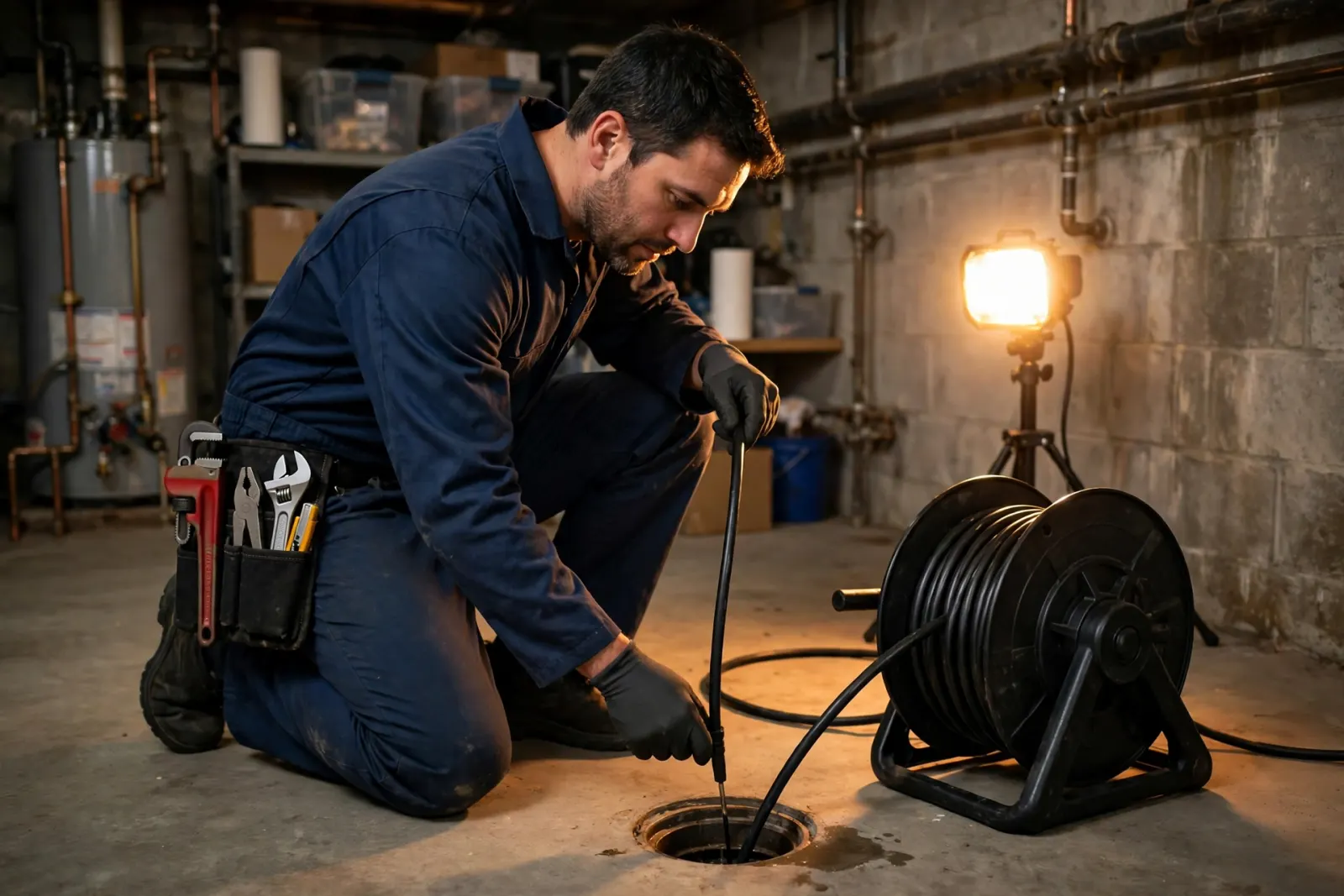
- 1Step 1 — Camera inspectionThe plumber sends a small camera into the line first. It shows the blockage type, the pipe material, and any weak spots, so the pressure and nozzle can be matched to the pipe.
- 2Step 2 — High-pressure cleaningA hose with a jetting nozzle goes into the line through a cleanout. Water jets spray forward and back, cutting buildup from the pipe walls and flushing debris out through the sewer.
- 3Step 3 — Final check and cleanupThe camera goes back in to confirm the line is clear. The crew checks flow at the fixtures, cleans the work area, and explains what was found and what to watch for next.
Get an estimate
Call for your estimate
Tell us what is happening and a local pro will take it from there. The call is free, and you agree on the price with the local company before any work starts.
(833) 878-1592How estimates work →Lines answered 24/7.
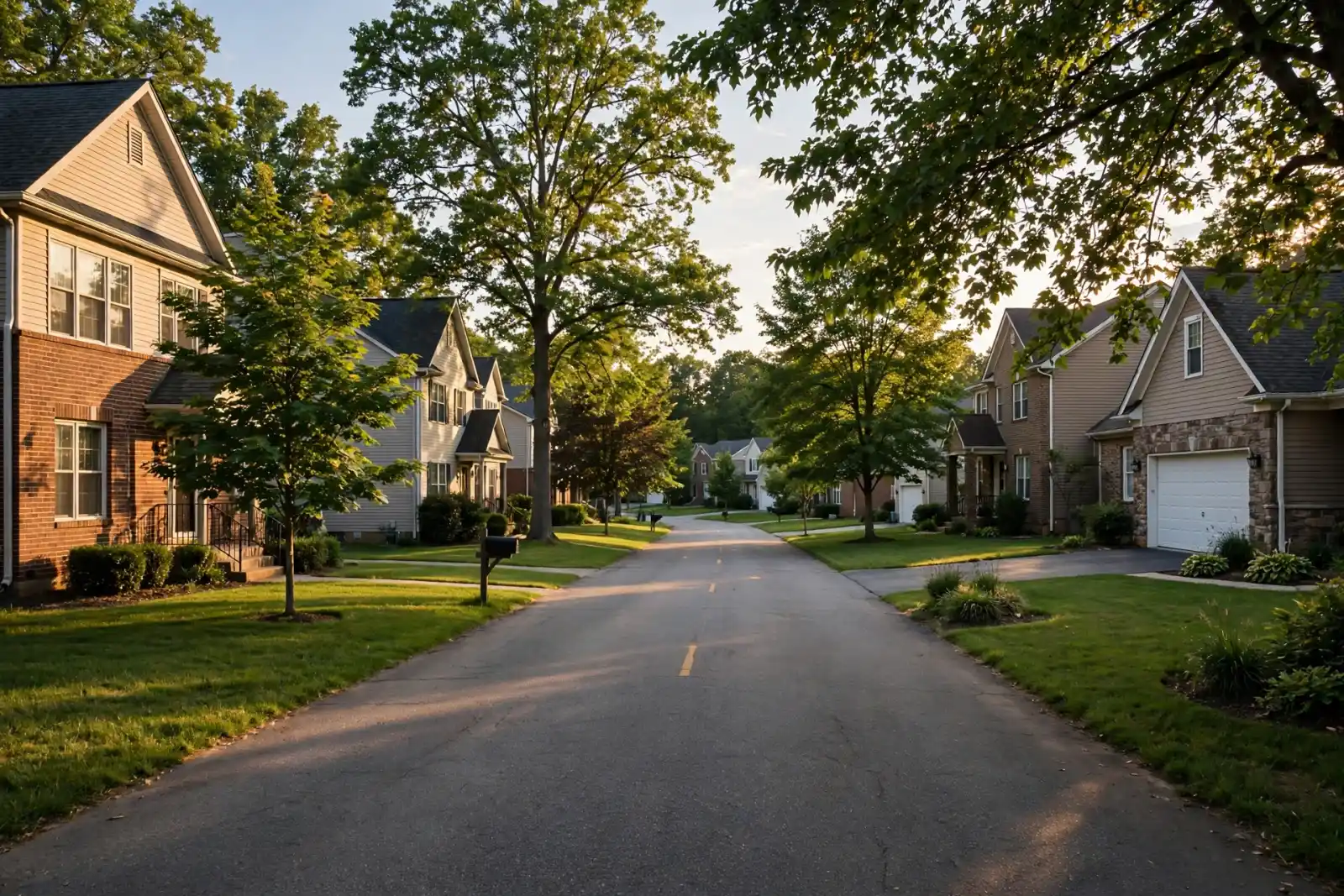 100 cities at launch across 32 states
Service area
Hydro jetting near you
We serve 100 cities at launch across 32 states, with more cities coming soon in 13 more states.
- New York, NY
- Los Angeles, CA
- Chicago, IL
- Houston, TX
- Phoenix, AZ
- Philadelphia, PA
- San Antonio, TX
- San Diego, CA
- Dallas, TX
- Jacksonville, FL
- Fort Worth, TX
- San Jose, CA
- Austin, TX
- Charlotte, NC
- Columbus, OH
- Indianapolis, IN
- San Francisco, CA
- Hempstead, NY
- Seattle, WA
- Denver, CO
- Oklahoma City, OK
- Nashville, TN
- Washington, DC
- El Paso, TX
Guides
Learn before you book
Short guides that explain the job, the price and the choices — written for homeowners, not plumbers.
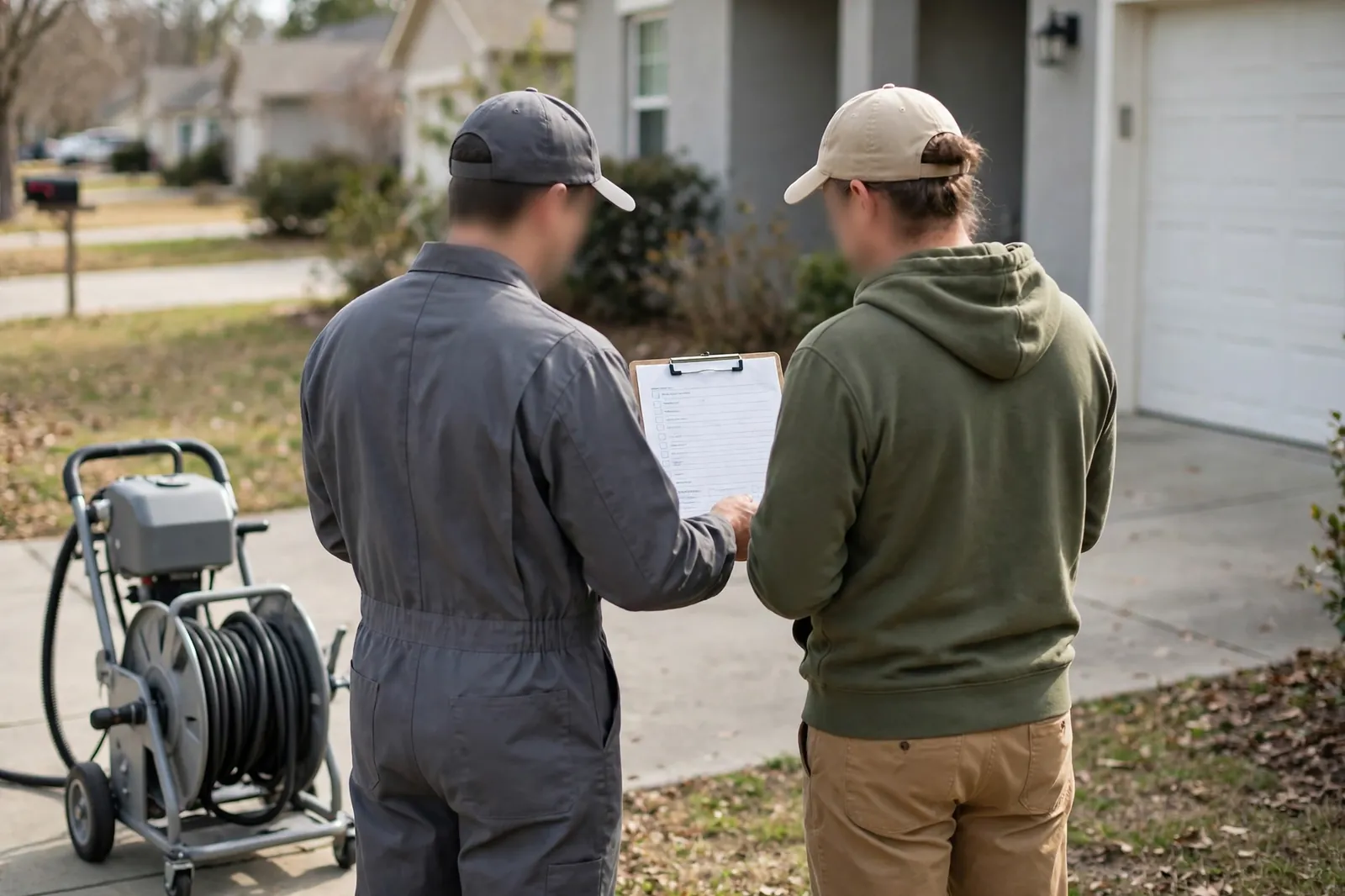 Hydro jetting cost guideWhat a jetting visit costs and what changes the price.Read the guide →
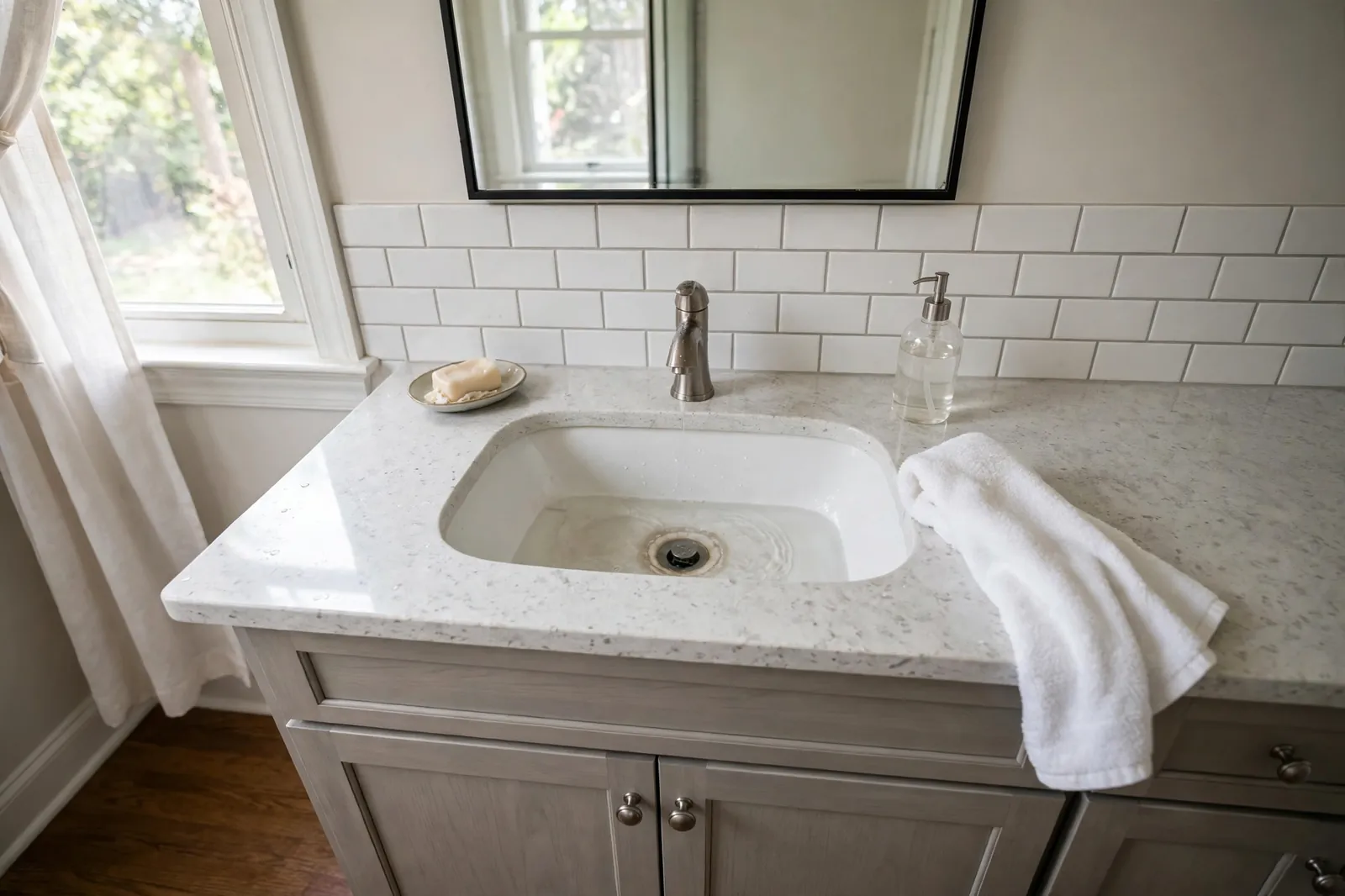 Signs you need hydro jettingA room-by-room checklist of the signs that point to a clogged line.Read the guide →
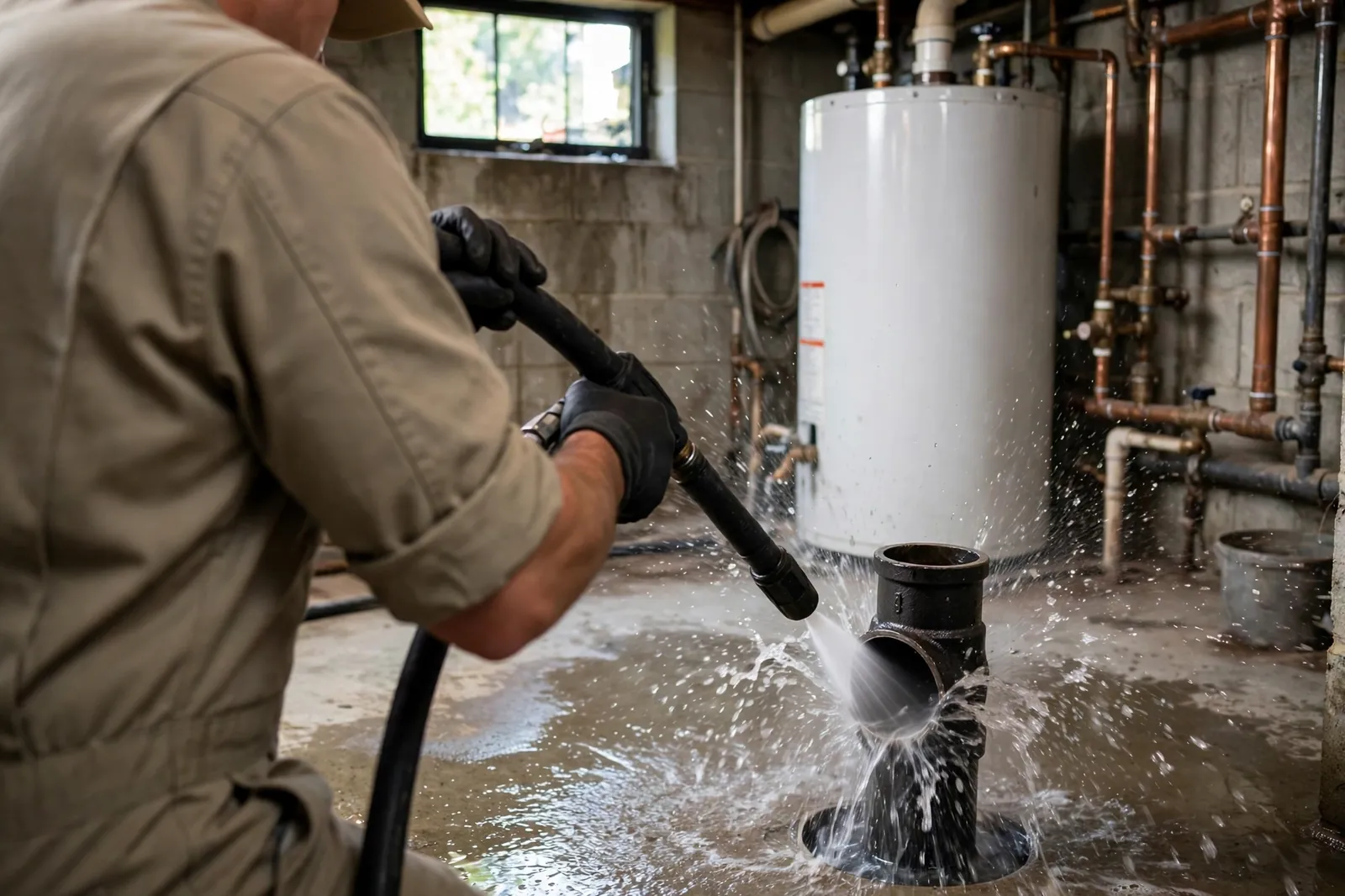 How hydro jetting worksPumps, nozzles and cameras — what happens from arrival to final check.Read the guide →

Our team
Our dedicated team
Local plumbing professionals, ready when your drains need them.
When you call, you reach local pros who do this work every day — drain and sewer cleaning, camera inspections, and the follow-up that keeps a line clear. Lines are answered 24/7, and a visit starts with a look at what is actually in your pipe.
Questions
Frequently asked questions
Straight answers about hydro jetting — cost, safety, pipes and timing.

Still not sure?
Call and describe the problem — the call is free and you are never obligated to hire.
Call (833) 878-1592Slow drains or a line that keeps backing up?
Tell us what is happening and a local pro will take it from there — lines are answered 24/7.