
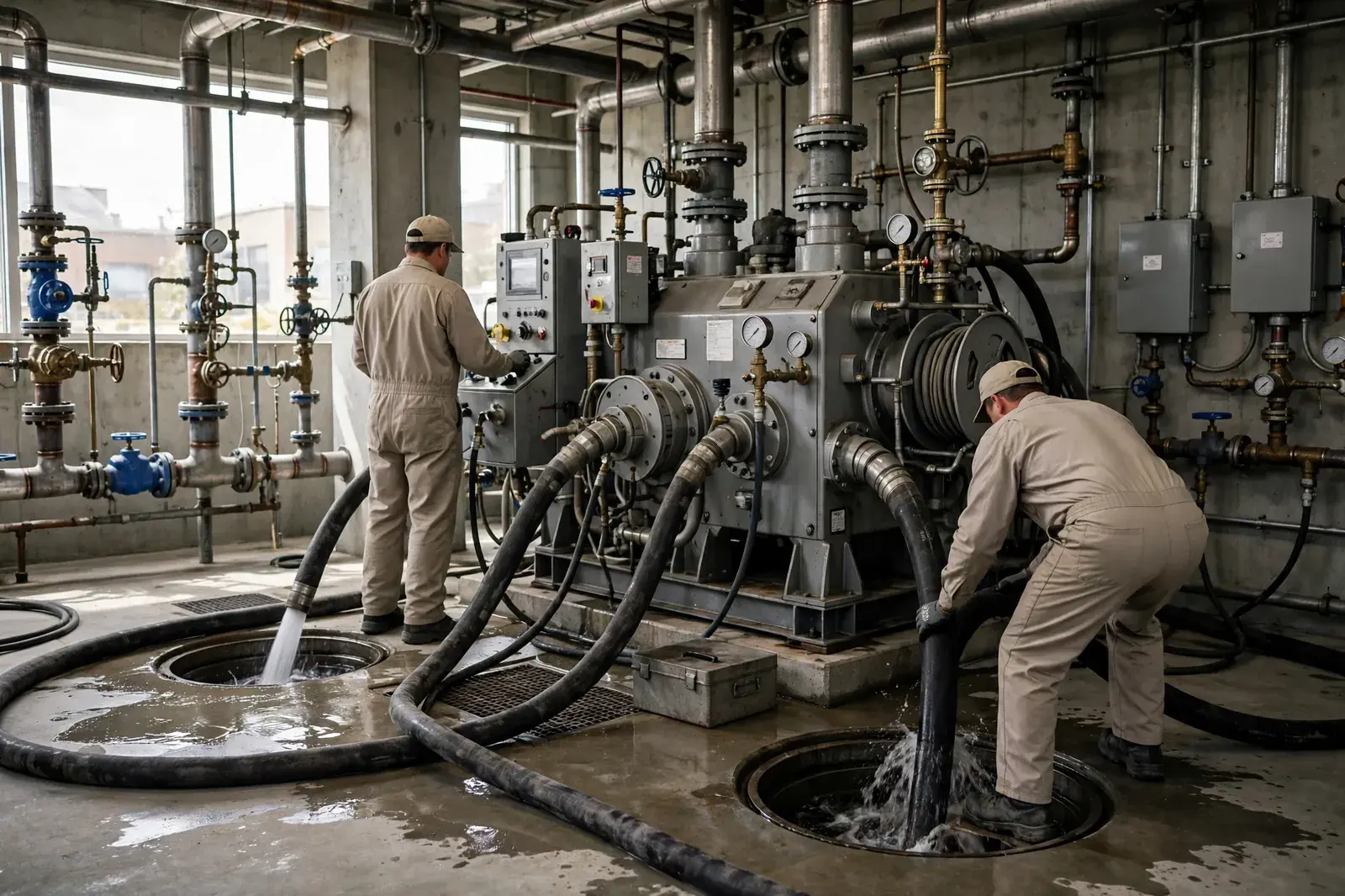
Commercial Hydro Jetting Guide
This guide is for the person who has to keep a business open while its drains are cleaned: the manager, the owner, the facilities lead. It covers how to plan a commercial jetting visit, what it usually costs, and how to set the repeat interval from what the camera shows. Call (833) 878-1592 to talk through your building.
Updated 2026-11-18. Prices shown are estimates only.
Start with the building, not the drain
A commercial clean begins on paper. Walk the building and list the fixtures that matter: kitchen sinks and floor drains in a restaurant, restroom floors in an office, laundry lines in a hotel, wash bays in a workshop. Note which of them have slowed, which have backed up, and when. That list is the brief the crew works from, and it stops the visit turning into a tour of every pipe in the place.
Also note the layout: where the cleanouts are, where the mains run, and which areas must stay open. A basement plant room, a service yard, a loading bay — each changes the setup. If you have old plans, dig them out; if you do not, say so, because the camera look will have to map the runs as it goes.
What a commercial visit usually costs
Commercial jetting usually runs between $500 and $1,500 per visit as a typical range. A single kitchen line in a small cafe sits at the lower end; a hotel with several restroom runs and a laundry main sits at the higher end. Length of run, number of runs, and the time window all move the figure. Work outside opening hours can cost more than work in a quiet weekday slot, because the crew is working antisocial hours.
Ask for the quote in writing, with the camera work, each run to be cleaned, and the tidy-up listed separately. That breakdown is what lets you compare two quotes fairly, and it is what you show a landlord or a finance lead when they ask what the money bought.
Picking the quiet window
The quiet window is the heart of commercial planning. For a restaurant it is the hours between close and open; for an office it is a weekend or an evening; for a hotel it is the mid-morning lull after checkout. Book the window first, then fit the work into it, not the other way round — a crew that arrives at lunch rush will do a worse job and disrupt more trade.
Tell the crew the window in plain terms: the earliest they can start, the latest they must be gone, and which fixtures must stay open throughout. If a restroom floor must stay open while another is cleaned, say so at booking, because it changes the order the runs are worked in.
The camera survey and what to ask for
Before any jetting, the crew should run a video inspection of the problem runs. Ask for two things from it: the footage, and a short spoken summary of what it shows — coating, roots, scale, damage, and the distance along the run where each sits. That summary is the basis for the quote and for any repair discussion later.
Keep the footage on file. It is the record that shows which runs block first, whether a weak section is getting worse, and when a repair would cost less than another clean. A manager who can show that record to a landlord is in a far stronger position than one who relies on memory of a phone call.
Kitchen lines in restaurants and cafes
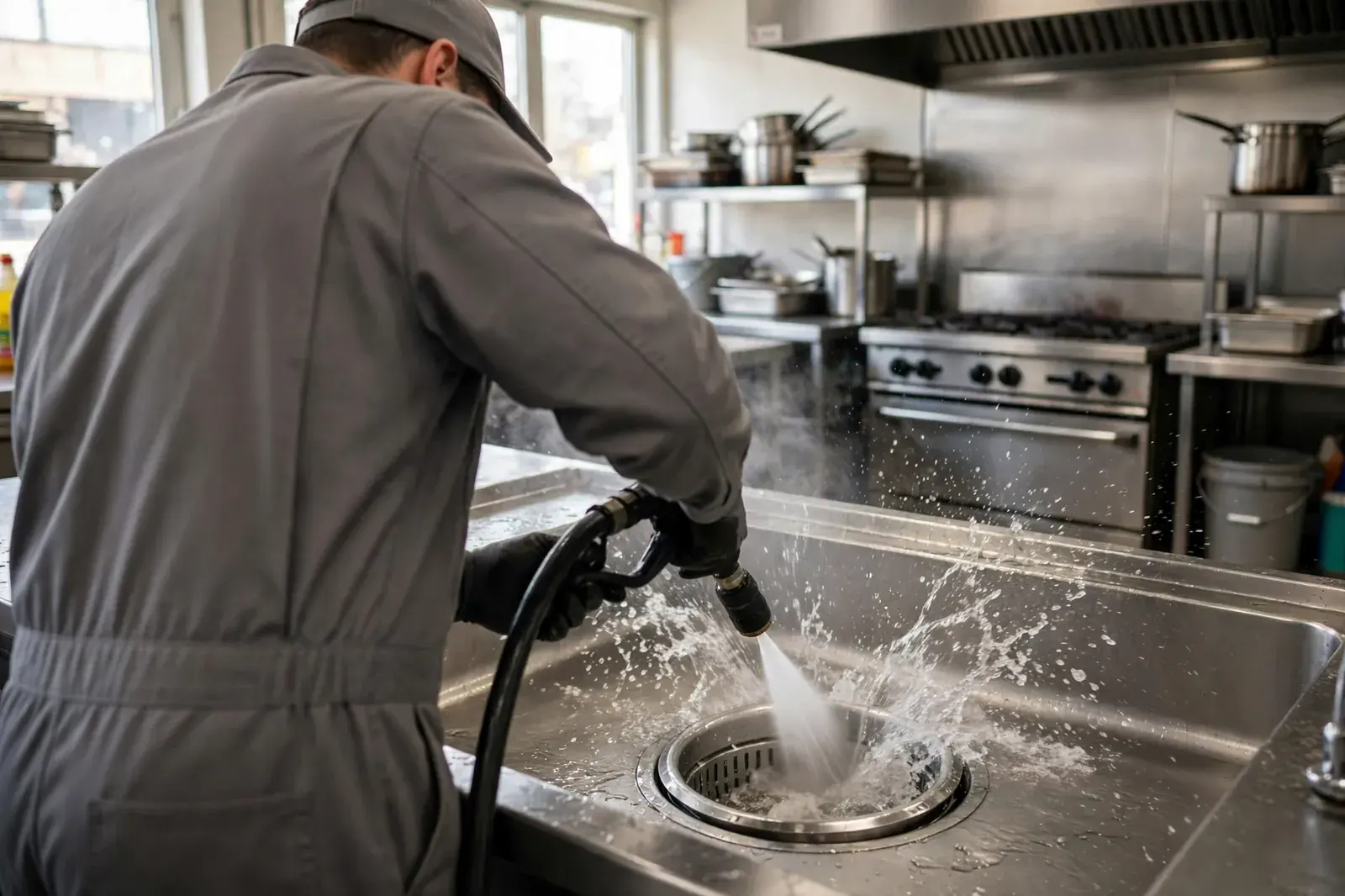
Restaurant kitchen lines are the hardest-working drains in commercial jetting. Fat, food waste and soap pass through them all day, and the lines beyond the grease trap coat up even when the trap itself is emptied on schedule. A kitchen line that slows every lunch rush and recovers overnight is showing the classic pattern: the bore is narrowed, and peak flow is more than it can carry.
Hot-water jetting strips that fat from the walls, and the interval is set by the camera: if the walls are coated again after three months, the interval is too long. Staff habits matter here too — scraping plates, wiping pans, and keeping oil out of the sink do more than any chemical, and they stretch the time between visits. For the restaurant picture in full, see hydro jetting for restaurants.
Restrooms, hotels and offices
Restroom runs block on paper, not fat. In an office, a single busy floor can collect enough paper to narrow a shared main, and in a hotel the problem multiplies across floors that join one trunk. The symptom is usually several fixtures on one floor slowing together, or a low restroom backing up when the floors above are busy.
Jetting clears paper mats and scale from these runs, and the camera shows whether the cause is buildup or shape — a sag where water sits, or a joint that has opened. Shape problems need repair, not another clean, and the footage is what proves which one you are dealing with.
Floor drains, silt and workshops
Floor drains in warehouses, workshops and car parks collect grit, silt and leaves, and they are easy to forget until they hold standing water. A floor drain that drains slowly is often the first sign of a main that is narrowing downstream, because it is the lowest point in the building and the first to show a backup.
Jetting a floor drain means working from its opening or a nearby cleanout, and flushing the silt toward the main. After the clean, a screen over the drain catches the worst of the grit, and a regular sweep of the floor keeps leaves and sand out of the line in the first place.
Setting the repeat interval
The repeat interval comes from the camera, not the calendar. After a clean, note the date and ask the crew what the walls looked like. If the next survey, three months later, shows heavy coating again, shorten the interval. If the walls are nearly clean after six months, stretch it. Over a year or two, a pattern emerges for each run, and the schedule writes itself.
That pattern is also the argument for a repair. A run that needs cleaning every two months because of a sag or a broken joint is costing more in repeated visits than a one-off fix would. The footage and the dates together make that case in a way a single invoice never can.
What to check before the crew leaves
Before the crew packs up, walk the cleaned runs with them. Run the fixtures that were slow and watch them drain. Ask to see the closing camera footage, and ask what it shows: clean walls, or a section that still needs attention. Ask what to watch for, and when they would suggest the next look.
Then file the paperwork: the written quote, the dates, and the footage. A building file with those three things in it turns the next blockage from a crisis into a routine call, because the next crew starts with a record instead of a blank page.
Offices: the restroom main and the coffee kitchen
An office loads its drains in bursts: the morning rush, the lunch hour, and the end of the day. The restroom main takes the brunt, and the small kitchenette by the coffee machine adds its own load of grounds, milk and food scraps. A single busy floor can collect enough paper to narrow a shared main, and the symptom is several fixtures on that floor slowing together.
Plan the office clean for a weekend or an evening, when the floors are empty. Tell the crew which restroom floors must stay open, if any, and where the cleanouts are. A coffee kitchenette deserves a camera look too, since grounds settle into a dense sludge that catches on any rough spot in the branch.
Hotels: many floors, one trunk
A hotel is a vertical building, and its drains are vertical too: stacks that run from the top floor to the basement, joining a trunk that leaves the building. A blockage low in the trunk shows itself on the lowest floors first, while a blockage in one stack shows itself on the floors that stack serves. The pattern tells the crew where to look, and the camera confirms it.
Hotel work is planned around occupancy. The mid-morning lull after checkout is the usual window, and the crew works one stack at a time so the rest of the building stays open. Laundry lines are a separate run, carrying lint and detergent, and they deserve their own slot in the visit. A hotel that jets on a planned cycle never has to close a floor for a drain.
Retail and shopping centres: shared lines
Retail and shopping centres have a different problem: shared lines. A food court with several kitchens feeds one main, and the fat from every unit lands in the same pipe. The centre's management, not any single tenant, usually owns that main, and the cleaning schedule is a management decision rather than a tenant's.
The plan starts with the shared runs, not the tenant branches. A camera survey of the food-court main shows which units load it hardest, and the interval is set from what the walls show after each clean. Tenants should still keep their own branches clear — scrape, wipe and screen — because a branch that blocks in one unit can back up into its neighbour.
Schools, hospitals and care homes
Schools, hospitals and care homes cannot close their drains during the day, and their planning reflects that. Work is booked for evenings, weekends or holiday breaks, and the crew must work around people who cannot easily move — patients, residents, children. The manager should tell the crew which areas must stay open and which fixtures are critical.
Hygiene matters more here than anywhere else. A blocked drain near food prep or a care area is a health risk, not just an inconvenience, and the record-keeping should match: dates, footage and quotes filed together, so an inspector or a manager can see the history at a glance. A planned cycle, booked well ahead, keeps these buildings running without a crisis.
Warehouses and car parks: silt and storm lines
Warehouses and car parks load their drains with grit, silt and leaves, and the storm lines that serve them can be long and shallow. A yard drain clogged with leaves will hold water that freezes in winter, and a floor drain in a warehouse will collect the sand and dust tracked in on wheels and feet. The first sign is usually standing water after rain, or a drain that holds water long after the floor is washed.
Jetting clears silt and leaves from these lines, and the camera shows whether the pipe is sound or whether a section has sagged and now holds water. After the clean, a regular sweep of the floor and a clear-out of the yard drains before the autumn leaf fall keep the lines open. Storm lines deserve the same camera-first habit as sewer lines.
Laundries and laundromats: lint and detergent
Laundries and laundromats load their lines with lint, detergent and fabric softener, and the coating they leave is soft, grey and quick to catch more lint. A laundromat with many machines can fill a shared main in months, and the symptom is several machines draining slowly at once, or a floor drain that backs up when the machines run together.
The fix is a camera look and a jetting clean, and the habits are about dose: too much detergent leaves more residue, and a hot wash now and then keeps the residue soft. Lint traps on the machines should be emptied daily, and the floor drain should have a screen. A laundry that does those things well still needs jetting, but on a longer interval.
The building file: what to keep and why
Keep one file for the building's drains, and keep it from the first camera look. In it go the footage and the dates, the written quotes, the trap pumping dates, and any repair plans. A file with those papers in it answers a landlord's question, an insurer's question or an inspector's question in a minute, and it sets the next interval from what the pipe showed.
The file is also the basis for the budget. A year of dates and footage shows which runs block fastest and which are nearly clean, so the money goes to the runs that need it. A building without a file buys the same clean for every run, whether it needs it or not, and that is money wasted on pipes that are already clean.
Budgeting for drain care across a year
A planned drain budget is cheaper than an emergency one. A restaurant that cleans its kitchen lines every three months on a written quote knows what the year will cost. The same restaurant, cleaning only when a line blocks during service, pays for the clean plus the covers lost, the staff idle and the food wasted — and the emergency visit itself often costs more than a planned one.
Build the budget from the camera record: the runs, the intervals, and the dates. Add a small reserve for the unexpected — a broken section the camera finds, or a trap that needs pumping early. A budget built that way is a number the finance lead can approve, because it is built from the building's own history rather than a guess.
Landlords, tenants and service charges
Who pays for a commercial clean depends on the lease. In many commercial leases the tenant keeps the drains clear as part of day-to-day maintenance, while the landlord pays for repairs to the pipe itself. A jetting clean is usually maintenance; a replacement of a broken section is usually the landlord's. The lease, not the plumber, decides, so read it before the argument starts.
In a shopping centre or a multi-tenant building, the shared main is usually a service-charge item, paid for through the management company. Keep the camera footage and the quote together, because they show whether the job was a clean or a repair, and which party the lease says should pay for it.
Choosing a commercial contractor
A commercial contractor should be chosen on more than price. Ask whether they work outside opening hours, whether they carry the insurance a commercial site needs, and whether the quote lists the camera work, each run and the tidy-up separately. Ask what happens if the camera finds a broken section, and whether they will show you the footage before they jet.
Also ask how they protect the building: floor coverings near entry points, protection for stock and equipment, and a closing camera look so you can see the result. OSHA's guidance on protective equipment sets the standard for workplace safety, and a contractor that works to that standard will answer these questions without hesitation.
Emergency cover: when a business line blocks without warning
Even a building on a planned cycle can suffer a sudden blockage — a foreign object, a collapsed section, or a main that blocks downstream. The first step is to stop the water going down the affected run: close the sinks, stop the machines, and keep staff and guests away from any standing water. Do not pour a chemical cleaner down a line that a crew will open later, because it creates a hazard for them and rarely clears the blockage.
Call the crew and say it is a business emergency, so they know the building must be usable by the next trading day. A same-day visit can usually restore flow, even if a full clean waits for the quiet window. After the emergency, book the full camera look and clean, and update the building file with the date and the footage, so the next interval is set from what the pipe showed rather than from a guess.
After the clean: the first month in a business
The month after a commercial clean is the test. In the first week, the fixtures that were slow should drain at their normal pace through a full day of trade, and any smell should be gone from the dining room, the reception or the restrooms. If a run slows again at peak within days, the coating was not fully removed, or a section of pipe needs attention, and the crew should be called back to look.
Watch the lowest drain in the building as well as the fixtures that were cleaned, because it is the first to show a main that is narrowing again. If the drains stay quick for a month, the interval and the staff habits are working, and the next clean can be timed from the camera pictures. If they slow within weeks, the interval is too short or a repair is due.
Signs you may need hydro jetting
- A restroom floor closes during busy hours because drains back up.
- A kitchen line slows every lunch rush and recovers overnight.
- Floor drains hold standing water in a warehouse or workshop.
- Several restrooms on one floor drain slowly at the same time.
- A drain smell returns in a dining room or reception area.
- The same commercial run blocks again within a few months.
- A food-court main slows when several kitchens run at once.
- Laundry machines drain slowly when they run together.
How it works
- 1
Step 1 — List the problem fixtures
Walk the building, list the slow or backing-up fixtures, note the cleanouts and the areas that must stay open, and pass that list to the crew.
- 2
Step 2 — Pick the quiet window
Agree the quiet window first — the earliest the crew can start and the latest they must be gone — then fit the camera survey and the cleaning into it.
- 3
Step 3 — Survey, then clean in the quiet window
A video inspection maps the runs, then jetting cleans the planned runs outside opening hours where possible.
- 4
Step 4 — File the record
Keep the quote, the dates and the camera footage together, so the next interval is set by what the pipe shows.
What does it cost?
Commercial planning figures are typical ranges, shown as estimates. Your written quote for the building is the figure that counts.
| Service | Typical range (estimate) | Notes |
|---|---|---|
| Commercial drain jetting | $500 – $1,500 | Per visit, per building |
| Video inspection | $200 – $500 | Long commercial runs |
| Restaurant kitchen line jetting | $400 – $1,000 | Kitchen to main |
Prices are estimates only. The local company that does the work sets its own final pricing.