
Main Line Jetting
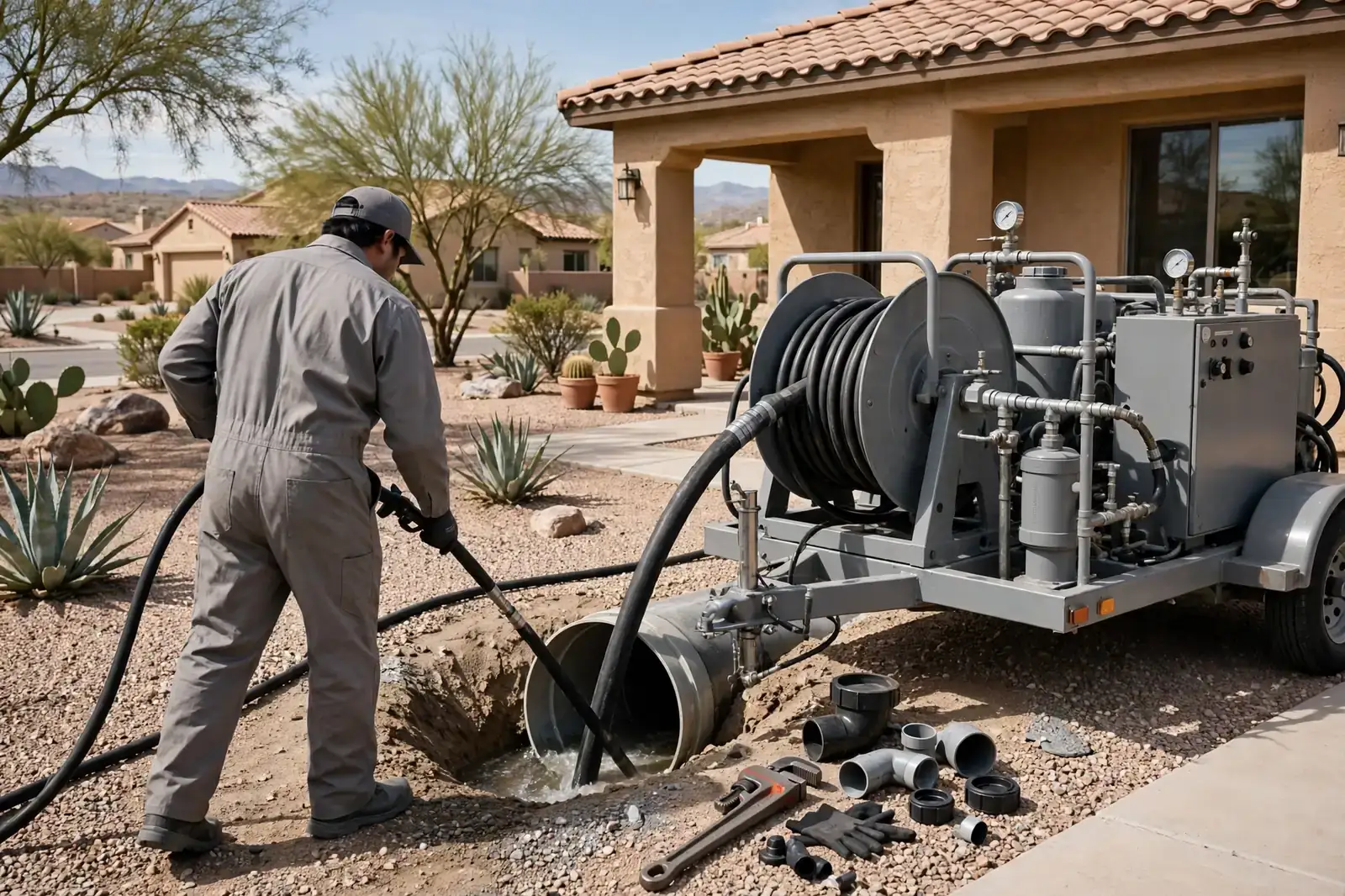
The main line is the single pipe that gathers wastewater from every sink, tub, toilet and appliance in a home and carries it out to the street sewer. When that one pipe narrows, every fixture feels it. Jetting scours its full length from one entry point. Ring (833) 878-1592 to book a camera look and a clean.
Updated 2026-11-18. Prices shown are estimates only.
- $150–$900 Typical cost range
- 5 Steps in the visit
- 12 Questions answered
Before & after — main line jetting
Before & after
Drag the slider to compare the same pipe before and after jetting.
Main Line Jetting
Where the main line runs and what it carries
From the lowest fixtures in a home, branch pipes join into a larger trunk that runs under the floor or yard and out to the street. Everything the household sends down a drain ends up in that trunk: shower water, dishwater, laundry water, toilet waste, food scraps and paper.
Because it carries the lot, it also collects the lot — grease settles on its walls, paper snags on rough spots, and scale builds where hard water flows.
The trunk is usually wider than a branch pipe, often three or four inches across, and it can be tens of feet long. That length is why a main-line job is a bigger piece of work than a single sink.
The hose has to travel the whole run, and the operator has to keep the jets working along every foot of it, not just at the blockage.
Main Line Jetting
Why whole-house symptoms point to this pipe
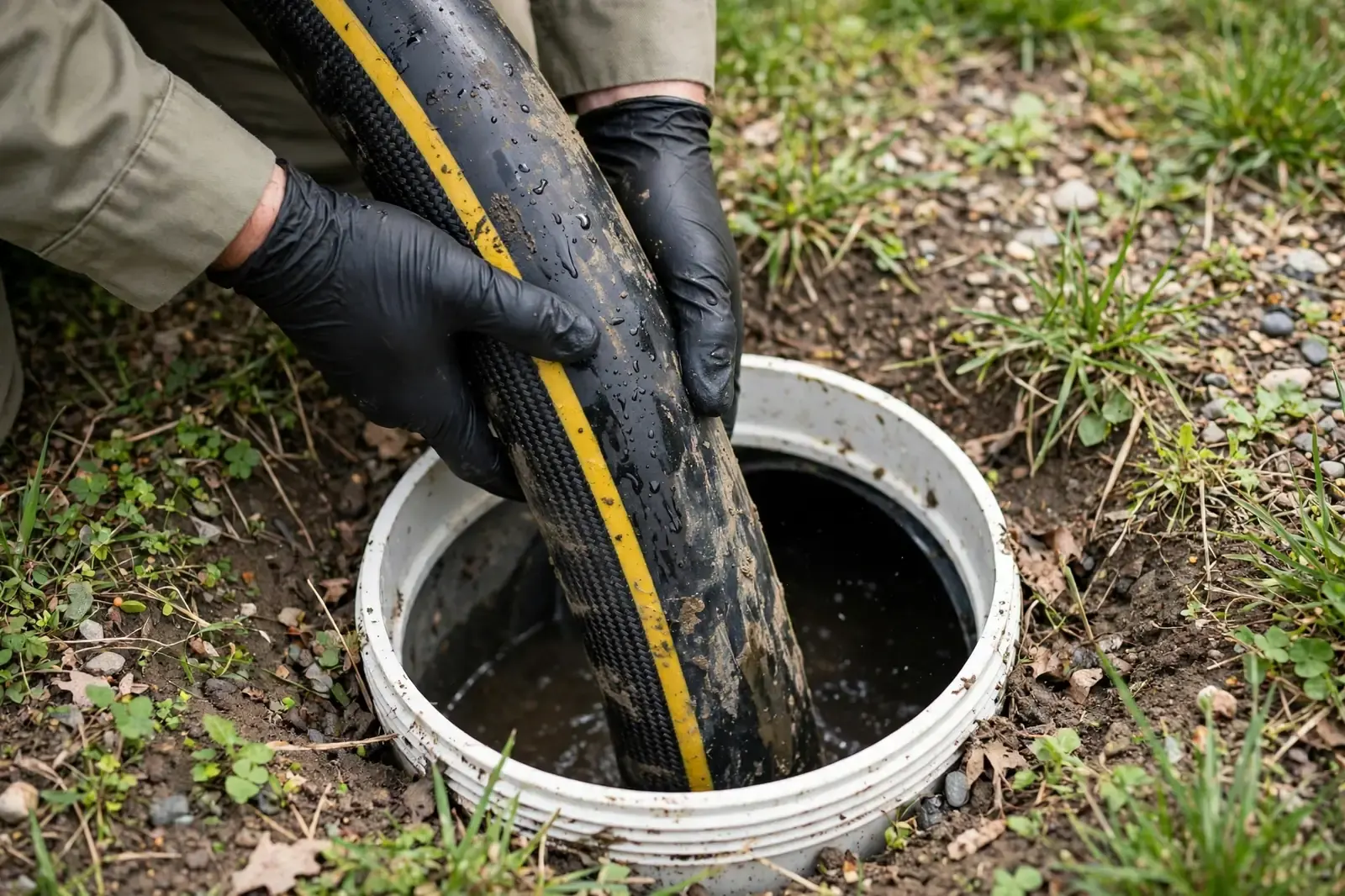
A single slow sink usually means a local problem in that branch. When the kitchen sink, the bathroom sink and the tub all slow together, the shared pipe is the likely cause, because it is the one place all three lines meet.
The lowest fixture in the home is often the first to show trouble: a basement floor drain or a ground-floor shower may fill while upstairs fixtures still seem fine.
Toilet behaviour is another tell. If a toilet flushes weakly, needs a second flush, or bubbles when the washing machine runs, the main line may be partly blocked downstream.
A video scope look settles it in minutes: the camera shows whether the trunk is coated, partly blocked, or clear, and where the worst stretch sits.
Main Line Jetting
Entry points the crew uses for a main line
The best entry point is a yard cleanout — a capped pipe sticking up near the house, often close to where the main line leaves the building. From there the hose can run in either direction along the trunk, and any water that comes back has somewhere to go outside.
A basement cleanout is the next best option, and it needs floor protection and a clear path for the hose.
If no cleanout exists, the crew may pull a toilet to reach the line, which takes longer and adds to the job. Some older homes have no accessible cleanout at all, and that is worth knowing before booking: the crew can advise whether fitting one is worth doing, since it makes every future clean far simpler and cheaper to reach.
Main Line Jetting
How a main-line clean is carried out
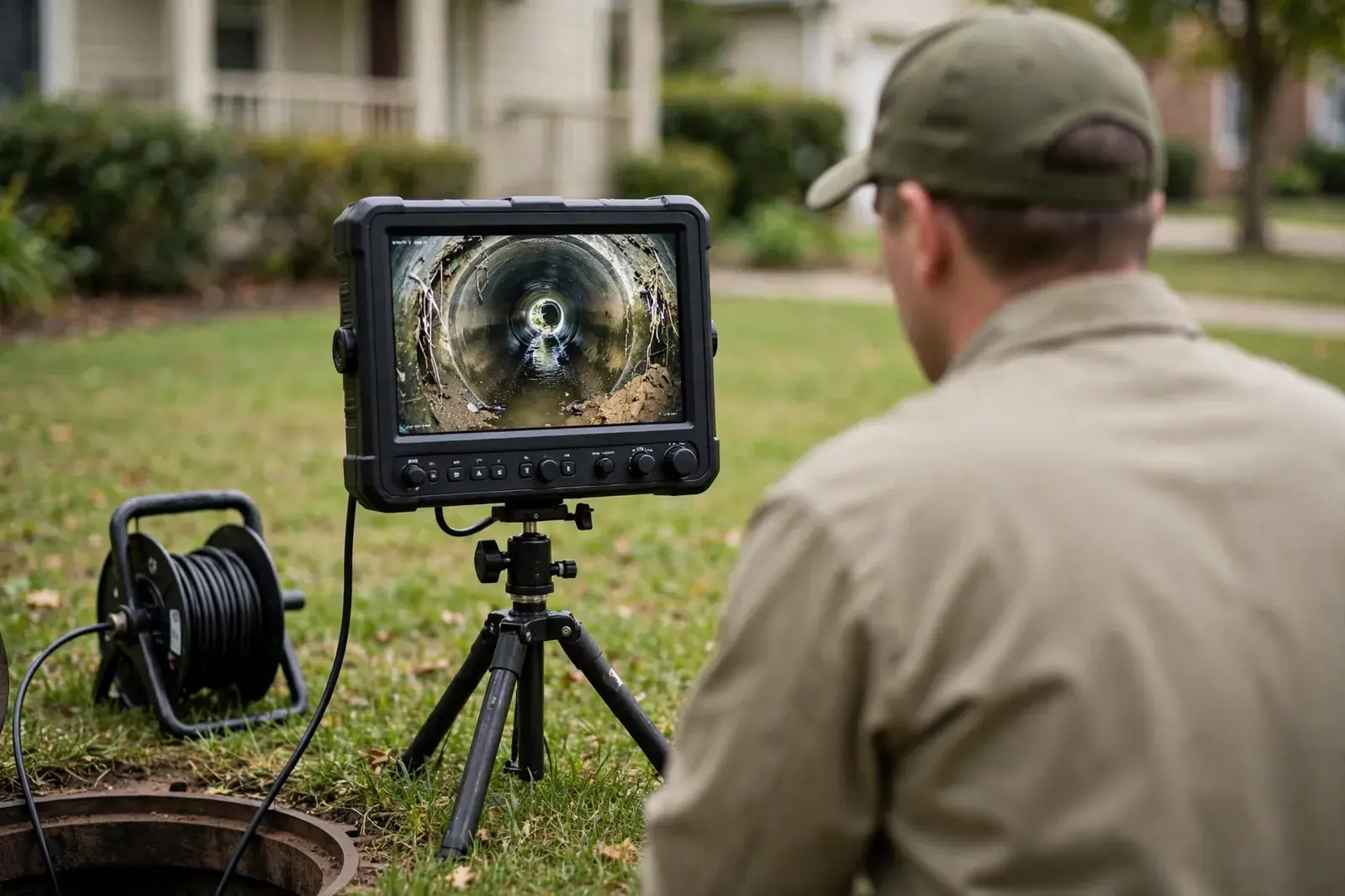
The visit opens with a video scope look from the cleanout. The operator watches the screen as the camera travels the trunk, noting coating, standing water, bellies where the pipe sags, and any roots or breaks.
That picture decides the nozzle and the pressure, because a sagging section needs a different approach from a straight coated run.
Then the jetting hose goes in, usually from the downstream end so the flow pushes debris toward the street sewer. The operator pulls the hose back slowly, letting the jets scour each stretch, and repeats the pass on the worst sections.
A closing scope look confirms the walls are clean and shows whether any section needs repair rather than another clean.
Main Line Jetting
What changes the price of a main-line job
Length is the biggest driver: a short run from a small home costs less than a long run across a big lot. Access is next — a clear yard cleanout is quick, while a buried cleanout that has to be dug out, or a toilet pull, adds time.
The type of buildup matters too: soft grease washes out fast, while scale and root strands need slower passes and a cutting nozzle.
Condition can change the job entirely. If the scope shows a cracked or collapsed section, cleaning stops being the answer and repair becomes the conversation.
A written quote given after the scope look should list the camera work, the jetting, and the tidy-up separately, so you can see what each part costs before anyone starts.
Main Line Jetting
After the clean: what to watch and what helps
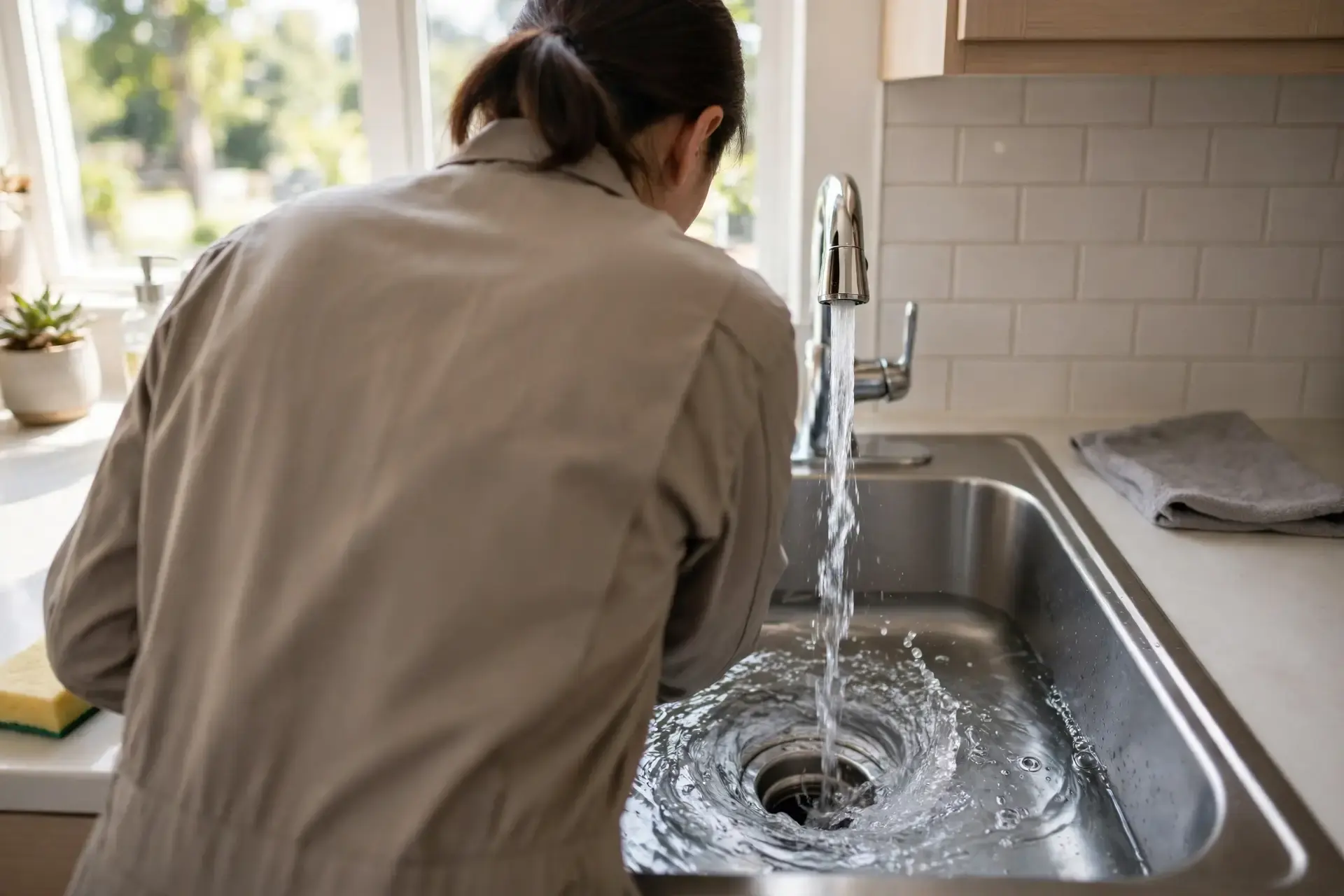
After a main-line clean, every fixture should drain at its normal pace, and a flush should not make a low drain gurgle. If one fixture still lags while the rest are fine, that fixture has its own branch problem, and it needs a separate look.
Keep an eye on the lowest drain for a week or two, since it is the first place a new blockage shows.
Habits make the result last. Keep cooking fat out of the sink, use screens to catch hair and food, and avoid flushing wipes, even ones labelled flushable, because they snag on rough pipe and start new blockages.
If trees stand near the line, a scope look every year or two is a cheap way to catch root strands before they mat together.
Main Line Jetting
How long is a main line, and why does length matter?
A main line runs from the point where the branch drains join together, usually under the house, out to the street sewer or the septic tank. In a typical single-storey home that run is forty to a hundred feet.
In a larger home, or one set far back from the road, it can be longer still. Length matters because the hose has to travel the whole run, and every extra foot adds time, water and wear on the equipment.
A long run also has more joints, and each joint is a place where the pipe can dip, shift or let roots in.
Length also decides how the crew works. A short main can be cleaned from one entry point in a single pass.
A long main may need the hose fed from the house end and then from the street end, so the jets meet in the middle and no stretch is missed. The camera survey is run the same way, in sections, because the picture gets harder to read the further the camera travels from the entry point.
When you ask for a quote, the length of the run is one of the first things the crew will want to know, and the distance from the house to the street is a fair guide to it.
Main Line Jetting
What is the difference between a main line clog and a sewer line clog?
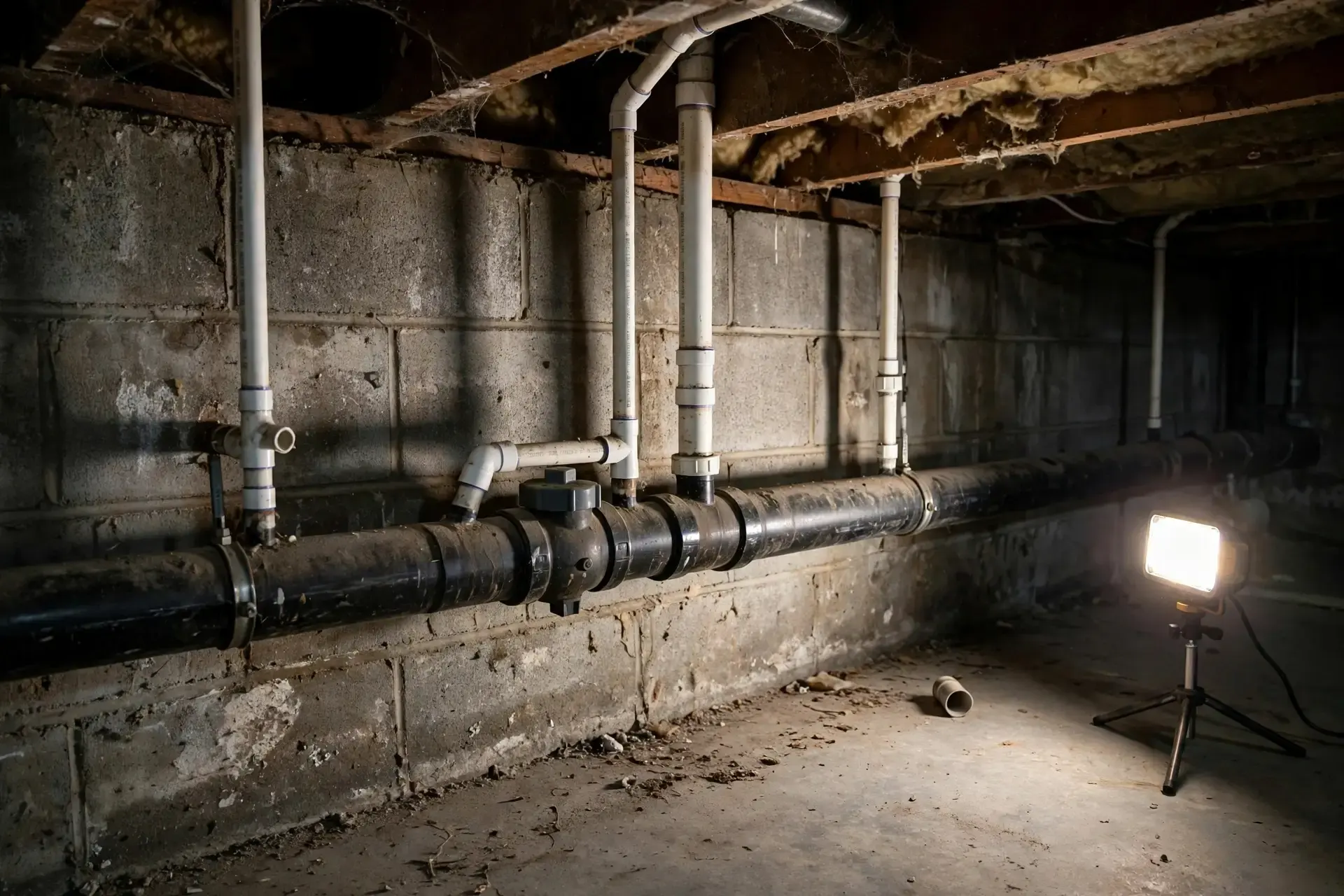
The two phrases are often used as if they mean the same thing, and in many homes they describe the same pipe. Strictly, the main line is the pipe inside the property boundary: from the house to the edge of the lot.
The sewer line, or lateral, is the pipe from the property boundary to the street main. A blockage in either one gives the same symptoms, because every fixture in the house feeds into both, one after the other.
The difference matters for who pays and who fixes it.
In most towns the homeowner owns the pipe up to the street main, including the section under the pavement, so a blockage anywhere along that run is the homeowner's problem. Some towns take over at the property line or at the curb, so a blockage past that point falls to the water authority.
Before a crew starts work, it is worth asking where the blockage sits, because the camera survey can show the distance from the house, and that distance settles which side of the boundary it is on. Jetting clears either section the same way; the question is only who is responsible for the bill.
Main Line Jetting
How does the camera survey work on a long main run?
A camera survey on a main line starts at the cleanout, the capped pipe that gives access to the run. The camera head is about the size of a walnut, with a bright light and a lens that looks forward.
The operator pushes it in on a stiff cable and watches the picture on a screen, calling out what passes: a joint, a dip where water sits, a patch of scale, a root strand. A counter on the cable records the distance, so every finding has a position measured in feet from the entry point.
On a long run the survey is done in two halves when the camera cable runs out of reach, once from the house end and once from the street end. The picture is recorded, and a good crew will save the recording or let you watch it live.
The survey is not just a way to find the blockage; it is the record of the pipe's condition. A main line that has been surveyed once can be compared against the same survey a few years later, and the comparison shows whether the pipe is holding up or slowly getting worse.
Main Line Jetting
When is a main line clean not enough?
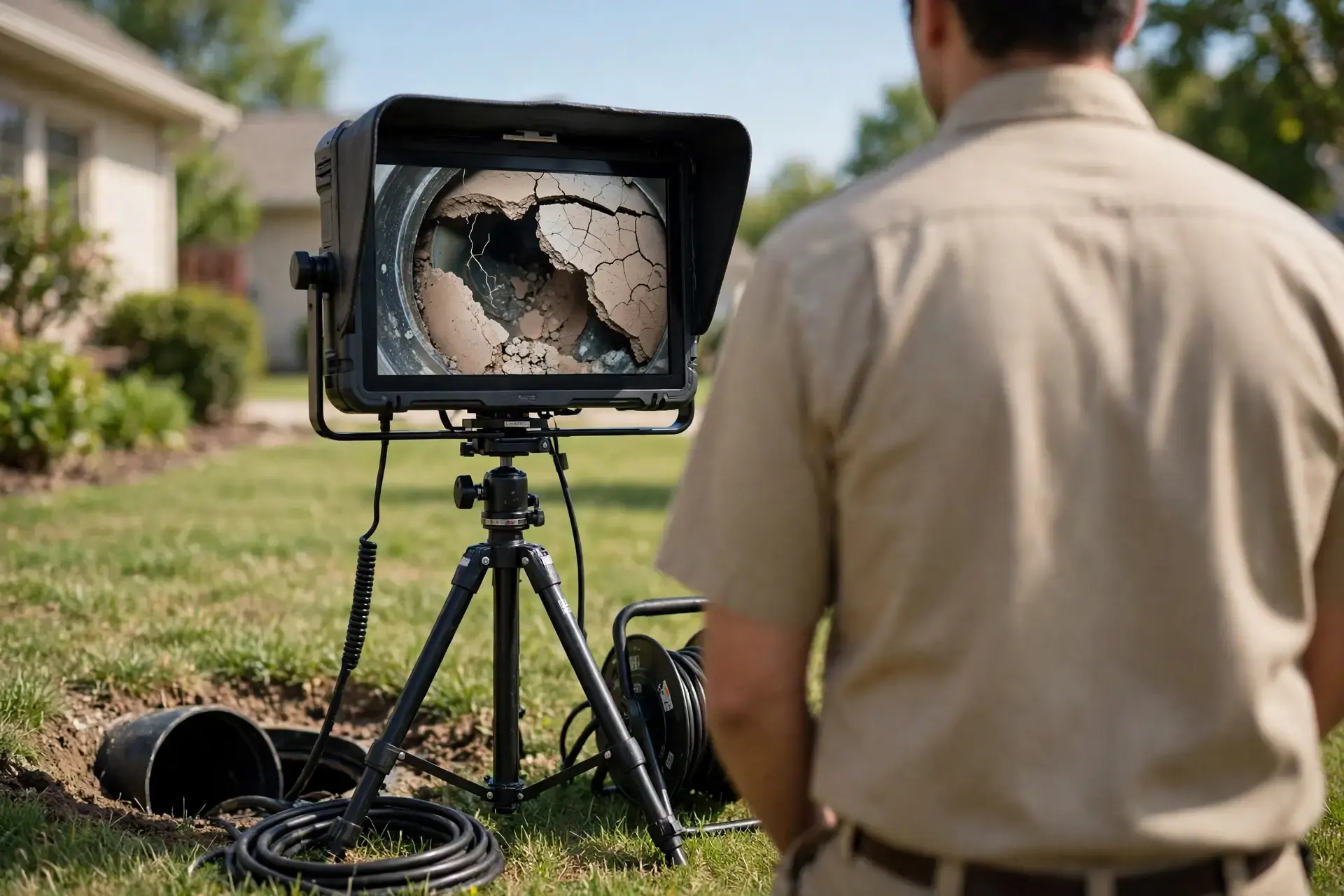
A clean fixes a dirty pipe. It does not fix a damaged one, and the camera survey is what tells the two apart.
A pipe that has dipped in the middle, sometimes called a belly, holds standing water, and waste settles in the dip after every flush. Jetting clears the settled waste, but the dip stays, and the waste settles again.
A pipe with a cracked section lets soil in and lets water out, and the crack grows with each season. A pipe that has collapsed lets nothing through at all, and no amount of water pressure will open it.
In these cases the crew should show you the camera picture and talk about repair choices rather than cleaning again. A short damaged section can sometimes be repaired from one dug hole.
A longer run may suit a liner, a new pipe pulled inside the old one, or a full replacement. These are bigger jobs than a clean, and they cost more, but cleaning a broken pipe every few months costs more again over time, and it leaves the home exposed to a backup in between.
The survey picture is the evidence to base the decision on.
Main Line Jetting
How do tree roots reach a main line?
Roots do not break into a sound pipe. They find a way in through a joint that has opened a fraction, or a hairline crack, and the leak of water vapour from that opening is what draws them.
A single fine strand slips through the gap and grows inside the pipe, where the flow of water and nutrients is steady. Over a season the strand thickens, branches, and catches paper and waste passing by.
The mat grows until the flow slows, and then the line blocks.
The trees that cause the trouble are usually the ones closest to the line, and the thirstiest ones: willows, poplars and maples are well known for it, but any tree within twenty feet of a main line can send roots that far. The fix is a cutting head on the jetting hose, which shreds the mat and washes it out, followed by a camera look to see the joint that let the roots in.
Cutting alone does not close the gap, so the roots will return, usually within a year or two. The lasting answer is to repair the joint, and the camera picture shows exactly where that joint sits.
Main Line Jetting
What can a homeowner do between professional cleans?
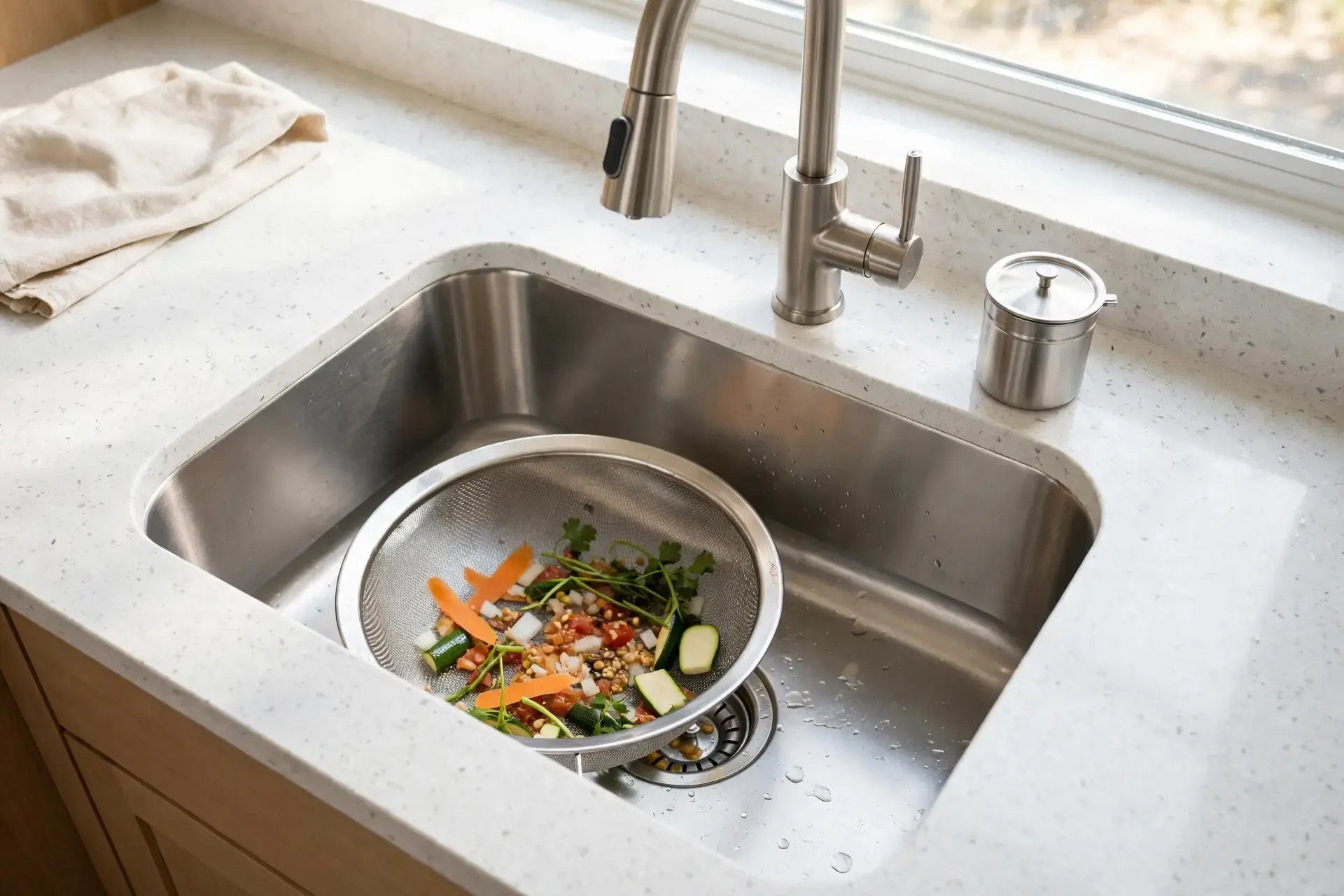
The most useful habit is also the simplest: keep fat out of the kitchen sink. Pour cooking fat into a jar, let it set, and throw it away.
Wipe a greasy pan with a paper towel before washing it. That one change slows the coating on the whole main line, because the kitchen branch feeds into it.
The second habit is to flush only toilet paper. Wipes, cotton pads, dental floss and sanitary products do not break down in water, and they catch on any rough spot in the line.
A monthly flush of hot water down the kitchen sink helps a little, by melting the surface of the fat film before it hardens, but it is a helper, not a cure: hot water cools within a few feet of pipe, and the fat sets again further down the line. Enzyme drain products, which use bacteria to eat grease, can slow the buildup, but they work slowly and they cannot clear a line that is already blocked.
The honest rule is that habits buy time between cleans, and a camera look every few years tells you whether the time bought is enough.
Signs you may need main line jetting
- Every fixture in the home drains slowly at the same time.
- The lowest shower or floor drain fills when other fixtures run.
- A toilet bubbles or flushes weakly when the washing machine drains.
- Water comes back up through a ground-floor tub or shower.
- Several drains gurgle, especially after a flush or a wash cycle.
- A drain smell returns in the lowest bathroom again and again.
- Every drain in the house slows at the same time, while no single fixture looks blocked on its own.
- The lowest fixture in the house, often a basement shower or floor drain, is the first to back up.
- Flushing one toilet makes water rise in another toilet or in the tub.
- A gurgling sound runs through the pipes when the washing machine drains, even though the machine itself is fine.
- The yard has a soft, wet patch over the line to the street, even though it has not rained.
- A drain that was cleared last year is already backing up again, which points to a main line problem rather than a branch one.
How it works
- 1
Step 1 — Map the symptoms
The crew asks which fixtures are affected and in what order they slowed, because a main line problem shows up across the whole house at once, starting with the lowest fixtures.
- 2
Step 2 — Open the cleanout
The capped cleanout outside the house or in the basement is opened, giving the crew direct access to the main run without pulling a toilet or opening a wall.
- 3
Step 3 — Camera survey of the run
A camera travels the length of the main line, showing the coating, any blockage, and the condition of the pipe and its joints, with distances measured from the entry point.
- 4
Step 4 — Jetting the full length
The hose cleans the run in slow passes from one end to the other, cutting through grease, scale and roots and washing the loosened material out toward the street sewer.
- 5
Step 5 — Final look and notes
A last camera pass confirms the line runs clear. The crew caps the cleanout, tidies up, and tells you what was found, including any joint or crack worth watching.
Main Line Jetting cost
What does it cost?
Main-line work is priced by length, access and buildup. These are typical ranges, shown as estimates, not quotes. A main line is the longest pipe in the house, so its length is the first thing that moves the price: a forty-foot run costs less than a hundred-foot run. The entry point matters next — a capped cleanout outside the house is quick to open, while a line that can only be reached from the street end or by pulling a toilet takes longer and costs more. The third driver is what is inside the pipe: a thin grease film clears in one pass, while thick scale or a root mat needs several passes, a cutting head, and more time on site. A camera survey may be priced on its own or bundled with the jetting, so ask which it is. A planned visit in working hours costs less than an urgent call, and the written quote should list the survey, the jetting and the tidy-up as separate lines.
| Service | Typical range (estimate) | Notes |
|---|---|---|
| Main line jetting | $350 – $900 | Whole-home trunk line |
| Video scope look with jetting | $150 – $350 | Often bundled in |
| Branch line jetting | $250 – $550 | One fixture line |
Prices are estimates only. The local company that does the work sets its own final pricing.
Questions about main line jetting