
Hydro Jetting Services
Hydro jetting pushes water through a drain at very high pressure to strip away the coating that narrows pipes. Grease, soap film, mineral crust, hair and food scraps come off the walls and wash out with the flow. A camera check runs first so the crew can see the pipe. Call (833) 878-1592 to arrange a visit.
Updated 2026-11-18. Prices shown are estimates only.
- $150–$900 Typical cost range
- 5 Steps in the visit
- 12 Questions answered
Before & after — hydro jetting
Before & after
Drag the slider to compare the same pipe before and after jetting.
Hydro Jetting
What the water actually does inside a pipe
Think of the inside of a drain as a surface that slowly gets coated. Every shower, wash and rinse leaves a thin layer behind, and those layers build into a rough skin that catches more debris.
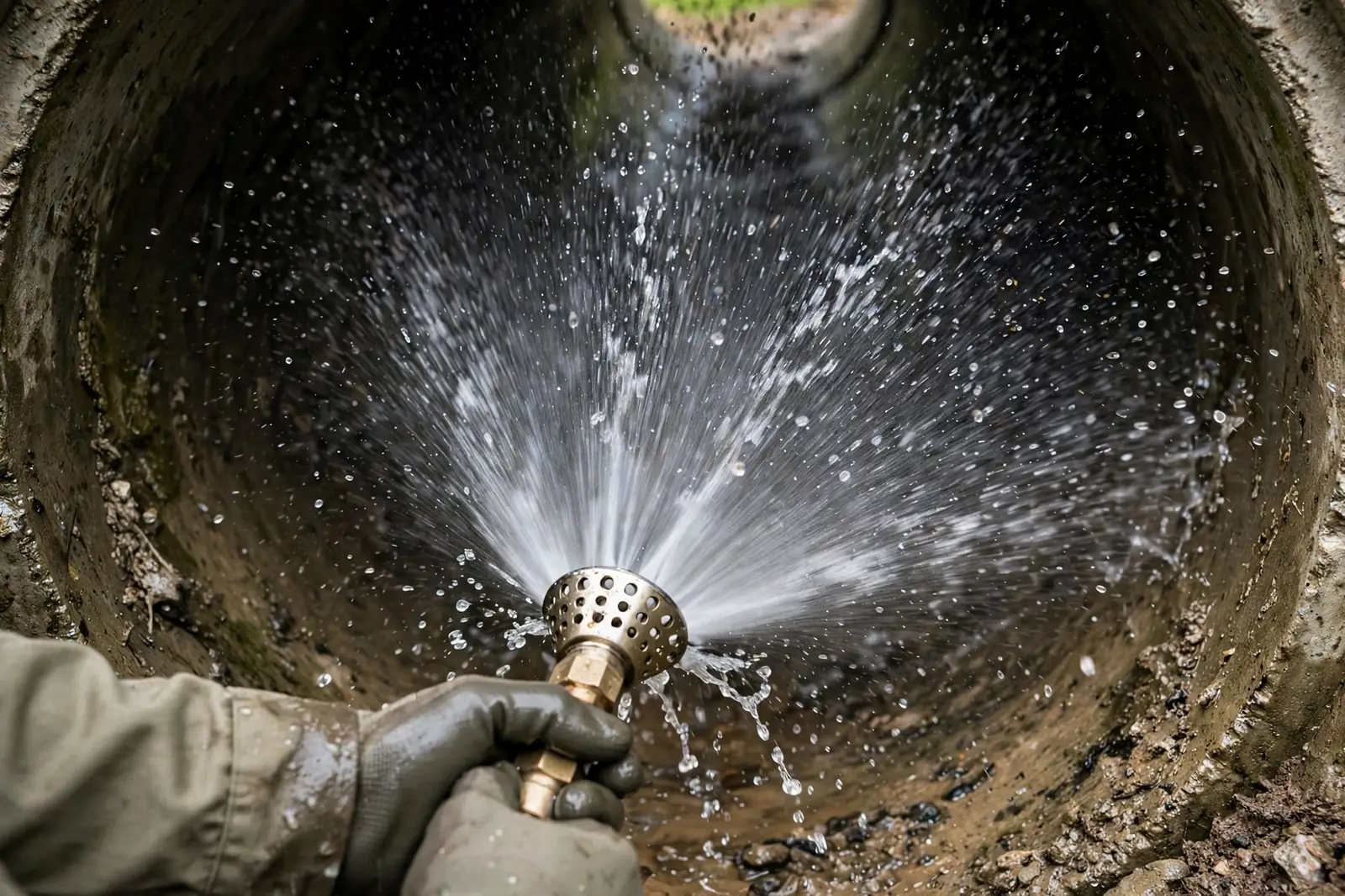
A jetting nozzle fires streams of water sideways and backwards, and those streams peel the coating off in sheets instead of poking a single hole through it. The loosened material rides out with the wastewater, so the bore of the pipe opens up along the whole cleaned length.
That full-width clean is the point. A cable tool opens a path through the middle of a blockage and leaves the walls coated, which is why the same drain often slows again within weeks.
Jetting treats the wall itself. The result is not just an open drain but a pipe interior closer to the way it was when it was fitted, with water able to move at its normal pace.
Hydro Jetting
Which household lines this service fits
Kitchen branches carry the heaviest load, because cooking fat and food waste coat them daily. Bathroom branches carry hair, soap and toothpaste residue.
Laundry branches carry lint and detergent film. The main drain that gathers all of them carries a mix of everything, and it is the line where a blockage causes the most trouble, since every fixture in the home feeds into it.
Jetting fits all of these, but the setup changes each time. A short branch needs a smaller hose and a lower flow; a long main needs a bigger machine and a longer run.
The crew picks the nozzle for the job in front of them, not a single setting for every line. If a line turns out to be broken rather than dirty, the camera check shows that first, and cleaning gives way to repair talk.
Hydro Jetting
How pressure and nozzle choice work
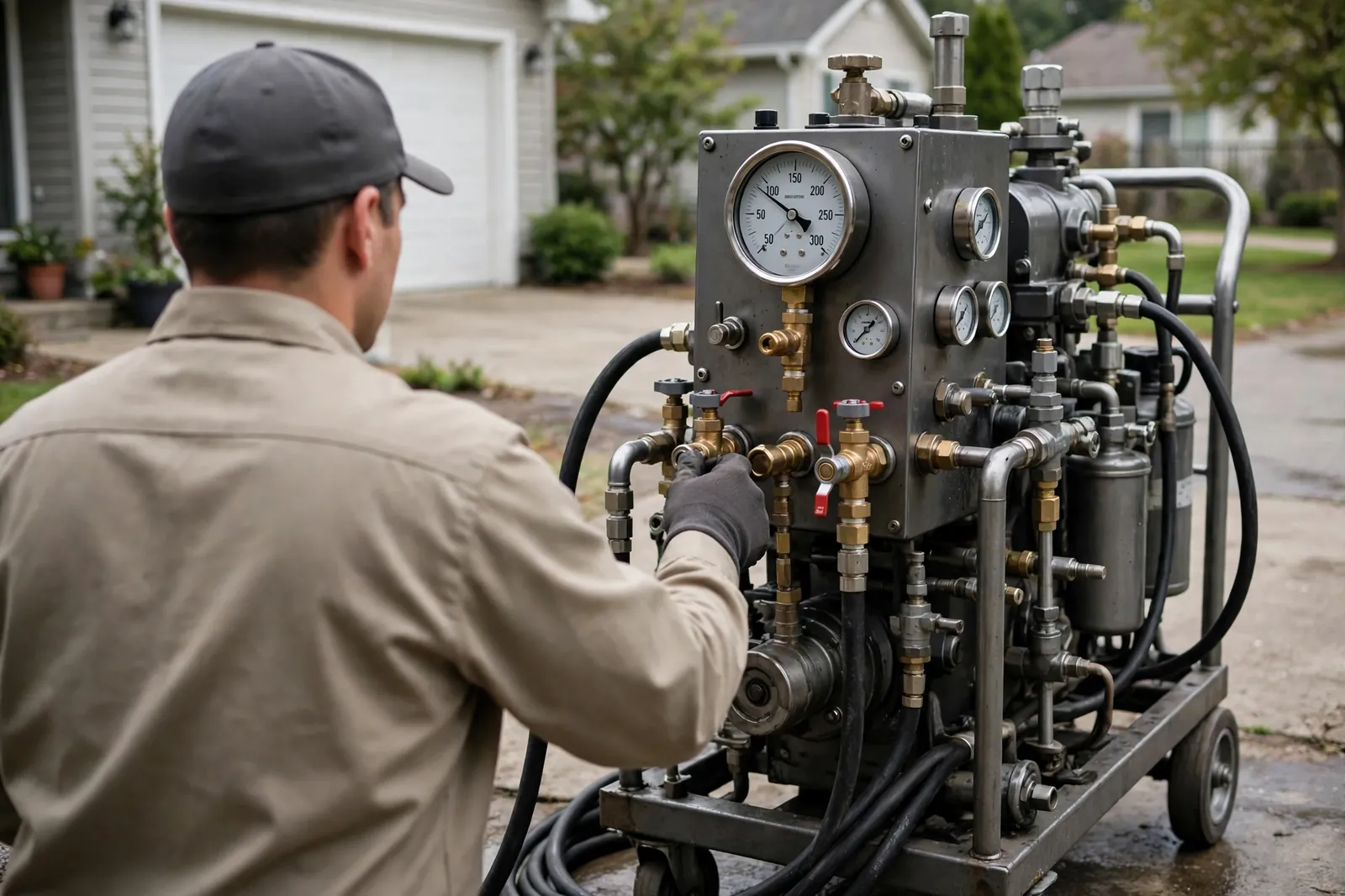
Pressure is set to the pipe, not to a fixed number. Sound plastic pipe takes a different setting from old cast iron, and clay pipe needs care around its joints.
The nozzle matters as much as the pressure: some nozzles spin and scour the walls, some push forward to cut through a plug, and some are shaped to wash debris back toward the entry point so it can leave the line.
A good crew watches the flow while they work. If water starts moving freely and the camera shows clean walls, they stop; extra passes on a clean pipe waste time and water.
If one stretch still shows coating, they work that stretch again. The camera check at the end is the record of what was done, and it is worth asking to see it on the screen before the crew packs up.
Hydro Jetting
When to book a visit instead of waiting
Book when the same drain slows again a short time after it was cleared, or when two or more fixtures slow together. A single slow sink can be a local trap problem.
Several slow fixtures point to a shared run of pipe, and that is where jetting earns its keep. Gurgling from a tub when a toilet flushes is another pointer, because it means air is trapped by a partial blockage downstream.
Do not wait once water starts coming back up through a low drain or a toilet. That is a backup, and it can spread water across a floor in minutes.
Stop running taps, do not flush, and call for help. The crew can look with the camera, find where the line is blocked, and clear it before the water reaches more rooms.
Hydro Jetting
Pipe materials and what they need
Plastic pipe is smooth and cleans well, and it holds up to jetting when the setting matches the pipe. Cast iron is rougher inside, and years of use leave a crust of scale that jetting can strip away, which often restores flow that has faded over time.
Clay pipe comes in short sections joined together, and those joints are the weak points where roots and soil can get in.
Age matters more than material on its own. A fifty-year-old line that has never been looked at may have thin walls or a cracked section that no amount of cleaning will fix.
That is why the camera check matters: it separates a dirty pipe from a damaged one. A damaged section needs a repair plan, and jetting at full force would only make it worse.
Hydro Jetting
What a visit looks like from the doorstep
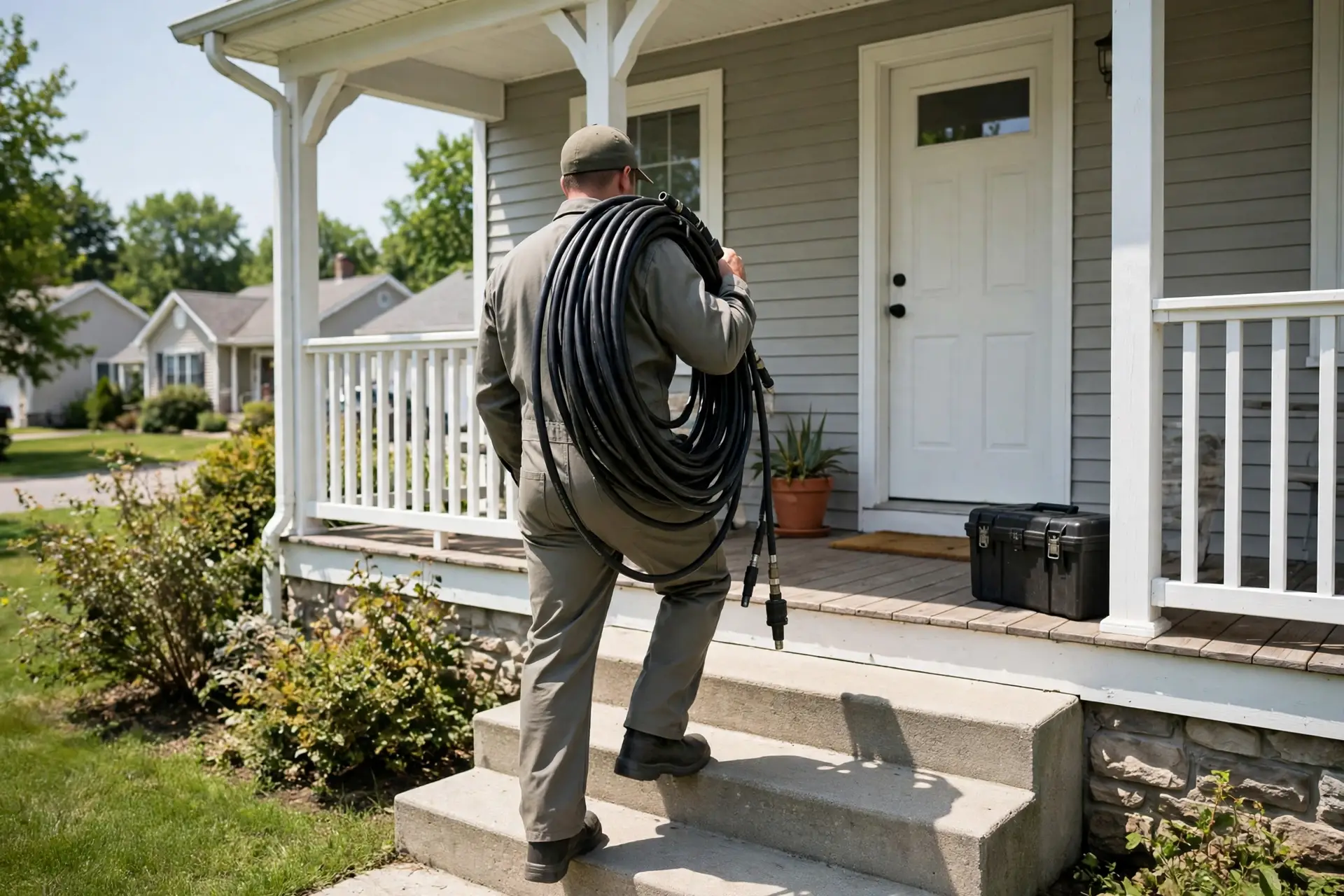
The crew starts by listening. They ask which fixtures are slow, when the trouble started, and whether it has been cleared before.
Then they find the entry point, usually a capped pipe outside or in a basement, and run the camera in. You can watch the screen with them and see the coating, the blockage, or the crack for yourself.
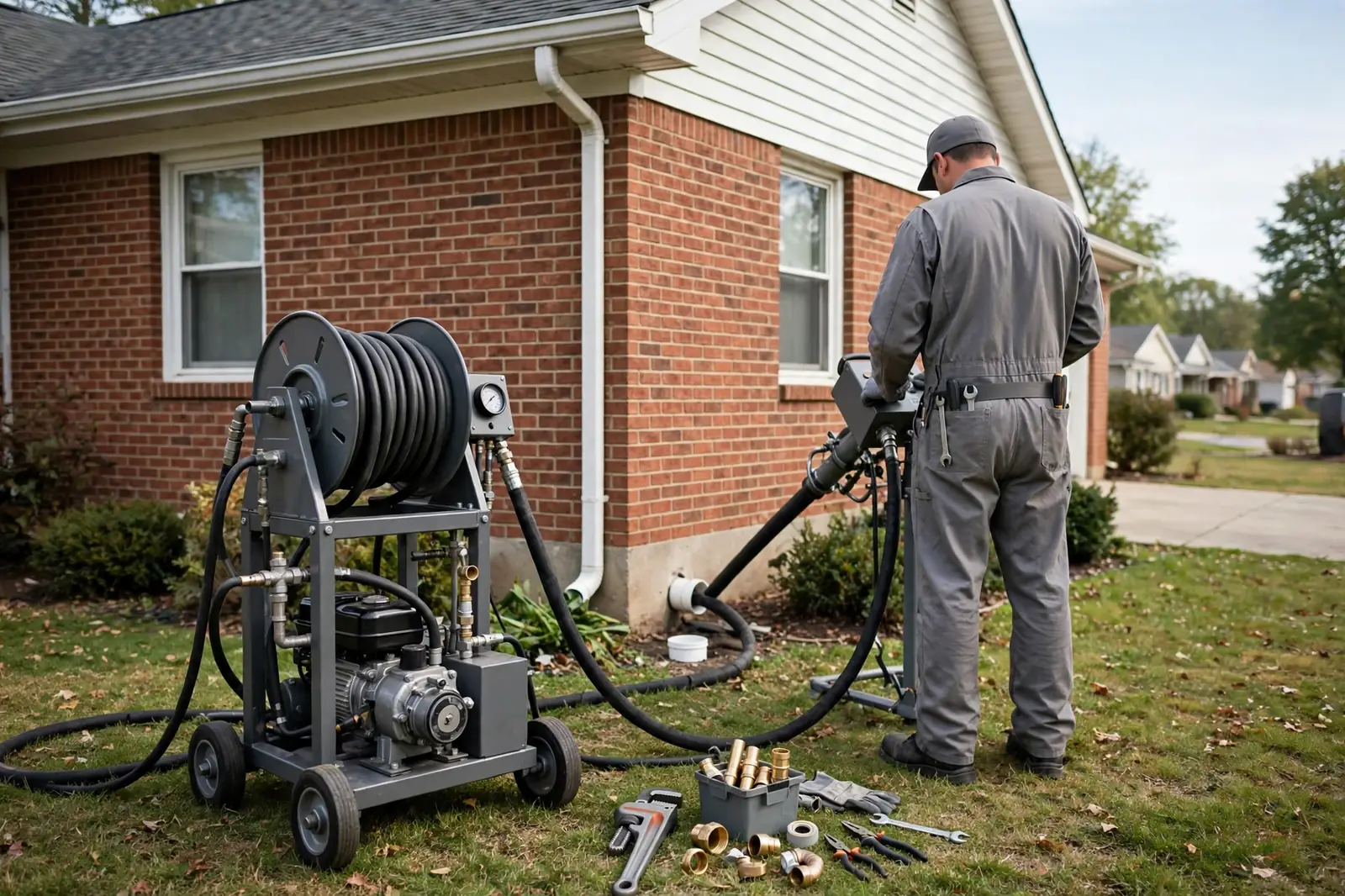
After the camera check, they set up the jetter, feed the hose in, and clean in passes, pulling the hose back slowly so the jets scour each stretch. A final camera pass confirms the walls are clear.
Most home visits run one to three hours. The crew should lay down protection near any indoor entry point and tidy up before they leave.
Hydro Jetting
What does a camera inspection show before jetting starts?
A camera inspection is a small waterproof camera on a flexible cable, pushed into the drain while the picture shows on a screen above ground. The picture tells the crew what the coating is made of, where the line narrows, and whether the pipe itself is sound.
Grease looks like a pale, waxy layer. Scale looks like a rough crust.
Roots look like pale strands hanging from a joint. A crack or a dip in the pipe looks different again, and it changes the plan, because cleaning will not fix a broken pipe.
The camera also measures distance. A counter on the cable shows how far into the line the camera has travelled, so the crew can say where the trouble sits: ten feet from the kitchen wall, or thirty feet out under the yard.
That matters when the entry point is far from the blockage, and it matters when a repair is needed later, because the digging starts in the right place. Ask to watch the screen during the first look.
A homeowner who has seen the inside of their own drain understands the quote that follows, and can see the difference again on the final look after the cleaning.
Hydro Jetting
How does jetting compare with snaking and chemical drain cleaners?
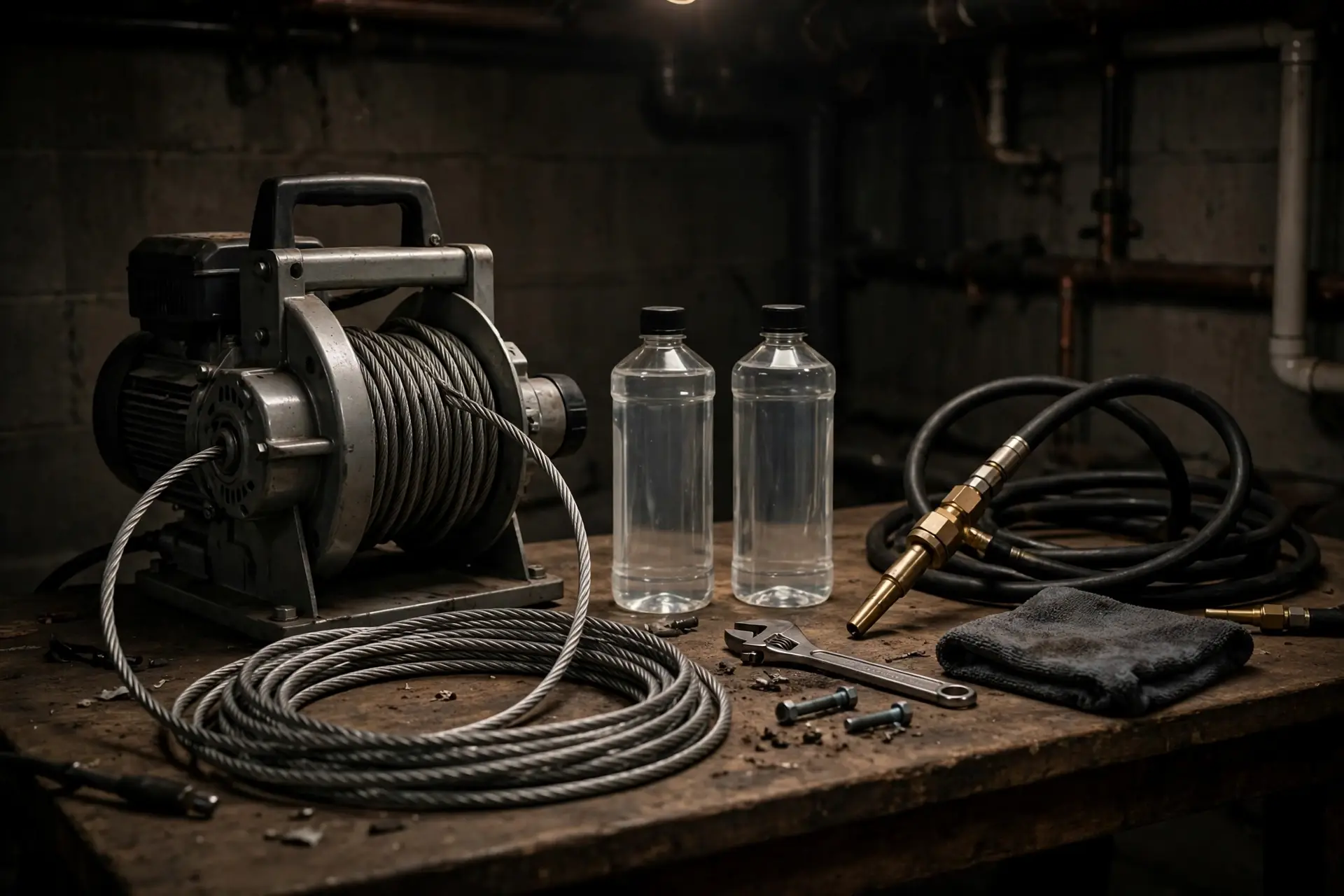
A drain snake is a steel cable with a cutting head. It bores a hole through a clog so water can pass, and it is the right tool for a single simple blockage, such as a wad of hair caught just past a trap.
What it does not do is clean the walls. The coating stays, and the drain narrows again as new debris catches on it.
That is why a snaked drain often slows again within weeks, and why the same drain can need snaking several times a year.
Chemical drain cleaners work by heat and caustic action. They can open a soft clog, but they sit in the pipe and attack more than the clog: they can soften plastic joints, pit metal, and damage the rubber seals around a trap.
They are also a hazard to anyone who later opens the drain, and they do nothing for scale or roots. Jetting uses only water.
It removes the coating from the full width of the pipe, it leaves the pipe material alone when the pressure is set right, and it washes the loosened material out of the line instead of pushing it further down.
Hydro Jetting
How often should a home have its drains jetted?
There is no single schedule that fits every home, because the load on the drains decides it. A household that cooks most meals at home and washes dishes by hand puts far more fat down the kitchen line than a household that eats out.
A home with long hair in the family fills a shower drain faster. A home with old cast iron pipe builds scale faster than a home with smooth plastic pipe.
The honest answer is that jetting is needed when the signs show up, and a planned clean every couple of years suits homes that have had repeat trouble.
A practical rhythm is to jet a line once it has needed clearing twice in a year, and then to watch how long the result holds. If a jetted kitchen line runs clear for two years, that is the interval to keep.
If it slows again in six months, something is feeding the line faster than normal, and it is worth looking at habits first: fat going down the sink, coffee grounds in the disposal, or wipes being flushed. A camera look at the same time as a jetting visit gives a baseline picture, and the next visit can be judged against it.
Hydro Jetting
What changes the price of a hydro jetting visit?
Length is the first driver. A short branch line from a kitchen sink to the stack takes less time and less water than a main drain that runs a hundred feet to the street.
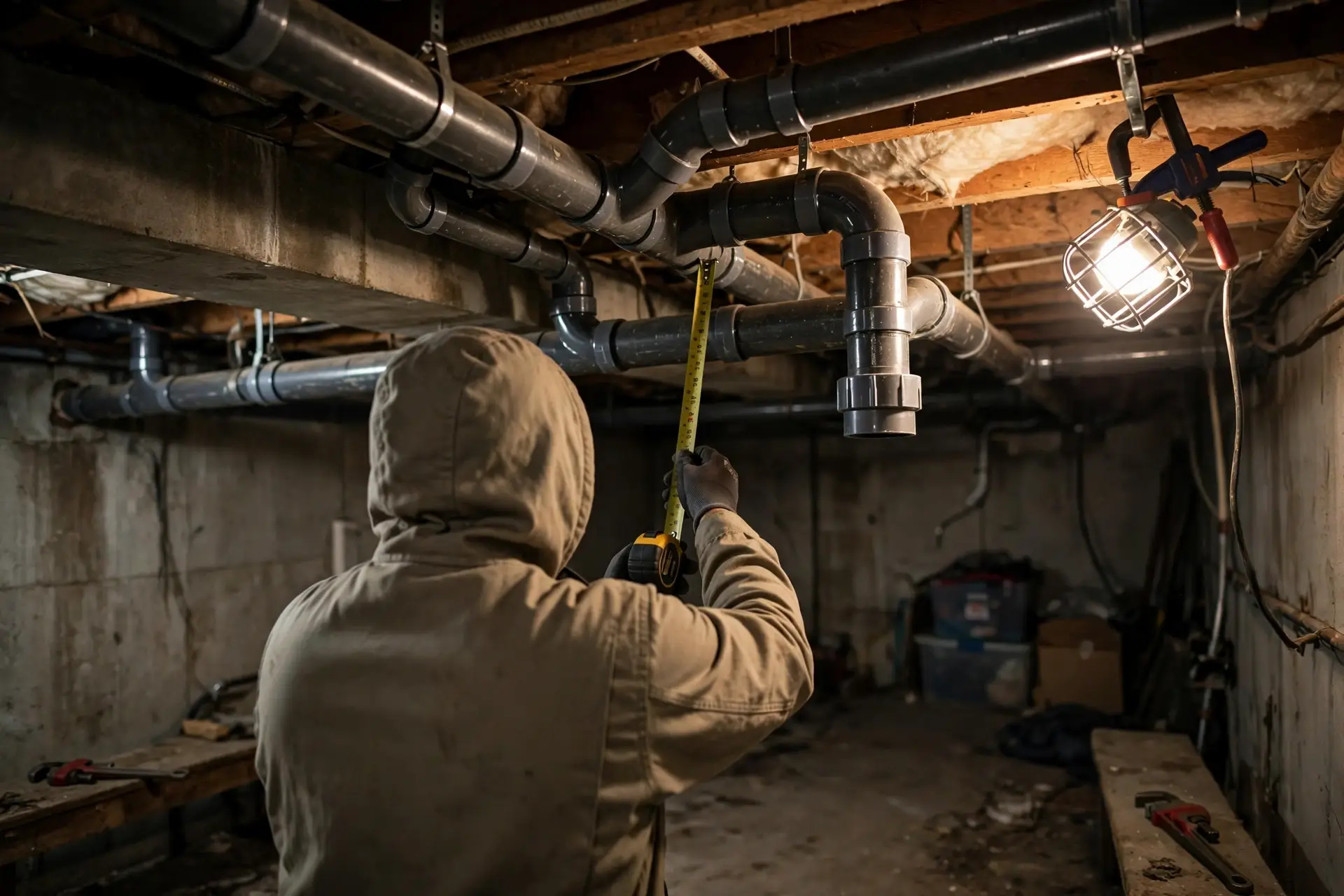
Entry point is the second. A capped cleanout outside the house is quick to open; a line that can only be reached by pulling a toilet or going through a roof vent takes longer and costs more.
The amount of coating is the third: a thin grease film clears in one pass, while a thick crust of scale or a root mat needs several passes and sometimes a different nozzle.
Time of day matters too. A planned visit in working hours costs less than a call at midnight, and a job that needs the camera twice costs more than a job that needs it once.
The written quote should list each part: the camera look, the jetting itself, and any follow-up work. If a quote is a single round number with no breakdown, ask what it covers.
A clear breakdown protects both sides, because it shows whether the camera check is included or priced on its own, and whether a second visit would be charged again.
Hydro Jetting
Can jetting clear scale and mineral buildup?
Scale is the hard crust left behind when water carrying dissolved minerals dries on a pipe wall, and it builds up fastest in areas with hard water and in old cast iron pipe, where the rough surface gives it something to grip. Over years it can narrow a pipe by a third or more, and the flow slows even though nothing is actually blocking the line.
A snake does little against scale, because its cutting head rides over the crust. A jetting nozzle with a spinning head is built for this work: the spinning jets strike the crust from several angles and flake it off in pieces.
Thick scale may need more than one pass, and the crew will run the camera in between passes to see how much crust is left. Very old cast iron with deep pitting needs care, because the scale can be the only thing holding a thin wall together, and stripping it away can expose a weak spot.
That is another reason the camera look comes first. On a sound pipe, though, a scaled line often comes back close to its original bore after jetting, and the difference in flow is easy to hear: a drain that gurgled and hesitated runs quiet and fast.
Hydro Jetting
What should you do to get ready for a jetting visit?
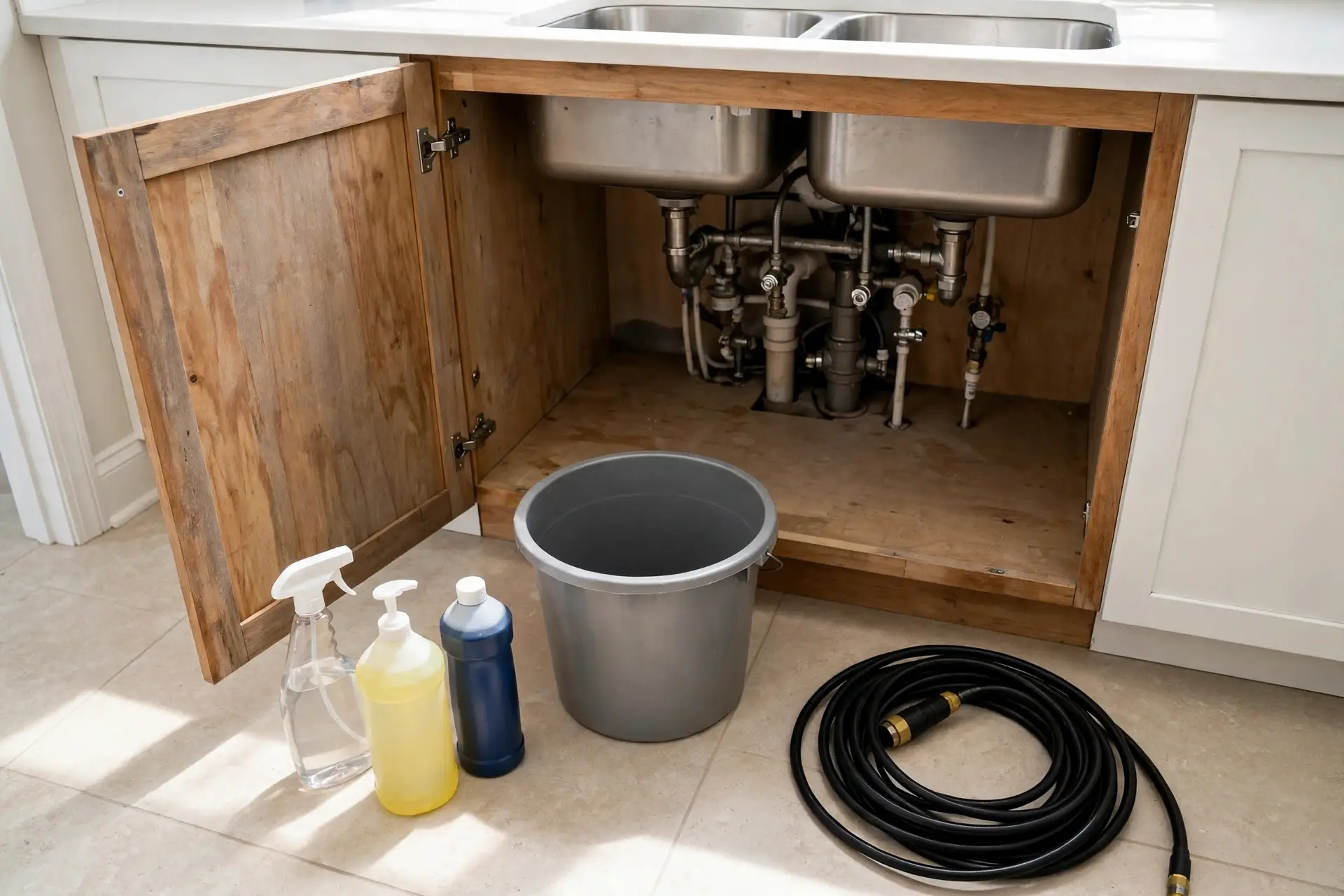
Clear a path to the entry point before the crew arrives. If the cleanout is outside, move bins, planters and garden furniture away from it, and cut back any shrubs that hang over the cap.
If the entry point is in a basement or a utility room, move boxes and stored items a few feet back so the crew can lay down floor protection and set up the machine. Knowing where the cleanout is saves time; if you do not know, the crew will find it, but the search adds minutes to the visit.
Stop running water into the slow line on the morning of the visit, and tell the crew about anything already poured down the drain, especially chemical cleaners, because the crew needs to know what is sitting in the pipe before they open it. Keep pets in another room, and plan to be home for the camera look at the start and the final look at the end.
Those two moments are when you see what was wrong and what was done about it. The crew will tidy the work area before they leave, and a short written note of what was found is worth asking for.
Signs you may need hydro jetting
- The kitchen sink drains slower each week even though the trap is clear.
- A tub gurgles when the toilet next door is flushed.
- Two or three fixtures in different rooms slow down at the same time.
- The same drain clogs again within a few weeks of being cleared.
- A faint drain smell hangs around a sink or floor drain.
- Water rises in a shower tray when the washing machine drains.
- Water drains well in the morning but slows down by the evening, when the line has had a full day of use.
- A drain that was snaked a month ago is already slowing again, which points to coating left on the walls.
- The toilet flushes weakly while the sink beside it drains normally, a sign the shared line downstream is narrowing.
- Bubbles rise in a toilet bowl when the washing machine pumps out, because air is trapped behind a partial blockage.
- A drain smells worse after hot water runs through it, as heat loosens the film on the pipe walls.
- The water level in a toilet bowl sits lower than usual, which can mean a partial blockage is pulling air through the trap.
How it works
- 1
Step 1 — Describe the symptoms
Tell the crew which fixtures are slow, when the trouble started, and what has already been tried, including any snake or chemical cleaner. That history points them at the right line first.
- 2
Step 2 — Find the entry point
The crew locates the capped cleanout, usually outside the house or in a basement, and lays down floor protection if the entry point is indoors. The hose goes in through this opening, not through a fixture.
- 3
Step 3 — Camera look before any water
A small camera travels into the line and shows the coating, the blockage and the pipe condition on a screen. You can watch with the crew and see exactly what needs cleaning.
- 4
Step 4 — Jetting in passes
The hose cleans the line in slow passes, pulling back a little at a time so the jets scour each stretch of wall. Heavy coating gets a second pass, and the camera goes back in to check the result.
- 5
Step 5 — Final check and tidy-up
A last camera look confirms the walls are clear and the water runs free. The crew removes the hose, caps the cleanout, tidies the work area, and tells you what was found.
Hydro Jetting cost
What does it cost?
Typical ranges for home jetting work, shown as estimates. The written quote for your line is the figure that counts, and it should list the camera check, the jetting and the tidy-up as separate lines. Length is the biggest driver: a short branch line costs less than a long main drain. Entry point matters too — a capped cleanout outside the house is quick to open, while a line that can only be reached by pulling a toilet takes longer. The amount of coating on the walls matters as well: a thin grease film clears in one pass, while thick scale or a root mat needs several passes and more time on site. A planned visit in working hours costs less than a late-night call, and a second camera look after the clean may be priced on its own. Ask what the quote covers before the work starts, so there is no surprise when the crew packs up.
| Service | Typical range (estimate) | Notes |
|---|---|---|
| Branch line jetting | $250 – $550 | One sink or bath line |
| Main drain jetting | $350 – $900 | Whole-home line |
| Camera check with jetting | $150 – $350 | Often bundled in |
Prices are estimates only. The local company that does the work sets its own final pricing.
Questions about hydro jetting