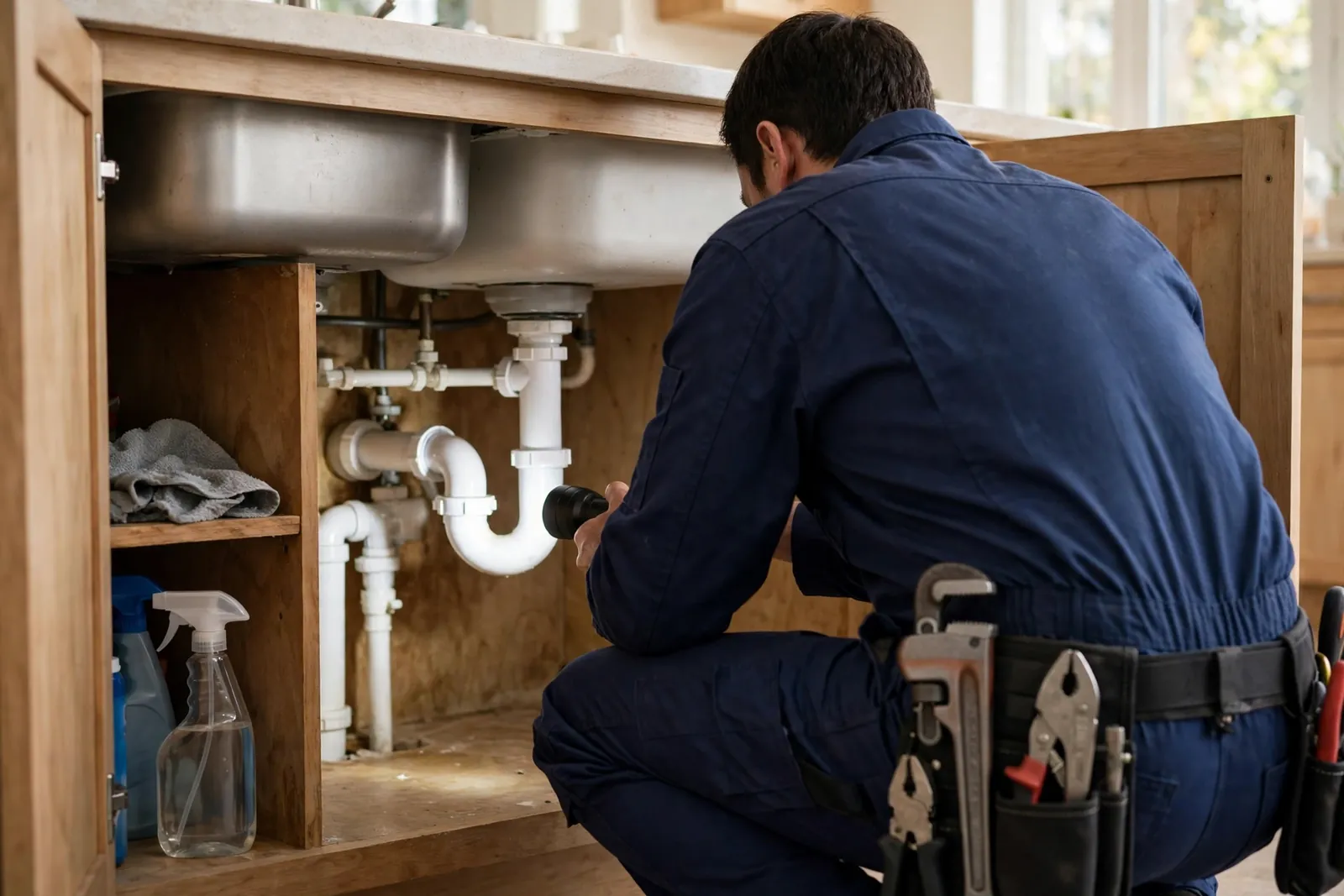
Hydro Jetting Cost Report
Most homes pay $300 to $900 for a hydro jetting visit, and a main sewer line usually lands between $350 and $900. A camera look first often adds $150 to $350 when billed on its own. Every figure here is a typical national range, shown as an estimate. Call (833) 878-1592 for a written quote.
Updated 2026-11-18. Prices shown are estimates only.
What should you budget for a jetting visit?
Plan on $300 to $900 for a typical home visit, and treat that span as the middle of the market rather than a promise. A short branch line to one fixture sits near the bottom, while a long main line coated in grease or roots sits near the top. The camera look that opens the visit is sometimes part of the price and sometimes billed apart, usually $150 to $350.
What you are paying for is time on site, water, and the gear to do the job right: a jetter, a set of nozzles, and a camera to prove the result. A visit that skips the camera may look cheaper on paper, but it leaves the plumber guessing about the pipe, and guessing is how a cleaning turns into a second call-out.
The budget also depends on how the visit is booked. A visit booked in advance, in the daytime, with a clear cleanout and a short line, sits at the low end. A visit booked at night, on a holiday, or for a long main line with heavy buildup sits higher. After-hours terms can differ, so ask when you phone what the visit includes and whether the written quote you get before work starts is the price you will pay. A budget is only useful if it covers the whole visit: the camera inspection, the jetting, and the cleanup, with no separate charge left to appear afterwards. Ask for the quote in writing, and check that it lists each part.
Which jobs sit at the low end, and which at the high end?
Single branch lines are the cheapest jetting work, commonly $250 to $550. Kitchen and food-service grease lines come next, often $300 to $700, because hot water and repeated passes are needed to strip the walls. Root work on a sewer line runs higher still, usually $400 to $900, since roots call for a cutting nozzle and more time in the line.
Main sewer lines span the widest band, $350 to $900, because length and buildup vary so much from house to house. Commercial work sits above the home bands at $500 to $1,500 or more: the lines are wider, longer, and carry more waste, and the work is often done outside business hours. Every one of these bands is a typical national range, shown as an estimate.
Access is the other great divider. A cleanout that is clear, close to the house, and easy to reach keeps the job simple and the price low. A cleanout buried under a patio, behind stored boxes, or under snow takes time to reach, and that time is part of the bill. A line that runs a long way from the house to the street takes more water and more passes than a short one. When you phone, say where the cleanout is and whether it is clear, since that helps the person on the phone give you a better sense of the range before the crew arrives.
Why do two quotes for the same street look different?
Length of pipe is the first reason. A home with a short run to the street pays for less time and less water than a home with a long run under a big yard. Access is the second: a cleanout at ground level is quick to reach, while a line that must be entered through a pulled toilet or a roof vent adds labour before the jetting even starts.
What is inside the pipe is the third reason. Soft grease and soap wash out fast; hard scale and roots need slow, repeated passes. Pipe condition is the fourth: a sound line takes full pressure, while a thin or cracked line must be worked gently, which takes longer. That is why a firm price only comes after the camera has been in the line.
The companies also differ in what they include. One quote may include the camera inspection, the jetting, and the cleanup in a single figure, while another lists the camera on its own and the jetting on its own. The two quotes can look far apart until the parts are compared line by line, and the cheaper one can turn out to be the one that leaves the camera out. Ask each company for the same list: the inspection, the jetting, and the cleanup, with the lines included named. Then the comparison is between the same work, and the difference, if there is one, is a real difference in price.
Jetting or snaking: which bill makes sense?
A snake visit for a simple clog often runs $100 to $300, well below a jetting visit, and for one local clog it is the right spend. Jetting costs more because it washes the whole pipe wall and needs heavier gear and more time. It earns its keep on repeat clogs, on lines coated in grease, and on main sewers that keep slowing down.
Count the year, not the visit. A home that pays for a snake every few months can pass the price of one jetting visit before the year is out, and still have a coated pipe. A camera check settles it: coated walls argue for jetting, while a single object or a local blockage argues for the snake. Compare one jetting bill against a year of snake bills before you pick.
The comparison also changes with time. Snaking costs less per visit, but a line that needs snaking every few months can cost more over a year than one jetting that clears the full pipe. Jetting costs more up front, but it removes the layer that catches new debris, so the line stays open longer. Over two years, a home that jets once may spend less than a home that snakes four times. The camera footage settles the choice: if the pipe wall is coated, jetting is the better fix; if the trouble is a single object or a local clog, snaking may be enough. Ask the plumber to show you the footage and explain the choice.
Reading a quote line by line
A good written quote names each part of the visit: the camera look, the jetting itself, and the cleanup afterwards. It says plainly whether the camera fee is inside the jetting price or added on top, and it says what happens if the camera turns up a broken pipe. Repair work, if it is needed, should be quoted on its own, after the footage has been seen.
Do not agree to repair work over the phone before the camera has been in the line, since a repair price without footage behind it is a guess. Keep the written quote and any camera report you are given. If the trouble comes back within days, those papers tell the next visit what is already known, and they keep the next quote honest.
Two lines on a quote deserve a second look. The first is the camera inspection: is it included, or priced on its own, and does the quote cover a check before and after the clean? The second is the list of lines: does the quote cover a single branch, the main line, or several lines, and are they named? A quote that says 'jetting' without naming the line is not a quote you can compare with another. A third line worth checking is what happens if the camera finds a broken pipe: does the job stop, does a repair quote follow, and is there a charge for the visit so far? Ask those questions before you agree, not after the work is done.
When the money is well spent — and when it is not
Jetting pays off when drains keep clogging, when several fixtures slow down together, or when the camera shows heavy buildup along a long run. In those cases one wash of the walls can hold the line open far longer than a snake job that only cuts a path through the blockage.
It pays off less for a single slow sink with a local clog, where a plunger or a small snake will do the job for far less. And it is the wrong tool for a collapsed pipe, which needs a repair, not a wash. A camera look before you book is the cheapest way to tell the two cases apart.
The money is not well spent when the camera shows a broken or collapsed pipe and the answer is another clean. Jetting cannot repair a broken pipe, and cleaning a broken line is money spent on a problem that will return. It is also not well spent when the trouble is a single local clog that a snake would clear in minutes. The camera is what tells the difference, and a crew that shows you the footage and talks through the options is spending your money better than one that starts jetting without a look. If a quote feels wrong, ask for the footage to be explained again, or get a second quote before you agree.
How the ranges on this page were put together
The ranges on this page are typical ranges for the trade, not prices taken from a single company or a single city. They are built from the work itself: how long a job takes, how much water and equipment it needs, and what the camera finds. A short branch line takes less time and less water than a long main line, and a line with light grease takes fewer passes than one with heavy scale or roots. Those differences are what move a job from the low end of a range to the high end, and they are the same in every city, though the level of the range moves with local labour and travel costs.
The ranges are labelled as estimates on every page where they appear, and they are not quotes. A quote is a firm price for a particular line, given in writing before work starts, after the camera has been in. If a price on this page and a quote on site disagree, the quote is the price that matters, because it is based on your line and not on a typical one. This page exists to help you judge a quote, not to replace it, and the cost table on this page is the summary to carry into that conversation.
What a main line job costs, and why it varies
A main line jetting job for a home often falls between $350 and $900. The low end is a short main line, easy to reach, with a blockage that clears in a few passes. The high end is a long line from the house to the street, with heavy grease, scale, or roots, needing more passes and more water. Access matters too: a cleanout that is clear and close keeps the job simple, while one buried under a patio or under snow takes time to reach. The camera inspection, $150 to $350 when priced on its own, is often included in the main line price, but not always, so ask whether it is part of the figure or listed on its own.
A main line with roots costs more than one with grease alone, because the roots must be cut out before the line can be flushed, and the camera check afterwards takes longer. A main line that needs a repair — a broken or collapsed section found on camera — is no longer a cleaning job, and the price changes altogether. The crew should explain the new price before going ahead, and you should not agree to repair work without that talk first. Keep the written quote, and check that it names the main line and lists the inspection, the jetting, and the cleanup.
What a kitchen or branch line job costs
A single drain line jetting job for a home often falls between $250 and $550. The low end is a short branch line, easy to reach, with a blockage that clears in one or two passes. The high end is a longer branch, or one with heavy grease that needs more passes and more water. A kitchen line is the most common branch job, because cooking fat hardens and narrows the pipe a little at a time, and a line that was slow for months can close altogether after a holiday meal.
A branch line job is shorter than a main line job, usually one to two hours, and the camera check is quicker, since there is less pipe to look at. Even so, the camera comes first, and the written quote comes before the jetting starts. If the camera shows that the trouble is further down, in the main line rather than the branch, the job changes, and the crew should explain the new price before going ahead. Ask whether the quote covers the branch alone or the main line as well, since that is the most common source of confusion on a branch line bill.
What a commercial job costs, and why it is priced differently
A commercial job is priced on the building, not on a single line. Restaurant, hotel, office, and apartment lines are larger and longer than home lines, and they carry more waste each day, so they need bigger equipment, more water, and more passes. A single restaurant line often takes two to four hours, and a hotel or office with several lines can take a full morning or afternoon. The price reflects that: the number of lines, their length, the amount of buildup, and whether the grease trap is included or priced on its own.
Commercial work is usually planned around opening hours — after closing or before opening — and the timing can affect the price, so ask when you phone what the visit includes and whether after-hours terms change anything. Ask for the quote in writing, check that it lists each line by name, the inspection, the jetting, and the cleanup, and keep a copy for your records. For a building with several lines, ask whether the quote covers all of them or only the one that is blocked, since that is the most common source of confusion on a commercial bill.
The camera inspection: what it costs and what it is worth
A camera inspection on its own often costs $150 to $350, and it is often included in the price of a jetting visit. It is worth having even when it is priced on its own, because it is what makes the job safe and the quote honest. The camera shows the blockage type, the pipe material, and any weak spots, so the pressure and the nozzle can be matched to the pipe. It shows whether the trouble is grease, scale, roots, or a broken section, and that answer decides whether jetting is the right fix at all.
Without a camera, a jetting job is a guess: the crew does not know what is in the line, how far down it sits, or whether the pipe can take the pressure. With a camera, the quote is based on what is actually there, and the final camera check proves the line is clear. Ask whether the inspection is included in the quote, whether it covers a check before and after the clean, and whether you will be shown the footage. A crew that shows you the footage is giving you the record of the work, not just a bill.
Regional differences: why the same job costs more in one city than another
The same jetting job can cost more in one city than in another, and the reasons are ordinary: labour costs, travel time, and the local cost of running a business. A job in a large city, where the crew travels further and the cost of living is higher, will usually sit higher in the range than the same job in a smaller town. A job in a city with hard water and older housing may also need more passes, because scale builds up faster and the pipes are older.
The ranges on this page are national, and the city pages give the same ranges as estimates, since the local level is set by the quote on site. When you compare quotes, compare them for the same work in the same city, with the same lines named and the same parts listed. A quote from another city is not a useful comparison, and a quote that leaves the camera out is not a useful comparison either. The locations page gathers the city pages, and each one carries the same ranges as estimates.
Signs you may need hydro jetting
- A sink, tub, or shower that empties at a crawl even after the trap has been taken apart and cleaned.
- A drain that blocks again a few weeks after a plunger or a snake cleared it.
- Several fixtures slowing down at once, which points to trouble further along the line.
- A gurgling sound from a sink or toilet while water runs elsewhere in the house.
- Bad smells coming up from drains, worst near the kitchen or bathroom once water has run.
- A flush or a washer cycle that pushes water back up into the tub, shower, or a floor drain.
- A quote that lists the inspection, the jetting, and the cleanup, with the lines named.
- A price given over the phone treated as an estimate, not a firm price, until the camera has been in.
- A job that changes price only after the camera finds a broken pipe, with the new price explained first.
How it works
- 1
Step 1 — Look inside with a camera
The visit opens with a small camera pushed into the line. It shows what is blocking the pipe, what the pipe is made of, and any thin or cracked spots, so the pressure and the nozzle can be set to suit the pipe.
- 2
Step 2 — Wash the line with high-pressure water
A jetting hose goes in through the cleanout, and its nozzle sprays ahead and behind as it moves. The spray cuts grease, scale, and roots from the walls and carries the loosened waste out toward the sewer.
- 3
Step 3 — Check the result and tidy up
The camera goes in again to prove the line is open, flow is checked at the fixtures, and the work area is cleaned. The crew then talks through the findings and what to keep an eye on in the months ahead.
What does it cost?
All figures below are typical national ranges, shown as estimates. A written quote from the plumber replaces them once the camera has been in the line.
| Service | Typical range (estimate) | Notes |
|---|---|---|
| Single drain line jetting | $250 – $550 | One branch to a single fixture |
| Main line hydro jetting | $350 – $900 | The line from house to street |
| Grease line hydro jetting | $300 – $700 | Kitchen and food-service lines |
| Root clearing with hydro jetting | $400 – $900 | Roots cut from the sewer line |
| Commercial hydro jetting | $500 – $1,500 | Wider, longer business lines |
Prices are estimates only. The local company that does the work sets its own final pricing.