
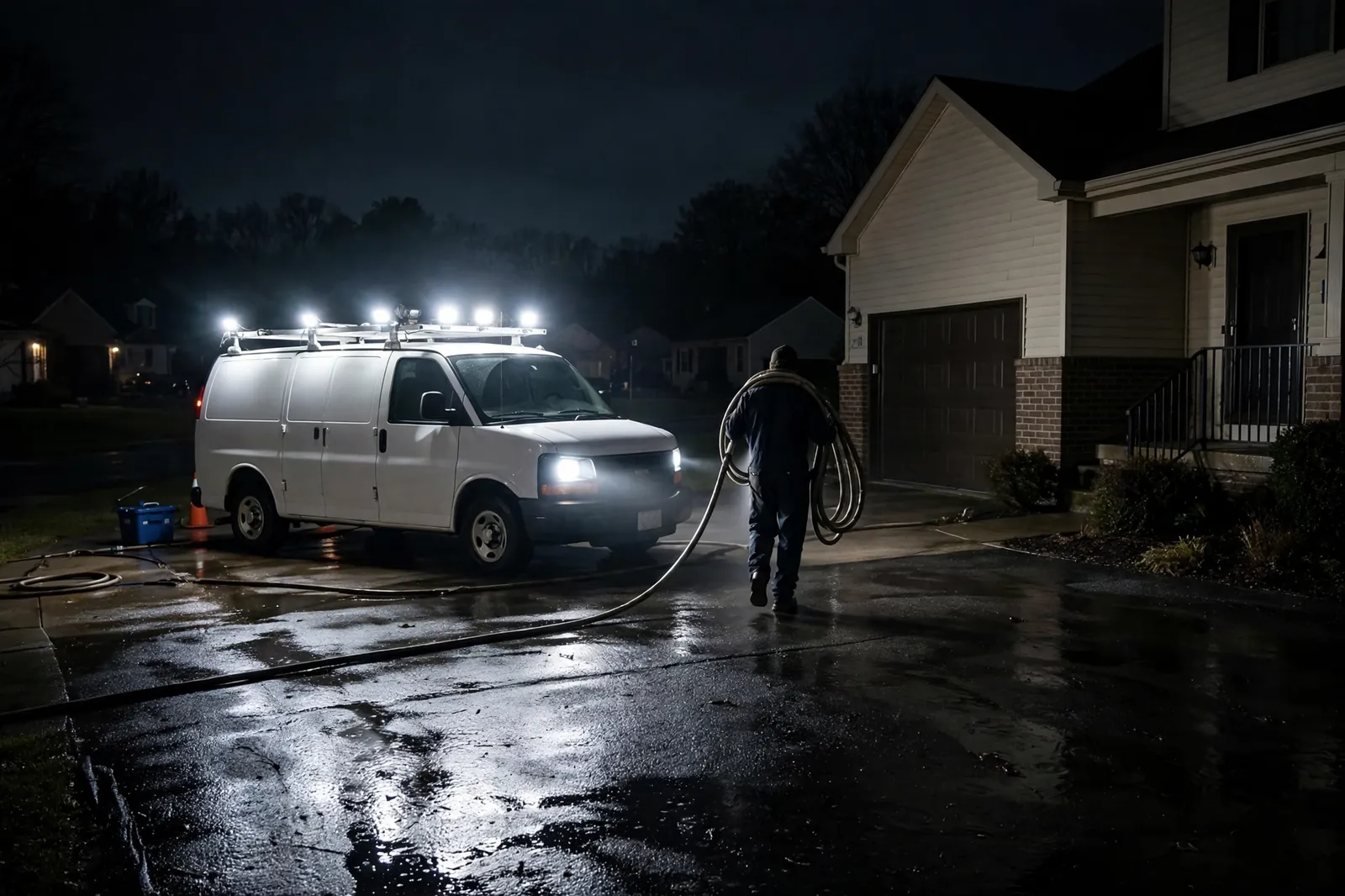
Emergency Hydro Jetting
A hydro jetting emergency is a backup, an overflow, or an active leak that needs help now, not next week. Stop using water, keep people away from standing water, and call (833) 878-1592. The crew looks inside the line with a camera first, then clears the clog and checks that water runs freely again.
Updated 2026-11-18. Prices shown are estimates only.
- $150–$900 Typical cost range
- 5 Steps in the visit
- 12 Questions answered
Before & after — emergency hydro jetting
Before & after
Drag the slider to compare the same pipe before and after jetting.
Emergency Hydro Jetting
Which problems count as an emergency?
Sewage coming back up through a drain, a toilet that overflows onto the floor, and water rising in a tub are all emergencies. So is a leak that keeps running from a drain line while you watch it.
These problems do not wait well: water on the floor can soak into finishes, walls, and stored boxes within hours, and sewage brings germs with it. A drain that is merely slow is not an emergency, and a single clogged sink can usually wait for a daytime visit.
The line is simple — if water is where it should not be, or waste is coming back into the home, treat it as urgent and stop using water straight away.
Emergency Hydro Jetting
What do you do in the first few minutes?
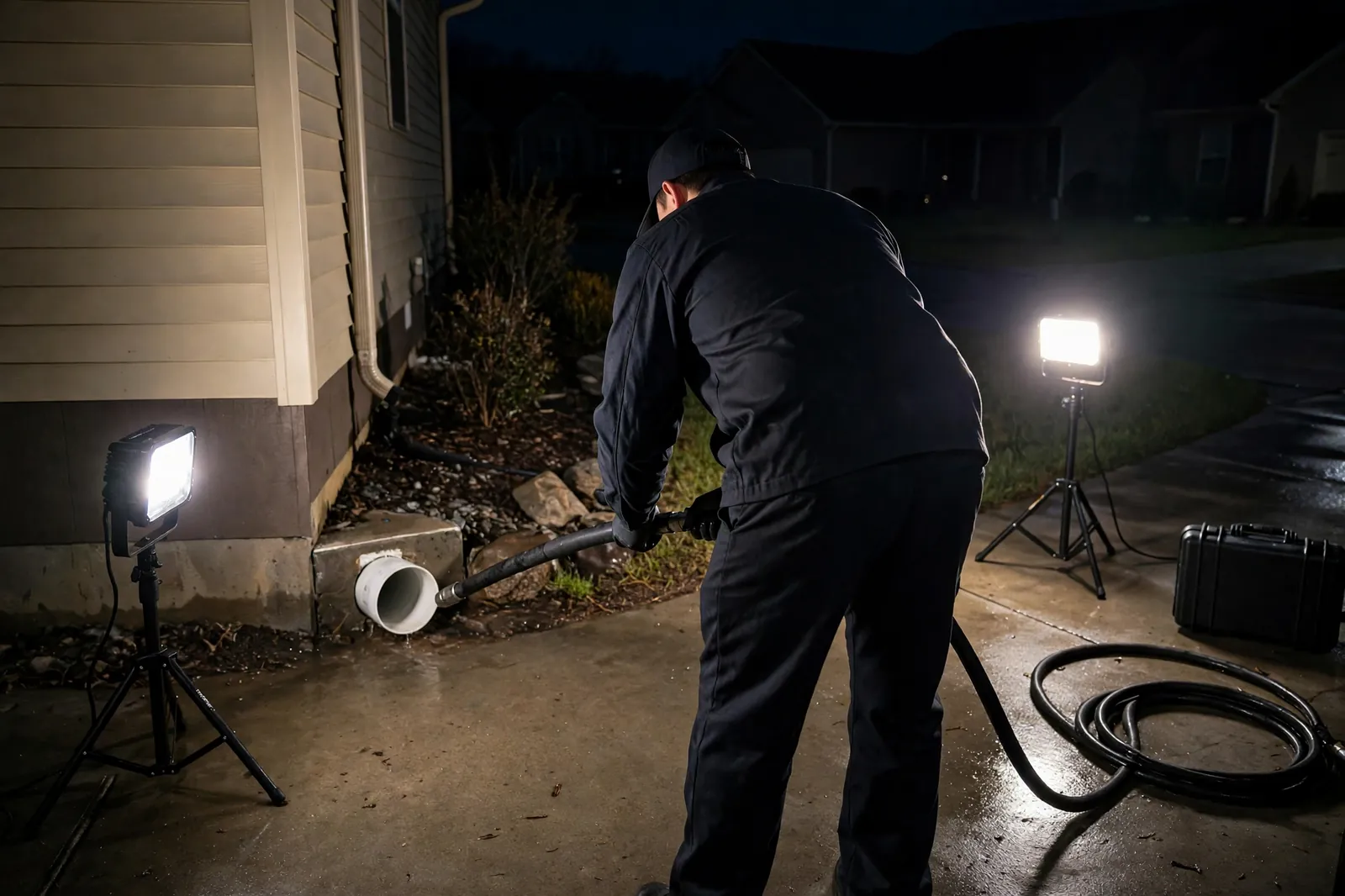
Stop all water use in the home first. Do not flush toilets, run the washer, or start the dishwasher, since every flush can push more water into the rooms.
Keep people and pets out of standing water, above all if it may be sewage, and do not step in water that sits near power outlets or appliances. If you can do it safely, move rugs, boxes, and valuables away from the wet patch.
Then phone (833) 878-1592 and say which fixtures are affected and when the trouble started, so the person on the phone can judge how urgent the visit is.
Emergency Hydro Jetting
What should you avoid doing right now?
Do not pour chemical drain cleaner into a line that has backed up. It can splash back, give off fumes, and leave the line unsafe for the crew to open.
Do not keep plunging a toilet that is already overflowing, and do not run taps to test whether the line has cleared — that only adds water to the floor. Do not try to open a sewer cleanout yourself if sewage is pressing behind it, since it can spill out fast and hard to control.
Leave the cleanout shut, leave the chemicals on the shelf, and wait for the crew with the right gear.
Emergency Hydro Jetting
What happens when the crew arrives?
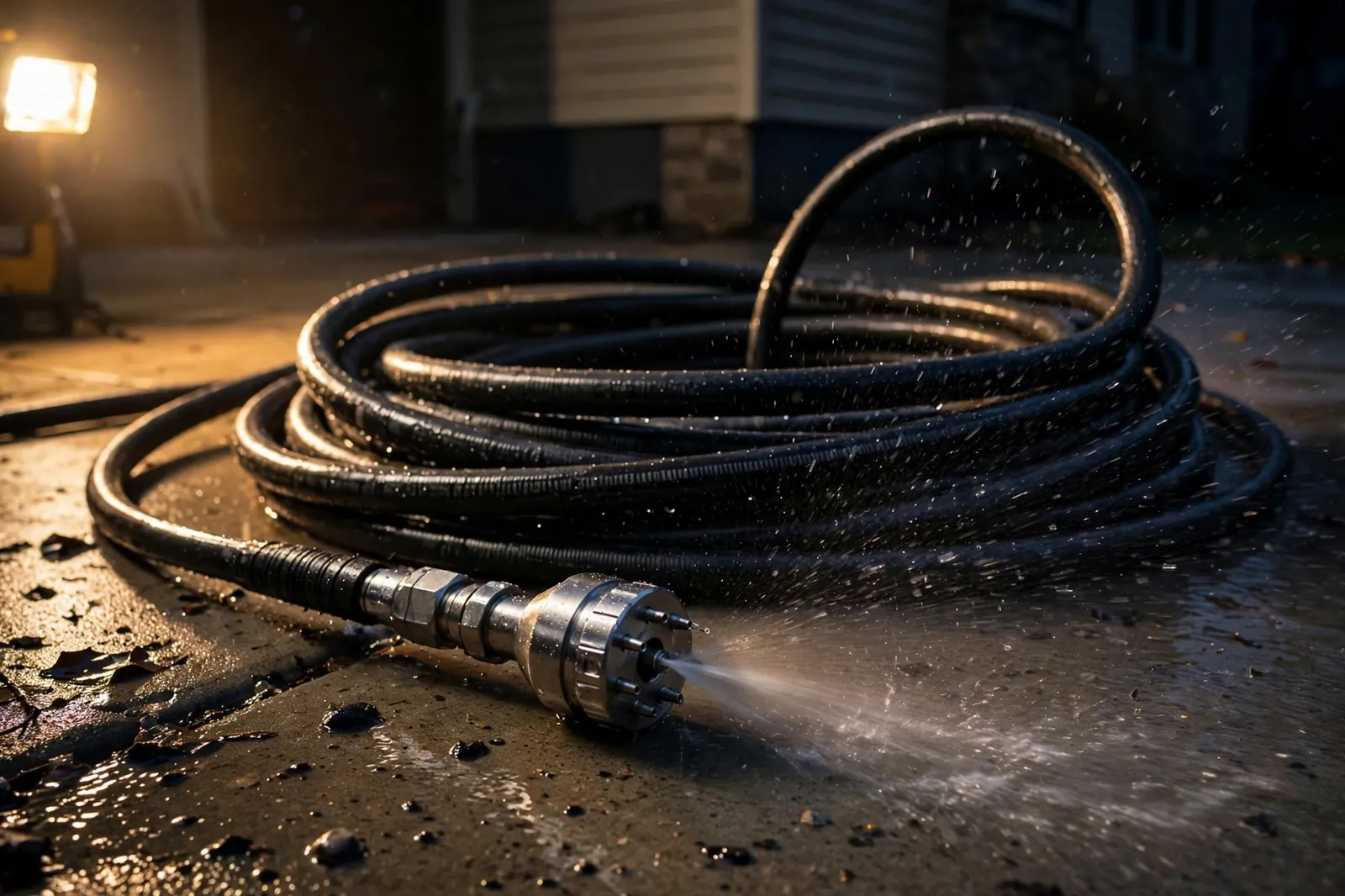
The crew starts with a quick look at the fixtures that are backing up and at the access point they will use. A small camera goes into the line first, so they can see what the clog is made of and where it sits, and whether the pipe has a crack or a weak joint.
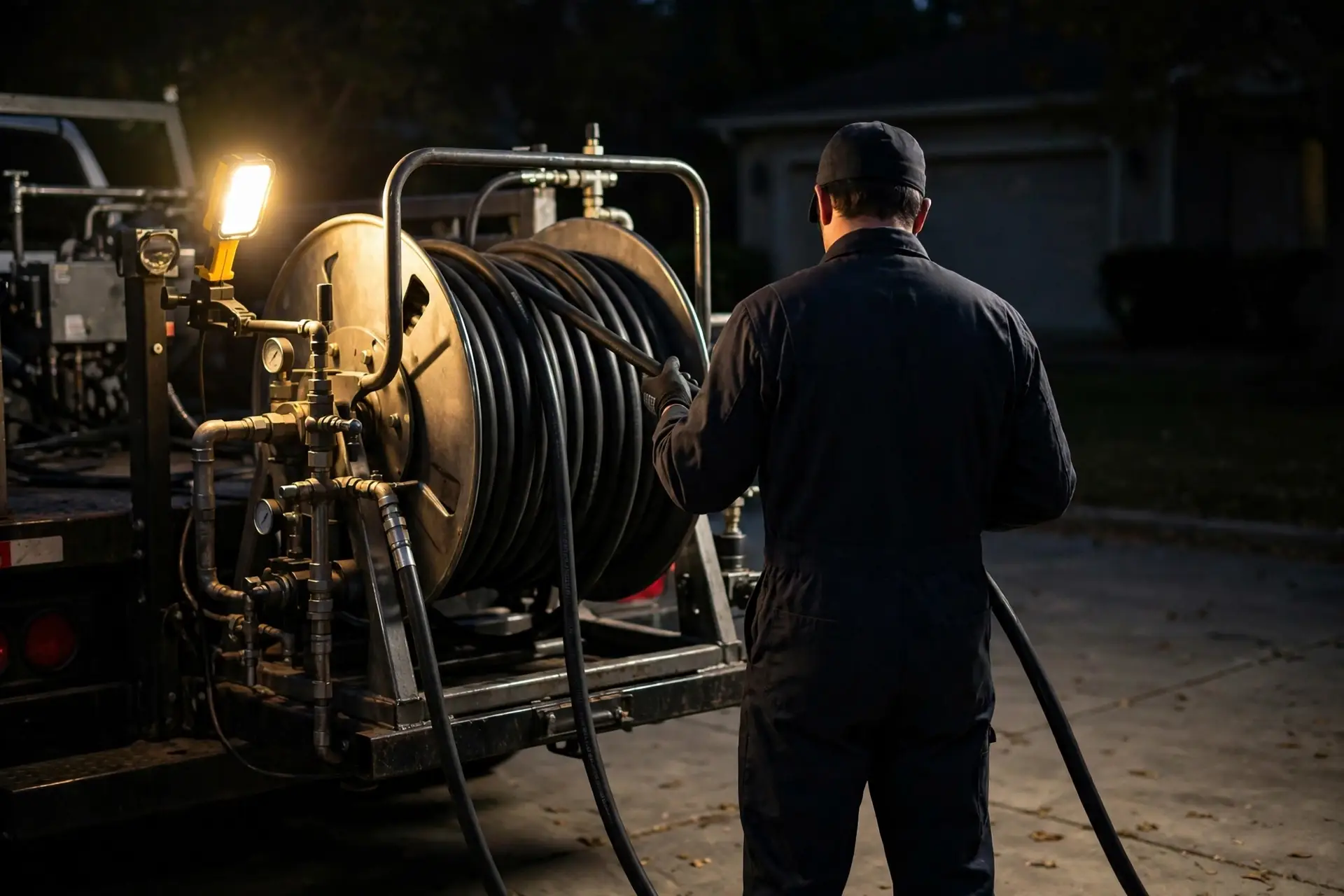
Then the jetting hose goes in through the cleanout and the water jets cut the clog away in passes until the flow returns. A last camera pass confirms the line is open, the crew checks the flow at the fixtures, and they tidy the work area before they leave.
Emergency Hydro Jetting
How soon can someone get to you?
How fast help arrives rests on where you live, what time it is, and how many crews are already out. When you phone, give your address, say which fixtures are backing up, and say whether the problem is getting worse — that helps the person on the phone put your visit in the right order.
You will hear a time window rather than an exact minute, since travel and earlier jobs can shift the day. Keep your phone nearby after you call, so the crew can ring to say they are on the way or to check the address.
Emergency Hydro Jetting
What should you check once the line is open?
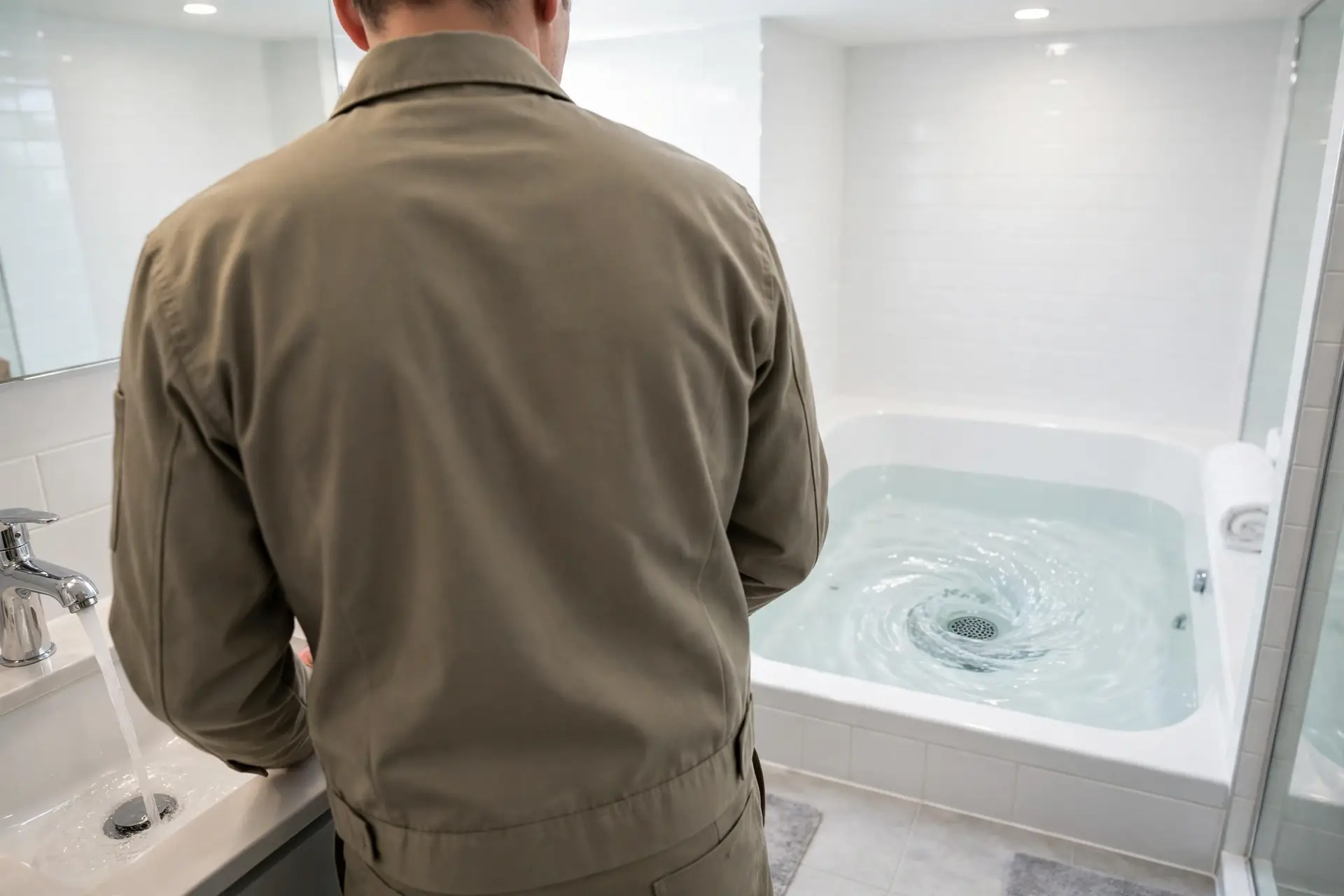
Once the crew has gone, run water in one fixture at a time and watch the drains. Start with the lowest fixtures in the home, such as a floor drain or a basement tub, since those show a backup first.
If the water drains at a normal pace and no smells come back, the line is holding. If the trouble returns within days, phone back and mention the earlier visit, so the crew can look at the camera footage again and hunt for a deeper cause, such as a broken section or a root pushing in through a joint.
Emergency Hydro Jetting
What should you do about standing water in the house?
Standing water from a drain backup is dirty water, and it should be treated as a health risk, not as a cleaning job to start right away. Keep children and pets out of the room, and do not walk through the water in bare feet.
If the water is near a wall socket, a floor lamp or any appliance, do not touch the water or the appliance: switch off the power to that room from the breaker panel if you can reach it without stepping in the water, and if you cannot, leave the room and wait for help.
Once the line is open and the water has drained away, the floor and any items that touched the water need washing with hot water and soap, then a disinfectant made for household use. Soft items that soaked up the water, such as rugs, cardboard boxes and stuffed toys, are hard to clean properly and are usually best thrown away.
Hard floors, tiles and sealed wood can be washed and dried. Open windows and run a fan to dry the room, because damp that stays in a floor or a wall turns into mould within days.
Take photos of the damage before you clean, because they are useful for an insurance claim.
Emergency Hydro Jetting
Is it safe to stay in the house during a backup?
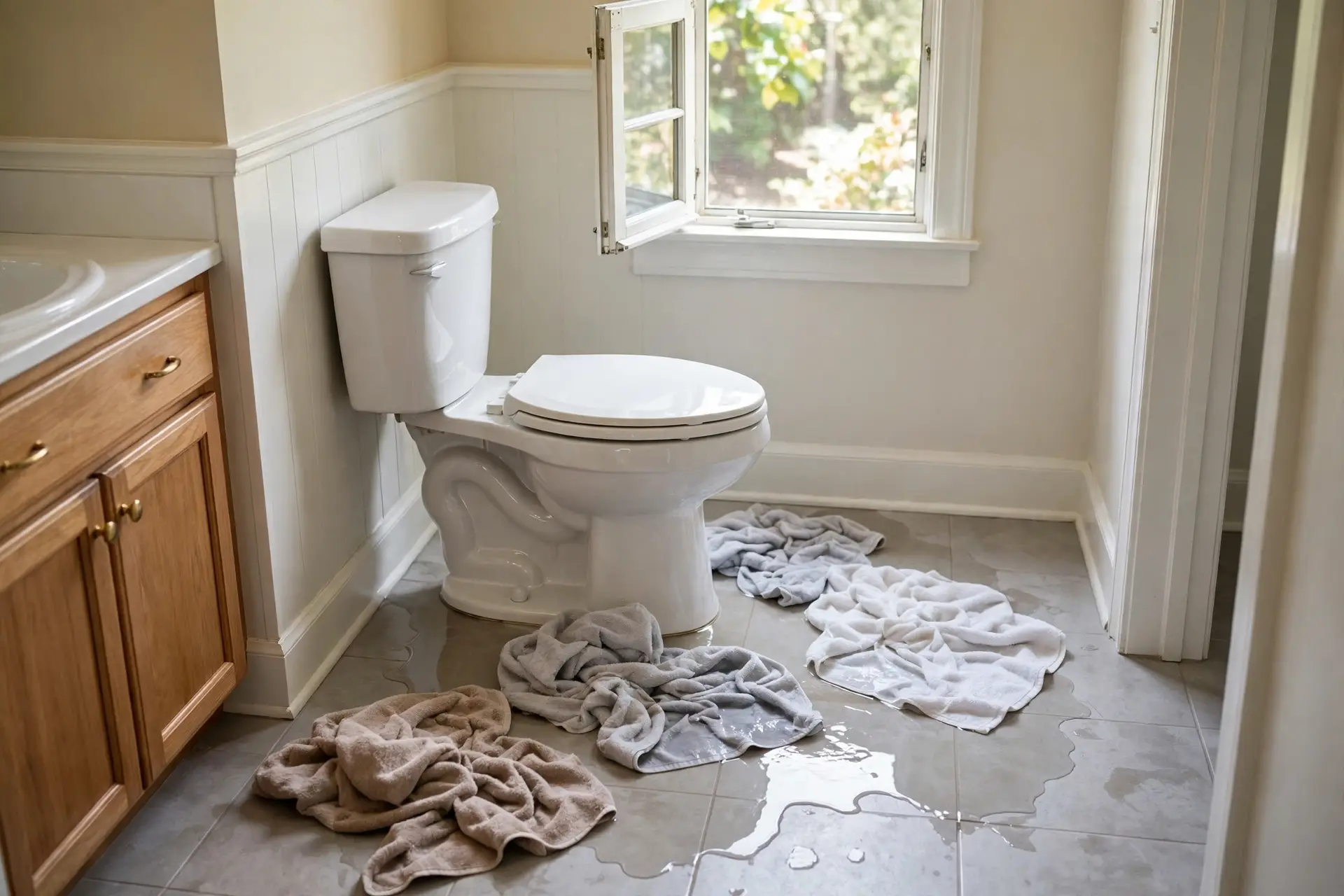
A small backup in one bathroom, with the water contained in the tub or the shower tray, is unpleasant but not dangerous, and most people can stay in the house while they wait for the crew. A backup that has spread across a floor, or that involves sewage rather than grey water, is a different case.
Sewage carries bacteria, and the smell alone is a sign that the air in the room is not healthy to breathe for long. If the water has reached a bedroom, a kitchen or a room where food is prepared, that room should be closed off until it is cleaned.
The clearest reason to leave is electricity. Water and electricity do not mix, and a backup that reaches a socket, an appliance or a power strip can turn a wet floor into a shock risk.
If the water is near any electrical fitting, switch off the power to that area from the breaker panel, and if the panel itself is in the wet area, do not go near it: leave the house and call for help from outside. The same applies to a gas appliance that has been flooded.
Safety comes before saving the floor, and a crew would rather arrive at an empty house than at someone who has been hurt trying to cope alone.
Emergency Hydro Jetting
What should you tell the crew when you phone?
A clear phone call gets help to you faster, because the crew can bring the right equipment and give you the right advice while they travel. Start with the address and a phone number where you can be reached, then say what is happening in plain words: water coming up through the shower, a toilet overflowing, a floor drain bubbling.
Say when it started and whether it is getting worse. A backup that started an hour ago and is spreading needs a faster response than a drain that has been slow for a week.
Then answer the questions the crew will ask. Which fixtures are affected, and are they all on the same floor?
Has this happened before, and was the line jetted or snaked last time? Is there a cleanout outside the house, and do you know where it is?
Is there standing water, and is it near any electrical fitting? Is anyone in the house unwell, elderly or a small child?
These details decide whether the crew comes with a jetting machine alone or with a pump as well, and they decide what you should do while you wait. Write the answers down before you phone, because it is hard to think clearly when water is spreading across a floor.
Emergency Hydro Jetting
What happens if the line cannot be cleared on the first visit?
Sometimes the camera shows that the problem is not a blockage at all, but a broken or collapsed pipe, and no amount of jetting will open it. When that happens, the crew should stop, show you the camera picture, and explain what the picture means.
The line is made safe: the water is stopped, the affected fixtures are closed off, and the crew tells you what not to use until the repair is done. A temporary fix, such as clearing the section that can be cleared, may give the household a working toilet while the repair is arranged.
The next step is a repair plan, and it should be given in writing, with the length of pipe involved, the depth it sits at, and the method proposed: a dug repair, a liner, or a replacement. A repair is a bigger job than a clean, and it may need a permit from the town, so the plan should say who applies for it and how long it takes.
If the damage is sudden and the house cannot be used, the crew should say so plainly and help you think about the next hours: which fixtures can be used, where the water should be shut off, and what to do about the standing water. A clear plan is worth more than a rushed promise.
Emergency Hydro Jetting
How do you keep a backup from spreading to other rooms?
Water follows the lowest path, so the first step is to find the lowest drain in the house and watch it. In most homes that is a basement floor drain, a basement shower or a ground-floor toilet.
If water is coming up there, it will spread across that floor first, and the way to slow it is to stop every tap, every flush and every appliance that drains water, including the washing machine and the dishwasher. Every litre that goes into the drains while the line is blocked comes back out of the lowest fixture.
Towels and old blankets can be rolled into a low barrier at a doorway to hold back a shallow spread, and a wet-and-dry vacuum can lift water from a hard floor faster than a mop. Move rugs, boxes and anything that soaks up water to higher ground, and lift furniture legs onto blocks or plastic bags if the water is rising.
Do not open a drain cap or pull a toilet to let the water out: the water has nowhere safe to go, and opening the line can flood the room faster. The crew will open the line from the cleanout, where the water can be controlled, and that is the point at which the spread stops.
Emergency Hydro Jetting
What does an after-hours visit cost compared with a daytime one?
An after-hours visit usually costs more than a planned daytime visit, because the crew is being called out at night, at the weekend or on a holiday, and the price reflects that. The extra cost is often a call-out fee added to the normal price of the work, and it can be a flat amount or an hourly rate for the time outside normal hours.
A job that takes two hours at midnight costs more than the same job at ten in the morning, and the crew should say so when you phone, before they set out.
Ask for the price before the crew arrives, and ask what it covers: the call-out fee, the camera look, the jetting, and the tidy-up. A clear quote protects both sides, because an urgent job can grow once the camera is in, and the price should be agreed before the work starts, not after it is finished.
If the price is more than you can pay at once, say so on the phone: some crews will still come and clear the line, and the payment can be arranged afterwards. The important thing is to get the water stopped, and the price is a conversation to have while the crew is on the way, not a reason to wait until morning.
Signs you may need emergency hydro jetting
- Sewage or grey water rising into a tub, shower, or floor drain.
- A toilet that overflows when flushed, even after one careful plunge.
- Water pooling on the floor near a drain with no clear source.
- Several fixtures backing up at once, not just one slow sink.
- A strong sewage smell that appears suddenly with slow drains.
- Gurgling from a toilet or sink while water rises in another fixture.
- Water is coming up through a shower drain or a floor drain, not just draining slowly.
- A toilet overflows when it is flushed, or when another fixture is used.
- Several drains back up at the same time, late at night or at the weekend.
- A drain that was slow yesterday is now completely blocked and the water has nowhere to go.
- A bad smell has appeared suddenly, together with water rising in a low fixture.
- The washing machine drains, and water comes up through the kitchen sink.
How it works
- 1
Step 1 — Stop the water at once
Turn off every tap, do not flush any toilet, and stop the washing machine and dishwasher. Every litre that goes into a blocked drain comes back out of the lowest fixture.
- 2
Step 2 — Keep clear of the water
Keep children and pets out of the room. Do not step in the water if it is near a socket or an appliance, and switch off the power to that room from the breaker panel if you can reach it safely.
- 3
Step 3 — Phone the crew and describe it plainly
Call (833) 878-1592 and say what is happening, when it started, which fixtures are affected, and whether there is standing water. Write down the answers before you phone, because it is hard to think clearly while water is spreading.
- 4
Step 4 — Camera look, then jetting
The crew runs a camera into the line to find the blockage, then jets it clear in passes, working from the house toward the street so the loosened waste washes out of the line.
- 5
Step 5 — Final check and clean-up advice
A last camera look confirms the line runs free. The crew caps the cleanout, tidies up, and tells you how to wash and dry the affected room and what to watch for in the next few days.
Emergency Hydro Jetting cost
What does it cost?
Typical ranges only — estimates, not quotes. An urgent visit can cost more than a planned one, and the final figure rests on what the crew finds. A late-night or weekend call often carries a call-out fee on top of the normal price of the work, and the crew should say what that fee is when you phone, before they set out. Length is the next driver: a short branch line costs less than a long main drain. The amount of coating matters too — a thin film clears in one pass, while a thick crust or a root mat needs several passes and more time on site. A camera look may be priced on its own at $150 to $350 or bundled with the jetting, so ask which it is. The written quote should list the call-out fee, the camera look, the jetting and the tidy-up as separate lines. If the job grows once the camera is in, for example when a root mat or a thick crust needs a cutting head and several more passes, the crew should agree the extra cost with you before they go on, not after the work is finished. Keep the written quote with the date on it, because it is the record of what was agreed if any question comes up later.
| Service | Typical range (estimate) | Notes |
|---|---|---|
| Main line hydro jetting | $350 – $650 | Most homes |
| Camera inspection with jetting | $150 – $350 | Often included |
| Single drain line jetting | $250 – $550 | One branch line |
| Repeat or heavy buildup cleaning | $400 – $900 | Extra passes needed |
Prices are estimates only. The local company that does the work sets its own final pricing.
Questions about emergency hydro jetting