
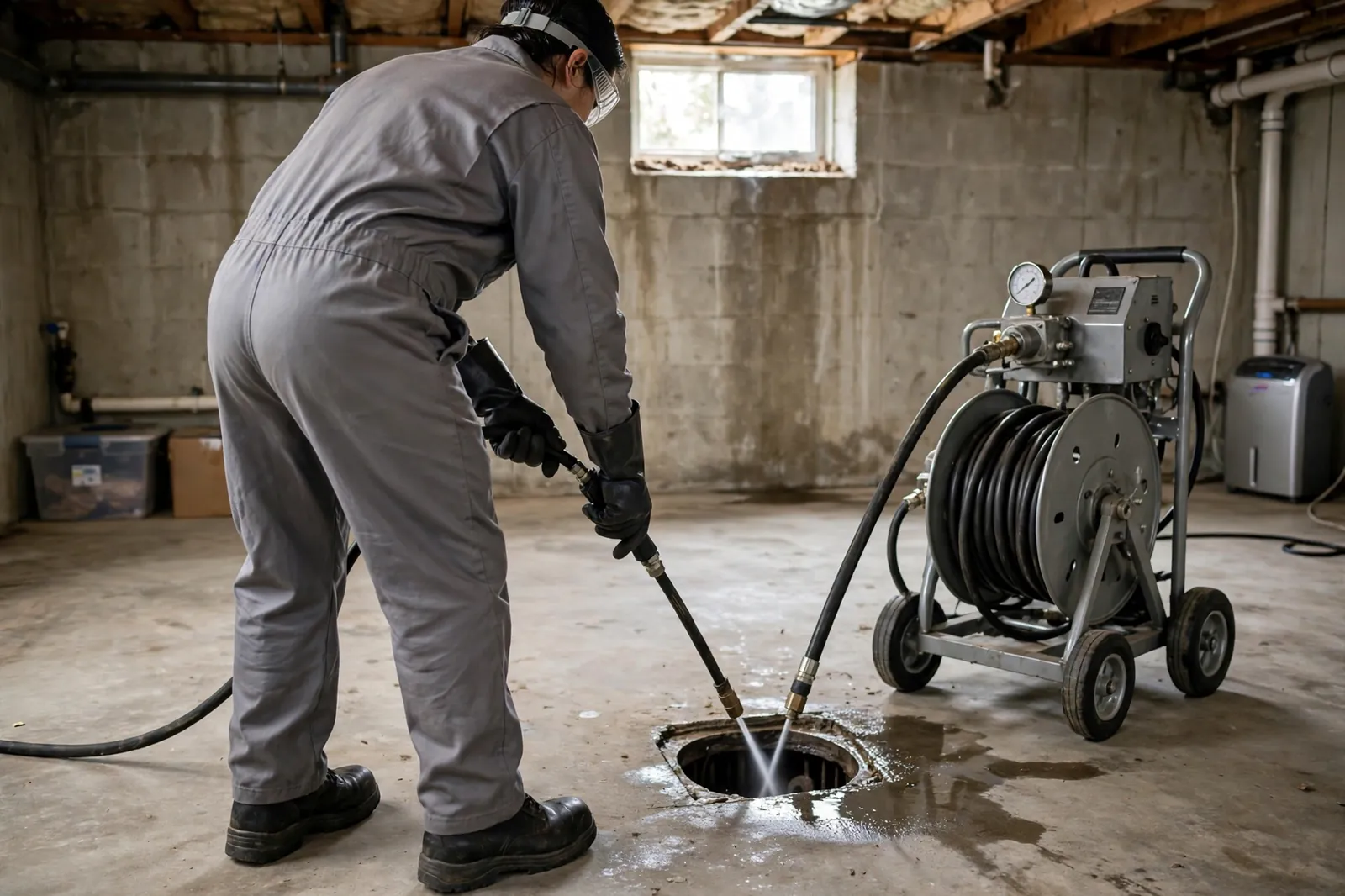
Hydro Jetting Safety Guide
High-pressure water is a tool, and like any powerful tool it can hurt people and damage pipes when it is used wrongly. This guide explains the risks of jetting, the gear and habits that keep a job safe, and why it is not a do-it-yourself task. Call (833) 878-1592 to book a trained crew.
Updated 2026-11-18. Prices shown are estimates only.
Why high-pressure water deserves respect
A jetting machine pushes water at 1,500 to 4,000 PSI for home work, and higher for large lines. At that pressure, a jet of water can cut skin, damage eyes, and inject water under the skin — an injury that looks small on the surface and is serious underneath. The hose itself, under pressure, can whip if it slips from a grip, and a nozzle that comes free can move fast enough to injure anyone nearby.
That is not a reason to fear jetting. It is a reason to treat it as a job for a trained operator with the right gear, not a weekend experiment. A professional crew knows the pressures, the distances, and the habits that keep the water in the pipe and away from people, and that knowledge is the safety system.
The operator's gear and habits
A trained operator wears eye protection, gloves, and sturdy footwear, and keeps bystanders — especially children and pets — out of the work area while the machine is running. The hose is fed in slowly and held with both hands, the pressure is raised gradually rather than in a sudden burst, and the operator watches the flow and the gauge throughout, because a sudden change means something has gone wrong.
The crew also checks the setup before starting: the hose connections are tight, the nozzle is secure, the entry point is clear, and the water supply is steady. Those checks take minutes, and they are the difference between a routine visit and an accident. A crew that skips them is a crew to stop.
Pipe safety: the camera comes first
The biggest risk to the pipe is jetting a line that is already broken. High-pressure water on a cracked, collapsed or badly corroded section can widen the break, push waste into the surrounding soil, and turn a repair into a larger one. That is why a camera inspection comes first on every job, without exception.
The camera shows the cracks, the thin walls, the weak joints and the collapsed sections before any water is used. If it shows damage, the operator lowers the pressure, uses a gentler method, or stops and talks about repair. A crew that starts jetting without looking first is taking a risk with your pipe, and you should ask them to look. See sewer camera inspection for what the survey covers.
Chemical cleaners and jetting: a dangerous mix
Chemical drain cleaners are a hazard on a jetting job. A cleaner poured down a line can sit on a blockage, give off fumes, and burn skin and eyes when the line is opened or the hose is fed in. The crew needs to know if a chemical has been used, so they can take precautions — gloves, eye protection, ventilation — and in some cases wait or flush the line first.
Tell the crew before they arrive if you have used a chemical cleaner, what it was, and when. Do not pour a chemical down a line and then book a jetting visit for the same day without saying so. And do not use a chemical as a substitute for jetting: it can damage pipes, it rarely clears a heavy blockage, and it creates a hazard for the next person who opens the line.
Children, pets and the work area
A jetting visit is not a spectator event. Children and pets should be kept out of the work area while the machine is running, and the crew should be told where they are so the hose run and the entry point can be kept clear of them. The pump unit outside is noisy and has hot surfaces, and the hose under pressure is not something to touch or step over.
Clear the work area before the crew arrives: move toys, pet bowls, shoes and anything else from around the cleanout or the drain that will be used. Make sure someone is home to give access and to hear what the camera shows, but keep the rest of the household out of the room where the work is happening until the crew says it is safe.
Noise, water and the neighbours
Jetting makes noise — the pump engine, the water jets, the flow through the pipe — and it is usually no louder than other plumbing or building work, but it is noticeable. A visit in the early morning or late evening can disturb neighbours, so a daytime booking is kinder where a choice exists. For commercial work outside opening hours, the manager should warn neighbouring units in advance.
Water use is modest: roughly 100 to 300 gallons for a home job, flowing out through the sewer. The job is contained, and the crew should protect floors near an indoor entry point and clean up before leaving. If water appears where it should not — on a floor, in a garden — tell the crew at once, because it may mean a connection has come loose.
Why DIY jetting is not a safe idea
Hydro jetting is not a do-it-yourself job, and the reasons are the risks above: pressure that can injure, a hose that needs skill to handle, and a pipe that needs a camera look before any water is used. Hire machines exist, but they come without the training, the camera, or the feel for the hose that a professional operator brings, and the saving on the hire is small against the cost of an injury or a broken pipe.
There are safe DIY steps for a slow drain: a plunger, a drain screen, clearing a trap, keeping fat out of the sink. Those are the right tools for a homeowner. Jetting is the step after them, and it belongs to a trained crew with the right gear, the camera, and the habit of looking before they jet.
What to do if something goes wrong
If a jetting visit goes wrong — water where it should not be, a smell of gas, a person hurt, a pipe that bursts — stop the work at once and tell the crew. The operator should shut the machine down, make the area safe, and explain what happened. Do not try to fix a pressurised hose yourself, and do not re-enter a room where water and electrics may have mixed.
Afterwards, keep the record: the written quote, the camera footage, and a note of what happened and when. That record is the basis for any follow-up with the company that did the work, and the call handler at (833) 878-1592 can help you reach them. A company that stands by its work will want to know, and will want to put it right.
How much pressure is too much
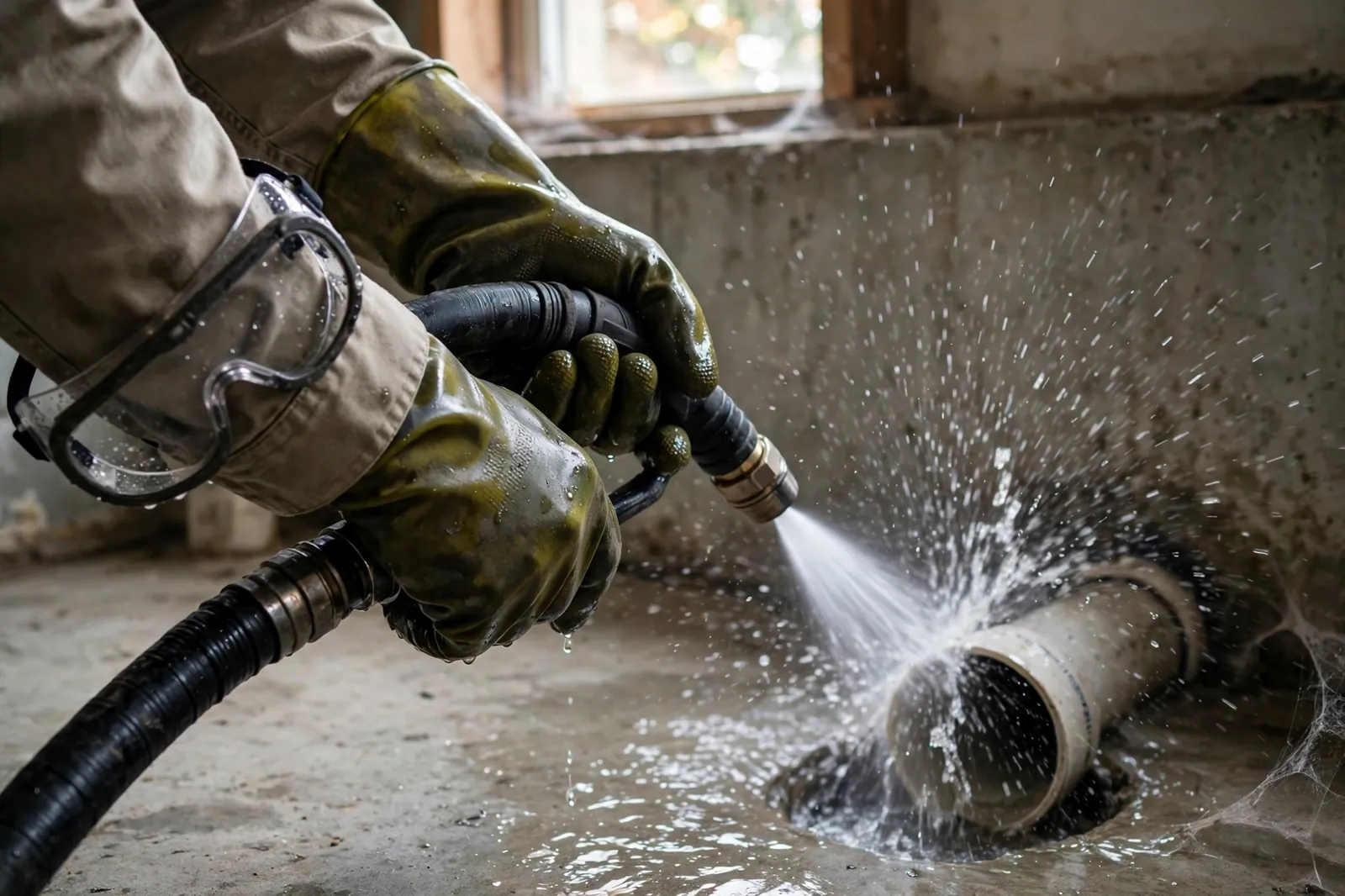
For home work, a jetting machine usually runs at 1,500 to 4,000 PSI, and large commercial lines can run higher. More pressure is not always better: the right pressure is the one that cleans the pipe without harming it, and that depends on the pipe material, its age and what the camera shows. A sound plastic pipe can take more than a thin, corroded iron one.
The operator sets the pressure from the footage, not from a dial. If the camera shows a sound pipe, the pressure goes to the cleaning level. If it shows a worn wall, the pressure comes down, or the job changes to a gentler method. Ask the crew what pressure they plan to use and why; a crew that can answer that question is a crew that has looked at your pipe.
The hose: the part that moves
The hose is the part of the job that moves, and it deserves as much respect as the water in it. Under pressure, a hose that slips from a grip can whip, and a nozzle that comes free can travel fast enough to injure anyone nearby. That is why the operator feeds the hose in slowly, holds it with both hands, and never lets it run free.
The hose also needs checking before the job: the connections must be tight, the outer cover must be sound, and the nozzle must be secure. A worn hose or a loose fitting is a reason to stop and replace it before the machine starts. As a homeowner, your part is simple: stay clear of the hose while the machine runs, and do not step over it or touch it.
Water injection injuries: why a small cut is serious
A high-pressure water jet can push water under the skin through a cut so small it looks trivial. That kind of injury — a water injection injury — is serious even when the skin wound is tiny, because the water spreads under the skin and can damage tissue. It needs medical attention at once, even if the person feels fine at first.
That is the sharpest reason to keep hands and feet away from the nozzle and the hose while the machine runs, and to keep children and pets out of the work area. If anyone is struck by a jet, or thinks they may have been, get medical help right away and say it was a high-pressure water injury, so the treatment starts from the right diagnosis.
Eyes and ears: the two most exposed senses
Eyes and ears are the two senses most exposed on a jetting job. A spray of water or debris can damage an eye in an instant, which is why the operator wears eye protection and why bystanders should not lean over the entry point to watch. The pump engine is loud enough that hearing protection is sensible where the pump runs close to the work area.
As a homeowner, the rule is distance: watch the camera monitor from a safe spot, not the open drain. If the crew offers you a look at the footage, take it from where they stand, not from over the pipe. The pictures are the same from three feet away, and your eyes are far safer there.
Slips, trips and wet floors
Water on a floor is a slip hazard, and a jetting visit puts water near the entry point by design. The crew should lay protection on floors near an indoor cleanout, mop up as they go, and keep the path through the house clear. Wet tiles, wet wood and wet stairs are all risks while the job runs.
Your part is to keep the path clear before they arrive: move shoes, toys and rugs from around the entry point, and keep the household out of the work area until the crew says it is safe. If you see water spreading beyond the protected area, tell the crew at once, because it may mean a connection has come loose or a fixture is backing up.
Gas, electricity and water: the hidden mix
Water, gas and electricity do not mix, and a jetting visit touches all three. If you smell gas at any point — during the visit or before it — leave the house at once and call your gas utility or 911 from outside. Do not use switches or phones inside, and do not try to find the leak yourself. The crew should not start work until the utility has checked the building.
Electricity needs the same care. Do not enter a room where water and electrics may have mixed, and tell the crew about any socket, junction box or appliance near the work area. A crew that finds water near electrics should stop, make the area safe, and call for help rather than pressing on.
When NOT to jet: fragile and old pipes
Some pipes should never be jetted at full pressure, and some should not be jetted at all. Old cast iron that has corroded thin, clay pipe that has cracked, and fibre pipe from the mid-20th century — a bitumen and wood-fibre material used in many homes of that era — can all fail under a jet. A collapsed section is the clearest case: no amount of pressure will open it, and jetting will only push waste into the soil around it.
The camera look is what separates these pipes from sound ones. It shows the thin walls, the cracks, the soft spots and the collapsed stretches before any water is used. If it shows a fragile pipe, the operator should lower the pressure, use a gentler method, or stop and talk about repair. A pipe that cannot be jetted safely is a pipe that needs a different plan.
After the job: what to check before the crew leaves
Before the crew packs up, walk through the job with them. Run the fixtures that were slow and watch them drain. Ask to see the closing camera footage, and ask what it shows: clean walls, or a section that still needs attention. Ask what to watch for in the coming weeks, and when they would suggest the next look.
Then check the house: floors dry, entry point tidy, no water where it should not be. Keep the written quote, the dates and the footage together. A visit that ends with those checks is a visit that is finished properly, and the file it leaves behind is the record for the next time the line needs attention.
Choosing a safe crew: questions to ask
A safe crew can be recognised before the machine starts. Ask whether they run a camera look first on every job, and whether they will show you the footage. Ask what pressure they plan to use and how they set it for your pipe. Ask about insurance, and about what happens if the camera finds a broken section.
Also ask how they protect the house: floor coverings near entry points, a tidy-up before they leave, and a closing camera look. OSHA's guidance on protective equipment sets the standard for workplace safety, and a crew that works to that standard will be able to answer these questions without hesitation. A crew that cannot is a crew to question.
Safety for renters and multi-unit buildings
In a rented home or a multi-unit building, safety is shared. A tenant should report a blockage to the landlord, with the symptoms and the date, and the landlord arranges the crew. A tenant should not book a jetting visit that involves digging or shared lines without the landlord's agreement, because the pipe belongs to the property.
In a multi-unit building, the shared main belongs to the building, and the management company should be told before work on it starts. Neighbours on the same line should be warned that water may be off briefly, and that the crew will be working in a shared area. The camera footage, shared with the management, is the basis for any joint decision about repair.
The homeowner's safe jobs vs the pro's jobs
Some drain jobs are safe for a homeowner, and some are not. Safe jobs are the simple ones: a plunger on a slow sink, a drain screen fitted over the plughole, clearing the U-bend under a sink, keeping fat out of the drain, and keeping wipes out of the toilet. Those are the right tools for a homeowner, and they prevent most blockages.
Jetting is the step after them. It needs a camera, a machine, a hose handled with skill, and a pressure set for the pipe. A homeowner who has tried the safe steps and still has a slow drain should call a crew, not hire a machine. The saving on the hire is small against the cost of an injury or a broken pipe. For the wider picture, see how hydro jetting works.
A safety checklist for your visit
Before the crew arrives, run through this list. Have you told them about any chemical cleaner used in the line? Is the work area clear, and are children and pets out of it? Is there a clear path to the cleanout, and is someone home to give access? Has the crew said they will run a camera look first?
During the visit, stay out of the work area while the machine runs, and ask to see the camera picture rather than leaning over the entry point. After the visit, ask what the camera showed, what was cleared, and what to watch for. That short list is the whole of jetting safety for a homeowner, and it takes less than a minute to run through.
Signs you may need hydro jetting
- A chemical drain cleaner was used in the line recently.
- Children or pets are near the cleanout or the work area.
- The crew starts jetting without a camera look first.
- A hose connection looks loose or water sprays where it should not.
- The work area is crowded with toys, shoes or pet bowls.
- No one is home to give access or hear what the camera shows.
- The pipe is old fibre, thin cast iron or already cracked.
- You smell gas, or water and electrics have mixed near the work area.
How it works
- 1
Step 1 — Tell the crew
Before the visit, say if a chemical cleaner has been used, which fixtures are affected, and where the cleanout is, so the crew can plan safely.
- 2
Step 2 — Clear the area
Move children, pets and clutter out of the work area, keep a clear path to the entry point, and stay clear while the machine runs.
- 3
Step 3 — Look, then check the setup
Ask for the camera look first, and check that the operator's gear, hose connections and nozzle are all in order before the machine starts.
- 4
Step 4 — Check the result
See the closing picture before the crew leaves, check the floors are dry and the entry point is tidy, and keep the quote and the footage on file.
What does it cost?
Safety is about habits and checks, not prices. Typical ranges for the work itself are shown as estimates below.
| Service | Typical range (estimate) | Notes |
|---|---|---|
| Branch line jetting | $250 – $550 | One sink or bath line |
| Main line hydro jetting | $350 – $900 | Whole-home line |
| Camera inspection with jetting | $150 – $350 | Often included |
Prices are estimates only. The local company that does the work sets its own final pricing.