
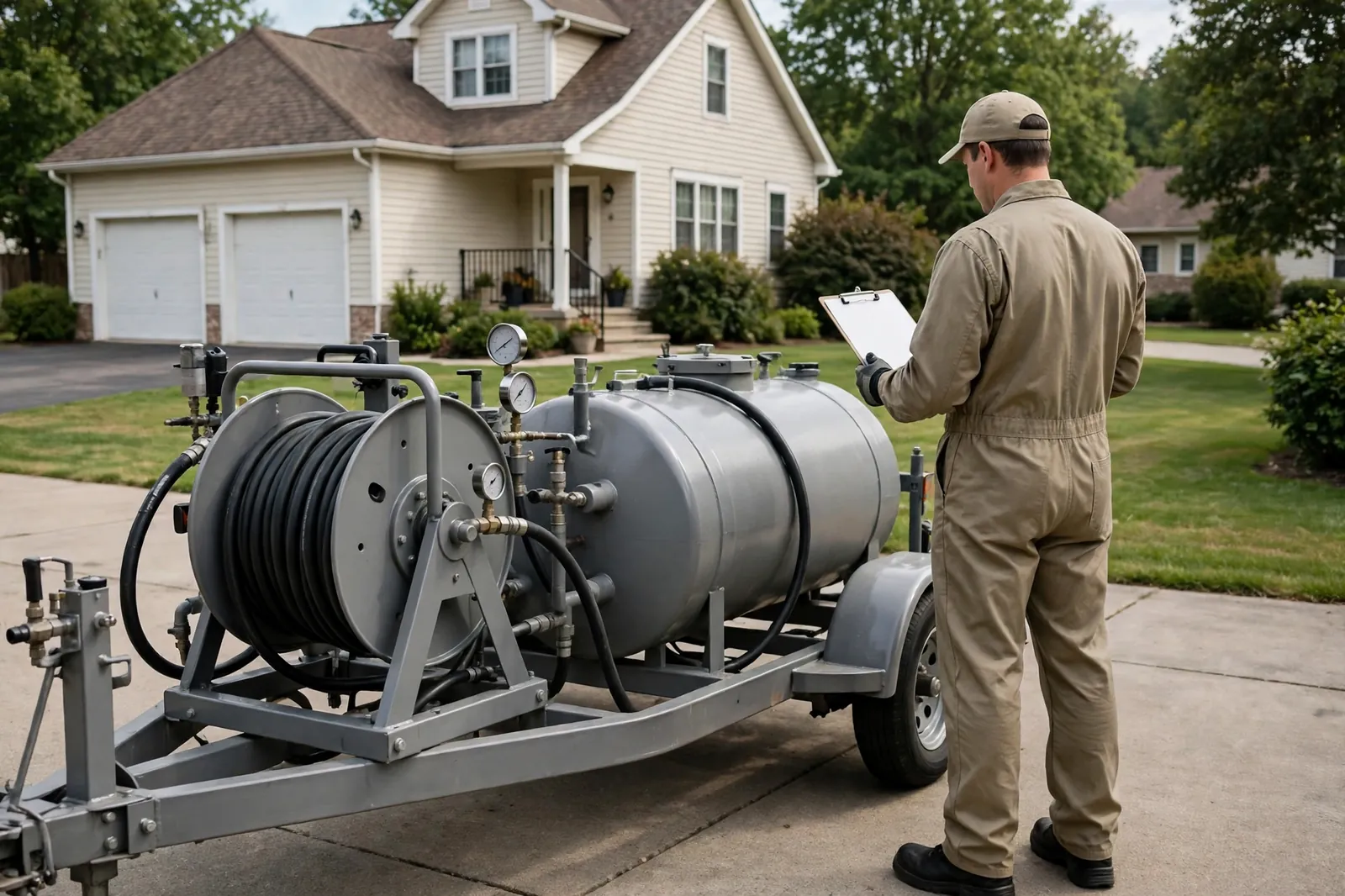
Hydro Jetting Permits Guide
Permits are the part of drain work nobody wants to think about, until a repair is stopped because one is missing. This guide explains when jetting needs no permit, when the work around it does, and who to ask — so a cleaning job never turns into a paperwork problem. Call (833) 878-1592 for advice.
Updated 2026-11-18. Prices shown are estimates only.
The short answer: cleaning usually needs no permit
Most hydro jetting jobs do not need a permit, because jetting is cleaning, not construction. No pipe is moved, no new connection is made, and no structure is altered. The crew arrives, runs a camera, cleans the line, and leaves, and no office needs to be told in advance. That is the case for the great majority of home and business jetting visits.
The exceptions are the jobs around the cleaning, not the cleaning itself. If the camera finds a broken pipe and the fix involves digging, replacing a section, or connecting to the street main, that work may need a permit. The permit question, in other words, is usually a repair question that a cleaning job has uncovered.
When a permit may be needed
A permit may be needed when work changes the pipe itself: replacing a section of sewer line, relaying a line at a new fall, making a new connection to the street main, or digging in a public road or pavement. Work on a shared drain, or on a line that serves more than one property, can also need permission from the other owners or the local authority, even before a formal permit is involved.
Rules differ by place, and they differ by the scale of the work. A small repair in a private yard may need nothing more than a call to the local office, while a replacement that crosses a pavement will need a formal permit and an inspection. The crew that finds the damage should be able to say which case yours is, and who to ask.
Who to ask, and what to ask them
The office to ask is the local building or plumbing permit office — the same office that handles building work in your area. Ask in plain terms: what work is planned, where the pipe runs, and whether it crosses public land. Bring the camera footage if you have it, because a picture of the break is worth more than a description of it.
Ask three questions: is a permit needed for this work, what does the application need, and how long does it take? The answer to the third question matters for planning, because a permit that takes weeks changes the timing of a repair, and a temporary clean may be needed to keep the line working while the paperwork goes through.
Homeowners associations and shared drains
A homeowners association can require owners to keep drains and sewer laterals in working order, and it may ask for proof of cleaning after a blockage, especially where a shared line serves several homes. An association can also have rules about digging in shared ground, about work in common areas, and about the hours when noisy work may be done.
If your home is in an association, check its rules before a repair is booked, not after the digging starts. A short call to the association, with the camera footage in hand, usually settles whether its approval is needed and what form it takes. For a plain cleaning job with no digging, an association rarely needs to be involved at all.
What happens if work starts without a permit
Starting repair work that needs a permit, without one, can stop the job. An inspector can order the work to stop, the trench may have to be left open while the paperwork is sorted, and the finished work may have to be uncovered for inspection. In some places a fine follows. None of that applies to a plain jetting clean, which is why the distinction between cleaning and repair matters so much.
The practical step is simple: when the camera finds damage, pause before the repair is booked, and ask the permit question. A crew that is used to repair work will know the local office and the usual timetable, and a day spent asking is cheaper than a week spent fixing a job that was stopped halfway through.
The camera footage as your paperwork
The camera footage is the most useful document in a permit conversation. It shows the break, its position along the line, and the condition of the pipe around it, and it lets the permit office and the repair crew agree on what needs doing without a second visit to look. Keep the footage, the date, and the written quote together, and take them to any conversation about the work.
That file is also the record for an association, a landlord, or an insurer, if any of them asks what was done and why. A job with a camera record is a job that can be explained in a minute; a job without one is a matter of memory, and memory is a poor basis for a permit application. See sewer camera inspection for what the survey covers.
Rentals, landlords and who applies
In a rental, the landlord is usually the one who applies for a permit, because the pipe belongs to the property, not the tenant. A tenant who finds a blockage should report it to the landlord, with the symptoms and the date, and the landlord should arrange the camera look and any repair. A tenant should not book a repair that involves digging without the landlord's agreement.
In a multi-unit building, the position is similar: the shared main belongs to the building, and the management company or the owners together decide on repair and permits. A single owner should not authorise work on a shared line alone. The camera footage, shared with all the owners, is the basis for that joint decision.
Timing: permits and the line in the meantime
A permit can take days or weeks, and the line still needs to work while it is awaited. A cleaning visit can keep a damaged line running in the meantime, provided the camera shows the damage is not so severe that jetting would make it worse. The crew can advise on that point from the footage: a cracked section that is still round can often be kept going with a clean, while a collapsed section cannot.
Plan the sequence with the crew: clean first to restore flow, apply for the permit, then repair when the permit arrives. That order keeps the home usable, gives the permit office the footage it needs, and avoids the worst outcome — a line that blocks completely while the paperwork is still in a queue.
What is a permit, and why does it exist
A permit is a formal permission from the local authority to carry out building or plumbing work, and it exists so the work can be checked against the local code. The code sets how pipes must be laid, jointed and connected, so that waste leaves the property safely and the public sewer is protected. The permit is the record that the work was planned, reviewed and inspected.
That is why cleaning needs no permit and replacement usually does: cleaning changes nothing about the pipe, while replacement changes the pipe itself. The permit is not a tax on the work; it is the check that the work was done to the standard the code requires, and that check protects the owner as much as anyone else.
Cleaning vs repair vs replacement: where the line falls
The line between cleaning, repair and replacement is the line the permit office draws. Cleaning removes buildup from a pipe that stays in place. Repair fixes a section of pipe, often by digging it up and swapping it. Replacement lays a new run where the old one was, or reroutes it entirely. Each step up the scale is more likely to need a permit.
There are grey areas. A liner fitted inside an old pipe is a repair in some places and a replacement in others, and the local office is the only source for which one it is where you live. The crew that found the damage should be able to describe the work in the terms the office uses, and the camera footage should be part of that description.
Sewer lateral vs main: who owns which pipe
A sewer lateral is the pipe that runs from a building to the street main, and the homeowner usually owns it and is responsible for keeping it clear and in repair. The main in the street belongs to the city or the utility. The boundary between the two is usually at the property line or at the connection to the main, and the exact point varies by place.
That boundary matters for permits, because work on the lateral is the owner's job, while work on the main or on the connection to it may need the utility's permission as well as a permit. If the camera shows damage near the boundary, ask both the permit office and the utility who is responsible, before any digging is planned. The answer saves arguments later.
Digging in a street or pavement: the extra permission
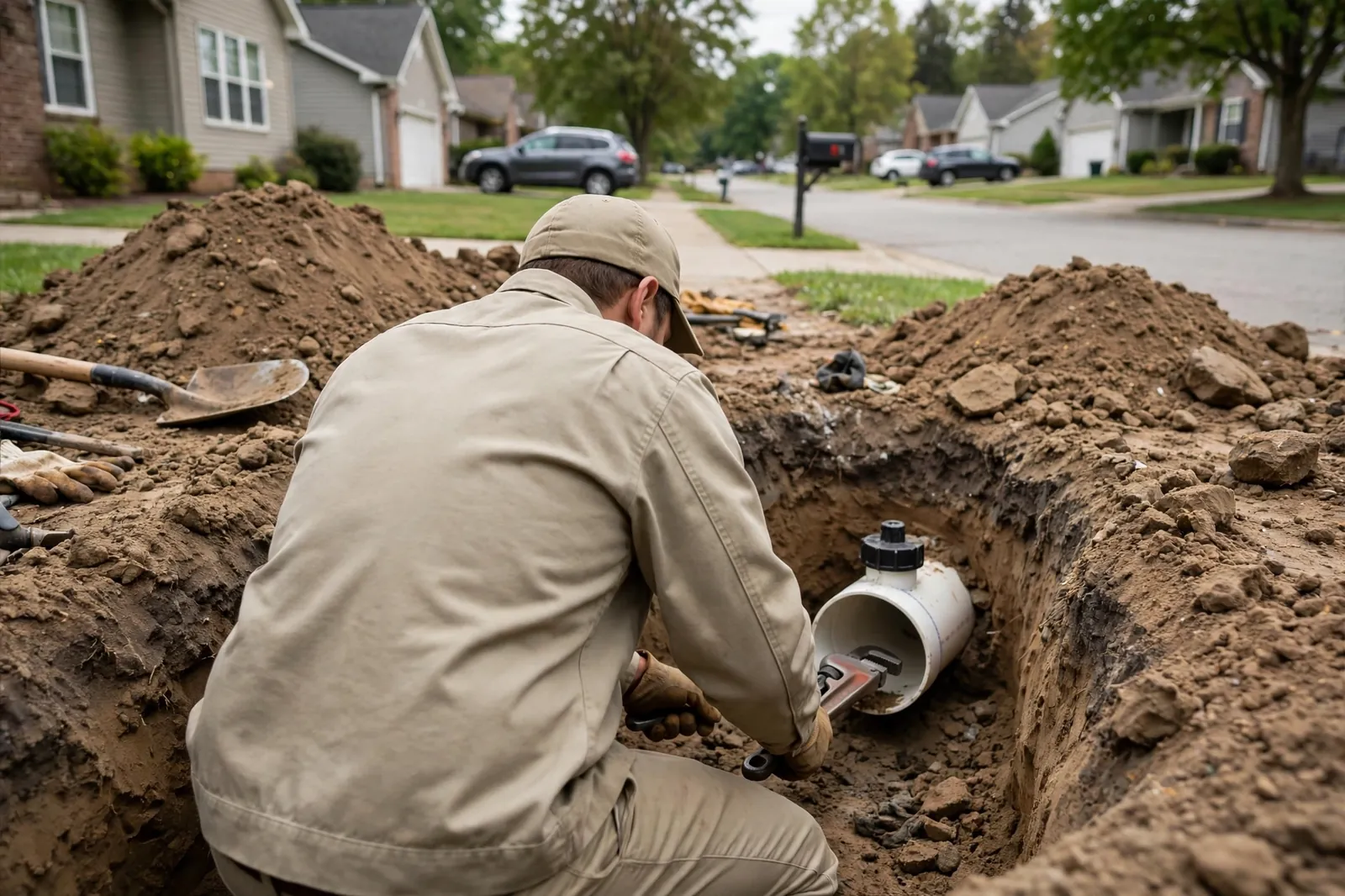
Digging in a street, a pavement or a verge needs more than a building permit. The road is public land, and work on it needs the permission of the authority that maintains it, along with a plan for traffic, safety barriers and restoring the surface afterwards. A crew that digs in a road without that permission can be stopped, and the road may have to be put back at the owner's cost.
That is one reason a repair that crosses a pavement costs more and takes longer than one in a private yard: the paperwork is heavier, and the restoration must meet the authority's standard. If your repair would cross public land, tell the crew at the first visit, so the permits can be applied for together rather than one after the other.
Backflow, venting and code: why the rules exist
Plumbing codes exist to protect health, and the rules for drains are written with that in mind. A sewer line must fall at a steady gradient so waste flows away, joints must be sealed so waste does not leak into the soil, and vents must let air in so traps do not empty. A repair that ignores those rules can leave a home with smells, slow drains or waste leaking under the yard.
The permit and the inspection are how the code is checked. An inspector looks at the open trench before it is filled, checks the fall and the joints, and signs the work off when it meets the standard. That check is worth having, because a repair buried without inspection is a repair nobody can verify, and a fault in it may not show for years.
What a permit application usually asks for
A permit application usually asks for a description of the work, the location of the pipe, and a sketch or plan showing the run. The camera footage is often the most useful attachment, because it shows the damage and its position along the line. Some offices ask for the name of the contractor who will do the work, and for proof that the contractor is licensed where a licence is required.
The application is not a test. The office wants to know what is planned, where it runs, and whether it crosses public land, so it can say whether a permit is needed and what conditions apply. A crew that does repair work regularly will know what the local office asks for, and can help put the application together from the footage and the quote.
Inspections: what the inspector checks
An inspection usually happens at least once during a permitted repair, most often while the trench is still open. The inspector checks the pipe material, the joints, the fall of the run, and the bedding under the pipe, and may ask for a water test to show the line holds. If the work passes, the trench can be filled; if it does not, the fault must be put right and the inspector returns.
The inspection is not an inconvenience to be avoided. It is the check that the repair was done to the code, and it is the record that protects the owner if the line is ever questioned — by a buyer, an insurer or the city. Keep the signed inspection record with the footage and the quote, because together they are the file for the pipe.
How long does a permit take
There is no single timetable for a permit. A small repair in a private yard can be approved in days, while a replacement that crosses a road can take weeks, because more offices are involved and the traffic plan must be agreed. The local office is the only source for the timetable that applies to your job, and it is worth asking at the first visit rather than the last.
Plan the sequence around the wait. A cleaning visit can keep a damaged line running while the permit is awaited, provided the camera shows the damage is not so severe that jetting would make it worse. Book the clean, apply for the permit, and schedule the repair for the week the permit is expected, so the home is never left without a working drain.
Permit costs: what to expect in general terms
Permit fees vary widely by place and by the scale of the work, and no figure in a guide can tell you what yours will be. Some offices charge a flat fee for a small repair, others base the fee on the value of the work, and a job that crosses public land may carry extra charges for the road work. The only reliable source is the local office itself.
Ask for the fee to be listed separately on the quote, so you can see what the permit costs and what the work costs. A contractor who will not itemise it is a contractor to question. And remember that the fee is small against the cost of a job stopped halfway for want of a permit, or a finished job uncovered for inspection because it was never approved.
Buying or selling a home: permits and disclosure
Unpermitted work can complicate a home sale. A buyer, or the buyer's inspector, may ask for the records of any sewer work, and a repair with no permit and no inspection record is a question the seller must answer. In some sales the buyer's lender or insurer will ask for the same records, and a missing permit can slow the sale or reduce the price.
Keep the file from the start: the footage, the quote, the permit and the signed inspection record. A home with that file in its drawer sells more easily than a home where the sewer work is a matter of memory. If you are buying a home, ask for the same file, and a camera survey of the line is a sensible part of the inspection.
A permit file for your home
Keep one file for the pipe, and keep it from the first camera look. In it go the footage and the date, the written quotes for cleaning and for repair, the permit application and the permit itself, the signed inspection record, and any letters from the association, the landlord or the utility. A file with those papers in it answers any question about the line in a minute.
The file is also the basis for the next decision. When the line needs attention again, the next crew starts with a record instead of a blank page, and the next permit application starts with footage and a history rather than a fresh description. The International Code Council publishes the model codes many local rules are based on, and its site is a useful background read before you talk to the local office.
A checklist before any repair is booked
Before a repair is booked, run through this list. Has the camera shown the damage, and do you have the footage? Has the crew said whether a permit is needed, and who should apply? Has the association or the other owners been told, if the line is shared? Is there a written quote for the repair, separate from the cleaning? And is there a plan for keeping the line working while the permit is awaited?
If the answer to each of those is yes, the repair can go ahead with confidence. If any answer is no, pause and get it before the digging starts. A day of checking is cheap; a stopped job is not, and the checklist is what keeps a cleaning job from turning into a paperwork problem.
Signs you may need hydro jetting
- A camera look finds a broken or collapsed pipe section.
- A repair would dig in a public road or pavement.
- A new connection to the street main is planned.
- A shared drain serves more than one property.
- An association asks for proof of cleaning after a blockage.
- A repair quote arrives before anyone has asked about a permit.
- The work crosses the boundary between the lateral and the street main.
- A buyer or insurer asks for the records of past sewer work.
How it works
- 1
Step 1 — Clean first, ask second
Book the jetting clean, since cleaning itself usually needs no permit, and let the camera show whether repair work is involved at all.
- 2
Step 2 — Ask the permit office
Take the camera footage to the local building or plumbing permit office and ask whether the planned repair needs a permit, what it needs, and how long it takes.
- 3
Step 3 — Book the repair on paper
Get the written repair quote, the association or owner agreement if the line is shared, and the permit, before any digging starts.
- 4
Step 4 — File the paperwork
Keep the footage, the quote, the permit and the signed inspection record together, so the next decision starts from a record, not a guess.
What does it cost?
Permit rules differ by place. The figures below are typical ranges for the cleaning work itself, shown as estimates.
| Service | Typical range (estimate) | Notes |
|---|---|---|
| Branch line jetting | $250 – $550 | One sink or bath line |
| Main line hydro jetting | $350 – $900 | Whole-home line |
| Camera inspection with jetting | $150 – $350 | Often included |
Prices are estimates only. The local company that does the work sets its own final pricing.