
Hydro Jetting for Restaurants
A restaurant kitchen sends more fat down its drains in a week than a home sends in a year. This guide is for owners and kitchen managers: how restaurant lines block, how jetting fits around service, and how to keep the kitchen open. Call (833) 878-1592 to plan a clean.
Updated 2026-11-18. Prices shown are estimates only.
Why restaurant lines block so fast
A restaurant kitchen is a fat factory. Fryers, grills, roasting trays, butter, cream and meat drippings all send fat into the washing-up water, and that water goes down the sink in volume, all day, every day. A home kitchen might send a spoonful of fat down the drain in a day; a busy restaurant sends litres. The coating on the pipe walls builds in weeks, not years.
Add food waste, flour, rice and soap, and the coating thickens faster still. The line beyond the grease trap is the worst stretch: the trap catches the bulk of the fat, but the water that passes it still carries enough to coat the pipe, and that stretch is out of sight, so nobody notices until the sink starts to fill during service.
The grease trap and the line beyond it
A grease trap — or interceptor — sits between the kitchen sinks and the sewer, and it catches fat before it reaches the main. It works, but only if it is emptied on schedule, and only for the fat that reaches it. The line between the sinks and the trap, and the line between the trap and the sewer, both coat up, and neither is cleaned by emptying the trap.
Jetting cleans those lines. Hot water strips the fat from the walls of the run from the sinks to the trap, and from the trap to the main, and the camera shows which stretch is worst. A restaurant that empties its trap but never jets its lines is doing half the job, and the half it skips is the half that blocks during a Friday dinner service.
Signs a restaurant line is about to block
The warning signs in a restaurant are the same as in a home, compressed into a working day. A pot sink that drains slower at lunch than it did at breakfast. A dishwasher that leaves water in its base. A floor drain in the kitchen that holds water after the floor is washed. A smell from the sinks that returns after the basins are scrubbed.
The sign that matters most is the pattern: slow at peak, fine overnight. That means the bore is narrowed and peak flow is more than it can carry. When that pattern appears, the line is weeks from blocking during service, and a clean booked now is far cheaper than a clean booked at midnight with a kitchen full of covers.
Cleaning around service: the closing-time visit
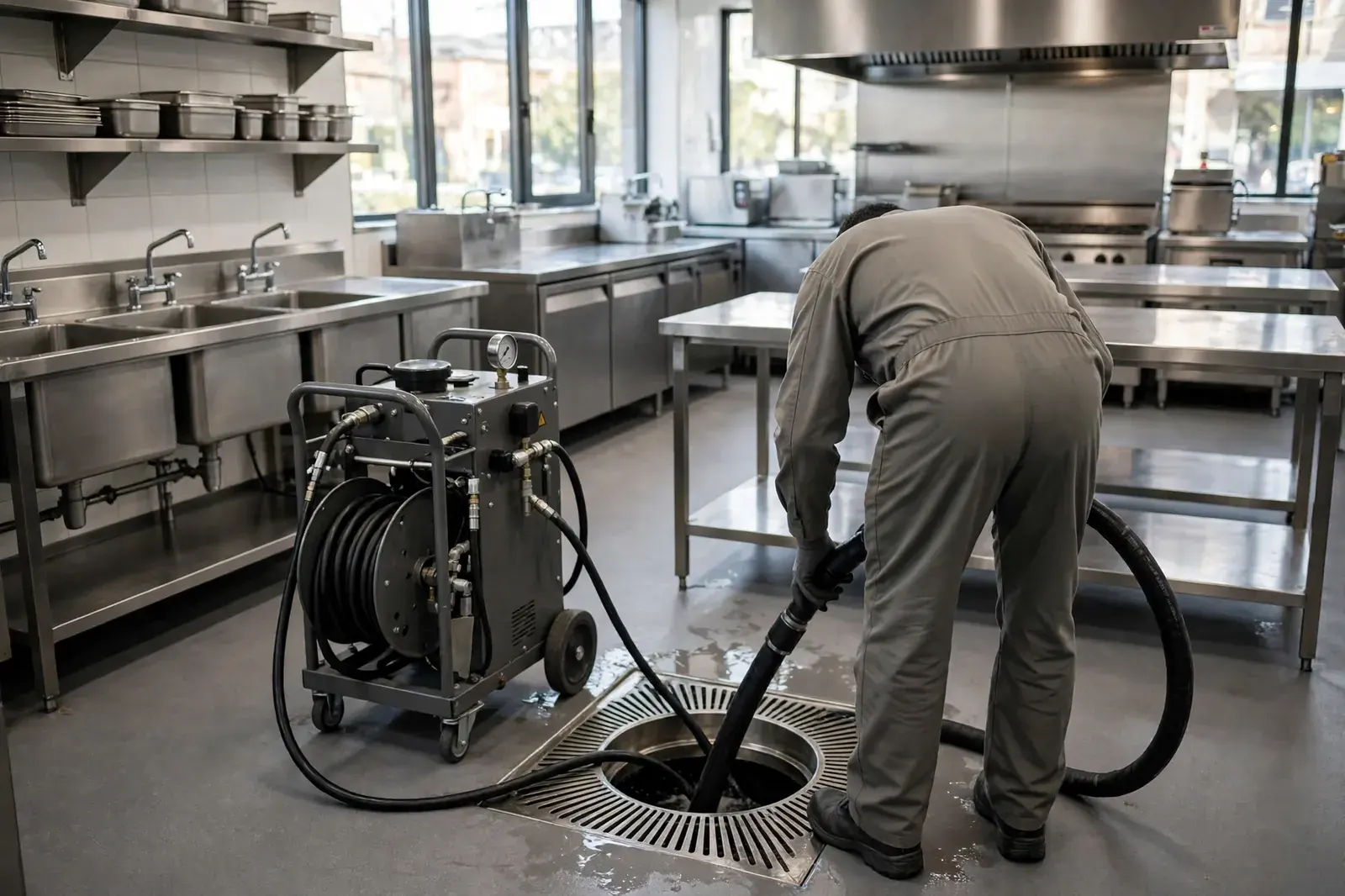
Restaurant jetting is almost always a closing-time job. The crew arrives after the last cover, works through the kitchen lines while the kitchen is empty, and is gone before the morning delivery. That window is short — often three or four hours — so the visit needs planning: which lines, which cleanouts, where the hose runs, and where the water supply is.
Tell the crew the window in plain terms when you book: the earliest they can start, the latest they must be finished, and which sinks must be usable for the morning prep. A written quote that lists the runs, the window and the tidy-up lets the manager check, before the night, that the kitchen will be ready for the morning.
Staff habits that stretch the interval
Staff habits are the cheapest form of drain care a restaurant has. Scraping plates into the bin before rinsing, wiping pans before washing, pouring cooled oil into a container rather than the sink, and using sink screens — each of these keeps fat and food out of the line, and together they can double the time between cleans.
The habit needs a manager behind it, because a busy service pushes staff to cut corners. Put the steps on the wall by the pot sink, brief new staff on their first shift, and check the screens at close. A kitchen that does this well will still need jetting, but it will need it half as often, and that is money saved every quarter.
What the camera shows in a restaurant
The camera in a restaurant line usually shows fat, and lots of it: a pale, waxy coating that narrows the bore along the whole run from the sinks. It may also show a sag where water sits, a joint that has opened, or a section where a previous repair changed the pipe size. Each of those is a different problem, and the footage is what separates them.
Ask for the footage and keep it. It shows which run blocks first, whether the trap is doing its job, and whether a weak section is getting worse. A manager who can show that footage to a landlord, a franchisor, or a contractor is in a far stronger position than one who can only say the drains blocked again.
Costs and the repeat cycle for a restaurant
A restaurant kitchen line usually runs $400 to $1,000 as a typical range, depending on the length of the run and how thick the fat is. A full commercial visit, covering kitchen, restroom and floor drains, runs $500 to $1,500. Those are typical ranges, shown as estimates, and the written quote for your building is the figure that counts.
The repeat cycle is set by the camera, not the calendar. A busy kitchen may need its lines every few months; a quieter one may go six months or more. If the walls are coated again three months after a clean, the interval is too long. If they are nearly clean after six months, it can stretch. Over a year, the pattern writes itself.
Health, smell and the dining room
A blocked kitchen line is not just a plumbing problem in a restaurant: it is a smell in the dining room, a floor drain that backs up near food prep, and a kitchen that cannot wash up during service. Guests notice a drain smell, and staff working around standing water is a hazard nobody wants. Keeping the lines clear is part of keeping the kitchen safe to work in, not a luxury.
That is also why a restaurant should not wait for a blockage to book a clean. A line that is cleaned on a planned cycle, in the closing-time window, never interrupts service. A line that blocks during service interrupts everything, and the cost of that interruption — covers lost, staff idle, food wasted — dwarfs the cost of the clean. The FDA Food Code sets the standard health inspectors use, and drain and plumbing condition is part of what they look at.
What kind of restaurant blocks fastest
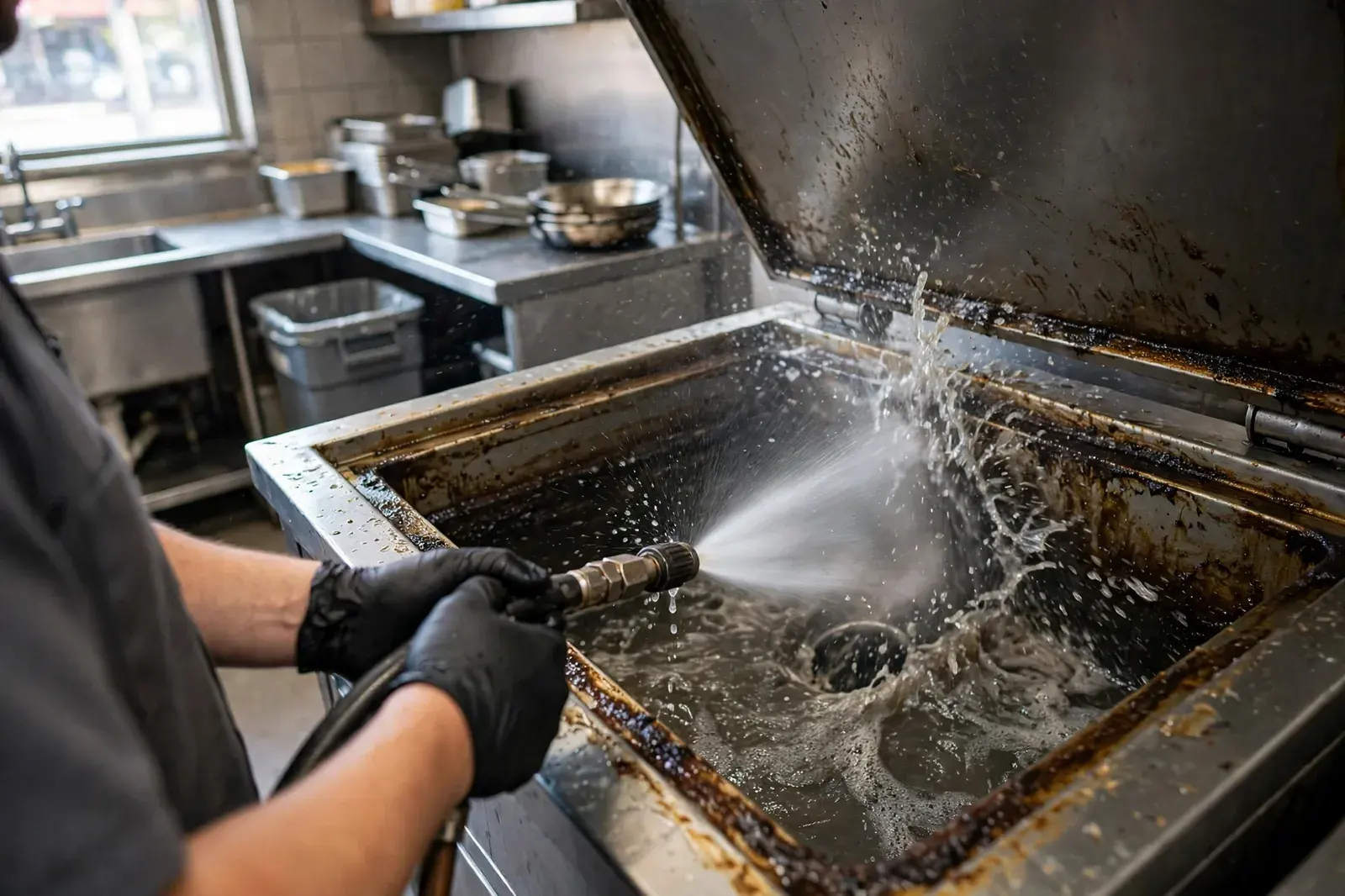
Not every restaurant loads its drains the same way. A fried-chicken shop or a burger kitchen, with fryers running all day, coats its lines far faster than a cafe that serves coffee and sandwiches. A bakery loads flour and dough into its lines, which set into a paste that catches fat. A steakhouse sends meat drippings and butter in volume. The menu writes the drain schedule.
That is why the first camera look matters so much: it shows what your kitchen actually puts into the pipe, rather than what a generic schedule assumes. A fryer-heavy kitchen may need a clean every two or three months, while a cafe may go twice a year. The interval should be built from your own footage, not from another restaurant's routine.
The grease trap pumping schedule
A grease trap only works if it is pumped on schedule, and the schedule depends on its size and the kitchen's volume. A small trap under a busy kitchen can fill in weeks; a large underground interceptor may go months. The pump date should be written on the wall by the trap and kept in the manager's diary, because a trap that is left too long stops catching fat and starts passing it straight to the line beyond.
When a trap slips, the signs show in the line, not the trap: the kitchen run slows faster than usual, and the camera shows a thicker coating than the last visit. If the trap is overdue, pump it before the jetting visit, so the clean starts from a trap that is doing its job. Pumping and jetting are two different jobs, and both need to be on the calendar.
Floor drains and the mop sink
The kitchen floor drain and the mop sink are the forgotten runs in a restaurant. They collect floor washings, food dropped during service, and the grey water from mopping, and they sit at the lowest point in the kitchen, so they are the first to show a backup from a blocked main. A floor drain that holds water after the floor is washed is an early warning, not a small problem.
Jetting a floor drain means working from its opening or a nearby cleanout and flushing the silt and fat toward the main. After the clean, a strainer over the drain catches the worst of the food and grit, and a daily sweep keeps leaves and sand out. The mop sink deserves the same attention: mop water carries fat and food, and its branch coats up just like the pot sink's does.
Restrooms and front-of-house lines
Front-of-house lines block on paper and soap, not fat, and they follow a different pattern. The symptom is several fixtures slowing together — the restrooms on one floor, or the bar sink and the hand basin at the same time — because they share a branch that is narrowing. A single slow toilet is usually a local blockage; a floor of slow fixtures is a shared line.
Jetting clears paper mats and scale from these runs, and the camera shows whether the cause is buildup or shape. A sag in the branch will keep collecting paper after every clean, and that needs a repair, not another wash. Plan the restroom runs for a slack period, so no guest finds a closed restroom during service.
When a line blocks during service
When a line blocks during service, the first step is to stop the water going down it: close the affected sinks, move the work to another station, and keep guests away from any standing water. Do not pour a chemical cleaner down a line that a crew will open later that night, because it creates a hazard for them and rarely clears a fat blockage anyway.
Call the crew and say it is a service blockage, so they know the kitchen must be usable by the morning. A same-night visit can usually restore flow, even if a full clean waits for the closing window. After the emergency, book the full camera look and clean, because a line that blocks once during service will block again until the coating is stripped from the walls.
Health inspections and drain records
A health inspector will look at the kitchen's drains as part of the wider picture: standing water, smells, and backflow near food prep are all findings that matter. A restaurant that can show a dated record of trap pumping, camera footage and jetting visits is in a far stronger position than one that can only say the drains were cleaned recently.
Keep a simple file: the pump dates, the jetting dates, and the footage from the last camera look. It takes minutes to maintain, and it answers an inspector's questions in seconds. The same file is useful for the landlord and the insurer, and it is the record that sets the next interval from what the pipe actually showed.
Landlords, leases and who pays
Who pays for a clean depends on the lease. In many commercial leases the tenant keeps the drains clear as part of day-to-day maintenance, while the landlord pays for repairs to the pipe itself. A jetting clean is usually maintenance; a replacement of a broken section is usually the landlord's. The lease, not the plumber, decides, so read it before the argument starts.
Keep the camera footage and the quote together, because they show whether the job was a clean or a repair. A manager who can show the landlord footage of a cracked section has a clear case that the repair is theirs. A tenant who books a repair without telling the landlord may find the bill is theirs, even where the lease says otherwise.
Choosing a commercial jetting crew
A commercial crew should be chosen on more than price. Ask whether they work after closing, whether they carry the insurance a commercial site needs, and whether the quote lists the camera work, each run and the tidy-up separately. Ask what happens if the camera finds a broken section, and whether they will show you the footage before they jet.
Also ask how they protect the kitchen: floor coverings near entry points, a tidy-up before they leave, and a closing camera look so you can see the result. A crew that answers those questions clearly is a crew that has done restaurant work before. The cheapest quote that skips the camera is rarely the cheapest job in the end.
After the clean: the first month
The month after a restaurant clean is the test. In the first week, the pot sink should drain at its normal pace through a full service, and the smell should be gone from the kitchen and the dining room. If the sink slows again at peak within days, the coating was not fully removed, or the trap needs pumping, and the crew should be called back to look.
Watch the floor drain as well as the sinks, because it is the lowest point and the first to show a main that is narrowing again. If the drains stay quick for a month, the staff habits and the interval are working, and the next clean can be timed from the camera pictures. If they slow within weeks, the interval is too short or a section of pipe needs attention.
Seasonal swings: holidays and patio season
Restaurant drains do not load evenly through the year. The holidays bring full houses and heavy cooking for weeks, and the kitchen line that coped in November can block in the week before Christmas. Patio season brings the opposite problem: outdoor sinks and bar lines that sat dry all winter, with traps that have dried out and let smells into the dining room.
Plan for both. Book a camera look and a clean before the holiday rush, when the crew is available and the kitchen is quiet, rather than during it. In spring, run water through every seldom-used drain before the patio opens, and check that the outdoor lines drain freely. Two planned visits a year, timed to the seasons, cost less than one emergency call on a holiday night.
The bar, the coffee machine and the small lines
The bar sink and the coffee machine drain into small branches that block on grounds, fruit pulp and sugar. Coffee grounds settle into a dense sludge, and citrus pulp from the bar catches on any rough spot in the pipe. These lines are short, but they block often, and a blocked bar sink during service is as disruptive as a blocked pot sink.
Keep grounds out of the sink — bin them, every time — and use a strainer in the bar sink. When the crew comes for the kitchen lines, ask them to run the camera down the bar branch too, since it is a short addition to the visit. A small line that is cleaned on the same cycle as the kitchen never gets the chance to stop service on its own.
A simple routine for a restaurant kitchen
Here is a routine that fits most restaurants. Scrape and wipe at every station, use screens, keep oil in containers, and empty the grease trap on schedule. Book a camera look and a jetting visit on a planned cycle, in the closing-time window, and keep the footage and the dates on file. Review the interval each time the camera shows the walls.
That routine is short, and it is the difference between a kitchen that runs and a kitchen that stops. A restaurant that follows it will still call a jetting crew, but on its own timetable, in its own quiet window, and at a price it has seen before — not at midnight, during service, with a dining room full of guests. For the home version of the same problem, see hydro jetting for grease.
Signs you may need hydro jetting
- A pot sink drains slower at lunch than at breakfast.
- Water stands in the dishwasher base after a cycle.
- A kitchen floor drain holds water after the floor is washed.
- A drain smell returns in the kitchen or dining room.
- The kitchen line slows at peak service and recovers overnight.
- The kitchen line blocks again a few months after a clean.
- Several restroom fixtures on one floor slow at the same time.
- The grease trap has not been pumped on schedule.
How it works
- 1
Step 1 — Note the pattern
Write down which sinks slow, when they slow, and whether the line recovers overnight, since that pattern points to fat narrowing the bore.
- 2
Step 2 — Check the trap and the low drains
Check the grease trap's last pump date and whether the floor drains hold water, since a full trap or a low drain changes what the crew must do.
- 3
Step 3 — Book the closing-time visit
Call (833) 878-1592, give the window between close and open, and book a camera look and a hot-water clean of the kitchen runs.
- 4
Step 4 — Set the staff routine
Scrape, wipe, screen and contain oil at every station, and set the next clean from what the camera shows.
What does it cost?
Restaurant work is priced by the length of the runs and how thick the fat is. A single kitchen line costs less than a full building visit, and work in the closing-time window can cost more than work in a quiet weekday slot. Typical ranges, shown as estimates.
| Service | Typical range (estimate) | Notes |
|---|---|---|
| Restaurant kitchen line jetting | $400 – $1,000 | Kitchen to main |
| Commercial drain jetting | $500 – $1,500 | Per visit, per building |
| Video inspection | $200 – $500 | Long commercial runs |
Prices are estimates only. The local company that does the work sets its own final pricing.