
Emergency Root Clearing
A root emergency is a sewer line choked by tree roots, so drains back up and the line may be at risk of breaking. Stop using water, keep clear of any backup, and phone (833) 878-1592. The crew cuts the roots out with a spinning nozzle, checks the line on camera, and tells you whether a repair is needed.
Updated 2026-11-18. Prices shown are estimates only.
- $150–$900 Typical cost range
- 5 Steps in the visit
- 12 Questions answered
Before & after — emergency root clearing
Before & after
Drag the slider to compare the same pipe before and after jetting.
Emergency Root Clearing
How do roots block a sewer line so suddenly?
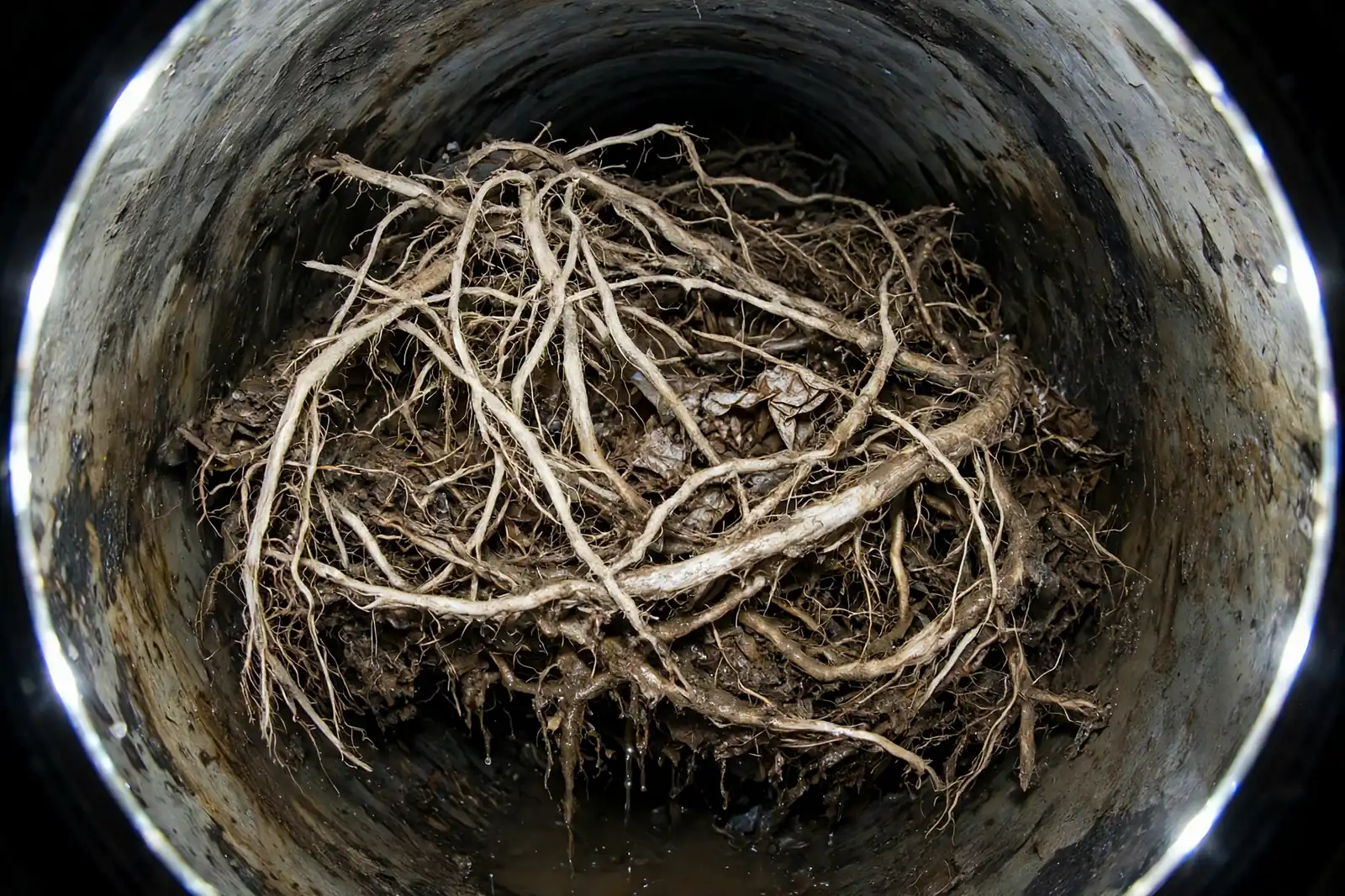
Roots find the smallest opening in a sewer line — a joint, a hairline crack, a gap where two sections meet — and push fine hairs inside to drink. Over months those hairs thicken into a mat that catches paper and waste, and the line narrows bit by bit.
The drains slow a little, then a heavy day of laundry or a long shower pushes the mat shut, and the line blocks all at once. That is why a root problem often feels sudden: the mat was growing for a year, and one busy evening finished the job.
The trees to blame are often the big ones near the front yard, and their roots can reach a line from many feet away.
Emergency Root Clearing
What should you do when roots back the line up?
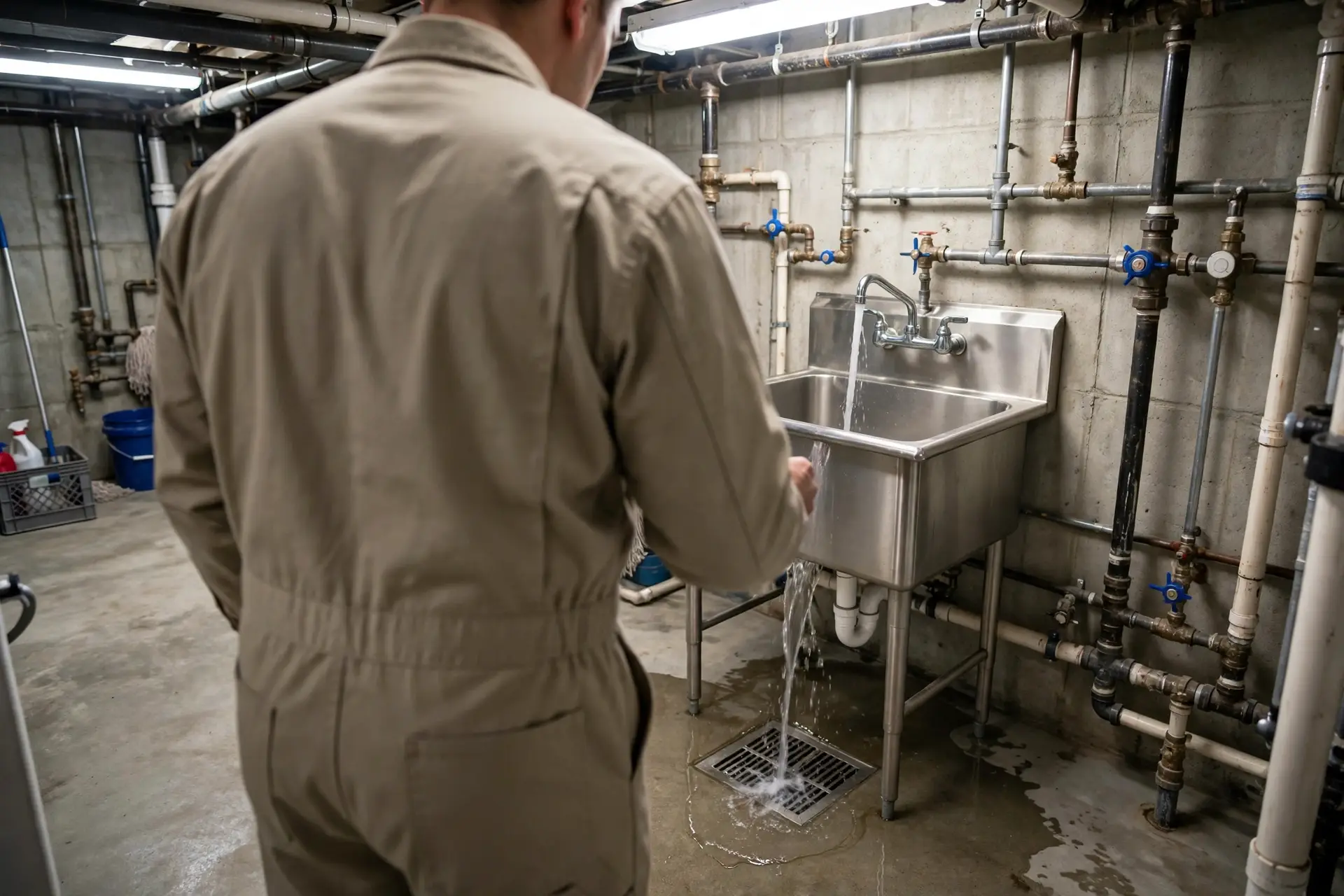
Stop using water first, since every flush adds to the backup behind the root mat. Check the lowest fixtures — the floor drain and the basement tub — and keep people and pets away from any water that comes up.
Do not pour root killer or drain cleaner down the line: it will sit behind the mat, give off fumes, and do nothing to roots that have already formed a thick mass. Do not run a snake yourself if you have never done it in a main line, since a cable can tangle in the mat and snap.
Phone (833) 878-1592, say which trees stand near the line, and tell the crew which fixtures back up first.
Emergency Root Clearing
How does the crew cut roots out of a line?
The crew runs a camera down the line first to find where the roots come in and how thick the mat is. Then a jetting hose goes in with a root-cutting nozzle — a head that spins as it moves, slicing the roots while the water flushes the cut pieces out toward the main.
The crew works the mat in passes, pulling the hose back a little at a time so the nozzle cuts the full width of the line. A last camera pass shows whether the line is open and where the roots entered, so the crew can point to the joints or cracks that need watching.
If the roots have split a joint open, the crew will say so and explain the repair.
Emergency Root Clearing
Will the roots grow back after jetting?
Yes, in most cases they will. Jetting cuts the roots that are inside the line, but the tree outside is still alive and its roots still reach the same joints and cracks.
How fast they return rests on the tree, the season, and how much rain keeps the soil wet. A line that is jetted in spring may need attention again within a year or two, while a line with a small entry point may hold longer.
A camera check a year after jetting shows how fast the roots are coming back. If the same joints keep filling, a repair that seals the entry points is the only lasting fix.
Emergency Root Clearing
When is a repair needed instead of another jetting?
Jetting is the right call when the line is sound and the roots are the only problem. A repair is needed when the camera shows a joint that has split open, a section that has cracked through, or a pipe that has sagged and holds water.
Roots that have forced a joint apart will keep coming back no matter how often the line is jetted, and each round of growth can widen the split. The crew should show you the camera footage and explain what they see, then give you the repair options and the price in writing.
A repair that seals the entry points costs more than a jetting visit, but it stops the cycle of backups.
Emergency Root Clearing
What should you watch for after a root clearing?
Run water in one fixture at a time and watch the lowest drains, since those show a blockage first. If the drains run at a normal pace and the gurgling stops, the line is open.
Note the date of the visit and which joints the camera showed as entry points, so the next crew knows where to look. Watch the trees near the line through the growing season, and keep an eye on any damp patch in the yard over the line.
If the drains slow again within months, phone back and mention the earlier root clearing — a fast return often means a joint has split and a repair is due.
Emergency Root Clearing
Why does a root blockage seem to appear overnight?
A root blockage rarely appears overnight, even though it feels that way. The roots have been growing inside the pipe for months or years, thickening a little each season and catching a little more paper with each flush.
The flow finds a smaller and smaller path through the mat, and the drains slow so gradually that the household gets used to it. Then one flush, often a large one, or one load of washing, pushes a wad of paper into the last open gap, and the line closes completely.
The blockage feels sudden, but the mat behind it is old.
The season matters too. Roots grow fastest in spring and early summer, when the tree is pushing new growth and the soil is wet.
A line that ran all winter can block in May, when the roots put on a season's growth in a few weeks. A dry summer makes it worse, because the tree chases the moisture leaking from the joint harder.
The lesson is that a drain that slows a little each month is a warning, and a camera survey when the slowing starts is far cheaper than an emergency call when the line closes. If the drains have been slowing for months, tell the crew: the history tells them the mat is old and thick, and they will bring the cutting head.
Emergency Root Clearing
What should you do if the line blocks during a storm?
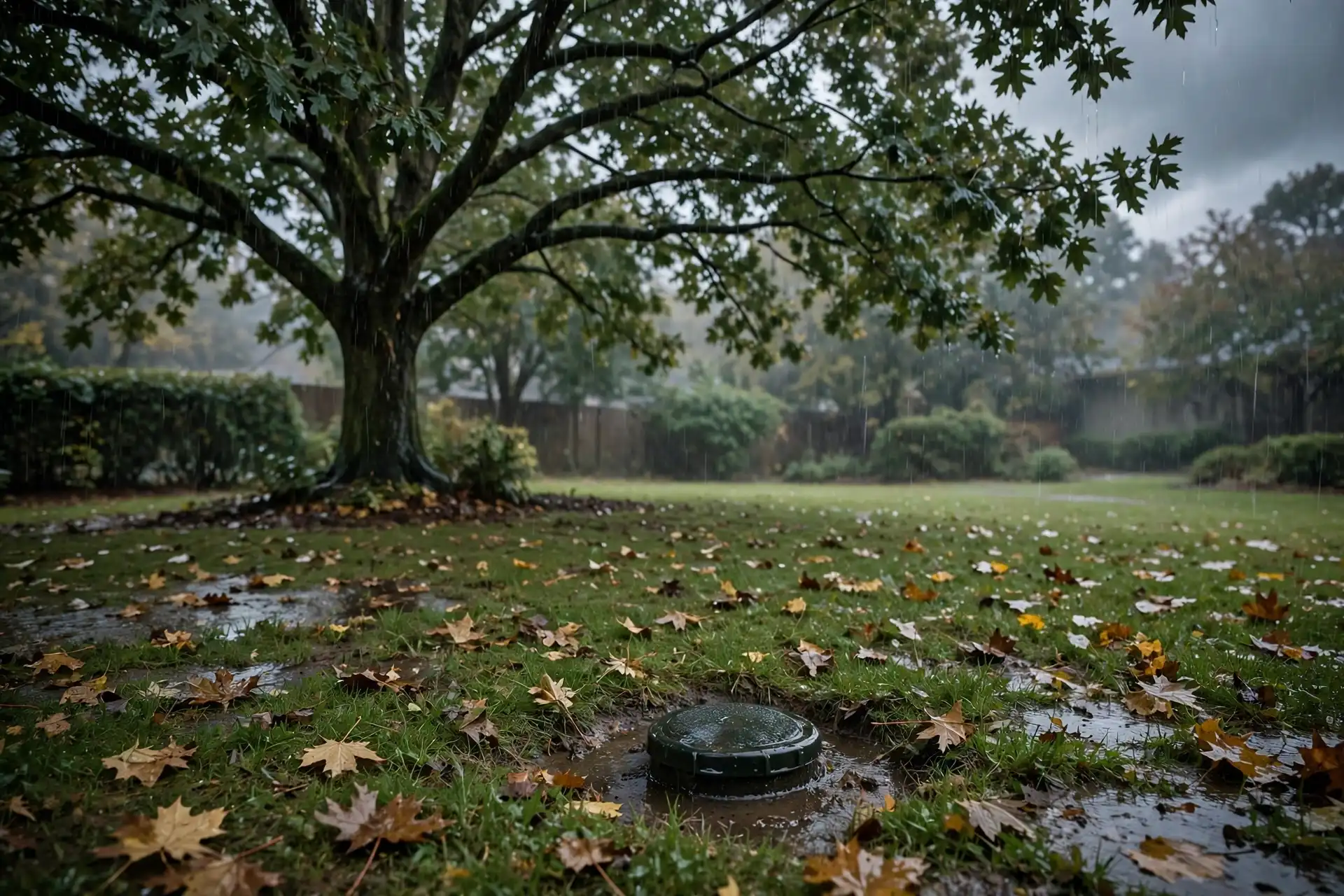
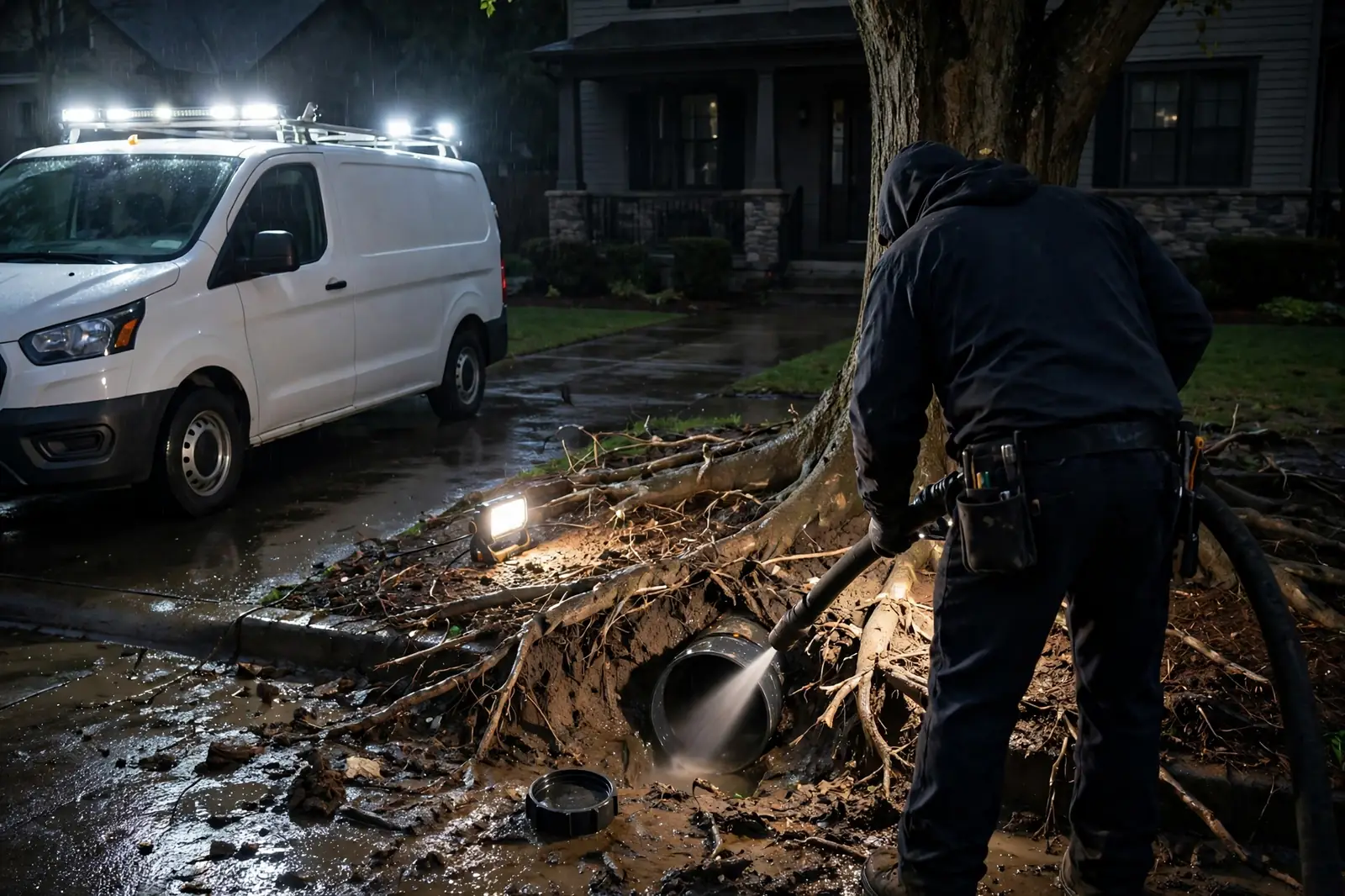
A root blockage during a storm is harder than one in dry weather, because the rain is adding water to the system at the same time as the line is blocked. The street sewer fills faster, the ground around the pipe is saturated, and the crew may have trouble reaching an outdoor cleanout in the wet.
The steps are the same as in dry weather, and they matter more: stop the water at once, keep clear of any standing water near electricity, and phone for help with the facts ready.
While you wait, do not go outside to open a cleanout in a storm, and do not lift a manhole cover: the water inside can be under pressure, and the cover is heavy and slippery. If the water is rising in the lowest room, move valuables to higher ground and put towels at the doorways.
The crew will come in the rain, because an emergency crew works in all weather, but they may take longer to reach you if the roads are flooded. If the backup is caused by the street sewer as well as the roots, the crew will say so after the camera look, and the water authority should be called too.
The line can be cleared, but the storm water has to go down first.
Emergency Root Clearing
How does the crew reach a root mat far from the house?
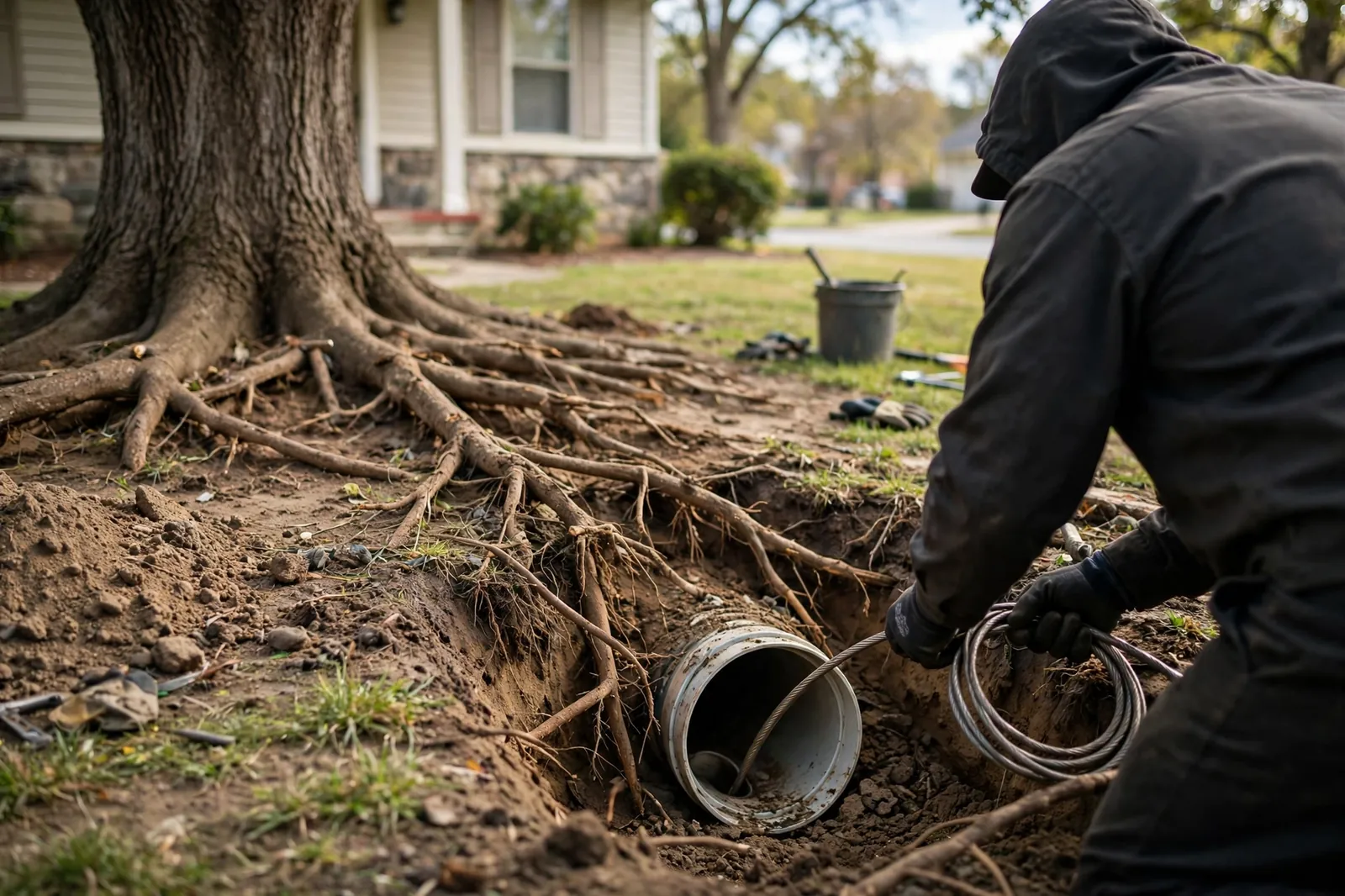
A root mat can sit forty or sixty feet from the house, deep under the yard, and reaching it takes a long hose and the right entry point. The crew usually works from the outdoor cleanout, the capped pipe near the house wall, because it gives a straight run out to the street.
If the house has no outdoor cleanout, they may work from a basement cleanout, or from the street end, feeding the hose in from the road toward the house. Each entry point has its own reach, and the crew picks the one that puts the mat closest to the hose.
The camera goes in first, on a cable that is longer than the hose, and it shows the mat, the joint it came through, and the distance from the entry point. That distance tells the crew how much hose to feed in, and whether the mat is within reach of one entry point or needs a second one.
A very long lateral may need the hose fed from both ends, so the jets meet in the middle and no stretch is missed. The work takes longer when the mat is far away, because the hose has to travel further and the crew makes more passes, but the method is the same: cut the mat, wash it out, and check the camera.
Emergency Root Clearing
What if the roots have cracked the pipe?
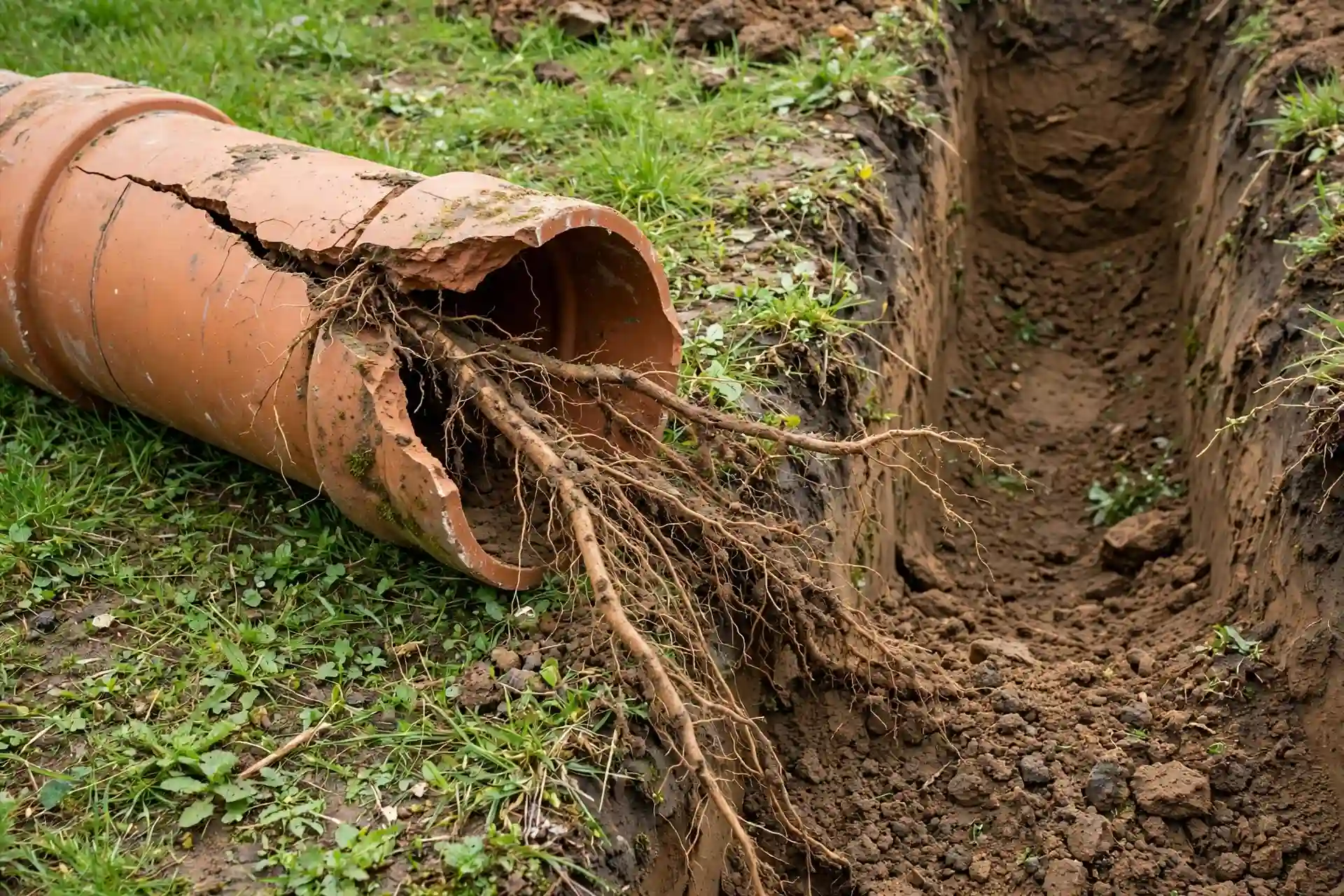
Roots do not break into a sound pipe, but they can widen a crack that was already there, and over time the pressure of a growing root can split a clay pipe along its length. When the camera shows a crack with roots growing through it, the crew has to decide whether cutting is safe.
A small crack with fine strands can usually be cut at a lower pressure, with a careful, slow pass. A wide crack, or a pipe that has shifted so that one section no longer lines up with the next, should not be jetted at full force, because the water can widen the crack or push soil into the line.
In that case the crew should stop, show you the camera picture, and talk about repair. A short cracked section can sometimes be repaired from one dug hole.
A longer run with several cracks may suit a liner, a new pipe formed inside the old one, which covers every crack and every joint at once. A collapsed section needs digging and replacement.
The emergency visit still has value: the crew can clear enough of the mat to get the line flowing again, and the camera picture from the visit is the evidence for the repair plan. Do not ask the crew to cut a badly cracked pipe at full pressure: the risk is a line that breaks completely, and a repair that is far bigger than the one the crack needed.
Emergency Root Clearing
How do you keep a root emergency from happening again?
The lasting answer is to close the gap the roots came through. Cutting and jetting remove the mat, but the joint stays open and the tree stays outside, so new strands find the same gap again.
Repairing the joint, lining the pipe, or replacing the section are the three ways to close it, and the camera picture from the emergency visit shows which one fits. A single open joint suits a repair.
Several open joints along a sound pipe suit a liner. A collapsed or badly cracked pipe needs replacement.
Until the repair is done, a schedule keeps the emergencies away. Note the date of the emergency clearing and how bad the mat was, and book the next clearing before the drains slow again: if the mat took a year to grow back, book the next visit in ten months.
A root killer product used between visits can slow the regrowth, but it will not close the gap. A water alarm by the lowest drain, a small battery device that sounds when it touches water, catches a backup in minutes rather than hours.
The combination of a repair, a schedule and an alarm turns a home that has had a root emergency into a home that is unlikely to have another.
Emergency Root Clearing
Should the tree be removed after a root emergency?
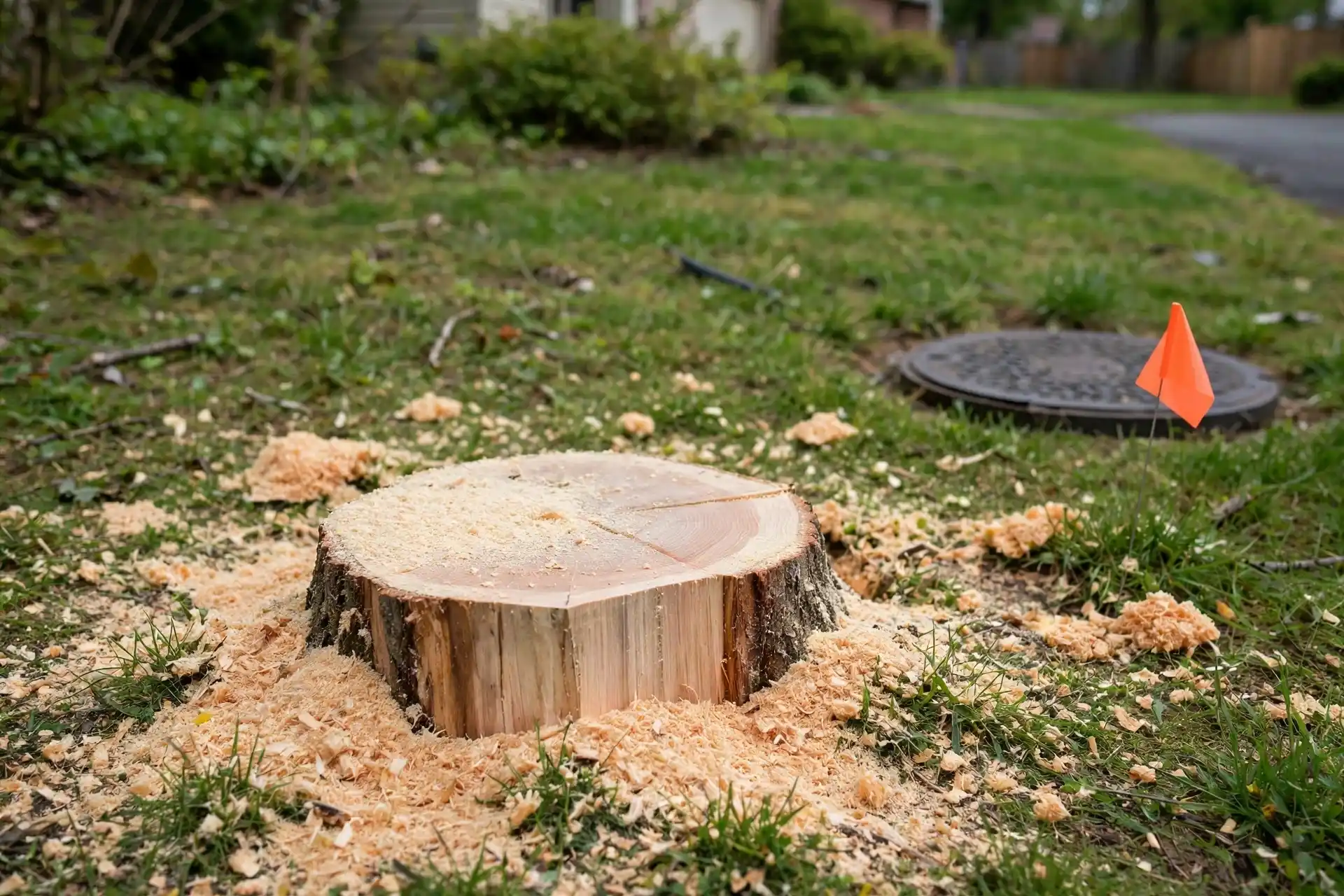
Removing the tree is the most drastic answer, and it is rarely the first one to try. A tree that has sent roots into a sewer line will send them again from the stump if it is cut down, because the roots stay alive and keep growing for a season or two after the trunk is gone.
Removing the tree also loses the shade, the privacy and the value it adds to the property, and in some towns a large tree cannot be removed without a permit. The cheaper and more lasting answer is usually to repair the pipe, because a sound pipe with closed joints keeps roots out whatever tree stands above it.
There are cases where removal is the right call. A willow planted directly over a sewer line, a tree whose roots have already broken the pipe in several places, or a tree that is diseased and due to come down anyway are all candidates.
The decision should rest on the camera picture and on the species: a willow fifty feet from the line is a bigger threat than a small ornamental tree ten feet away. Talk to the crew and, if the tree is large, to a tree specialist, before deciding.
A root barrier, a sheet of plastic buried between the tree and the line, can also help, but it is a big digging job, and it only works if the barrier goes deeper than the roots.
Signs you may need emergency root clearing
- Drains slow a little more each month, then block all at once.
- A big tree stands in the front yard over the sewer line.
- The line clogs again within months of the last clearing.
- Gurgling starts in a toilet when the washer drains.
- The camera once showed roots at a joint, and the drains are slow again.
- A damp patch sits in the yard where the line runs.
- The drains were slow for months, then blocked completely after one large flush.
- A toilet overflows in spring, when the trees are putting on new growth.
- Water backs up through the lowest fixture, and the yard has a large tree near the sewer line.
- The same line blocked last year, and the drains are slowing again in the same season.
- A gurgling sound comes from the floor drain when a toilet flushes, and the house has old clay pipe.
- Paper flushed down one toilet appears in another fixture, because the flow is pushing back through a root mat.
How it works
- 1
Step 1 — Stop the water at once
Turn off every tap, do not flush, and stop the washing machine and dishwasher. A root mat blocks the line completely once the last gap closes, and every litre that goes in comes back out of the lowest fixture.
- 2
Step 2 — Keep clear and protect the lowest room
Keep children and pets out of the wet room, move boxes and valuables to higher ground, and do not step in water that is near a socket or an appliance.
- 3
Step 3 — Phone with the tree facts ready
Call (833) 878-1592 and say which fixtures are affected, when the drains first slowed, what trees stand near the line, and whether the line has blocked before. The history tells the crew the mat is old and thick.
- 4
Step 4 — Camera, cutting head, then jetting
The crew surveys the line with a camera to find the mat and the joint it entered through, cuts the mat with a spinning head, and washes the line clean in passes toward the street.
- 5
Step 5 — Show the joint and plan the repair
A final camera look shows the gap the roots used. The crew explains whether cutting on a schedule will do, or whether the joint should be repaired or lined, and suggests the next date.
Emergency Root Clearing cost
What does it cost?
Typical ranges only — estimates, not quotes. Root jobs vary with the mat: a thin root hair costs less than a thick mat, and a mat near the house costs less than one sixty feet down the line. A late-night or weekend call often carries a call-out fee on top of the normal price, and the crew should say what that fee is when you phone, before they set out. The camera survey is the first step, and it may be priced on its own at $150 to $350 or bundled with the cutting and jetting, so ask which it is. A thick mat needs a cutting head, several passes and more time on site. If the survey shows a cracked joint, a repair or a lining is a separate job with its own quote. The written quote should list the call-out fee, the survey, the cutting, the jetting and the tidy-up as separate lines.
| Service | Typical range (estimate) | Notes |
|---|---|---|
| Root clearing with hydro jetting | $400 – $900 | Roots in sewer line |
| Camera inspection with jetting | $150 – $350 | Often included |
| Single drain line jetting | $250 – $550 | One branch line |
| Repeat or heavy buildup cleaning | $400 – $900 | Extra passes needed |
Prices are estimates only. The local company that does the work sets its own final pricing.
Questions about emergency root clearing