
Emergency Main Line Jetting
A main line emergency is every drain in the house slowing or backing up together, and it needs help the same day. Stop using water, check the lowest fixtures first, and phone (833) 878-1592. The crew runs a camera down the main line, jets the clog clear, and tests the fixtures before leaving.
Updated 2026-11-18. Prices shown are estimates only.
- $150–$900 Typical cost range
- 5 Steps in the visit
- 12 Questions answered
Before & after — emergency main line jetting
Before & after
Drag the slider to compare the same pipe before and after jetting.
Emergency Main Line Jetting
How do you tell a main line problem from a branch clog?
A branch clog hits one fixture: the kitchen sink is slow, but the bathroom drains fine. A main line problem hits everything at once.
The toilet gurgles when the washer drains, the shower fills when the dishwasher runs, and the basement tub is the first to show waste water. If only the lowest fixture is affected, the clog is likely near the end of the main line.
If all of them are slow together, the clog sits further down, where the main run leaves the house. That pattern — many fixtures, one cause — is the mark of a main line emergency, and it is why the crew starts with the main line rather than one sink.
Emergency Main Line Jetting
Why does a main line backup get worse so fast?
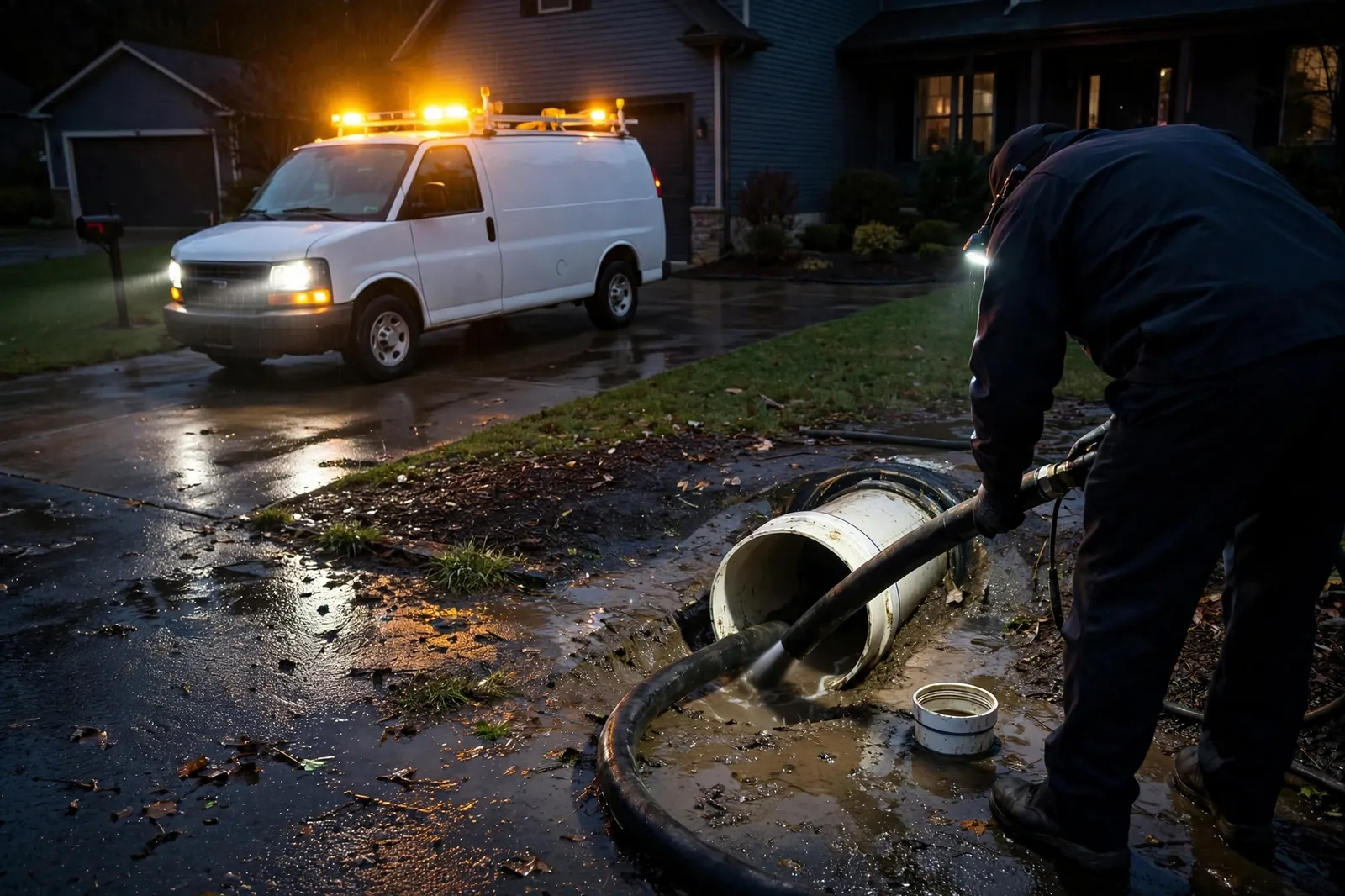
The main line carries everything the house sends down the drains, so a clog there blocks the whole system at once. Each flush, each tap, and each appliance cycle adds water that has nowhere to go, and the lowest fixture becomes the overflow point.
In an hour of normal use, a family can send enough water down the drains to flood a basement floor. That is why the first instruction is always the same: stop using water.
No more flushes, no laundry, no dishwasher, until the line is open. The less water that goes in, the less water comes back up through the floor drain.
Emergency Main Line Jetting
What do you check before you phone?
Look at the lowest fixtures first — the basement tub, the floor drain, and any ground-floor toilet. If waste water is rising there, say so on the phone, since it tells the crew the clog is in the main run.
Note when the trouble started and whether it came on slowly over days or all at once after a heavy day of laundry. Check whether the cleanout cap outside is wet, and whether the yard over the line to the street is damp.
Write down which fixtures are affected and in what order they went wrong, then phone (833) 878-1592 and read the list out.
Emergency Main Line Jetting
What must you not do with a main line backup?
Do not keep flushing to test the line. Every flush sends more water into a blocked main, and the overflow will show up at the lowest fixture.
Do not pour in drain cleaner: it will pool behind the clog, give off fumes, and make the line unsafe for the crew to open. Do not snake the line yourself if you have never done it — a cable in a main line can kink, snap, or punch through a weak joint.
Do not open the outside cleanout if water is pressing behind it. Leave it shut, keep everyone away from the standing water, and let the crew open the line with the right gear.
Emergency Main Line Jetting
What does the crew do on a main line call?
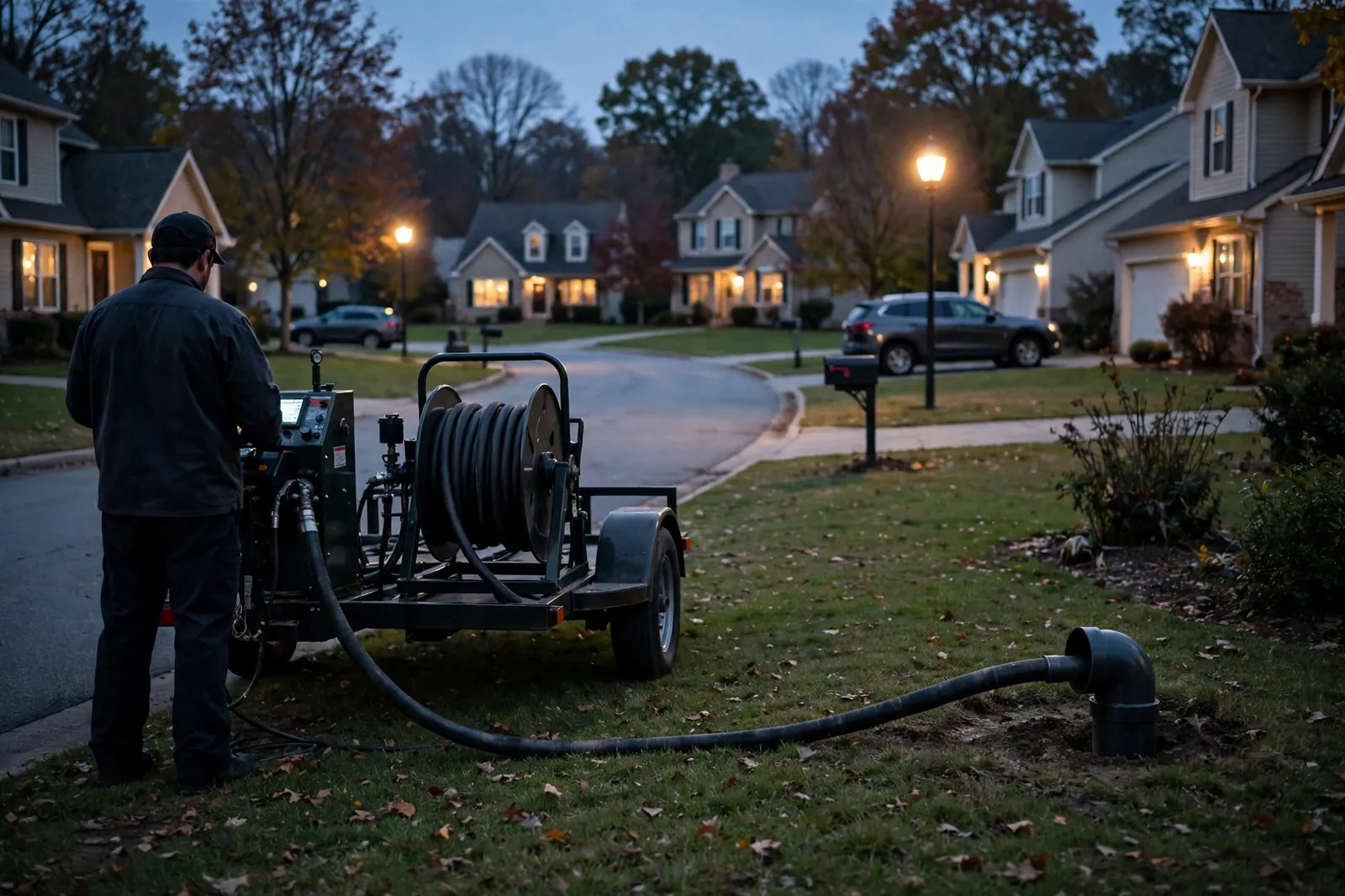
The crew finds the main cleanout, usually outside the house or in the basement, and runs a camera down the main run to find the clog and see what it is. Grease, scale, paper, and roots are the usual causes, and the camera shows which one it is and how far down the line it sits.
Then the jetting hose goes in with a nozzle matched to the clog, and the crew works the line in passes until the water runs freely. A final camera pass checks the full length of the main, the crew tests the fixtures one at a time, and they explain what the camera showed before they leave.
Emergency Main Line Jetting
When does a main line need more than jetting?
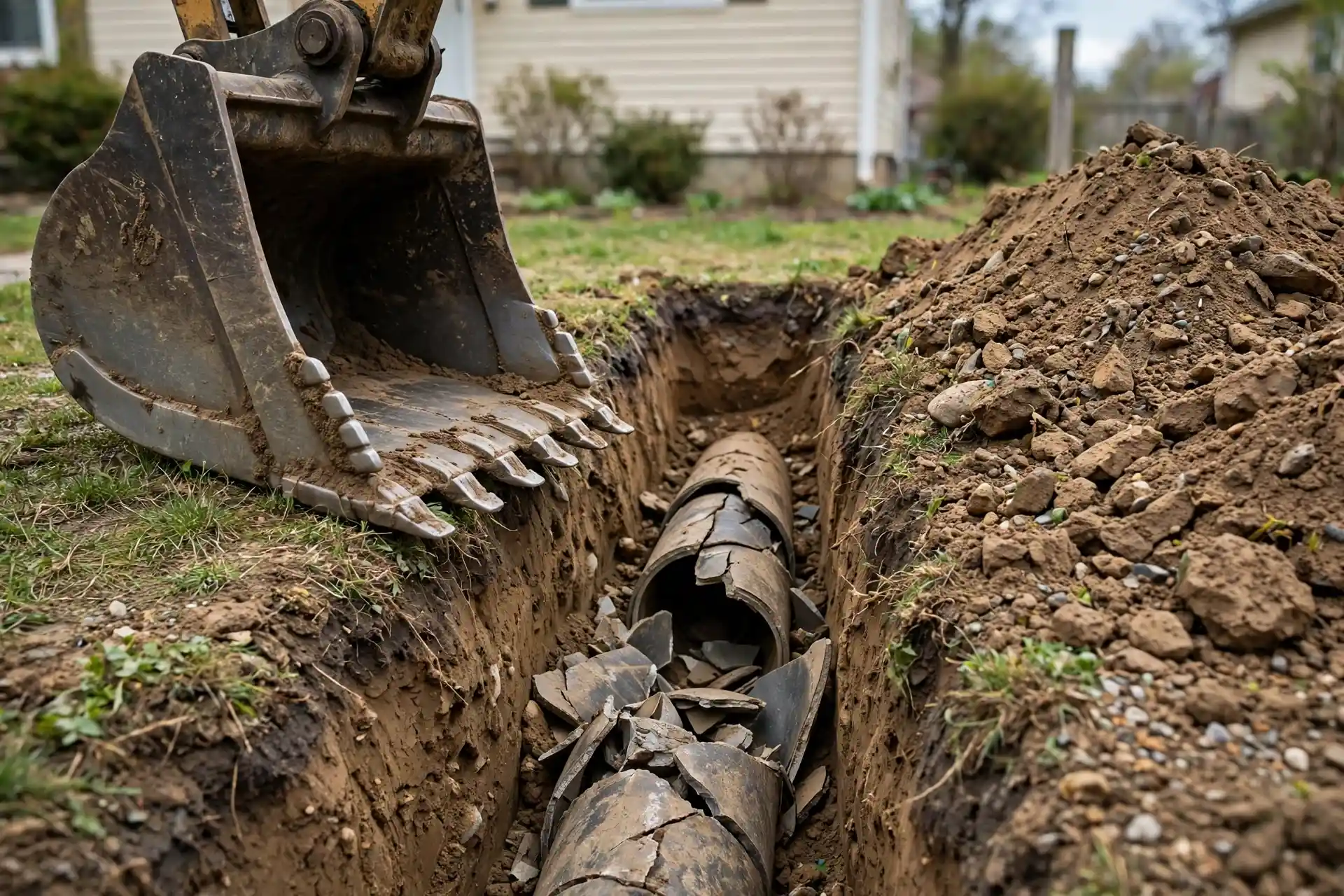
Jetting clears clogs, but it cannot fix a broken main. If the camera shows a collapsed section, a severe break, or a line that has sagged into a belly that holds water, the crew will say so plainly and explain the repair.
A belly can be jetted clean and still fill again, since water and waste settle in the low spot. Roots that have split a joint open will also grow back after jetting.
In those cases the crew should give you the repair options and the price in writing before any digging starts, so you can decide with the full picture in front of you.
Emergency Main Line Jetting
Which room floods first in a main line backup, and why?
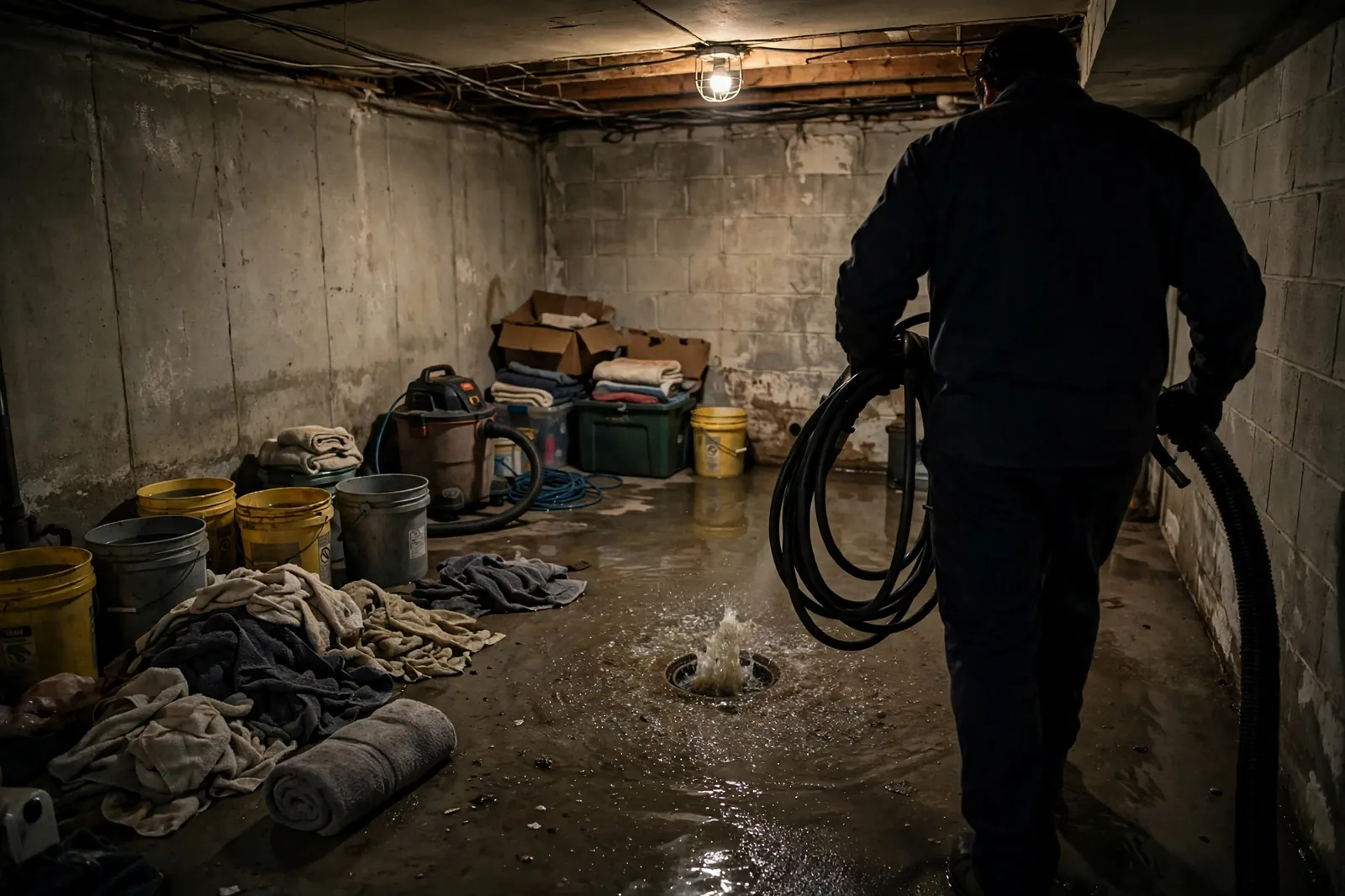
Water always finds the lowest opening, so the first room to flood in a main line backup is the one with the lowest drain. In a house with a basement, that is usually the basement floor drain, a basement shower or a laundry tub.
In a house without a basement, it is the ground-floor toilet or the shower on the lowest floor. The water does not come up through every fixture at once: it rises in the lowest one first, and only when that fixture is full does it move on to the next lowest.
Knowing this helps in two ways. First, it tells you where to look: if the basement floor drain is bubbling, the trouble is in the main line, not in a single sink.
Second, it tells you where to put your effort: move valuables out of the lowest room first, because that room floods first and deepest. A basement with boxes on the floor can lose a great deal in a few inches of water, while the same water on a tiled ground floor is a cleaning job.
If the lowest room has a floor drain, do not try to plug it: the water will find the next lowest opening instead, and the pressure can damage the pipe.
Emergency Main Line Jetting
What should you do if the backup happens at night?
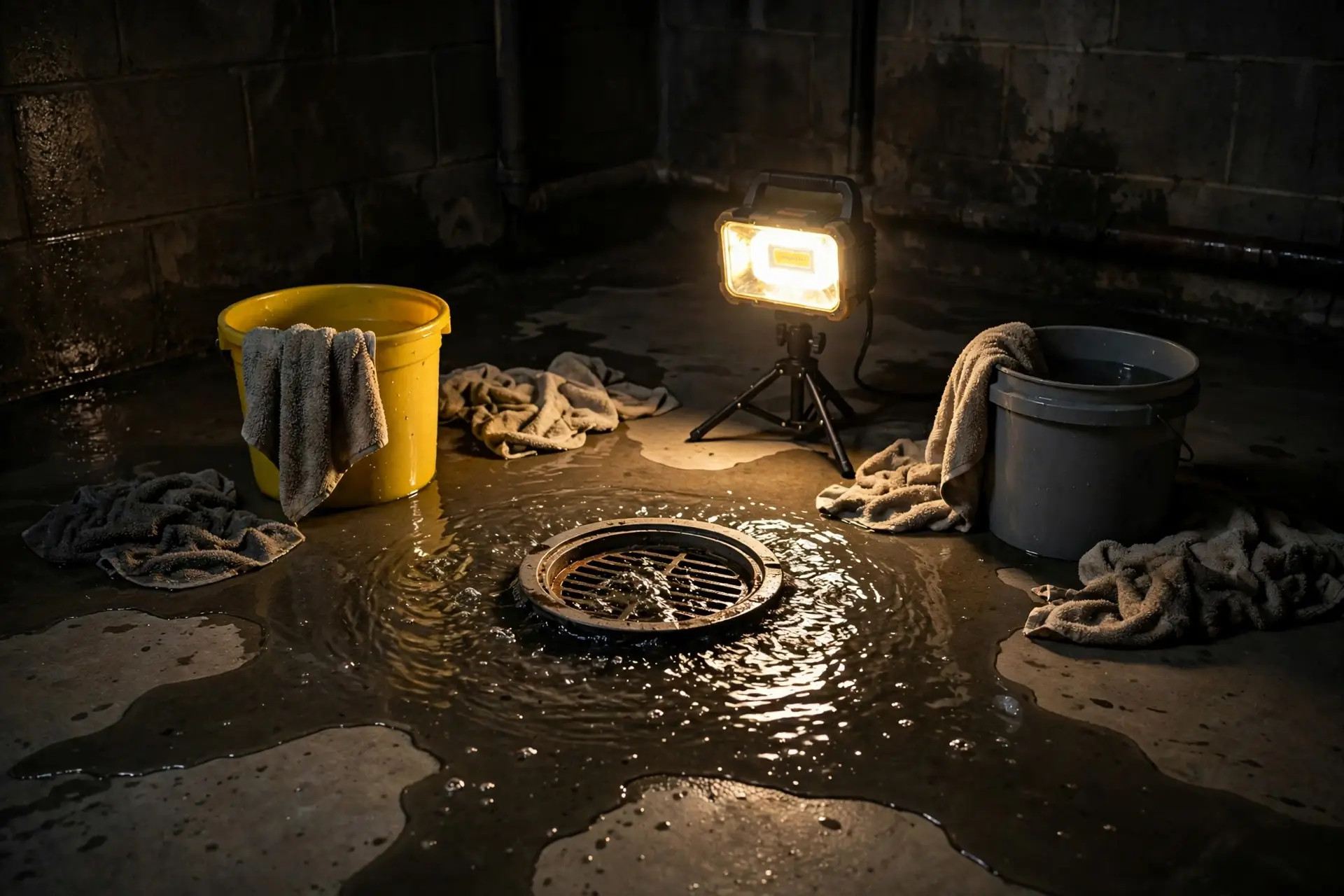
A backup at night feels worse, because the house is quiet, the crew is not yet on the way, and every sound of water seems louder. The steps are the same as in the daytime, and they should be done in the same order.
Stop the water: turn off every tap, do not flush, and stop any appliance that is running. Go to the lowest room with a torch and look at the lowest drain.
If water is rising, move what you can to higher ground, and put towels at the doorway to slow the spread.
Then phone for help. An emergency crew answers at night, and the call is the same as a daytime one: address, what is happening, when it started, which fixtures are affected.
While you wait, stay out of the wet room if the water is near a socket or an appliance, and do not go down into a flooded basement in the dark. If the water is only in a tub or a shower tray, you can leave it there until morning and sleep in another room.
If it is spreading across a floor, stay up and keep moving valuables, because a few inches of water in the night becomes a foot of water by morning.
Emergency Main Line Jetting
How do you protect valuables in a basement during a backup?
A basement is where most homes store the things that water ruins fastest: cardboard boxes of papers and photographs, old clothes, books, electronics and furniture with wooden legs. The first rule is to keep nothing valuable directly on a basement floor.
Plastic storage boxes with lids, set on a shelf or on blocks a few inches off the floor, survive a shallow backup that would destroy a cardboard box. Metal shelving is better than wooden shelving, because it does not soak up water.
When a backup starts, move the lowest items first, and move them upstairs rather than to another corner of the same floor, because the water will spread. Photographs and papers go in a plastic bag before they are carried, because wet paper tears.
Electronics should be unplugged from the wall before they are moved, and only if the floor around them is dry: never reach for an appliance that is standing in water. Furniture legs can be lifted onto blocks or wrapped in plastic bags.
These steps take ten minutes, and they save things that cannot be replaced.
Emergency Main Line Jetting
What should you do after the crew leaves?
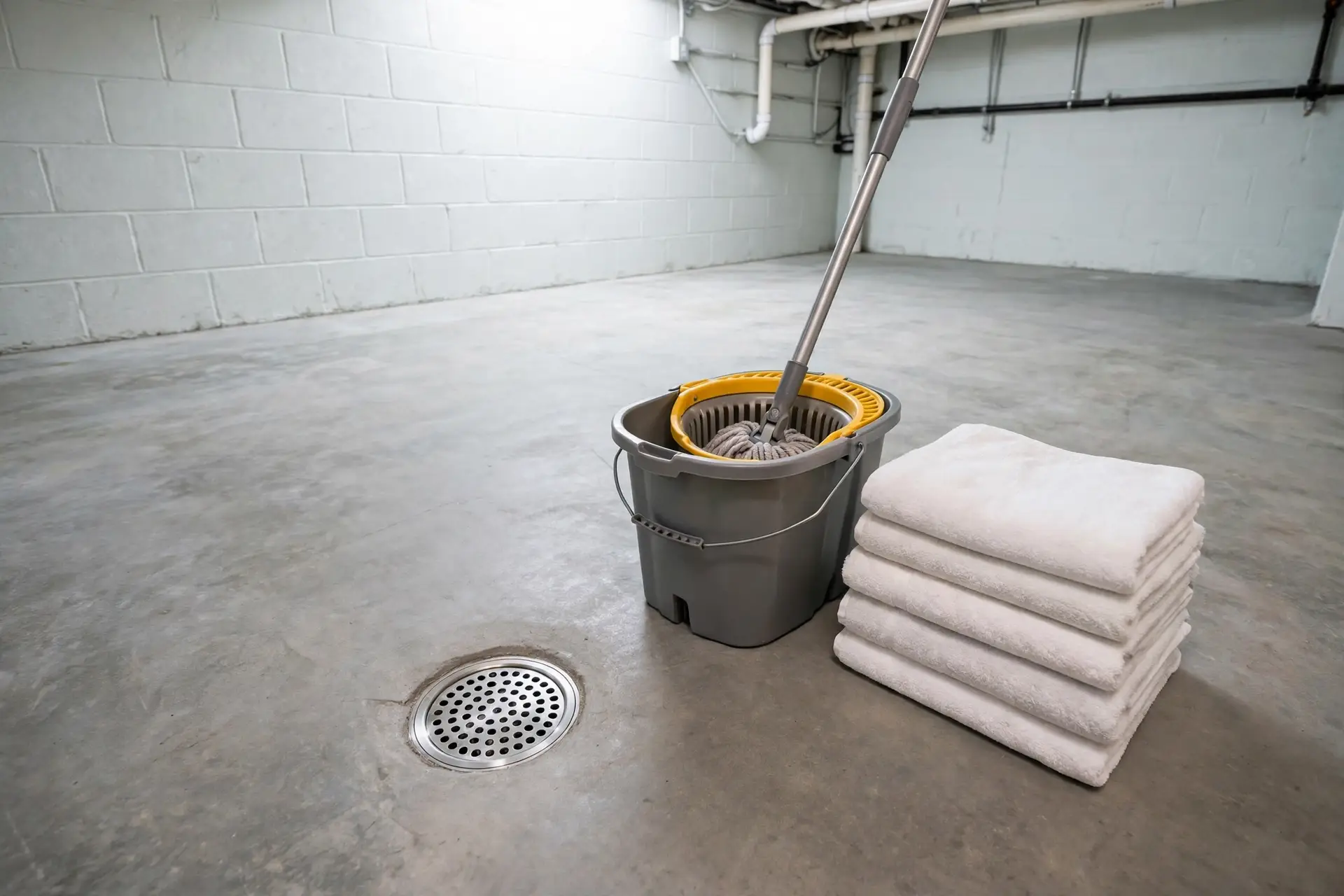
After the crew leaves, the line is open, but the house still needs attention. Start with the room that flooded: wash the floor with hot water and soap, then a household disinfectant, and open windows and run a fan to dry it.
Soft items that soaked up the water, such as rugs and cardboard boxes, are hard to clean properly and are usually best thrown away. Check the walls at floor level for damp, because water that sat against a wall can wick upward and leave a stain that turns into mould.
Then watch the drains for a few days. Run each fixture one at a time and listen for gurgling, and watch the lowest drain when the washing machine pumps out.
If the flow is strong and quiet, the line is clear. If a drain slows again within days, phone the crew back and tell them, because a line that blocks again that fast usually has a damaged section or a root mat that was only partly cut, and the camera recording from the first visit will show which it is.
Take photos of any damage before you clean, and keep the crew's written note, because both are useful for an insurance claim.
Emergency Main Line Jetting
Can a main line backup be caused by the street sewer?
Yes, and it is more common than most homeowners think. After heavy rain, the street sewer can fill faster than it drains, and the water level in the main rises above the level of a home's lateral.
When that happens, wastewater pushes back toward the house, and the lowest fixture is where it shows up first. The signs are a backup that starts during or just after a storm, and neighbours on the same street having the same problem at the same time.
A single house backing up in dry weather is almost always a problem in its own line; a whole street backing up in a storm is a problem in the main.
Jetting the home's line will not fix a full street sewer, because the blockage is not in the home's pipe. The crew can still help: the camera survey shows whether the home's line is clear, and if it is, the problem is upstream, and the water authority should be called.
A backwater valve, a one-way valve fitted in the lateral, stops the street water from pushing back into the house, and it is worth asking about if the street backs up more than once. Until the street main drains, the best step is to stop using water and wait, because every litre that goes down the drain has nowhere to go.
Emergency Main Line Jetting
What if the main line backs up again the same week?
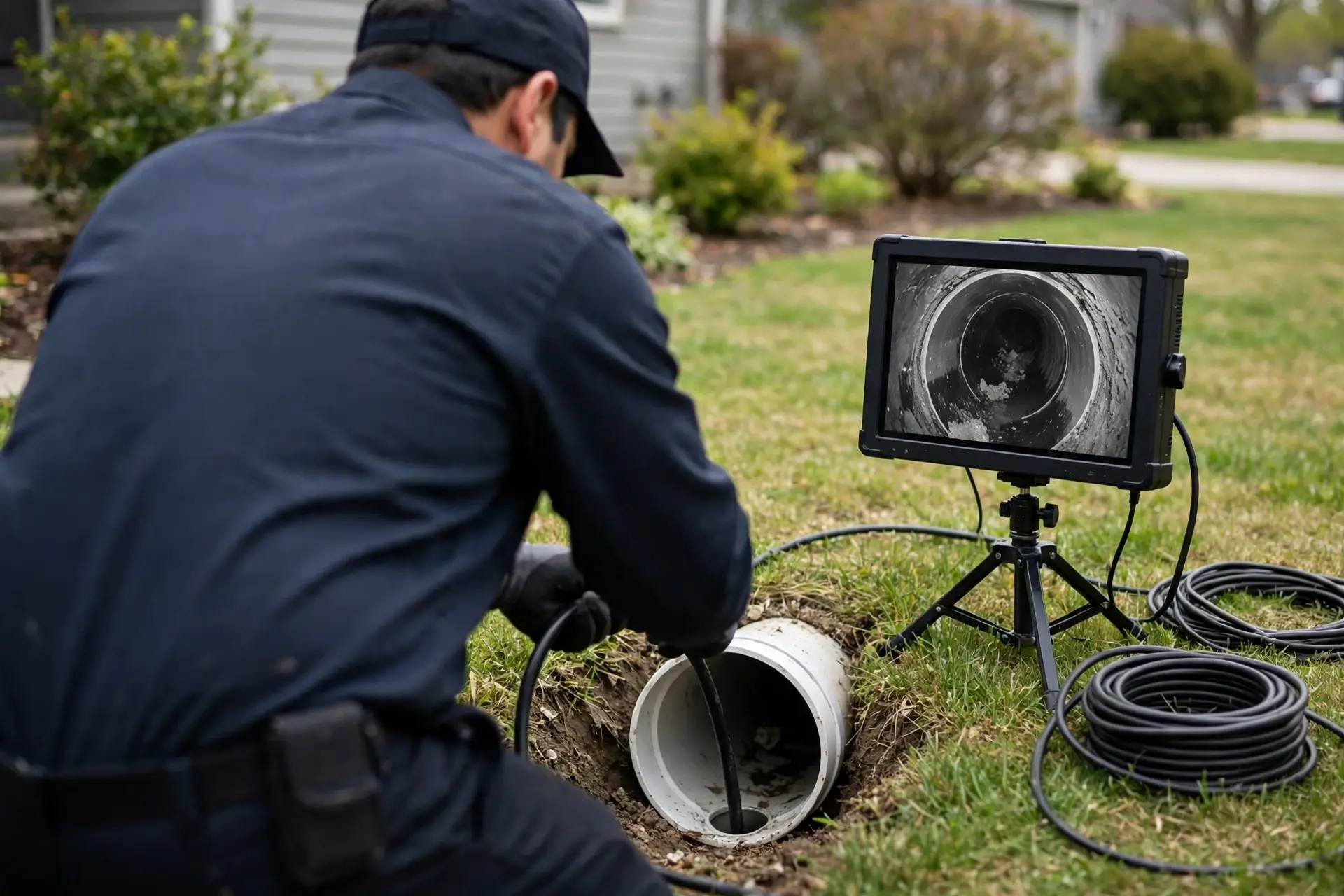
A main line that backs up again within days of being jetted has a problem that cleaning alone did not solve, and the crew should be told at once. The most common cause is a damaged section: a dip that holds standing water, a crack that lets soil in, or a collapsed length.
Jetting clears the waste that has settled, but the dip or the crack stays, and the waste settles again within days. The camera recording from the first visit will show whether such a section exists, and the crew should look at it again before jetting a second time.
The second common cause is a root mat that was only partly cut. A thick mat can look clear on the first pass and then swell again as the cut fibres absorb water.
The third cause is a blockage further down the line, past the point the first visit reached, which the camera may not have seen. In all three cases, the answer is not to jet the same stretch again and hope: it is to run the camera the full length of the line, find the section that is failing, and talk about repair.
A second backup in the same week is information, and it should be treated as such, not as bad luck.
Signs you may need emergency main line jetting
- Every fixture in the house drains slowly at the same time.
- The toilet gurgles when the washer drains a load.
- The shower fills while the dishwasher is running.
- Waste water rises in the basement tub first.
- The floor drain overflows after a normal flush.
- All the drains went wrong at once after days of slowing.
- The basement floor drain is bubbling, and the water level in it is rising.
- A ground-floor toilet overflows when the washing machine drains upstairs.
- Water appears on the basement floor with no rain and no appliance running.
- Every toilet in the house gurgles when one of them is flushed.
- The lowest shower in the house fills with dirty water when the kitchen sink runs.
- A backup that happened last year has returned, and it is worse this time.
How it works
- 1
Step 1 — Stop every drop going down
Turn off all taps, do not flush, and stop the washing machine and dishwasher. A main line backup gets worse with every litre that enters the drains, so stopping the water is the first and most important step.
- 2
Step 2 — Check the lowest drain first
Go to the lowest room in the house and look at the lowest drain, usually a basement floor drain or a ground-floor shower. That is where the water will show up first, and it tells the crew how far the backup has gone.
- 3
Step 3 — Move valuables and keep clear
Move boxes, papers and electronics to higher ground, and keep children and pets out of the wet room. Do not step in water that is near a socket or an appliance.
- 4
Step 4 — Phone with the facts ready
Call (833) 878-1592 and say which fixtures are affected, when it started, and whether the water is rising. The crew will tell you what to do while they travel and what equipment to bring.
- 5
Step 5 — Camera, jetting, and a watchful week
The crew surveys the main line with a camera, jets it clear in passes toward the street, and checks the final picture. Watch the lowest drain for a few days after, and phone back at once if it slows again.
Emergency Main Line Jetting cost
What does it cost?
Typical ranges only — estimates, not quotes. Main lines are long and carry the whole house, so the price rests on length and on what is inside the pipe. A short main run costs less than a long one that stretches across a deep lot to the street. A late-night or weekend call often carries a call-out fee on top of the normal price, and the crew should say what that fee is when you phone, before they set out. The blockage itself is the next driver: a soft grease plug clears in one pass, while a thick root mat or a crust of scale needs a cutting head, several passes and more time on site. A camera look may be priced on its own at $150 to $350 or bundled with the jetting, so ask which it is. The written quote should list the call-out fee, the survey, the jetting and the tidy-up as separate lines.
| Service | Typical range (estimate) | Notes |
|---|---|---|
| Main line hydro jetting | $350 – $900 | Whole-home line |
| Camera inspection with jetting | $150 – $350 | Often included |
| Single drain line jetting | $250 – $550 | One branch line |
| Repeat or heavy buildup cleaning | $400 – $900 | Extra passes needed |
Prices are estimates only. The local company that does the work sets its own final pricing.
Questions about emergency main line jetting