
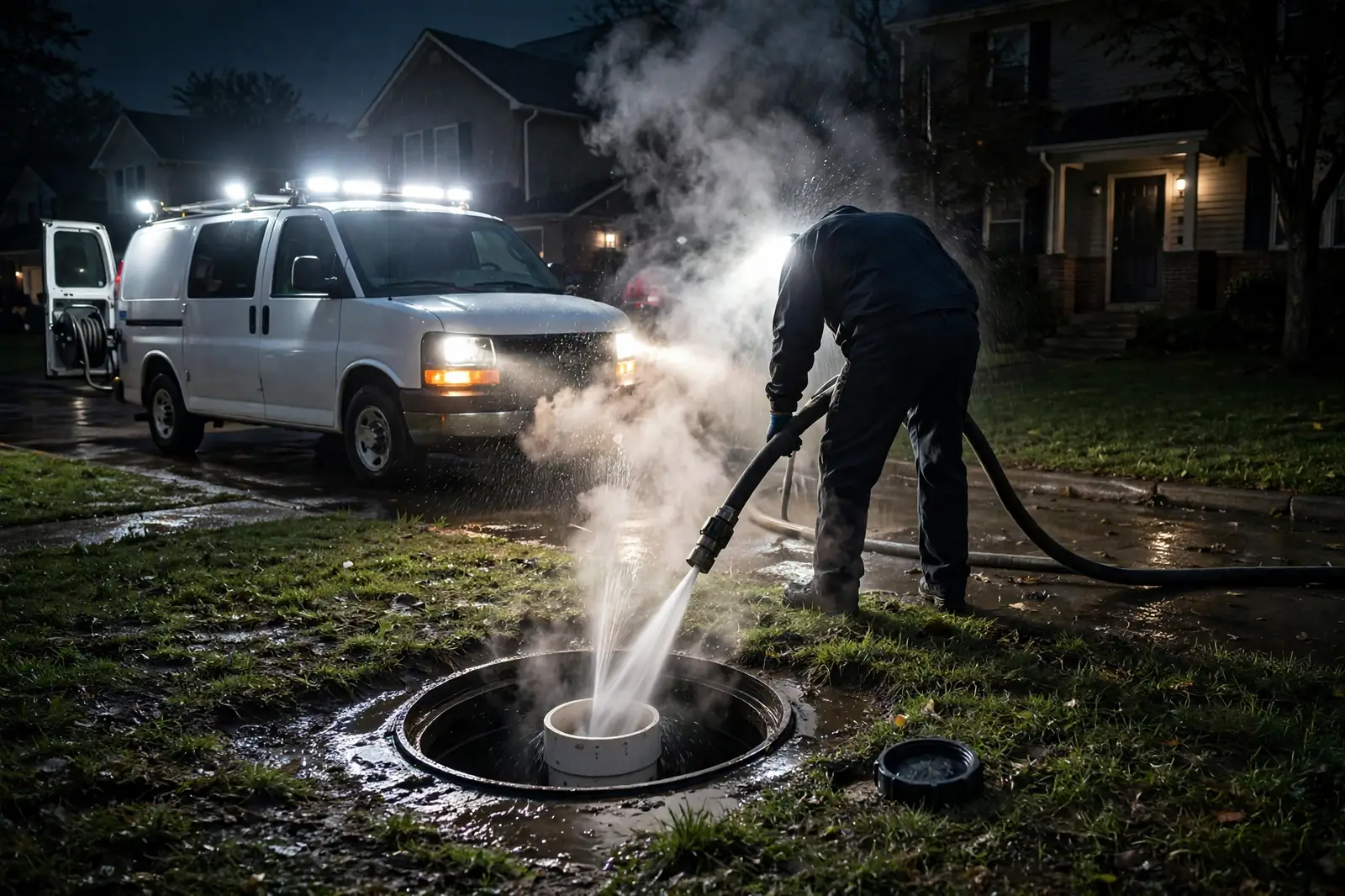
Emergency Sewer Jetting
A sewer emergency is waste water forcing its way back into the home or pooling in the yard, and it needs a crew now. Stop flushing and running taps, keep clear of the water, and phone (833) 878-1592. The crew checks the lateral with a camera, clears the clog with a jetting hose, and confirms the flow before leaving.
Updated 2026-11-18. Prices shown are estimates only.
- $150–$900 Typical cost range
- 5 Steps in the visit
- 12 Questions answered
Before & after — emergency sewer jetting
Before & after
Drag the slider to compare the same pipe before and after jetting.
Emergency Sewer Jetting
How do you know the sewer line is the problem?
When the trouble sits in the sewer lateral, the signs show up at the lowest points first. The basement tub fills when a toilet upstairs is flushed, the floor drain burps up grey water when the washer runs, and several fixtures misbehave at the same time.
A smell of sewage in the yard, or a damp patch of lawn over the line to the street, points the same way. One slow sink is a branch problem; the whole house acting up at once is a lateral problem.
If the cleanout cap near the kerb is wet or weeping, say so on the phone — it tells the crew where to start.
Emergency Sewer Jetting
What makes a sewer backup dangerous?
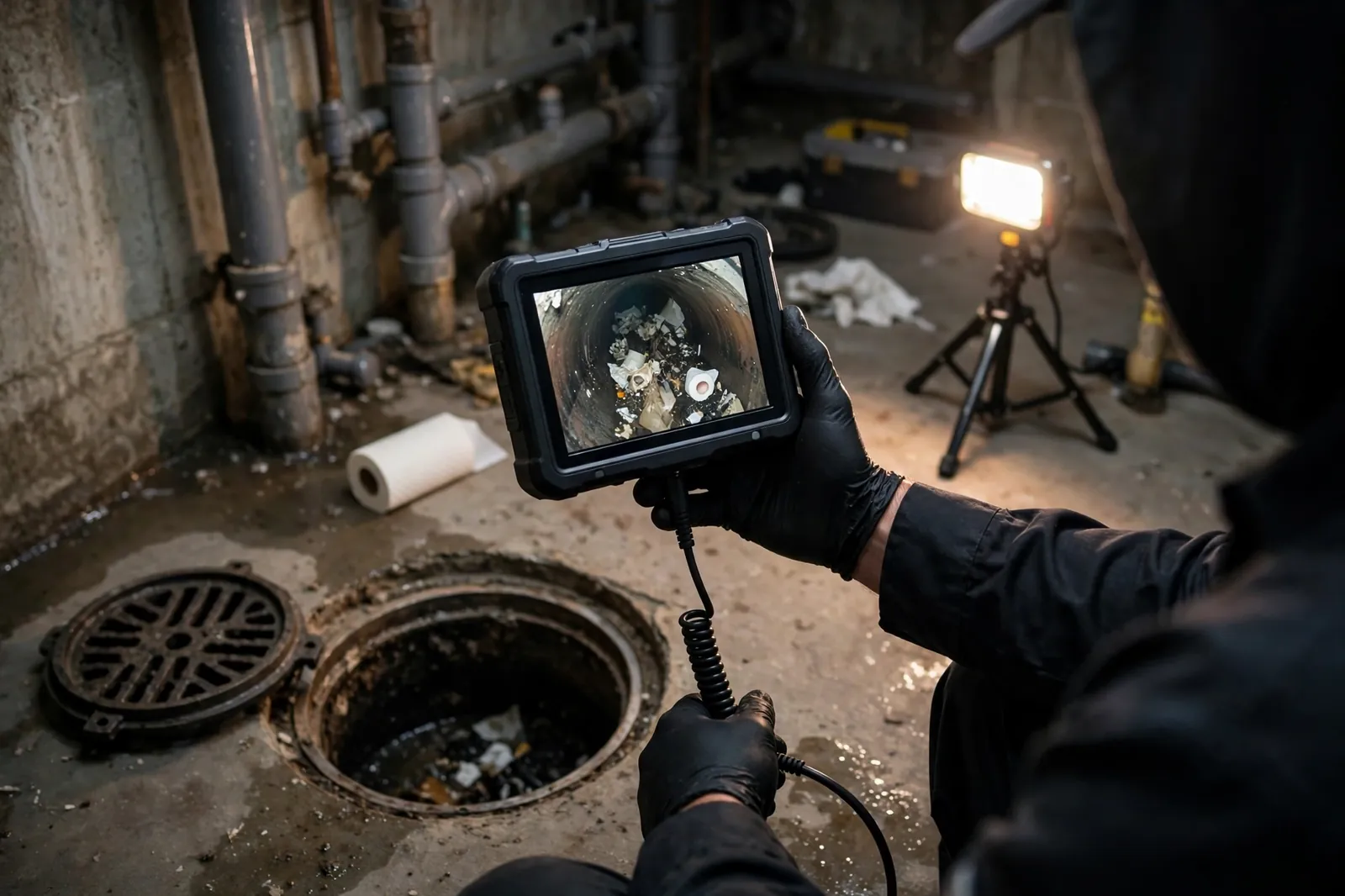
Sewer water carries germs, and it soaks into floors, skirting, and anything stored low. The longer it sits, the further it spreads and the harder the clean-up becomes, so the first hour matters more than the rest of the day.
Keep children and pets right away from it, and do not wade through it to rescue boxes — wet cardboard and fabric can be thrown away, but an infection from sewer water is not worth the risk. If the water is near sockets, switches, or appliances, stay out of it entirely and wait for the crew.
The job is to get the line open and the water out, not to save what is already soaked.
Emergency Sewer Jetting
What should you do while you wait for the crew?
Stop every tap, toilet, and appliance that sends water down the drains. Lift rugs and move boxes off the floor near the wet area if you can reach them without stepping in the water.
Put old towels at the edge of the wet patch to slow the spread, and open a window if the smell is strong, but do not run fans that blow across sewage water. Note which fixtures back up and in what order — the tub first, then the toilet, then the floor drain, for instance — and tell the crew when they arrive.
That order helps them judge how far down the lateral the clog sits.
Emergency Sewer Jetting
What should you never do with a sewer backup?
Never pour drain cleaner into a backed-up sewer line. It will sit in the standing water, give off fumes, and turn the line into a hazard for the crew who must open it.
Never force a cleanout cap off while sewage is pressing behind it — the cap can blow and the spill can cover the area in seconds. Never keep flushing to see if the line clears; each flush adds to the flood.
And never run the dishwasher or the washer to get them out of the way, since both send large amounts of water straight into the blocked lateral.
Emergency Sewer Jetting
How does the crew clear a sewer lateral?
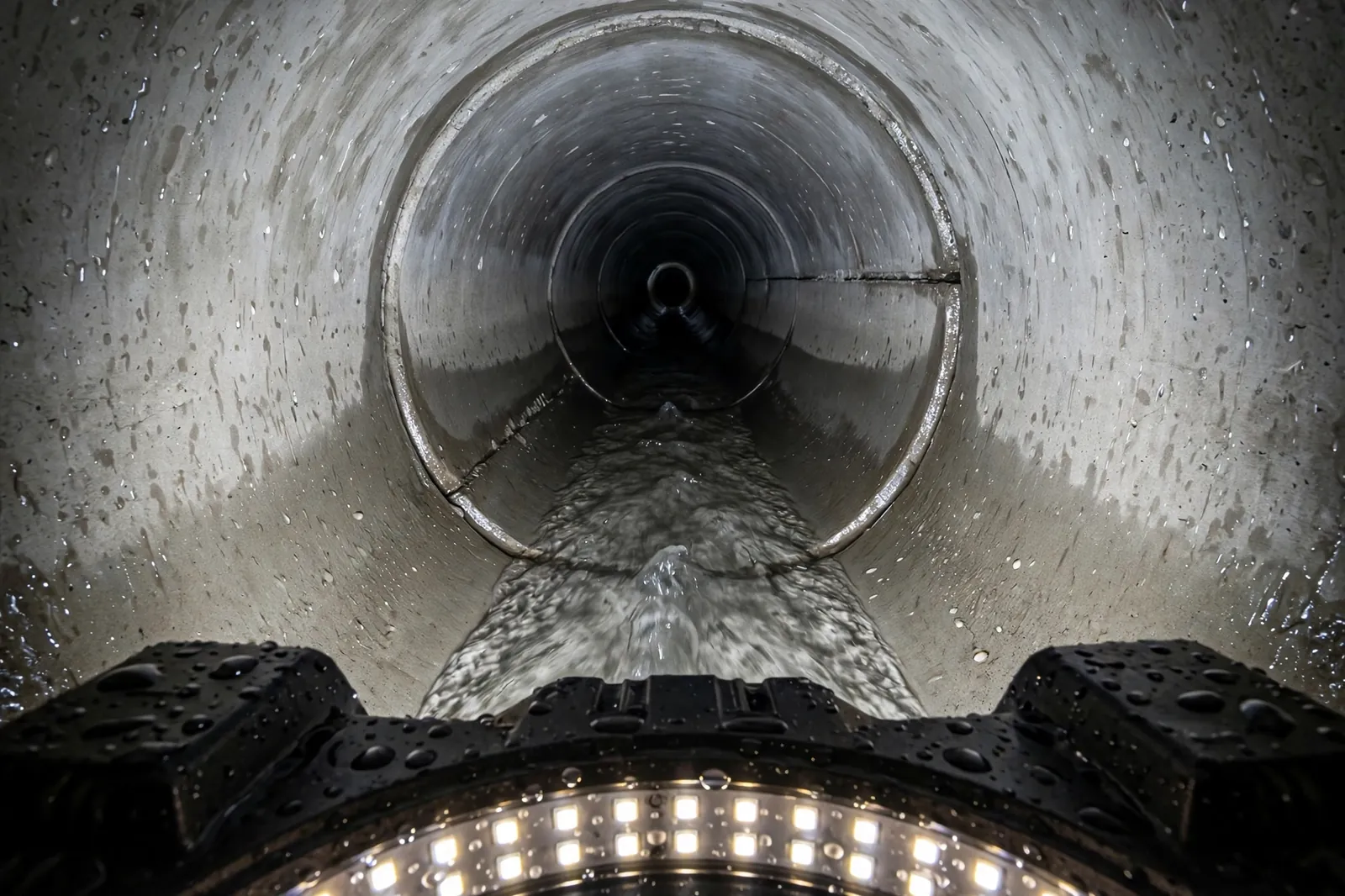
The crew starts at the access point, often the cleanout near the house or the kerb, and runs a camera down the lateral toward the street. The camera shows whether the clog is grease, roots, scale, or a break, and how far from the house it sits.
Then a jetting hose with a nozzle matched to the clog goes in and works the line in passes, washing the debris out toward the main. A second camera pass confirms the lateral is open along its full length.
If the camera shows a collapsed or broken section, the crew will explain the repair and its price before any digging starts.
Emergency Sewer Jetting
What comes next after the lateral is open?
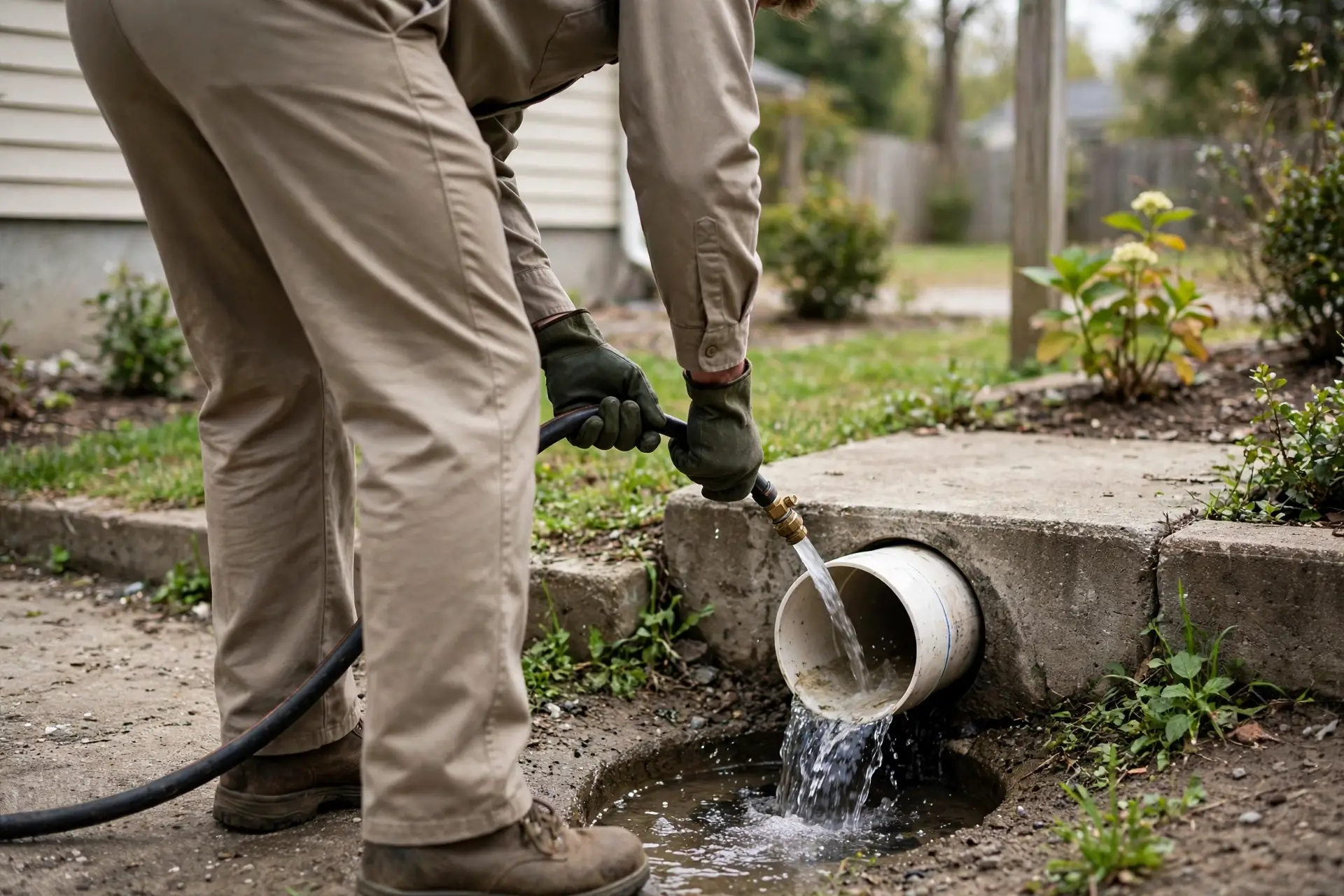
Run one fixture at a time and watch the lowest drains first. Flush a toilet, then run a tap, then start the washer on a short cycle, checking the floor drain and the basement tub after each one.
If everything drains at a normal pace, the lateral is holding. Ask the crew to show you the camera footage and to note what they found, so you have a record if the trouble comes back.
If it does return within days, phone back and mention the first visit — a repeat backup often means roots at a joint or a sagging section that needs a repair, not another clean.
Emergency Sewer Jetting
What is the difference between grey water and sewage in a backup?
Grey water is the water from sinks, showers, baths and washing machines. It is dirty, and it carries soap, grease and food scraps, but it has not passed through a toilet.
Sewage is the water from toilets, and it carries human waste and the bacteria that go with it. The difference matters because the two kinds of backup need different care.
Grey water on a floor is a cleaning job. Sewage on a floor is a health risk, and the room should be closed off until it is cleaned properly.
Telling them apart is usually easy: sewage smells strongly and looks dark, while grey water smells of soap and looks pale. A backup from a sewer lateral is usually sewage, because the lateral carries toilet waste along with everything else.
A backup from a kitchen branch alone is usually grey water. If you are not sure, treat the water as sewage: keep children and pets out, do not walk through it in bare feet, and wash your hands after touching anything that has been in it.
The crew will treat it the same way, and they will tell you how to clean the room once the line is open.
Emergency Sewer Jetting
How do you clean up after a sewer backup?
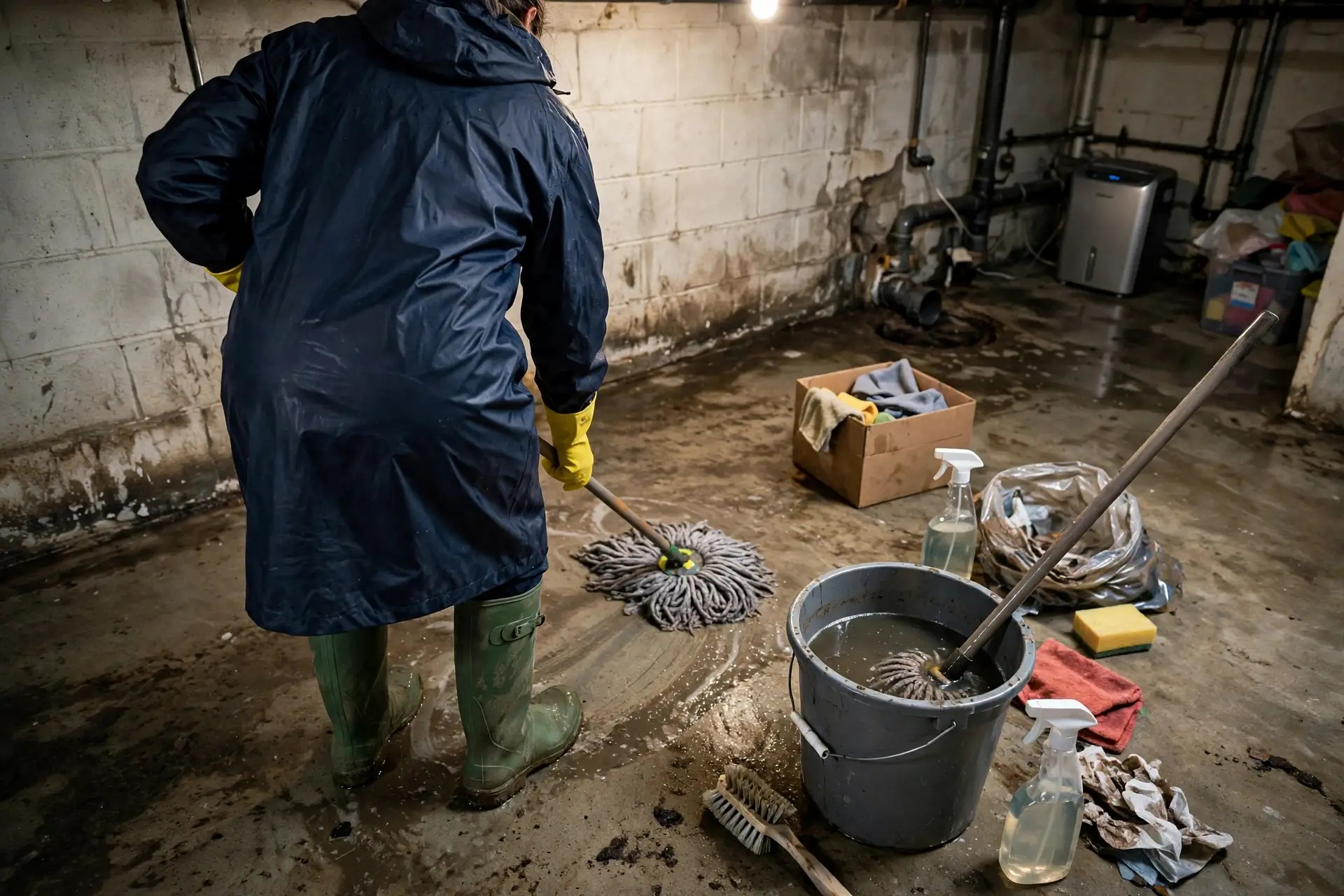
Start only once the line is open and the water has drained away. First, take photos of every room and every damaged item, because the photos are the record for an insurance claim.
Then remove the water with a wet-and-dry vacuum or a mop and bucket, and put the dirty water down a working drain, not on the garden. Bag up soft items that soaked up the water, such as rugs, cardboard boxes and stuffed toys, and throw them away: they are hard to clean properly and they hold bacteria.
Then wash every hard surface that the water touched with hot water and soap, and follow with a household disinfectant made for the job, leaving it on the surface for the time the label says. Wash the walls up to the height the water reached, and check the skirting boards for damp.
Open windows and run a fan or a dehumidifier to dry the room, because damp that stays in a floor or a wall turns into mould within days. Wash your hands well after the work, and wash any clothes that touched the water separately in a hot wash.
If the backup was large, or if the water reached a bedroom or a kitchen, a professional cleaning crew is worth the cost.
Emergency Sewer Jetting
Should you call your insurer after a sewer backup?
Yes, and the call should be made as soon as the water is stopped and the line is open. Many home insurance policies cover the damage from a sewer backup, but some do not, and some cover it only if the homeowner has added a sewer backup rider to the policy.
The call is worth making even if you are not sure, because the insurer will tell you what is covered and what is not, and what they need from you. Do not start major cleaning or throw away damaged items before the call, because the insurer may want to see the damage or send an assessor.
Keep everything the insurer asks for in one place: photos of the damage taken before cleaning, the crew's written note of what was found, the camera recording if the crew saved one, and receipts for any cleaning or repair work. Write down the date and time of the backup, when the crew arrived, and what they did.
If the backup was caused by the street sewer, the water authority may also be liable, and the insurer will want to know that. A backup is stressful enough without a dispute over paperwork, and a clear file made on the day is the best defence against one.
Emergency Sewer Jetting
What if the backup happens while you are away from home?
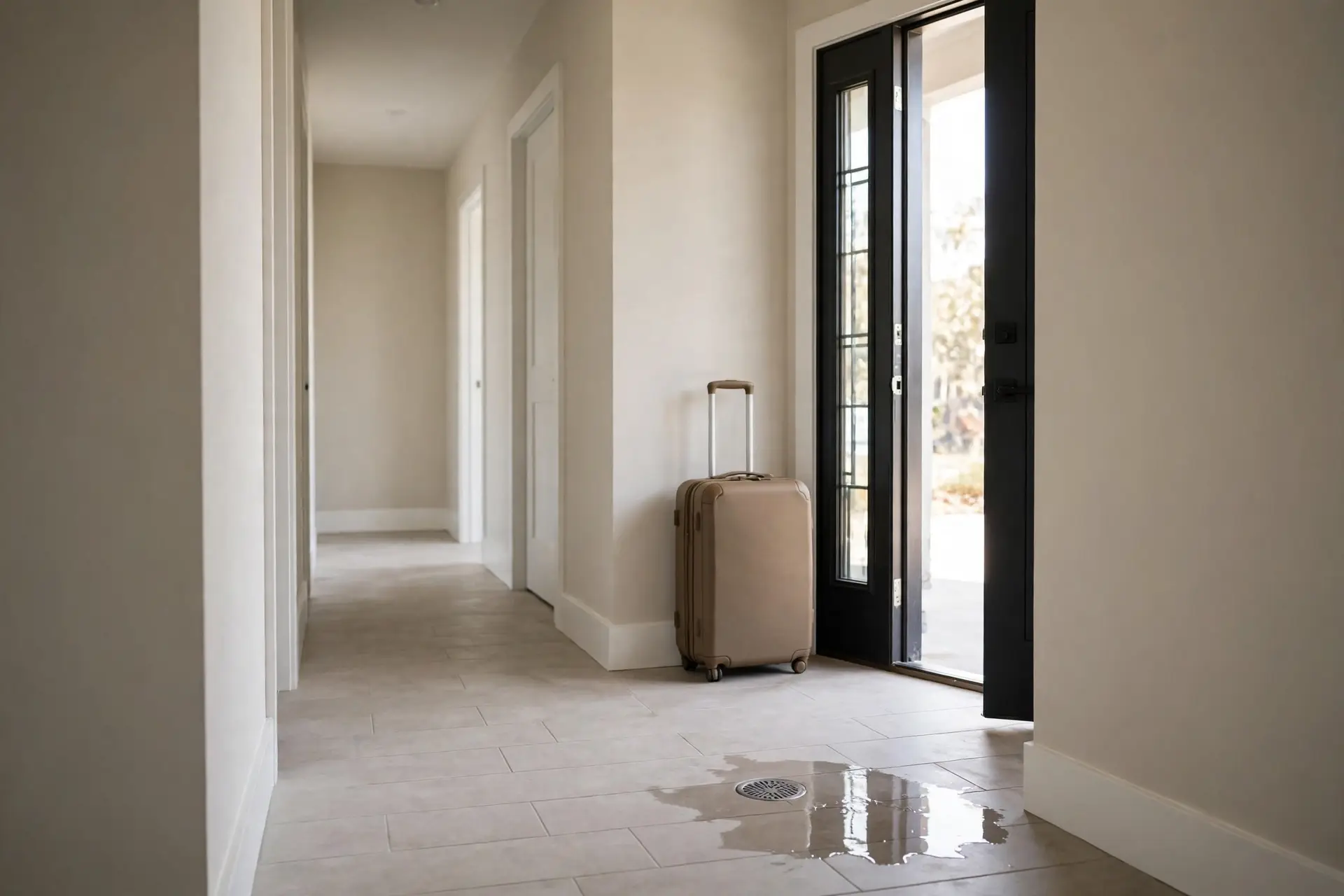
A backup that happens while the house is empty is the worst kind, because the water can run for hours or days before anyone notices. The signs on return are a smell, a damp floor, and water stains on the walls.
The first step is the same as if you had been there: do not walk through the water if it is near a socket or an appliance, and switch off the power to the wet area from the breaker panel if you can reach it safely. Then call for help and take photos of everything before you start cleaning.
The best defence is prevention before a trip. Ask a neighbour to check the house every day or two, and to look at the lowest drain.
Turn off the water to the washing machine and the dishwasher before you leave, because a leaking appliance can add to a backup. Some homes have a water alarm, a small battery device that sits on the floor by the lowest drain and sounds when it touches water; a neighbour who hears it can call for help before the damage spreads.
A house that has backed up once is more likely to back up again, so the camera survey and the repair that follow the first backup are the real protection against a second one while you are away.
Emergency Sewer Jetting
How does a sewer backup affect a home on a septic system?
A home on a septic system has no street sewer to push the waste into: the lateral runs to a tank in the yard, and the tank drains into a soakaway field. A backup in such a home can mean the lateral is blocked, the tank is full, or the soakaway field has failed, and the fix is different for each one.
A blocked lateral is cleared by jetting, the same as a home on a street sewer. A full tank needs pumping, and a failed soakaway field needs a specialist to look at the soil and the drainage.
The signs point to the cause. A backup that affects every fixture at once, together with a smell in the yard over the tank or the field, often means the tank is full or the field is saturated.
A backup that affects one fixture only is more likely to be a branch line. Jetting the lateral will not help a full tank, and pumping the tank will not help a blocked lateral, so the camera survey and a look at the tank level are both needed before the work starts.
A septic tank should be pumped every three to five years, and a home that has not had its tank pumped in that time should have it checked before any other work is done.
Emergency Sewer Jetting
What can stop a sewer backup from happening again?
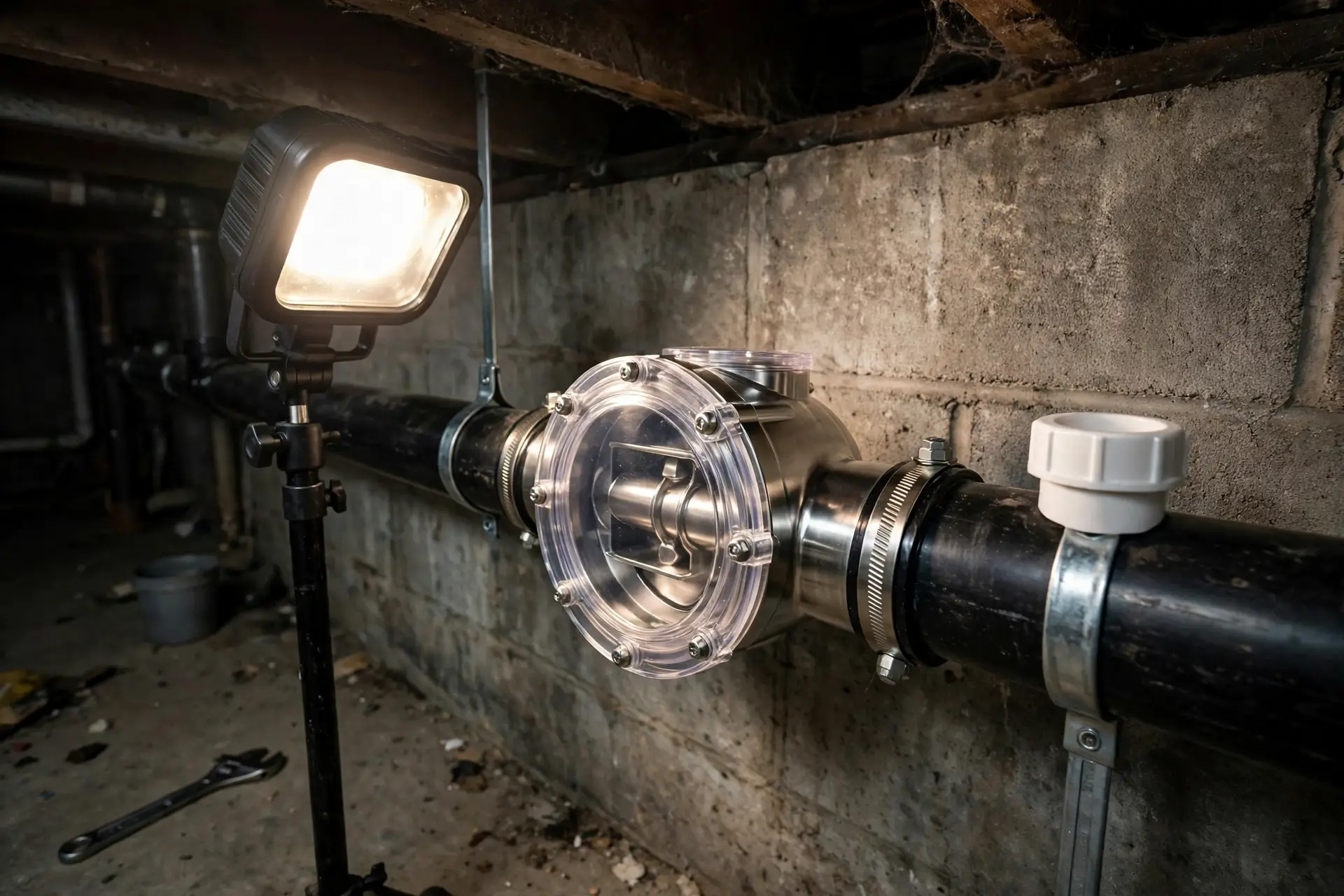
The most reliable step is to fix what the camera survey found. If the survey showed a root mat, repair the joint the roots came through.
If it showed a dip that holds standing water, repair the dip. If it showed a cracked section, replace it.
Cleaning alone buys time; repair ends the problem. A backwater valve, a one-way valve fitted in the lateral, stops a full street sewer from pushing water back into the house, and it is worth fitting if the street has backed up before.
The second step is habit. Flush only toilet paper, and put wipes, cotton pads and sanitary products in the bin.
Keep cooking fat out of the kitchen sink. Have the lateral surveyed every few years, and jetted when the survey shows coating building up.
The third step is a water alarm by the lowest drain, a small battery device that sounds when it touches water, so a backup is caught in minutes rather than hours. None of these steps is expensive beside the cost of a flooded floor, and together they turn a home that has backed up once into a home that is unlikely to back up again.
Signs you may need emergency sewer jetting
- The basement tub fills when a toilet upstairs is flushed.
- A floor drain burps up grey water while the washer runs.
- A sewage smell hangs over the yard above the line to the street.
- The cleanout cap near the kerb is wet or weeping.
- All the fixtures in the house drain slowly together, with none spared.
- A damp, sunken patch of lawn sits over the sewer lateral.
- Sewage is coming up through a floor drain or a shower, with a strong smell.
- The yard has a wet patch over the sewer line, and the house drains are backing up at the same time.
- Toilets on different floors back up together, late at night or during a storm.
- Water pools in the yard near the street, and the drains in the house stop working.
- A drain that was jetted last year is backing up again, and the water is dark and foul.
- The washing machine drains, and sewage comes up through the lowest toilet.
How it works
- 1
Step 1 — Stop the water and keep clear
Turn off every tap, do not flush, and stop the washing machine and dishwasher. Keep children and pets out of the room, and do not step in the water if it is near a socket or an appliance.
- 2
Step 2 — Phone with the facts ready
Call (833) 878-1592 and say what is coming up, when it started, which fixtures are affected, and whether neighbours have the same problem. That last detail matters, because a whole street backing up points to the street main.
- 3
Step 3 — Camera survey of the lateral
The crew runs a camera into the sewer line from the cleanout, showing the blockage, the pipe condition and the distance from the house, so the work starts at the right place.
- 4
Step 4 — Cut and jet the lateral clear
A cutting head breaks up the plug, and the jetting nozzle washes the line clean in passes toward the street main, so the waste leaves the property instead of coming back into it.
- 5
Step 5 — Final look, clean-up advice and the next step
A last camera look confirms the lateral runs free. The crew explains how to clean the affected rooms, what to watch for, and whether a joint, a valve or a repair should follow.
Emergency Sewer Jetting cost
What does it cost?
Typical ranges only — estimates, not quotes. A sewer lateral is long and often needs more passes, so the price rests on length and on what is blocking it. A short lateral to a near street main costs less than a long one across a deep lot. A late-night or weekend call often carries a call-out fee on top of the normal price, and the crew should say what that fee is when you phone, before they set out. The blockage itself is the next driver: a soft plug clears in one pass, while a root mat or a fibrous wipe plug needs a cutting head, several passes and more time on site. A camera look may be priced on its own at $150 to $350 or bundled with the jetting, so ask which it is. The written quote should list the call-out fee, the survey, the jetting and the tidy-up as separate lines.
| Service | Typical range (estimate) | Notes |
|---|---|---|
| Sewer line hydro jetting | $350 – $850 | Main sewer pipe |
| Camera inspection with jetting | $150 – $350 | Often included |
| Single drain line jetting | $250 – $550 | One branch line |
| Repeat or heavy buildup cleaning | $400 – $900 | Extra passes needed |
Prices are estimates only. The local company that does the work sets its own final pricing.
Questions about emergency sewer jetting