
Emergency Commercial Hydro Jetting
A commercial emergency is a drain backup that stops a business trading: a flooded kitchen, a restroom out of use, or a floor drain overflowing in front of customers. Shut off the affected water, keep the area clear, and phone (833) 878-1592. The crew clears the line fast and keeps the disruption to the business as small as possible.
Updated 2026-11-18. Prices shown are estimates only.
- $150–$1,500 Typical cost range
- 5 Steps in the visit
- 12 Questions answered
Before & after — emergency commercial hydro jetting
Before & after
Drag the slider to compare the same pipe before and after jetting.
Emergency Commercial Hydro Jetting
What counts as a commercial drain emergency?
In a business, a drain problem becomes an emergency the moment it stops trade. A restaurant kitchen with a backed-up sink cannot serve food.
A shop with a restroom out of use loses customers. An office with a floor drain overflowing into a hallway has a safety problem as well as a plumbing one.
A hotel with a blocked main line faces every room at once. The difference from a home emergency is the clock: every hour of closure costs money, and a backup during service can end the day entirely.
If the problem closes a room, a kitchen, or the whole building, treat it as urgent and phone at once.
Emergency Commercial Hydro Jetting
What should staff do in the first minutes?
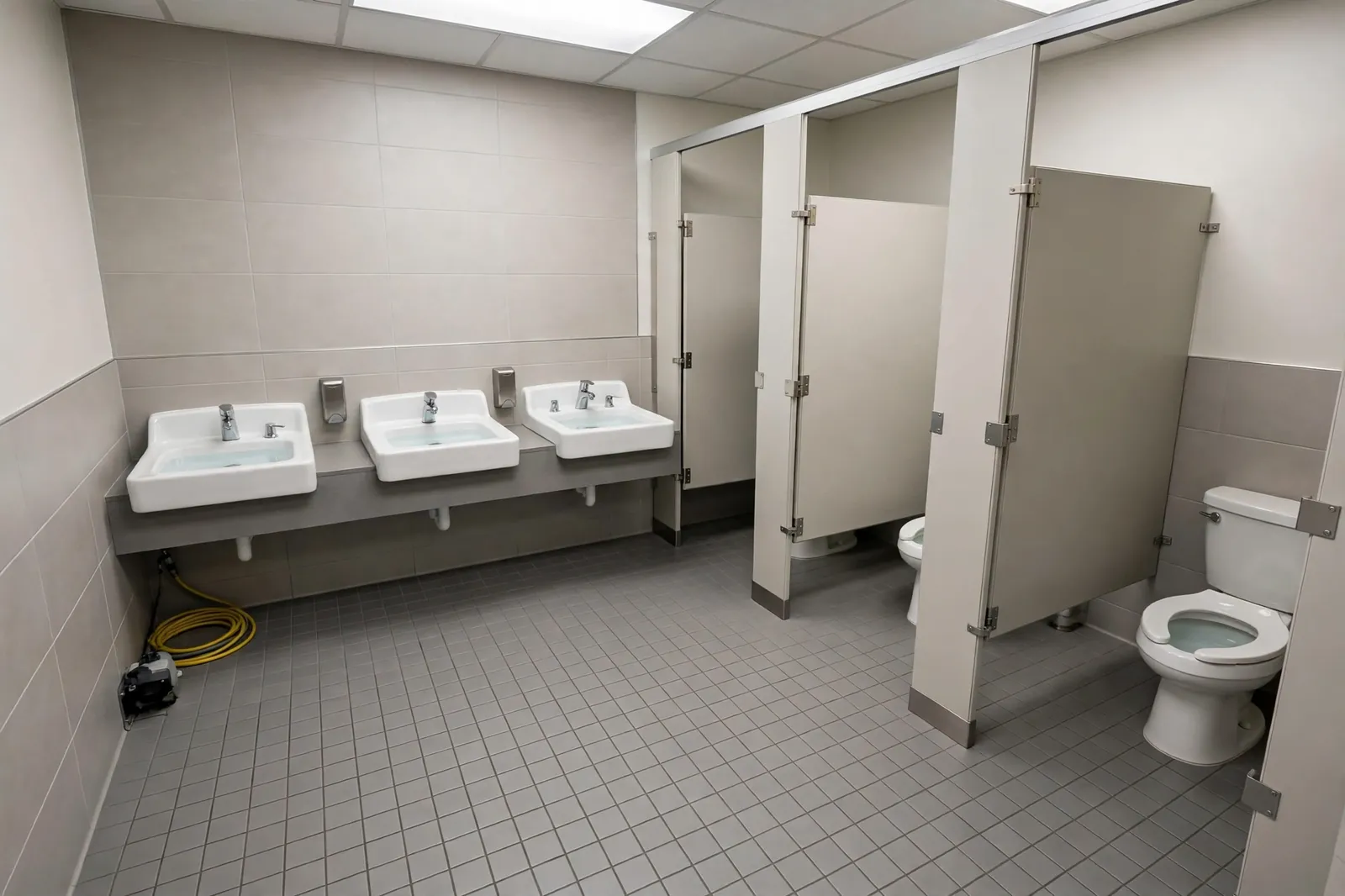
Shut off water to the affected area first, and stop the dishwasher, the ice machine, and any equipment that drains into the blocked line. Keep customers and staff out of the wet area, and put up a sign or a barrier so nobody walks through standing water.
Move stock, boxes, and paperwork off the floor near the water. Tell the manager or the owner straight away, and have one person phone (833) 878-1592 with the address, the type of business, which drains are affected, and whether the building can stay open.
If food is involved, stop serving from the affected kitchen until the line is open and the area is cleaned.
Emergency Commercial Hydro Jetting
What should a business never do during a backup?
Never pour chemical cleaner into a commercial line that has backed up. In a kitchen it can contaminate surfaces and food areas, and it leaves the line unsafe for the crew.
Never keep trading through a backup in a food business — a health inspector will take a dim view of sewage water near food, and the risk to customers is real. Never let untrained staff open a cleanout or run a snake in a commercial main; the lines are larger, the pressure is higher, and a mistake can flood the building.
Never run more water to test the line. Shut the affected water off and wait for the crew.
Emergency Commercial Hydro Jetting
How does an emergency commercial visit work?
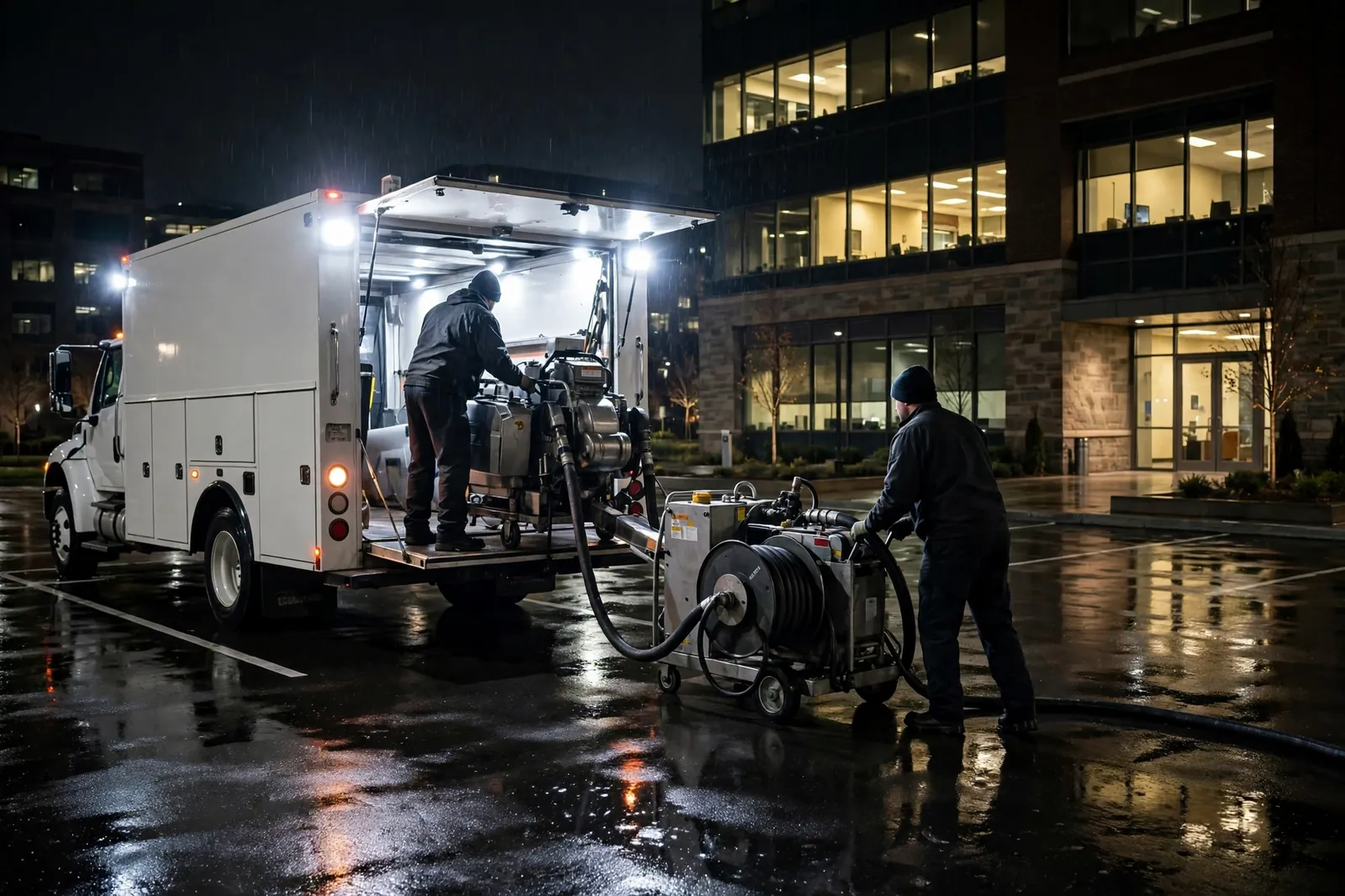
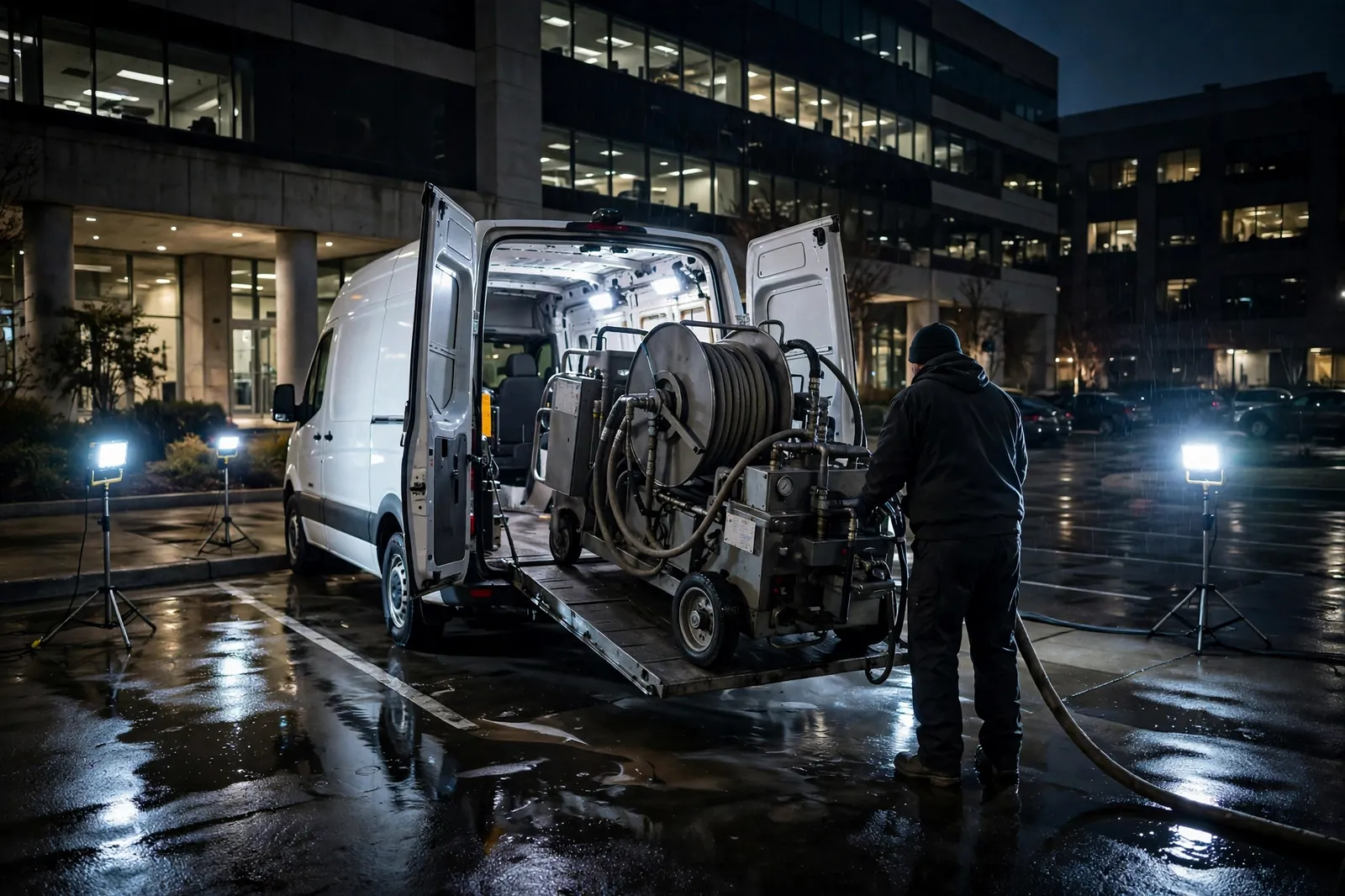
The crew arrives with gear sized for commercial lines, which run larger and longer than home lines. They find the access point — a cleanout, a floor drain, or a roof vent — and run a camera in to see the clog and the line.
Then the jetting hose goes in with a nozzle matched to the line size and the clog, and the crew works the line in passes until the flow returns. A last camera pass proves the line is open.
The crew will tell the manager what they found, whether the line needs a repair, and what to watch for, and they will clean the work area before they leave so trade can restart.
Emergency Commercial Hydro Jetting
Can the business stay open while the crew works?
It rests on where the clog is and how much of the building it affects. A blocked kitchen line in a restaurant usually means the kitchen stays shut until the line is open, though the front of house may keep serving drinks.
A single restroom out of use can be closed off while the rest of the building trades. A main line backup often closes the whole building, since every fixture drains into it.
The crew will say plainly what must shut and for how long, and they will work as fast as the line allows. Booking the visit for a quiet hour, if the problem allows it, keeps the loss to a minimum.
Emergency Commercial Hydro Jetting
What should the business do after the line is clear?
Test the drains one at a time before reopening the affected area, starting with the lowest fixtures. In a kitchen, run the sinks and the dishwasher on a short cycle and watch the floor drains.
Keep the camera footage and the written report from the visit — a landlord, an insurer, or a health inspector may ask for it. Note the date and what the crew found, and set a reminder for a follow-up camera check if the line has a history of clogging.
If the same line blocks again within weeks, phone back and mention the first visit, since a repeat points to a deeper cause such as a broken section or a grease trap that needs pumping.
Emergency Commercial Hydro Jetting
What should a hotel do when a guest room floods?
A guest room that floods from a drain backup needs two responses at once: one for the water and one for the guest. The guest should be moved to another room straight away, with an apology and an offer of help with their luggage.
The flooded room should be closed off, and the guest should be told plainly what happened, because a guest who finds out later will trust the hotel less than a guest who is told at once. The front desk should note the time, the room number, and what the guest was told, because that note is useful if the guest claims for damaged belongings.
The water itself is handled the same way as in any building: stop the water going into the affected line, keep people out of the room, and call for help. The crew will work from the cleanout or the roof vent, and they will tell the manager whether the blockage is in the room's branch or in a shared stack.
After the line is open, the room needs washing with hot water and soap, then a disinfectant, and the carpet or the floor needs drying with fans before the room is let again. A room that has had sewage in it should not be let until it is dry and clean, and the manager should keep the crew's written note in the maintenance file.
Emergency Commercial Hydro Jetting
How does a backup affect food safety in a restaurant?
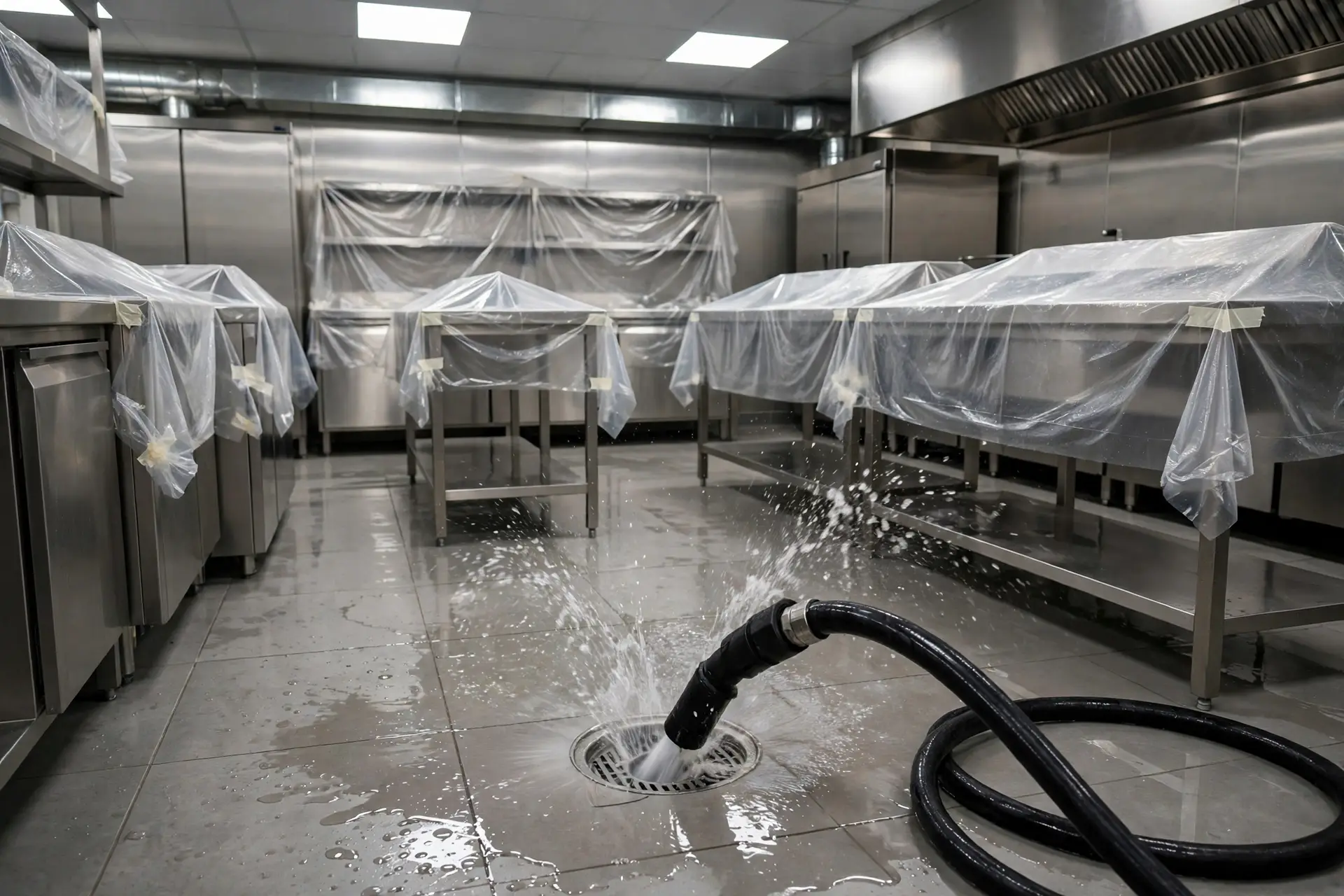
A backup in a restaurant kitchen is a food safety problem as well as a plumbing problem. Any food that the water has touched must be thrown away, and any surface the water has touched must be washed with hot water and a degreaser, then a disinfectant, before food preparation resumes.
The dish machine cannot run while the line is blocked, so clean crockery and cutlery will run out, and the kitchen may have to close even if the dining room stays open. The manager should tell the staff at once which sinks are out of use and which food must be thrown away.
A health inspector will want to know what happened, when it happened, and what was done. The manager should keep a written note of the time the backup started, what was thrown away, when the crew arrived, and when the kitchen was cleaned and reopened.
That note is the evidence that the restaurant acted properly. After the line is open, the floor and the affected sinks need washing before service resumes, and the grease trap should be checked, because a full trap is the most common cause of a kitchen backup.
A restaurant that has blocked once during service should be put on a regular jetting schedule, because a second blockage during service costs far more than a planned clean.
Emergency Commercial Hydro Jetting
What should an office do when the restrooms flood?
An office restroom that floods needs the restroom closed at once, with a sign on the door and a message to the staff telling them which restroom to use instead. The water should be treated as dirty, and staff should be kept out of the room until it is cleaned.
The building manager should call for help and say how many restrooms are affected and whether the flood is on one floor or several, because a flood on several floors points to a shared stack, while a flood on one floor points to a branch line.
While waiting, the manager should move any paper, electronics or furniture that is near the water, and put towels at the doorway to slow the spread. Staff should not try to clear the drain themselves, and they should not pour chemical cleaners down it, because the crew will be working in that line and the chemicals are a hazard to them.
After the line is open, the restroom needs washing with hot water and soap, then a disinfectant, and the floor needs drying before the restroom is opened again. The manager should keep a written note of the time, the rooms affected, and what the crew found, because that note is useful for the building's maintenance record and for any insurance claim.
Emergency Commercial Hydro Jetting
How do you tell staff and customers about a backup?
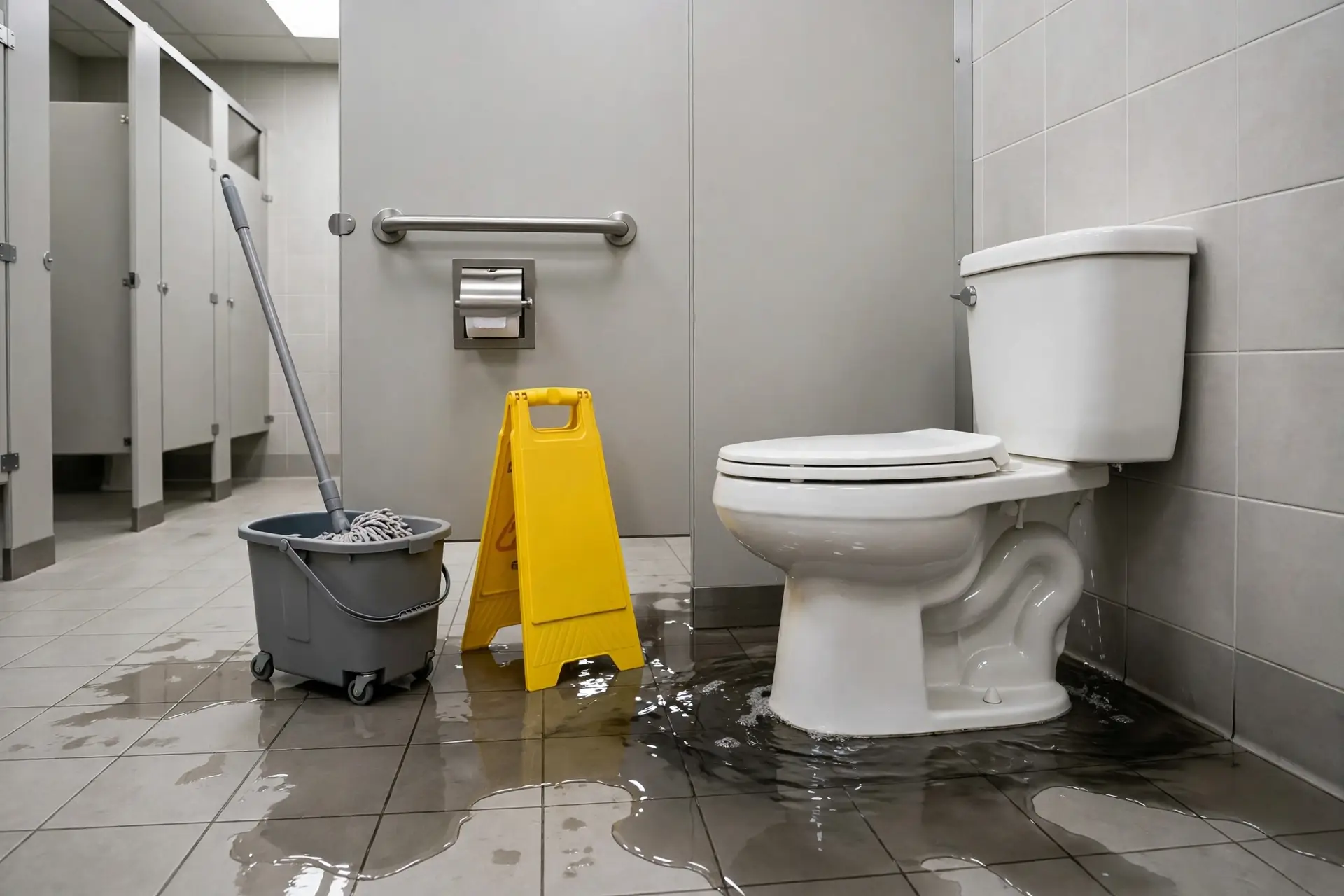
The message to staff and customers should be short, honest and practical. Staff need to know which drains are out of use, what they should do instead, and where the water is, so they can keep clear of it.
Customers need to know which restroom or which area is closed, and where to go instead. Neither group needs the details of the blockage, and neither group should be told that the problem is fixed before the crew has confirmed it.
A sign on a closed door is better than a spoken message, because it stays there when the person who put it up walks away. The sign should say that the room is closed, and where the nearest open restroom is.
In a restaurant, the manager should tell the front-of-house staff first, so they can answer customers without guessing. In a hotel, the front desk should be told which rooms are affected, so they do not let a room that is still wet.
After the line is open, the manager should tell the staff that the room is open again, and that the floor has been washed and dried. A clear message stops rumours, and it stops staff and customers from walking into a wet room.
Emergency Commercial Hydro Jetting
What records should a business keep after an emergency?
A business should keep a file for every drain emergency: the date and time it started, which drains were affected, what the crew found, what was done, and when the next cleaning is due. The camera recording, or at least the crew's written notes, should be filed with it.
Photographs of the water and any damage should be kept too, because they are the record for an insurance claim. The file does not need to be fancy: a folder, a spreadsheet, or a page in the maintenance log, kept in one place and updated after every visit, is enough.
The record matters for three reasons. First, it shows the pattern: a kitchen line that blocks every four months needs a schedule, not another emergency call.
Second, it matters for compliance: a restaurant's grease trap pumping needs a paper trail for the health inspector, and a record of regular jetting shows that the drains are being maintained. Third, it matters for insurance: a claim after a backup goes more smoothly when the business can show that the drains were cleaned on a schedule and that the trap was pumped.
A business that keeps this file spends less on emergencies, because the pattern in the file tells it when to clean before the next blockage.
Emergency Commercial Hydro Jetting
How does a business prepare for the next drain emergency?
The best preparation is a schedule. A business that knows its kitchen line blocks every four months should book a jetting visit every three, so the line is cleaned before it blocks.
A hotel that knows its shared stacks block every eighteen months should book a survey at that interval. The schedule should be written down, with the dates, the lines, and the crew's number, so it does not depend on one person's memory.
The grease trap should be on the same schedule, pumped when it is a quarter full, not when the kitchen blocks.
The second preparation is a plan for the first minutes. Every shift should know who calls for help, where the cleanout is, and which drains to close first.
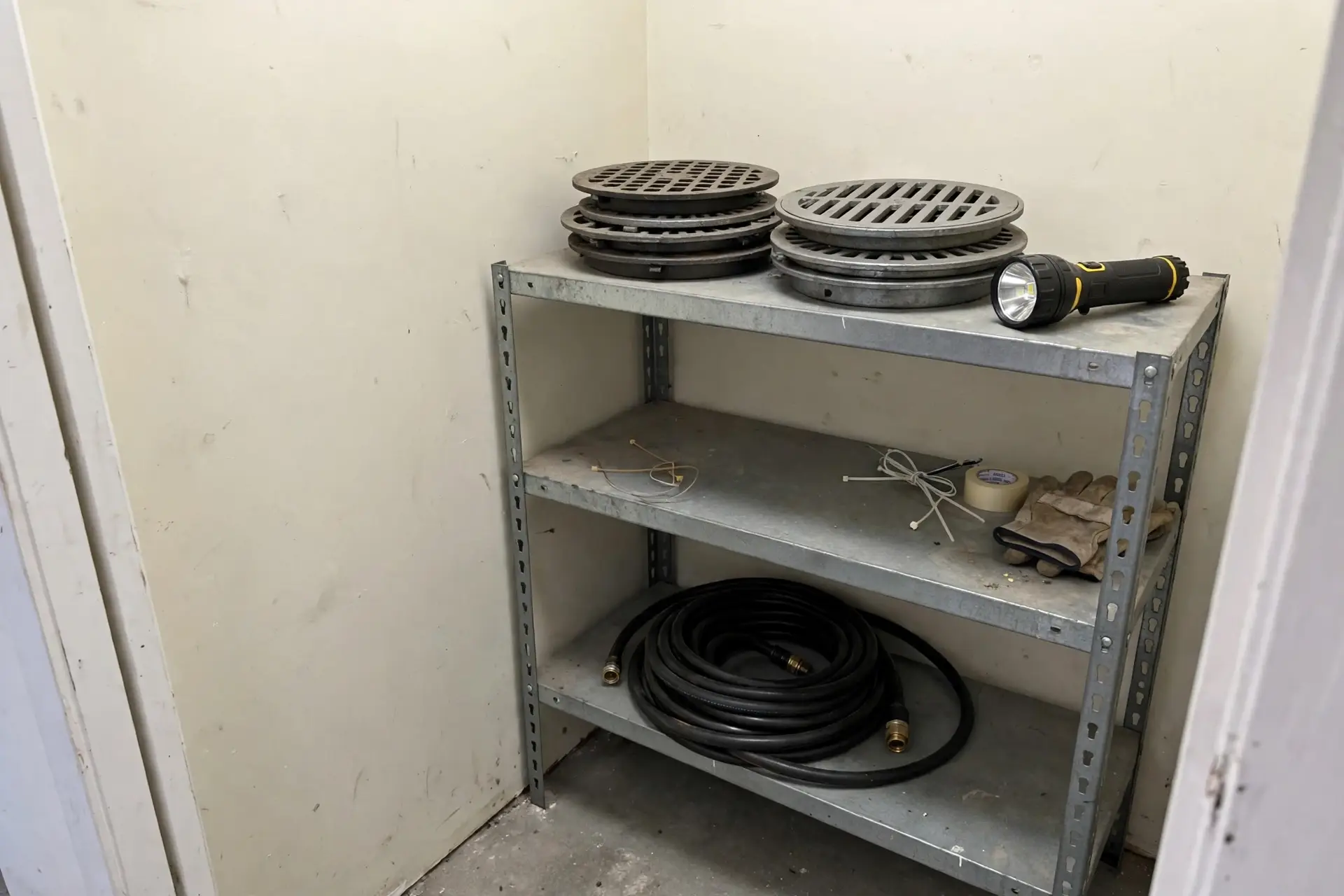
A laminated card by the manager's desk, with the crew's number, the cleanout location, and the steps to stop the water, is worth more than a meeting about it. The third preparation is equipment: towels, a wet-and-dry vacuum, signs for closed rooms, and a water alarm by the lowest drain.
None of these is expensive, and together they turn an emergency into a managed incident, with the business open again in hours rather than days.
Signs you may need emergency commercial hydro jetting
- A kitchen sink backs up during service and the line cannot be used.
- A restroom is out of use while the rest of the building drains fine.
- A floor drain overflows into a hallway or a customer area.
- Every fixture in the building slows at the same time.
- A grease smell hangs over the kitchen with slow drains.
- The same commercial line blocks again within weeks of a cleaning.
- A restaurant kitchen floor drain overflows in the middle of service, with the dish machine running.
- A hotel guest reports water coming up through the shower in their room.
- An office restroom floods, and the restrooms on the floor above start to back up too.
- A shop's floor drain bubbles when the toilet is flushed, in front of customers.
- A salon's shampoo sinks drain slowly, then stop completely, during a busy day.
- A business that blocked last year has the same drains slowing again, in the same season.
How it works
- 1
Step 1 — Close the affected area and stop the water
Close the sink, restroom or kitchen area that is backing up, put up a sign, and stop the water going into that line. Move staff and customers away from the water, and keep food away from it.
- 2
Step 2 — Phone with the business facts ready
Call (833) 878-1592 and say which drains are affected, when it started, whether the business is in service, and when the grease trap was last pumped. A kitchen in service is treated as urgent.
- 3
Step 3 — Camera look at the commercial run
The crew runs a camera into the line from the cleanout or the roof vent, showing the blockage, the pipe condition and the distance, so the work starts at the right place.
- 4
Step 4 — Jet the line clear in sections
The hose cleans the run in passes toward the street main, working one section at a time so the rest of the building can stay open. The loosened waste washes out of the property.
- 5
Step 5 — Final look, records and the next date
A last camera look confirms the line is clear. The crew leaves a written note of what was found and suggests the next cleaning date, so the manager can put the drains on a schedule.
Emergency Commercial Hydro Jetting cost
What does it cost?
Typical ranges only — estimates, not quotes. Commercial lines are larger and longer than home lines, so the price rests on the size of the building, the length of the runs and the time window. A small shop costs less than a hotel with dozens of bathrooms and long shared stacks. An urgent call during service often carries a call-out fee on top of the normal price, and the crew should say what that fee is when you phone, before they set out. The blockage itself is the next driver: a thin grease film clears in one pass, while a thick coating in a restaurant kitchen line needs several passes and more time on site. A camera look may be priced on its own at $200 to $500 or bundled with the jetting, so ask which it is. The written quote should list the call-out fee, the survey, the jetting, the trap check and the tidy-up as separate lines.
| Service | Typical range (estimate) | Notes |
|---|---|---|
| Commercial hydro jetting | $500 – $1,500 | Larger lines, varies by size |
| Camera inspection with jetting | $150 – $350 | Often included |
| Single drain line jetting | $250 – $550 | One branch line |
| Repeat or heavy buildup cleaning | $400 – $900 | Extra passes needed |
Prices are estimates only. The local company that does the work sets its own final pricing.
Questions about emergency commercial hydro jetting