
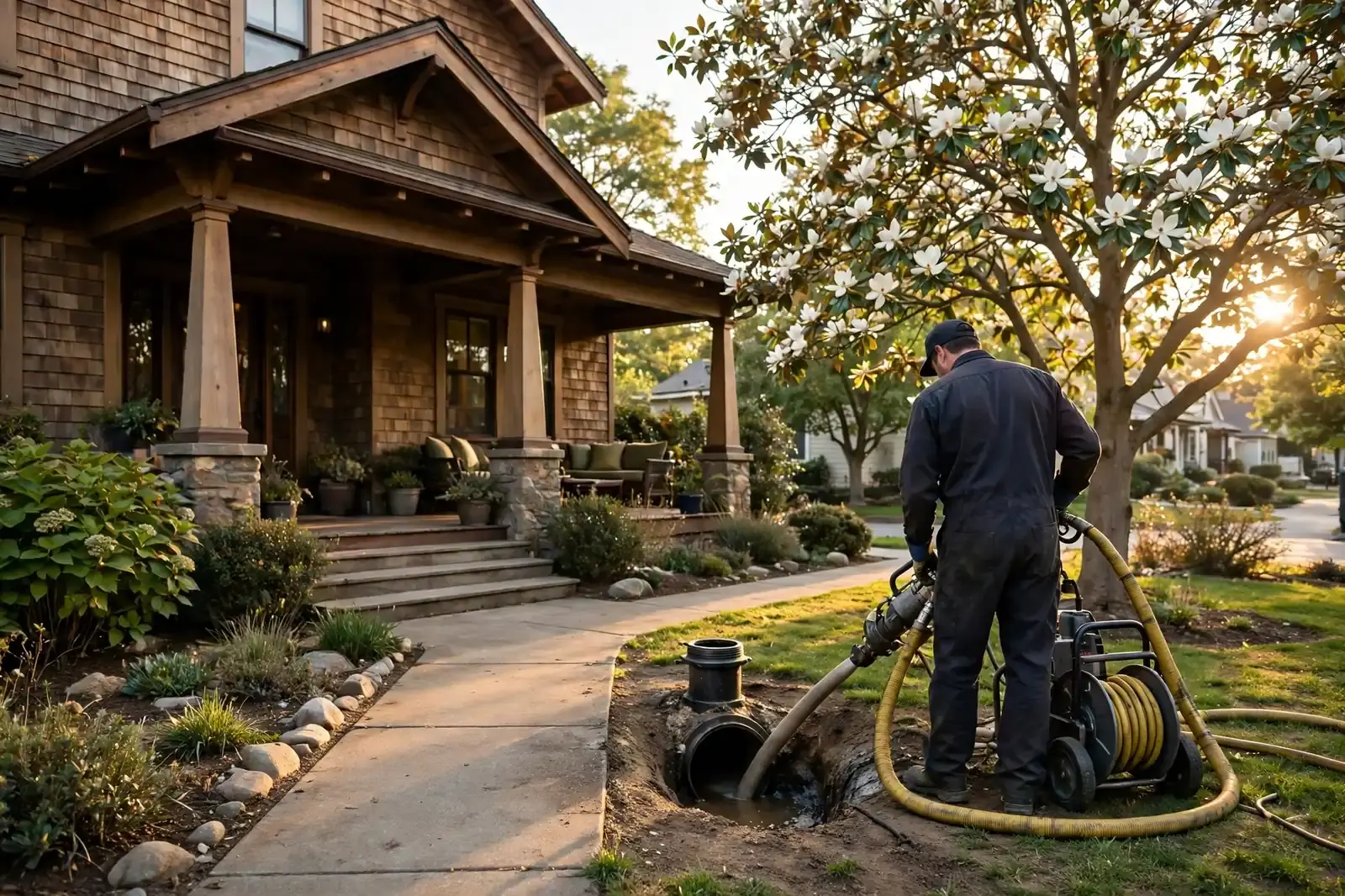
Hydro Jetting in Oakland, CA
In Oakland, CA, hydro jetting drives water at high force through a home drain or sewer line, scouring off the grease, crust, and roots that narrow older East Bay pipes. The crew sends a camera down first, then sets the nozzle and force for that pipe. Call (833) 878-1592 to arrange a visit.
Updated 2026-11-18. Oakland, CA · Alameda County · Population 443,554. Prices shown are estimates only.
- 443,554 Population
- Alameda County
- 26 ZIP codes served
- Rockridge Neighbourhood
Before & after in Oakland
Before & after
Drag the slider to compare the same pipe before and after jetting.
Hydro jetting in Oakland
Rockridge: 1920s houses on Oakland hills
The deed will tell you the age of a Rockridge house, and the pipes will confirm it. A home built in the 1920s or 1930s usually drains through cast iron inside and clay tile or cast iron outside, laid when the streets were new.
Ninety years of water, soap, and cooking fat have narrowed those pipes, and the narrowing is what brings most homeowners to call.
Inside the house, the cast iron rusts. The bore turns rough, fat sticks to the roughness, and the opening shrinks year by year.
Nothing dramatic happens. The kitchen sink empties a little slower each month.
The shower leaves water around your ankles. The toilet starts asking for a second flush.
A homeowner who watches will notice the fade long before the line blocks outright.
Outside, the clay tile fails at its seams. The pipe comes in short lengths, and the seams loosen as hillside ground shifts with rain, dry summers, and small tremors.
A root hair slips through a loose seam and grows in the mild climate, where nothing ever freezes it back. A camera run sorts out which story your house is living, and that answer sets the nozzle, the force, and whether a repair should follow the wash.
Hydro jetting in Oakland
Hillside laterals: slope, sag, and long runs
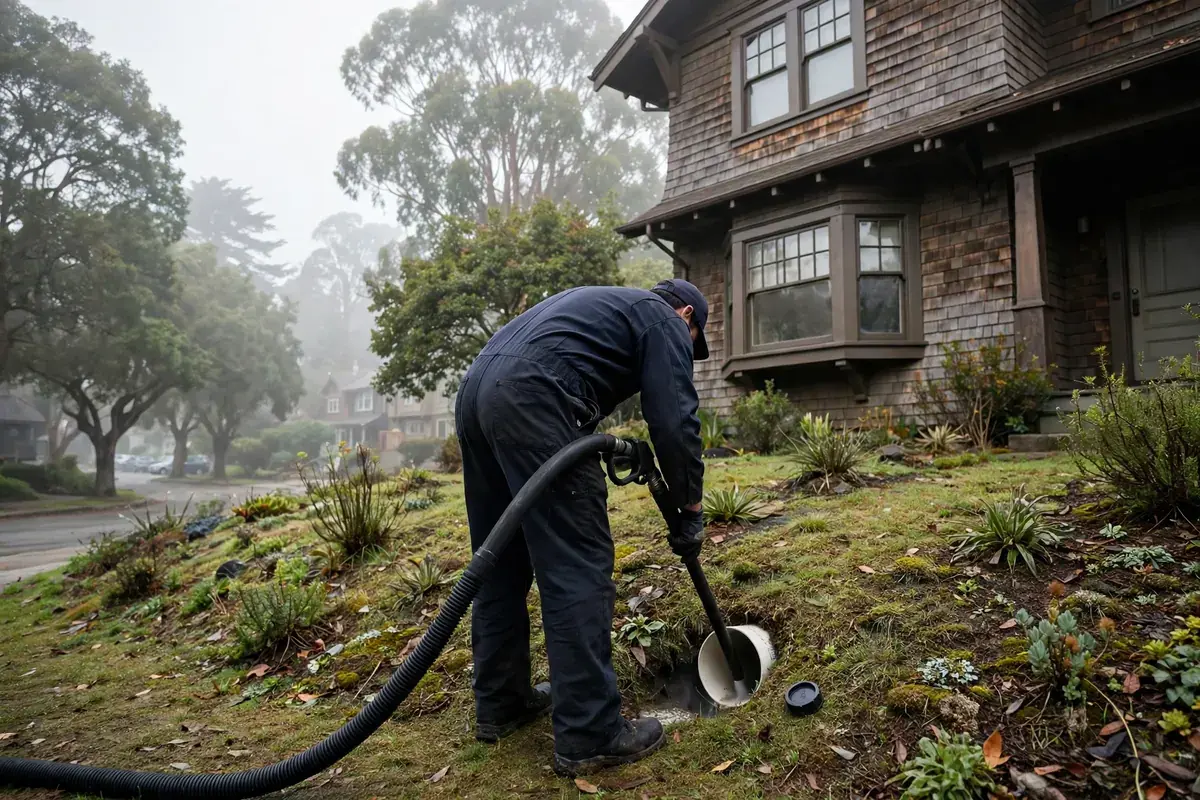
Oakland is a city of hills, and hills move. Rain soaks the soil, dry summers shrink it, and the ground creeps a little each year down the slope.
That movement works on sewer lines, especially older clay tile, where the seams between short lengths open a fraction at a time. Once a seam opens, roots find it, and once roots are inside, they grow all year in the mild East Bay climate.
The slope itself adds a second problem. A lateral running down a steep lot carries waste fast, which sounds good, but a steep run can also leave solids behind when the flow slows at a bend or a seam.
On flatter streets, the risk is the opposite: a length that has settled into a dip, where water stands instead of running off. Both patterns show up on camera, and both need more than a wash if they are severe.
A dip will keep clogging until it is repaired.
The length of the run matters too. A house high on a slope can have a lateral twice as long as a house on flat ground, and a longer run takes more hose and more time.
That is why two houses with the same symptom can get different figures: the work is priced on the pipe in the ground, not on the neighborhood name. If your house sits on a slope in Rockridge or the Oakland hills, say so when you call, so the crew expects a long run and brings enough hose.
Hydro jetting in Oakland
EBMUD, the city, and the lateral rules
Oakland homes get their water from the East Bay Municipal Utility District, EBMUD, and their sewer service from the City of Oakland. The line between them is the street main.
Your lateral, the pipe from your house to that main, belongs to you, including any wash or repair it needs. The main itself belongs to the city.
A blockage in your lateral is a jetting job. A fault in the main is the city's job to clear.
Oakland also has a rule that surprises newcomers. In the East Bay, a private sewer lateral must be inspected, and repaired if it fails, when a property changes hands.
If you bought your house recently, the lateral may already have been surveyed or replaced, and the sale paperwork will say. If you are selling soon, a camera run now can show whether the lateral will pass and what work is needed.
Tell the crew about any sale or inspection deadline when you call, so they can provide the video and notes you need.
That rule also means Oakland has more camera footage of its laterals than most cities, and plumbers here are used to reading it. When a drain slows, the question is rarely whether to look, but what the look will show.
A block-wide problem points at the main, and the city is the right first call. A single slow house points at its own lateral, and that is when a jetting crew is the right call.
Hydro jetting in Oakland
Roots in the East Bay: mild winters, long seasons
Oakland's mild climate is kind to trees and hard on sewer lines. Roots grow through every month, with no winter pause, so a root mat that takes two years to form in a cold city can form in one year here.
The streets of Rockridge and the older neighborhoods are shaded by mature maples, oaks, and redwoods, and their roots spread wide under lawns and sidewalks in search of water.
Roots do not break sound pipe. They find the gaps that soil movement has already opened, and once inside they grow fast in the damp, nutrient-rich flow.
The first sign is often a single toilet that gurgles, then a main that slows a little more each year. A camera run shows the mat and the seam it came through, and that seam is the real problem.
Cutting the mat buys time. Fixing the seam ends the cycle.
The fix depends on how many seams are open and how old the pipe is. One open seam can be repaired on its own.
Several open seams in a clay line may point to a lining or a replacement. Cutting down a mature street tree is almost never the right answer, and most homeowners would rather fix the seam than lose the shade.
Mention the big trees near your lateral when you call, so the crew brings the right head the first time.
Hydro jetting in Oakland
What the camera changes about the price
Three things set the figure, and the camera run is what measures all three. First, the length of the run: a house high on a slope can have a lateral twice as long as a house on flat ground, and a longer run takes more hose and more time.
Second, the coating: a thin film of fat is quick work, a thick crust of scale or a heavy root mat is not. Third, the state of the pipe: a sound line takes full force, a fragile one needs a gentler touch or a repair first.
The table below gives the ranges, and the camera run is what places your job inside them. A short branch with a little fat sits near the bottom.
A long main with a heavy mat sits near the top. The figure follows from those three facts, not from the size of the house or the name of the street.
Access shifts the figure too. A ground-level access point by the foundation means work starts within minutes.
A roof vent, common on older Oakland houses, means ladders and extra hose. An access point far down a steep lot means more hose and more setup time.
If the picture shows a collapsed length or a pipe broken open, washing is the wrong job, and a straight crew says so before charging for it.
Hydro jetting in Oakland
One survey, minute by minute
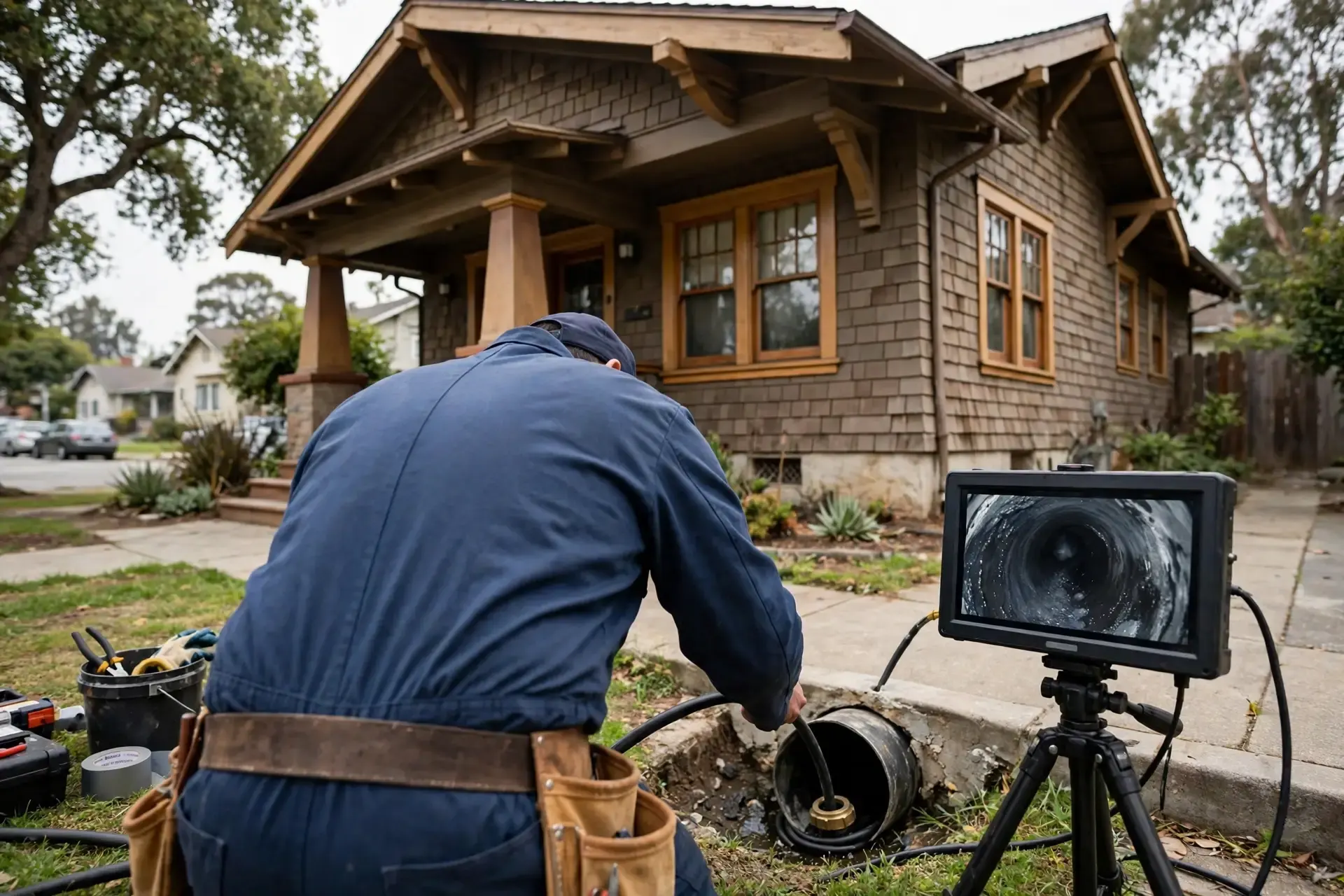
The camera run is the part of the visit that turns a guess into a fact. The crew opens the outside access point and feeds a small lens on a flexible cable down the line.
The lens moves a few feet at a time, and the technician watches a handheld screen, calling out what passes: a clean stretch, a seam, a patch of crust, then the trouble itself. The whole run takes about twenty minutes, and the homeowner can watch it happen.
What the lens finds in Oakland tends to fall into three groups. Roots come first, pale threads at a seam that have grown into a woven mass, usually under a big tree.
Then scale and fat in old cast iron, the wall rough and the bore narrowed. Then a shifted seam or a dip, where hillside ground has moved and the pipe no longer lines up.
Each finding points to a different head and a different force, and the technician chooses from the picture, not from a hunch.
After the washing, the lens goes back in. That second pass is the record of the job: bare walls, a clear run to the street, and a view of any crack or shifted seam that washing cannot cure.
Watch both passes if you are home. Keep the recording if one is offered.
The next plumber to touch that line will start from the recording rather than from nothing, and in a city where the ground moves, that record is worth holding on to.
Hydro jetting in Oakland
The white marks on the tap: Oakland's hard water
Many Oakland houses have a basement or a low crawl space, and that space tells the story of the sewer line before any camera goes in. A floor drain that has backed up leaves a mark.
A damp patch near the cleanout hints at a slow leak. A musty smell that never quite leaves the basement often means a line that is holding water instead of moving it.
Before the crew arrives, a walk through the basement with a flashlight can answer questions the camera will ask later.
The basement also holds the access point in many older Oakland houses. A cleanout in the basement wall or floor is easy to reach in dry weather, and it keeps the crew out of the rain in winter.
It needs a clear path, though, and a floor drain nearby that can take the water used during the wash. Boxes stacked against the cleanout, or a workbench built over it, can add half an hour to the visit.
Clearing that spot before the crew arrives is the cheapest preparation there is.
A basement cleanout also changes what the crew sees first. Water standing in the line shows up at the basement floor drain before it shows anywhere else, and a camera run from the basement can reach the whole lateral in one pass.
If your house has a basement cleanout, say so when you call. It changes the setup, the hose run, and sometimes the price, and it gives the crew the easiest possible start.
Hydro jetting in Oakland
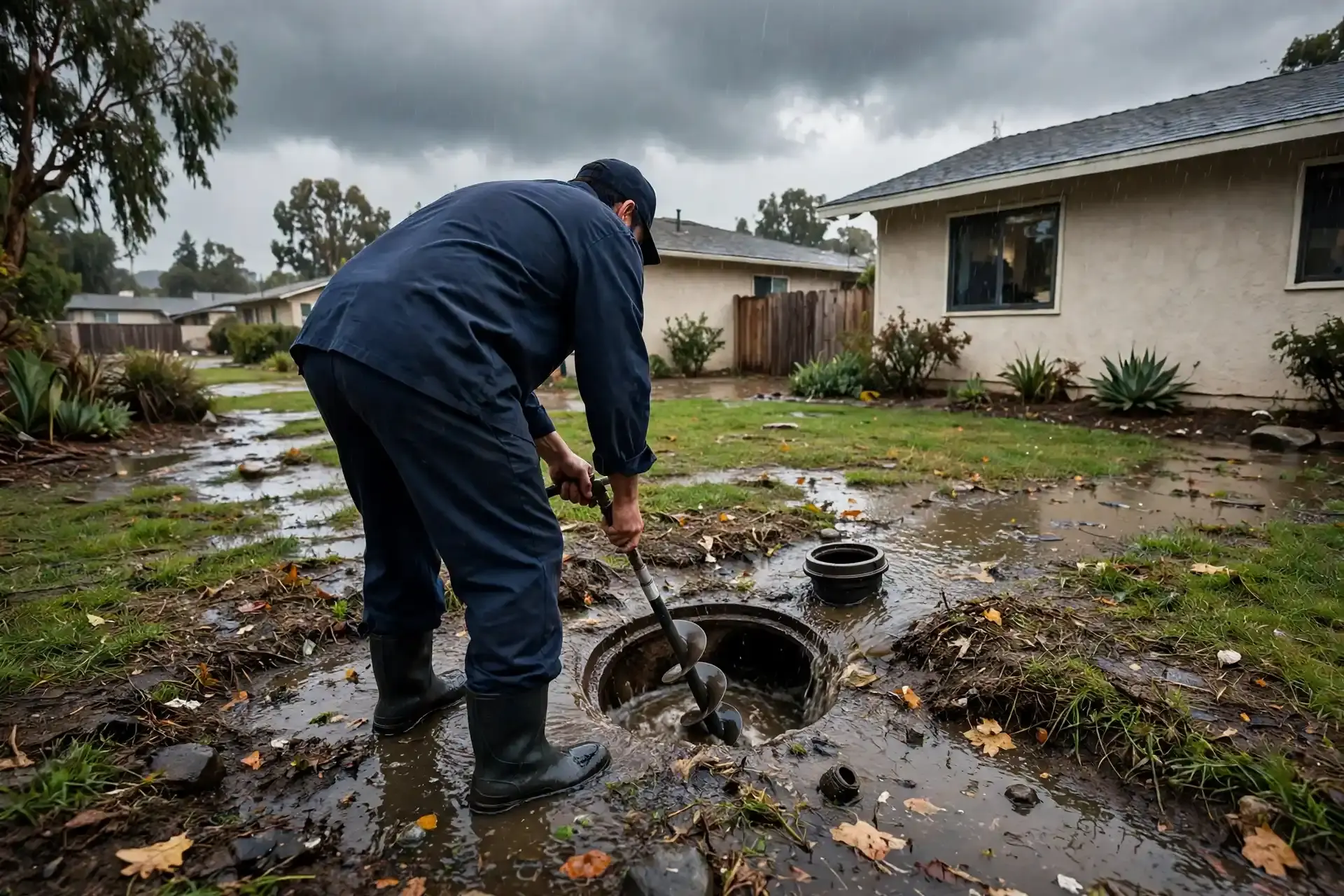
Winter rain on the hillsides
Oakland has a lot of duplexes and small apartment buildings, and many of them share a sewer line. A shared lateral means a shared problem: a blockage downstream of the junction slows every unit at once, and a wash downstream helps everyone.
It also means a shared decision, and that is where things get complicated. One tenant cannot authorize work on a line that belongs to the building, and a landlord who lives elsewhere may not know the drains are slow until a tenant complains.
The practical rule is simple. A problem inside one unit, a slow bathroom sink or a single clogged tub, belongs to that unit.
A problem across several units at once, slow fixtures in two flats, or a backup in the lowest unit, belongs to the shared line, and the landlord or the building manager is the one to call. Tenants should report the pattern, which fixtures, and when it started, and let the owner book the visit.
A camera run will show whether the trouble is in one branch or in the shared run, and that picture settles the question of who pays.
For owners of small buildings, a camera run is cheap insurance. A shared line that blocks on a Friday evening can flood the ground-floor unit by Saturday morning, and the cleanup costs far more than a planned wash.
A yearly camera check on a shared lateral, with a wash when the picture shows buildup, keeps the building draining and keeps the tenants happy. Keep the footage with the building records, so the next plumber starts from the picture rather than from nothing.
Hydro jetting in Oakland
Autumn leaves and the lines they find
Fall in Oakland drops a lot of leaves, and some of them end up in the drains. Leaves wash into yard drains and area drains, and from there into the sewer line, where they mat together with fat and form a blockage that a plunger cannot move.
A line that slows every autumn, then clears, then slows again the next autumn, is often carrying leaves.
The fix is partly a habit. Keep yard drains and gutters clear through the fall, and keep the cleanout cap on tight so leaves cannot fall straight into the lateral.
A missing cap is an open door for leaves, rain, and grit, and it costs nothing to replace. If the line slows after the first big leaf fall of the season, mention the timing when you call.
It tells the crew to look for a leaf mat rather than roots or scale.
Jetting clears a leaf mat easily, because the jets break it apart and wash it downstream. The camera will show whether leaves were the whole story or whether they were catching on something else, a root mat or a rough patch of scale, that gave them a place to snag.
A line that blocks on leaves every year usually has a second problem hiding underneath, and the camera is what finds it.
Hydro jetting in Oakland
Permits, in the order they happen
A wash is maintenance, and maintenance needs no permit. The crew arrives, runs the camera, jets the line, and leaves the same day with the drains working.
Nothing is dug, nothing is filed, and no office is involved. That ease is one reason jetting is a sensible first move when a drain slows.
A repair is a different matter, and it follows an order. The camera run comes first, because it shows whether the job is a wash or a repair at all.
If it is a repair, an application goes to the city, setting out the job and the location. The city reviews it against the code, the work is done, and an inspector signs it off.
How long that takes depends on the size of the job, and a plumber who does this work every week can give a realistic wait.
Sellers face one more step. A lateral that fails its inspection at sale must be repaired before the sale closes, under the same permit and inspection as any other repair.
Do not let the question of permits hold up a camera run. The run is what shows whether paperwork is needed at all.
If the picture shows damage, ask who files the application and who restores the lawn or the drive afterward, and file the papers with the house records. A buyer will ask for them.
Hydro jetting in Oakland
Oakland beside San Francisco, Berkeley, and San Jose
Cross the bay to San Francisco and the streets get steeper, the houses older, and the laterals shorter and steeper too, with cast iron showing up more often. Go south to San Jose and the housing gets newer, so more laterals are PVC and more clogs are fat than roots.
Head to Fremont and the ground flattens out, so the lines face less slope movement than Oakland's hillside houses.
Berkeley, just north, is Oakland's closest match: the same hills, the same older housing, the same root and seam problems, with a similar mix of clay and cast iron. Hayward, to the south, sits on flatter ground with a high water table in places, so its lines see more groundwater pressure.
Stockton, farther inland, runs hotter and drier, so its soil moves more with the seasons. Oakland, home to about 443,554 people, holds the widest spread of the lot: hillside houses in Rockridge with long steep laterals, flatland houses with clay tile, and new builds with PVC.
The comparison is useful only if it stays specific. A tip meant for a new PVC line in a young suburb will not fit a 1930s clay lateral under a mature tree on a slope.
The age of the house, the trees over the line, and the slope under it decide what your line needs. When you call, give the age of the house and the area.
The crew can usually say what they find on that kind of street before they arrive.
Signs you may need hydro jetting
- The shower filling while a toilet flushes in another room.
- The kitchen sink emptying slower each week, with no sudden blockage.
- A toilet that needs a second flush more and more often.
- Water rising in a tub when the washing machine drains.
- A faint sewer smell from a guest bath that is rarely used.
- Drains that drag for days after winter rain soaks the hill.
- A soft, green patch of lawn sitting right over the sewer run.
- A floor drain that gurgles when the dishwasher runs.
- The same bathroom drain blocking again a month after it was cleared.
- A cleanout cap with water standing behind it when it is opened.
- Gurgling from a kitchen sink while the tub next door empties.
How it works
- 1
The call: what to have ready
Have three facts ready when you call: which fixtures are slow, when the trouble started, and the age of the house. Those three facts tell the crew what to expect before they arrive, and whether to bring a root head, a descaling head, or both.
- 2
The look: what the lens finds
The crew opens the outside access point and feeds a lens down the line. The picture shows fat, roots, or crust, the pipe material, and any crack or dip. Every choice after that follows what the lens found.
- 3
The wash: what the machine does
The jetting machine sits on the drive and pushes water down a hose to the nozzle in the pipe. The nozzle works the run in slow passes, and the jets cut at the walls on the way back. Fat, crust, and root pieces break loose and rinse downstream, and the crew runs a tap as they go to watch the flow return.
- 4
The re-check: the second look
The visit ends with the lens going back down while water runs through the fixtures that were slow. Bare walls in the picture and a quick drain at the tap show the work is done. The crew closes the access point and talks through what they found.
Hydro jetting cost in Oakland
What does it cost?
Treat the figures below as countrywide estimates for 2026. An Oakland job usually lands inside them. A short branch sits near the bottom, a long main with heavy roots near the top. What moves the figure is the length of the lateral, the way the crew reaches it, and what the lens finds inside. A ground-level access point keeps the visit quick. A roof vent entry or an access point far down a steep lot adds setup time and hose. Local conditions add their own costs: root mats under mature trees that grow all year, crust in older cast iron, and shifted seams where the hillside ground has moved. The camera run before any washing prices the job from the line itself, so the figure you hear follows the run, the buildup, and the access at your house.
| Service | Typical range (estimate) | Notes |
|---|---|---|
| Main sewer jetting | $350 – $650 | What most houses need |
| Small line jetting | $250 – $500 | One sink, tub, or laundry line |
| Heavy roots and grease work | $600 – $1,200 | Heavy roots, grease, or long runs |
Prices are estimates only. The local company that does the work sets its own final pricing.
Questions about hydro jetting in Oakland